56th: 443 Songwriters in HOF

Before listing the members of the Songwriters Hall of Fame, I recently discovered a digital handbook that would be an asset to any serious songwriter. It is available from the Berklee College of Music based in New York City. Here is the link to the necessary information:

With Berklee Online, you can study the renowned curriculum of Berklee College of Music from anywhere in the world, and in your own rhythm. Since 2002, more than 75,000 students from 144 countries have enhanced their creative output and marketability with Berklee Online’s award-winning master’s degree programs, bachelor’s degree majors, certificate programs, and 200+ music courses. Through Berklee Online, you’ll receive unparalleled instruction from music industry professionals and the same faculty members who teach at Berklee’s Boston campus.


https://welcome.online.berklee.edu/rs/497-GEH-430/images/Berklee-Online-Songwriting-Degree-Handbook.pdf

The Songwriters Hall of Fame’s ongoing mission is to celebrate and honor the contributions and legacies of songwriters of all genres of music while developing and nurturing the next generation of songwriters through Master Sessions, songwriting craft forums, scholarships and digital initiatives. Since 1970, 443 artists and bands have been inducted. I have organized them into alphabetized groupings and a link to a sample of their music (Note: at the end of the Hall of Fame artists, we have added the NYU Steinhardt Songwriters Scholar Award winners).

A’s:

Tom Adair
Photo credit: SongwritersHallofFame.com

Adair, Tom (1913-1988). Ramones “Blitzkrieg Bop” (https://youtu.be/iymtpePP8I8).

Lee Adams
Photo credit: SongwritersHallofFame.com

Adams, Lee (1924- )). “We Can Call It Love.” https://youtu.be/ZfutxjHYUTA.

Harold Adamson
Photo credit: SongwritersHallofFame.com

Adamson, Harold (1906-1980). “The World in 80 Days.” https://youtu.be/zbcPIo2J_9k.

Richard Adler
Photo credit: SongwritersHallofFame.com

Adler, Richard (1921-2012). “The Pajama Game”https://youtu.be/_TRAYXP5f7Q.

Milton Ager
Photo credit: SongwritersHallofFame.com

Ager, Milton (1883-1979). Ain’t She Sweet” https://youtu.be/qsdVjPYpCzY.

Fred Ahlert
Photo credit: SongwritersHallofFame.com

Ahlert, Fred (1892-1963). “Mean to Me” https://youtu.be/B6xFq5MSk0g.

Harry Akst
Photo credit: SongwritersHallofFame.com

Akst, Harry (1894-1963). “Am I Blue” https://youtu.be/iPKMv8Rz61A.

Louis Alter
Photo credit: SongwritersHallofFame.com

Alter, Louis (1902-1980). “Grammy Salute” https://youtu.be/eOptc6Grbiw.

Leroy Anderson
Photo credit: SongwritersHallofFame.com

Anderson, Leroy (1908-1997). “Forgotten Dreams”. https://youtu.be/jHPJJKVt5-Y.

Paul Anka
Photo credit: SongwritersHallofFame.com

Anka, Paul (1941- ). “Medley” https://youtu.be/SmbMuauXcdY.

Harold Arlen
Photo credit: SongwritersHallofFame.com

Arlen, Harold (1905-1986). “Tribute Melodies – Lena Horne & Frank Sinatra” https://youtu.be/FeiprgKDR3A.

Nickolas Ashford
Photo credit: SongwritersHallofFame.com

Ashford, Nickolas (1941-2011). “An Evening with Valorie Simpson” https://youtu.be/9not1wo0qZM.

Dallas Austin
Photo credit: SongwritersHallofFame.com

Austin, Dallas (1970- ). “In the Studio” https://youtu.be/D_615YjK2y4.

Charles Aznavour
Photo credit: SongwritersHallofFame.com

Aznavour, Charles (1924-2018). “Audiobiographie” https://youtu.be/dpciS7JTMbg.

B’s:

Babyface
Photo Credit: IMDb.com

Babyface (1958- ). “Never Keeping Secrets” (https://youtu.be/f_Qw1iLfDr4)

Burt Bacharach
Photo credit: biography.com

Bacharach, Burt (1928- ). See Post 41. “I’ll Never Fall in Love Again” (https://youtu.be/3B0i_Ou4QuA)

Phillip Bailey
Photo Credit: somethingelse.com

Bailey, Phillip (Earth, Wind & Fire) (1951- ). “Lets Groove” (https://youtu.be/74nFihsmo2I)

Ernest Ball
Photo credit: seamus.dubhghaill.com

Ball, Ernest (1878-1927). “When Irish Eyes Are Smiling” (https://youtu.be/QBli_Iyw9uk)

Jeff Barry
Photo credit: deadline.com

Barry, Jeff (1938- ). “Da Doo Ron Ron” (https://youtu.be/kPyS4dKk9FU)

John Barry
Photo Credit: deezer.com

Barry, John (1933-2011). “All Time High” (https://youtu.be/7_arP69Gzm0)

Dave Bartholomew
Photo Credit: theguardian.com

Bartholomew, Dave (1918-2019). “My Ding-A-Ling” (https://youtu.be/OgyF2Mv360Q)

Katherine Lee Bates
Photo credit: wikipedia.com

Bates, Katherine Lee (1859-1929). “America the Beautiful” (https://youtu.be/Gm39Or0C7gc)

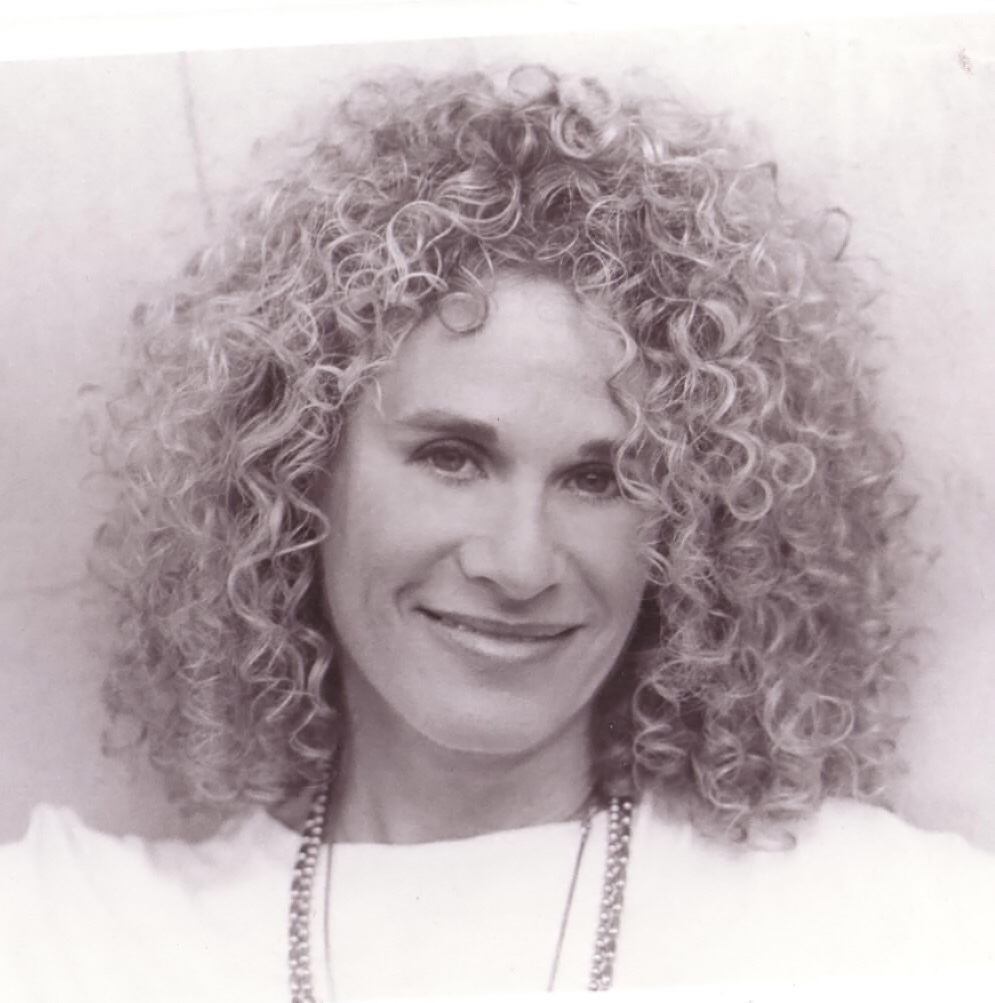
Carole Bayer-Sager
Photo Credit: IMBd.com

Bayer-Sager, Carole (1947- ). “It’s the Falling in Love” (https://youtu.be/zbY06ND-XtI)

Thom Bell
Photo credit: soulwalking.co.uk

Bell, Thom (1943- ). “A Theme for LA’s Team” (https://youtu.be/_OmDxuZHdyk)

Lead Belly
Photo Credit: 64parishes.com

Belly, Lead (1888-1949). “House of the Rising Sun” (https://youtu.be/y5tOpyipNJs)

Bennie Benjamin
Photo Credit: famousbirthdays.com

Benjamin, Bennie. (1907-1989). “Don’t Let Me Be Understood” (https://youtu.be/8C9a04fokSE)

Alan Bergman
Photo credit: wikidata.com

Bergman, Alan (1925- ).”What Matters Most” (https://youtu.be/mxiJOK5gvR4)

Irving Berlin
Photo Credit: broadwayworld.com

Berlin, Irving (1888-1989). “Blue Skies” (https://youtu.be/u95BpnGqR78)

Leonard Bernstein
Photo credit: grammymuseum.com

Bernstein, Leonard (1918-1990). “Brahms Symphony No1” (https://youtu.be/EGRqIGOAPcE)

Chuck Berry
Photo Credit: thenewyorktimes.com

Berry, Chuck (1926-2017). See Posts 36, 41 and 46. “Johnny B. Goode” (https://youtu.be/Uf4rxCB4lys)

John Bettis
Photo credit: thegodfatherwiki.com

Bettis, John (1946- ). “As Long as We’ve Got Each Other” (https://youtu.be/_Mbe8YRRCgs)

William Billings
Photo Credit: tracklib.com

Billings, William (1746-1800). “The Contenental Harmony” (https://youtu.be/YxvjFJeDvyo)

Don Black
Photo Credit: songwritershalloffane.com

Black, Don (1938- ). “Why You Mad” (https://youtu.be/m0MYgS7gddk)

Otis Blackwell
Photo credit: michaelochsarchieve.com

Blackwell, Otis (1931-2002). “All Shook Up” (https://youtu.be/yU9HvqRekpw)

James Bland
Photo Credit: findagrave.com

Bland, James A. (1854-1911). “One Job” (https://youtu.be/1tCZ2wQBt-k)

Ralph Blaine
Photo credit: IMDb.com

Blaine, Ralph (1914-1995). “Love” (https://youtu.be/JB2NX4vPP4I)

Ruben Bloom
Photo Credit: jazzmusicarchives.com

Bloom, Ruben (1902-1976). “Trainwreck” (https://youtu.be/zfdx9mXByvg)

Jerry Bock
Photo credit: musichistory.com

Bock, Jerry (1928-2010). “If I Were a Rich Man” (https://youtu.be/iJ52CAihukc)

Jon Bon Jovi
Photo Credit: biography.com

Bon Jovi, Jon (1962- ). “Livin on a Prayer” (https://youtu.be/lDK9QqIzhwk)

David Bowie
Photo Credit: vulture.com

Bowie, David (1947-2016). See Post 41.”Starman” (https://youtu.be/aBKEt3MhNMM)

Bobby Braddock
Photo credit: pbs.com

Braddock, Bobby (1940- ). “He Stopped Loving Her Today” (https://youtu.be/BP_neBGKVU4)

Leslie Brieusse
Photo Credit: billboard.com

Brieusse, Leslie (1931-2021). “If I Ruled the World” (https://youtu.be/E8yg5qbPf7U)

Eddie Brigati
Photo credit: songwritershalloffame.org

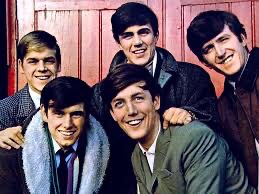
Brigati, Eddie (1945- ). The Young Rascals. “Interview” (https://youtu.be/HteKkHrrAf8)

James Brockman
Photo Credit: songhall.org

Brockman, James (1886-1967). “Strange World” (https://youtu.be/fFdu4gRyjv8)

Garth Brooks
Photo Credit: biography.com

Brooks, Garth (1962- ). “The Thunder Rolls” (https://youtu.be/YiPQlXKLhts)

George Brown
Photo credit: songhall.org

Brown, George (Kool & The Gang). (1949- ). “Get Down on It” (https://youtu.be/1AVxBedMP4I)

James Brown
Photo Credit: biography.com

Brown, James (1933-2006). See Posts 12, 30 and 41. “It’s a Man’s World” (https://youtu.be/H77fRz1rybs)

Jackson Brown
Photo credit: rockandrollhalloffame.com

Browne, Jackson (1948- ). “The Pretender” (https://youtu.be/SqRvJLH_-vU)

Alfred Bryan
Photo Credit: cshf.ca

Bryan, Alfred (1871-1958). “Round on the Ends” (https://youtu.be/uTTrmrTSeWk)

Boudleaux, Bryant
Photo credit: songhall.org

Bryant, Boudleaux (1920-1987). Felice’s husband.“Love Hurts” (https://youtu.be/pe8_VzjLP2Y)

Felice Bryant
Photo Credit: findagrave.com

Bryant, Felice (1925-2003). Boudleaux’s wife. “We Could” (https://youtu.be/VsvGR_Bo-aE)

Irving Burgie
Photo Credit: bbc.com

Burgie, Irving (1924-2019). “Day-O” (https://youtu.be/lDY5oGHiXtU)

Joe Burke
Photo credit: worldmusiccentral.com

Burke, Joe (1939-2021). “Button Accordian” (https://youtu.be/F5KiiqlZ7M0)

Johnny Burke
Photo Credit: en.wikipedia.com

Burke, Johnny (1908-1964). “Judge My Soul Again” (https://youtu.be/iXqYleSaXMo)

C’s:

Irving Caeser
Photo credit: facebook.com

Caeser, Irving (1895-1996). “Tea for Two” (https://youtu.be/k8bMRufByt8).

Sammy Cahn
Photo Credit: discogs.com

Cahn, Sammy (1914-1993). “Medley” (https://youtu.be/f0PHnBWDGtM)

Anne Caldwell
Photo credit: famousbirthdays.com

Caldwell, Anne (1867-1936). “We Are” (https://youtu.be/ZyeM9ipb0vU)

Mariah Carey
Photo Credit: twitter.com

Carey, Mariah (1969- ). “We Belong Together” (https://youtu.be/0habxsuXW

Hoagy Carmichael
Photo Credit: flemingsbond.com

Carmichael, Hoagy (1899-1981). “Stardust” (https://youtu.be/j2fbOAyNOpM)

Harry Carroll
Photo credit: reddit.com

Carroll, Harry (1892-1962). “Two-Timin” (https://youtu.be/S7jyypMguF0)

Felix Cavaliere
Photo Credit: hammondusa.com

Cavaliere, Felix (1942- ). “Groovin” Rascals music. (https://youtu.be/bebbnHeHCXo) Add to blog

Peter Cetera
Photo credit: iheart.com

Cetera, Peter (1944- ). Chicago. Terry Kath guitarist. “25 to 6 to 4” (https://youtu.be/DkqBMNi-LSU)

Saul Chaplin
Photo Credit: mubi.com

Chaplin, Saul (1912-1997o). “Its Easy to Blame the Weather” (https://youtu.be/A5ann8PEnXo)

Desmond Child
Photo credit: sickthingsuk.co.uk

Child, Desmond (1953- ). “Livin on a Prayer” (https://youtu.be/QhQwE3Q61II)

Eric Clapton
Photo Credit: amazon.com

Clapton, Eric (2001). See Posts 41 and 46. “Tears in Heaven” (https://youtu.be/JxPj3GAYYZ0)

Sidney Clare
Photo Credit: open.spotify.com

Clare, Sidney (1892-1972). “Lets Do It” (https://youtu.be/HOrk8Nf-VKs)

George M. Cohan
Photo credit: encyclopediabritannica.com

Cohan, George M. (1878-1942). “Over There” (https://youtu.be/yGsVguiM5ao)

Lenard Cohan
Photo Credit: wegow.com

Cohan, Lenard (1934-2016). “Hallelujah” (https://youtu.be/YrLk4vdY28Q)

Cy Coleman
Photo credit: markrobinsonwrites.com

Coleman, Cy (1929-2004). “I Walk a Little Faster” Fiona Apple (https://youtu.be/vbe7Dc_r3as)

Phil Collins
Photo Credit: open.spotify.com

Collins, Phil (1951- ). Deaf drummer. “In the Air Tonight” (https://youtu.be/YkADj0TPrJA)

Betty Comden
Photo Credit: spicyonion.com

Comden, Betty (1917-2006). “I Get Carried Away” (https://youtu.be/isOVssp92qU)

Con Conrad
Photo credit: secondhandsongs.com

Conrad, Con (1891-1938). “Waiting for a Message” (https://youtu.be/U7ImDo6WiLE)

Roger Cook
Photo Credit: secondhandsongs.com

Cook, Roger (1940- ). “I’d Like to Teach the World to Sing” (https://youtu.be/gniPULVph2s)

Sam Cooke
Photo credit: wttw.com

Cooke, Sam (1987). See Posts 12 and 41. “A Change is Going to Come” (https://youtu.be/wEBlaMOmKV4)

J. Fred Coots
Photo Credit: songhall.org

Coots, Fred. J. (1897-1985). “You Go to My Head” (https://youtu.be/yLpkw0jcTU8)

Henry Cosby
Photo credit: songhall.org

Cosby, Henry (1928-2002). “My Cherie Amour” Pianist. (https://youtu.be/X4BMhGsFBbk)

Sam Coslow
Photo Credit: archive.org

Coslow, Sam (1902-1982). “ I Wanna Be Loved By You” (https://youtu.be/sXsrdcAS2AM)

Elvis Costello
Photo Credit: theguardian.com

Costello, Elvis (1954- ). See Post 41. “Pump It Up”. (https://youtu.be/3Y71iDvCYXA)

Noel Coward
Photo credit: wikipedia.com

Coward, Noel (1899-1973). With Mary Martin “Medley” (https://youtu.be/Ei-MmuLn3MU)

Linda Creed
Photo Credit: soulwalking.com

Creed, Linda (1948-1986). Died at only 37 from breast cancer. With Michael Masser “The Greatest Love of All” (https://youtu.be/zoJvJUzS6q4)

Bob Crewe
Photo credit: rhino.com

Crewe, Bob (1930-2014). Four Seasons. “Music to Watch Girls By”(https://youtu.be/auS-ndWXLso)

Jim Croce
Photo Credit: ultimateclassicrock.com

Croce, Jim (1943-1973). On September 20,1973, Jim was killed in a plane crash at only 30 years old (five others were killed as well ). See Posts 36 and 41. “His Greatest Songs” (https://youtu.be/tdLYcCT3Av8). “Bad, Bad Leroy Brown” (https://youtu.be/JzYf6qskdfA) (RQ 10) reached No1 during his lifetime. But, “Time in a Bottle” (https://youtu.be/KuVW4ke-lqU) (RQ 10) reached No1 after his death.

Steve Cropper
Photo credit: thecolumbian.com

Cropper, Steve (1941- ). “Fire it Up” (https://youtu.be/fcF0fALiNj8)

David Crosby
Photo Credit: morrisonhotelgallary.com

Crosby, David (1941- ). Founded both the Bryds and Crosby, Stills & Nash. “I Won’t Stay for Long” (https://youtu.be/WwF7IzH-Q60).

D’s:

Hart Pease Danks
Photo Credit: wikipedia.com

Danks, Hart Pease (1834-1903). “Are You Lonesome Tonight” (https://youtube.com/playlist?list=RDEM6QgEcCYG0EGo_wzw2OwFdw&playnext=1)

Bobby Darin
Photo credit: jeremyjr.medium.com

Darin, Bobby (1936-1973). Bobby had a history of heart trouble, manifested after he was stricken with rheumatic fever at the age of eight. In 1971 he underwent open heart surgery for five hours for the insertion of two artificial valves where he died at only 37 two years later. See Posts 39 and 41. “Dream Lover” (https://youtu.be/wVHAQX5sSaU)

Hal David
Photo Credit: playbill.com

David, Hal (1921-2012). “Interview by Music Express” (https://youtu.be/YeRoT7oqG5Q). “What the World Needs Now” by Dionne Warwick in collaboration with Burt Bacharach. (https://youtu.be/FfHAs9cdTqg).

Mack David
Photo credit: findagrave.com

David, Mack (1912-1993) “Party Til the Lights Come On” (https://youtu.be/NE1isSTpeUM)

Ray Davies
Photo Credit: elsewhere.co.nz

Davies, Ray (1944- ) Lead singer for the Kinks. “Imaginary Man” (https://youtu.be/4e1_6ILM2gY)

Benny Davis
Photo Credit: songhall.org

Davis, Benny (1895-1979). “Stay at Home Dad” https://youtu.be/QGCKn1QTJ6g)

Mac Davis
Photo credit: reviewjournal.com

Davis, Mac (1942-2020). See Post 51. “Baby Don’t Hooked on Me” (https://youtu.be/JZwiIiWBx24)

Gene DePaul
Photo Credit: secondhandsongs.com

DePaul, Gene (1919-1988). “You Don’t Know What Love Is” (https://youtu.be/lixPwhguH2E)

John Deacon
Photo credit: queen.fandom.com

Deacon, John (1951- ). Bassist for Queen. “Bohemian Rhapsody” (https://youtu.be/fJ9rUzIMcZQ)

Reginald DeKoven
Photo Credit: commons.wikipedia.com

DeKoven, Reginald (1859-1920). “Oh Promise Me”. (https://youtu.be/bFGaoN0vNn4)

Eddie DeLange
Photo Credit: songhall.org

DeLange, Eddie (1904-1949). “Beer Barrel Polka” (https://youtu.be/jLhvnuDcl0Y)

Matt Dennis
Photo credit: en.wikipedia.com

Dennis, Matt (2014-2002). “Angel Eyes” (https://youtu.be/k6QjV8UU1-4)

John Denver
Photo Credit: 303magazine.com

Denver, John (1943-1997). He was only 54 when his his experimental amateur aircraft crashed into Monterey Bay on the California coast. See Posts 38 and 41. “Take Me Home Country Road” (https://youtu.be/1vrEljMfXYo)

Peter DeRose
Photo credit: amazon.com

DeRose, Peter (1896-1953). A member of the New York City “Tin Pan Alley” era (1880-1930s). “Deep Purple” (https://youtu.be/3-LMkgahVnU) .

Jackie DeShannon
Photo Credit: songhall.org

DeShannon, Jackie (1941- ). See Posts 36 and 41. “Needles and Pins” (https://youtu.be/SSbM_Zmx9kA)

Buddy DeSylva
Photo credit: mubi.com

DeSylva, Buddy (1895-1950). “April Showers” (https://youtu.be/5e50yBynvK0)

Neil Diamond
Photo Credit: biography.com

Diamond, Neil (1941- ). Has sold more than 100M records. See Post 38. “Greatest Hits” (https://youtu.be/reED6X9W7QI)

Howard Dietz
Photo Credit: secondhandsongs.com

Dietz, Howard (1896-1983). He collaborated with Arthur Schwartz. “You and the Night” (https://youtu.be/MJjW1hooUqk)

Mort Dixon
Photo credit: songhall.org

Dixon, Mort (1892-1956). See Post 18. For Sarah Vaughn “Bye Bye Black Bird” (https://youtu.be/60zoLsvuNZs)

Walter Donaldson
Photo Credit: dignitymemorial.com

Donaldson, Walter (1893-1927). “Songs Composed by Walter Donaldson” (https://youtu.be/pZsK874nZvE)

Donovan
Photo credit: simple.wikipedia.com

Donovan – Phillips Leitch (1946- ). He developed an eclectic and distinctive style that blended folk, jazz, pop, psychedelic rock and world music. See Post 36. “Greatest Hits” (https://youtu.be/lPz4Z-1laxg)

Steve Dorff
Photo Credit: wypr.org

Dorff, Steve (1949- ). His work was mainly in country music. “Pour Me Out of this Town” (https://youtu.be/B44ODZ7ffoY)

Lamont Dezier
Photo credit: funkatopia.com

Dezier, Lamont (1941- ) He wrote fourteen No1 hits including: “Trying to Hold Onto My Woman” (https://youtu.be/bddUgm7XTKI)

Ervin Drake
Photo Credit: songhall.org

Drake, Ervin (1983). “I Believe” by SATB Choir. (https://youtu.be/KOlV7Pkyu58)

Paul Dresser
Photo Credit: songhall.org

Dresser, Paul (1857-1906). Dresser performed in traveling minstrel and medicine-wagon shows and as a vaudeville entertainer for decades. “My Sal Gal” (https://youtu.be/CmWctDU0524)

Dave Dryer
Photo credit: secondhandsongs.com

Dryer, Dave (1894-1967) “Nobody Cares About Their Second Kid” (https://youtu.be/v4HsyK37R7A)

Al Dubin
Photo Credit: songwritershalloffame.org

Dubin, Al (1891-1945). Best known for his collaborations with Harry Warren. “We’re in the Money” (https://youtu.be/kZ9WR3-L0qA)

Vernon Duke
Photo credit: bdralyuk.wordpress.com

Duke, Vernon (1903-1969). He composed and published much serious music, but devoted greater efforts to establishing himself on Broadway. “April in Paris” (https://youtu.be/P0fuNgcXQO4)

Larry Dunn
Photo Credit: larrydunnmusic.com

Dunn, Larry (1953- ). Keyboard player for Earth, Wind & Fire. “You Want My Love” (https://youtu.be/DGqZqYiKBx4)


Jermaine Dupri
Photo credit: georgiaencyclopedia.com

Dupri, Jermaine (1972- ). Rapper. “Gotta Getcha” (https://youtu.be/v-PUZ2fuG48).

Bob Dylan
Photo Credit: thisdayinmusic.com

Dylan, Bob – Zimmerman (1941- ). He has sold more than 125M records. See Posts 30, 38 and 41. “Greatest Hits” (https://youtu.be/kHjzuqq3b44)

E’s:

Fred Ebb
Photo Credit: playbill.com

Ebb, Fred (1928-2004). Many successful collaborations with composer John Kander. The Kander and Ebb team frequently wrote for such performers as Liza Minnelli and Chita Rivera. “Chicago the Musical” (https://youtube.com/playlist?list=RDEMnHL2V3BbmJLPvZNsq0_R3g&playnext=1)

Bernard Edwards
Photo credit: famousbirthdays.com

Edwards, Bernard (1952-1996). known primarily for his work in disco music with guitarist Nile Rodgers. “CHIC 1996 Tokoyo” (https://youtu.be/rvFV0oFzEKg) Electric bass player.

Gus Edwards
Photo Credit: songhall.org

Edwards, Gus (1878-1945). “In My Merry Oldsmobile” (https://youtu.be/lPbqtY8P-cI)

Raymond Egan
Photo credit: songhall.org

Egan, Raymond B. (1970). “Epiphany Hymm” (https://youtu.be/5a9WzXg8Jeg)

Edward Eliscu
Photo Credit: celebrityhometown.com

Eliscu, Edward (1902-1998). “More Than You Know” (https://youtu.be/YT6Apy5PYHE)

Duke Ellington
Photo credit: jazz.fm

Ellington, Duke (1899-1974). Gained a national profile through his orchestra’s appearances at the Cotton Club in Harlem, NYC. “Satin Doll” (https://youtu.be/wTFPV1pk654)

Missy Elliot
Photo Credit: biography.com

Elliot, Missy (1971- ). Elliott has been referred to as the “Queen of Rap” by media outlets. She has sold over 30 million records in the United States. Her accolades include four Grammy Awards. “Work It” (https://youtu.be/cjIvu7e6Wq8)

Daniel Decatur Emmett
Photo credit: posterazzi.com

Emmett, Daniel Decatur (1815-1904). “Dixie” Confederate National Anthem. (https://youtu.be/GJR9CNNHzGQ)

Ray Evans
Photo Credit: songhall.org

Evans, Ray (1915-2007). He was a partner in a composing and song-writing duo with Jay Livingston, known for the songs they composed for films. “Bonanza Theme” (https://youtu.be/k9JGDq2jp5c)

F’s:

Sammy Fain
Photo Credit: guidetomusicaltheatre.com

Fain, Sammy (1902-1989). He contributed numerous songs that form part of The Great American Songbook, and to Broadway theatre. “Love Me or Leave Me” (https://youtu.be/t3I9Ymt4WYY)

Dorothy Fields
Photo credit: guidetomusicaltheatre.com

Fields, Dorothy (1905-1974). She wrote over 400 songs for Broadway musicals and films. With Jerome Kern. “The Way You Look Tonight” (https://youtu.be/mGag56guEdQ)

Ted Fiorito
Photo Credit: archieve.org

Fiorito, Ted (1990-1971). Known as Ted Flo Rito.“They Say” With Muzzy Marcellino. (https://youtu.be/0U2SDEhGiJ4)

Fred Fisher
Photo credit: songhall.org

Fisher, Fred (1875-1942). Born in Cologne, Germany. In the Ripley’s “Believe It or Not” column credited him with writing more Irish songs than anyone else. “Atolobar” (https://youtu.be/JUu5y5o7n0c)

John Fogarty
Photo Credit: youtube.com

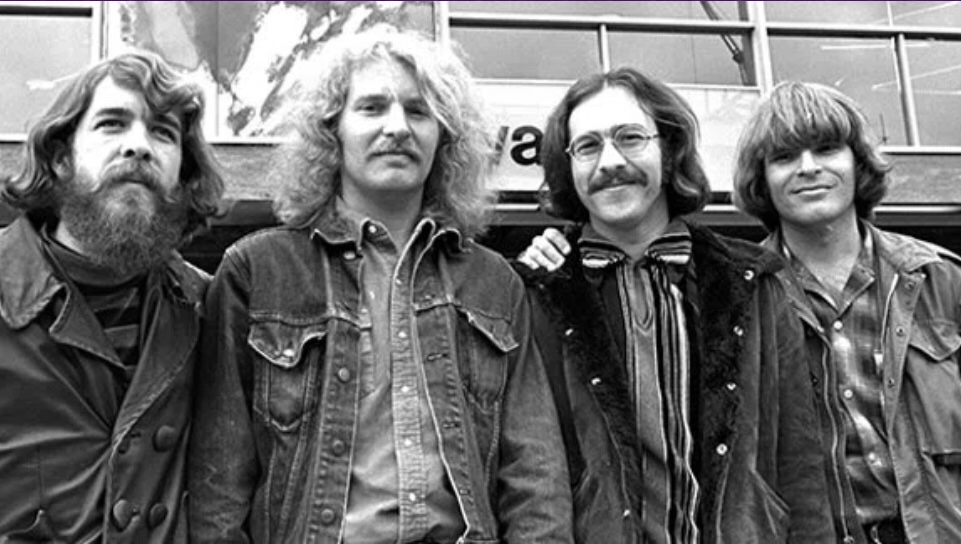
Fogerty, John (1945- ). Together with Doug Clifford, Stu Cook, and his brother Tom Fogerty, he founded the band Creedence Clearwater Revival, for which he was the lead singer, lead guitarist, and principal songwriter. “Greatest Hits” (https://youtu.be/ztanaIurqyA)

David Foster
Photo Credit: imbd.com

Foster, David (1949- ). He has won 16 Grammy Awards from 47 nominations. “Love Songs Collection” (https://youtu.be/AMHNLIhc06I) Favorite album

Stephen Foster
Photo credit: artistbios.nocapshows.com

Foster, Stephen (1826-1864). Known primarily for his parlour and minstrel music during the Romantic period. He wrote more than 200 songs. “Oh Susanna” (https://youtu.be/qSIj17xbAyk) (RQ 9)

Charles Fox
Photo Credit: infofamouspeople.com

Fox, Charles (1940- ). Pop musical backgrounds which accompanied every episode of the 1970s ABC-TV show Love, American Style; the theme song for the late 1970s ABC series The Love Boat; and the dramatic theme music to ABC’s Wide World of Sports and the original Monday Night Football; as well as the Grammy-winning hit song “Killing Me Softly” by Roberta Flack (https://youtu.be/DEbi_YjpA-Y)

Arthur Freed
Photo Credit: posterazzi.com

Freed, Arthur (1894-1973). He won the Academy Award for Best Picture twice, in 1951 for An American in Paris and in 1958 for Gigi. Both films were musicals. In addition, he produced and was also a co-lyricist for the now-iconic film: “Singing in the Rain” by Gene Kelly. (https://youtu.be/DMGqnJFUj3Q)

Glenn Frey
Photo credit: nightswithalicecooper

Frey, Glenn (1948-2016). Frey was the co-lead singer and frontman for the Eagles, roles he came to share with fellow member Don Henley, with whom he wrote most of the Eagles’ material. Henley joined Linda Ronstadt to sing backing vocals on her smash hit version of Roy Orbison’s “Blue Bayou,”“Greatest Hits” (https://youtu.be/-GO11WPbZWs)’

Rudolph Frimi
Photo Credit: britannica.com

Frimi, Rudolf (1879-1972). Composer Frimi was born in Prague, Czechoslovakia . While living in Czechoslovakia, he attended the Prague Conservatory and studied piano with composers Dvorak and Jiranek. His catalogue of over 40 songs included “Indian Love Call” (https://youtu.be/LZ_IwlEzE4M)

G’s:

Kenneth Gamble
Photo credit: soundhall.org

Gamble, Kenneth (1943- ). Together with Leon Huff, they are an American songwriting and production team credited for developing the Philadelphia soul music genre. “The Jokes on You” (https://youtu.be/r-wrTb2hY_Q)

Jerry Garcia
Photo Credit: iHeart.com

Garcia, Jerry (1942-1995). The lead guitarist and a vocalist with the rock band the Grateful Dead, of which he was a founding member and which came to prominence during the counterculture of the 1960s. His fans saw him as truly extraordinary. And he never really saw it himself or could feel it himself. He could only see its effect on other people, which baffled and dismayed him. See Post 46. “How Sweet it is to be Loved By You” (https://youtu.be/1_NOFuEb-yo)

Bob Gaudio
Photo credit: shutterstock.com

Gaudio, Bob (1942- ). A keyboardist and backing vocalist of the Four Seasons. “Sherry” (https://youtu.be/jMcWldfg28s

Marvin Gaye
Photo Credit: onthisday.com

Gaye, Marvin (1939-1984). See Posts 2, 41 and 54. At only 45 years old, during an argument with his father, he shot and killed Marvin. “I Heard It Through the Grapevine” (https://youtu.be/5ZnrZnFSlWU)

George Gershwin
Photo Credit: bellperc.com

Gershwin, George (1898-1937). Died at only 39 from a brain tumor. He recorded 41 albums including “Rhapsody in Blue”(https://youtu.be/eFHdRkeEnpM)

Ira Gershwin
Photo credit: jewornotjew.com

Gershwin, Ira (1896-1983). The first lyricist to be awarded a Pulitzer Prize — for OF THEE I SING in 1932. “Talks About His Brother George” (https://youtu.be/NLL4Hf8e8Jo)

Barry Gibb
Photo Credit: noise11.com

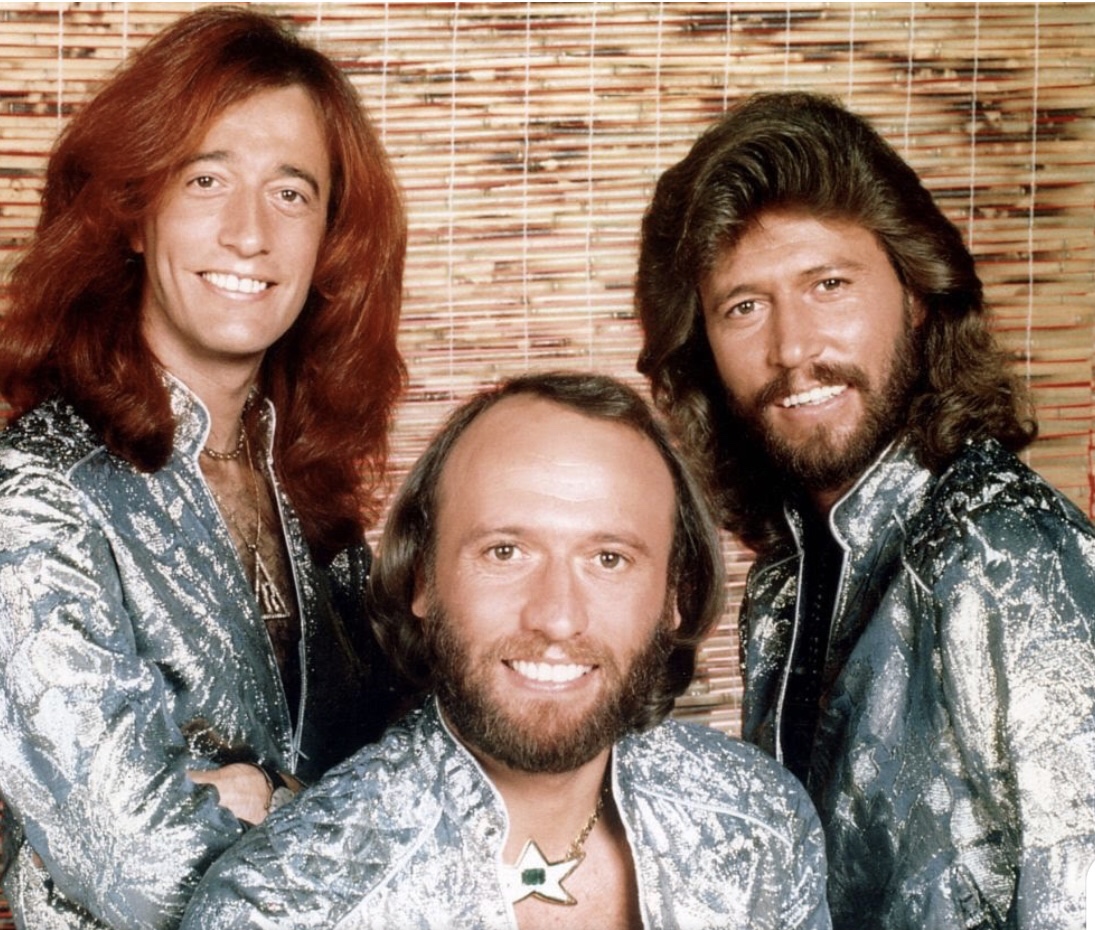
Gibb, Barry, Maurice & Robin (1946- ) Bee Gees. He has written or co-written sixteen Billboard Hot 100 number ones. Guinness World Records lists Gibb as the second most successful songwriter in history, behind Paul McCartney. “Stayin Alive” (https://youtu.be/fNFzfwLM72c).

Wolfe L. Gilbert
Photo credit: dignitymemorial.com

Gilbert, Wolfe L. (1886-1970). Wrote 27 songs between 1912-1931 including “Ramona” (https://youtu.be/C5iosYqbfWA)

Patrick Gilmore
Photo Credit: en.wikipedia.com

Gilmore, Patrick (1829-1892). While serving in the Union Army during the U.S. Civil War he wrote “When Johnny Comes Marching Home” (https://youtu.be/d9uarq2_hQ8)

Haven Gillespie
Photo Credit: songhall.org

Gillespie, Haven (1888-1975). “Santa Claus is Coming to Town” is one of the most popular Christmas songs ever written. But Gillespie was never enthusiastic about it. (https://youtu.be/wvF6UINQwUc)

Norman Gimbel
Photo credit: imdb.com

Gimbel, Norman (1927-2018). With his longtime writing collaborator Charles Fox, Gimbel’s lyrics to Flack’s “Killing Me Softly” (https://youtu.be/34bYLPNbHeU) (RQ 9) earned them the Song of the Year Grammy in 1973. The chart-topper was covered years later by the Fugees in a hip-hop version. In their 30-year partnership, Gimbel and Fox wrote more than 150 songs together, earning Oscar nominations for Olivia Newton-John’s “Richard’s Window” (from 1975’s The Other Side of the Mountain) and Barry Manilow’s “Ready to Take a Chance Again” (from 1978’s comedy Foul Play). “Epilogue” (https://youtu.be/-bqCfRoEa1w) Organ music.

Gerry Giffin
Photo Credit: soulbounce

Goffin, Gerry (1939-2014). Collaborating initially with his first wife, Carole King, he co-wrote many international pop hits of the early and mid-1960s, including the US No.1 hits “Will You Love Me Tomorrow”, “Take Good Care of My Baby”, “The Loco-Motion”, and “Go Away Little Girl”.“Masterpieces with Carole King” (https://youtu.be/B96mgv99xWI)

Mack Gordon
Photo credit: songhall.org

Gordon, Mack (1904-1959). He was nominated for the best original song Oscar nine times in 11 years, including five consecutive years between 1940 and 1944, and won the award once, for: “ You’ll Never Know” by Ralna English (https://youtu.be/FnuXaIVjkYA)

Graham Goldman
Photo Credit: flickr.com

Gouldman, Graham (1946- ). Best known as the co-lead singer and bassist of the art rock band 10cc. He has been the band’s only constant member since its formation in 1972. “Standing Next to Me” (https://youtu.be/KXRmv8zV7JE)

Lou Gramm
Photo credit: lyricstranslate.com

Gramm, Lou (1950- ) The lead singer of the rock band Foreigner from 1977 to 1990 and 1992 to 2003 during which time the band had numerous successful albums and singles including: “Just Between You and Me” (https://youtu.be/0W1lb9hj8ps)

Adolph Green
Photo Credit: imdb.com

Green, Adolph (1914-2002). With long-time collaborator Betty Comden, penned the screenplays and songs for some of the most beloved film musicals, particularly as part of Arthur Freed’s production unit at Metro Goldwyn Mayer. “I Said Good Morning” with Betty Comden (https://youtu.be/1ysxm9vHVL8)

Al Green
Photo Credit: kennedy-center.org

Green, Al – Albert Leornes Greene (1946- ). The music world was shocked on Oct. 18, 1974 when Al Green was doused with a boiling pot of grits by girlfriend Mary Woodson. Green was about to shower at his Memphis home when Woodson scalded him, causing third-degree burns on his back. See Post 41. “Greatest Hits” (https://youtu.be/csZV3w_nscg)

Bud Green
Photo credit: secondhandsongs.com

Green, Bud (1898-1981). He was commissioned by Hollywood during the 30’s and 40’s and Green songs can be heard in the Hollywood musicals Syncopation, Mother’s Boy, Lucky in Love, Big Boy, Show in Hollywood and Baby Take a Bow. “Moonlight on the River” with Lee Morse (https://youtu.be/cr5YTJHvh1w)

Johnny Green
Photo Credit: imdb.com

Green, Johnny (1908-1989). He was given the nickname “Beulah” by colleague Conrad Salinger. His most famous song was one of his earliest, “Body and Soul” (https://youtube.com/playlist?list=RD5D84aT7H6ys&playnext=1) from the revue Three’s a Crowd. “Montana” (https://youtu.be/cniuBrzDXMc)

Roger Greenaway
Photo credit: popularbio.com

Greenaway, Roger (1938- ). Best known for his collaborations with Roger Cook. His compositions have included “You’ve Got Your Troubles” and the transatlantic million selling songs “I’d Like to Teach the World to Sing” and “Long Cool Woman in a Black Dress” and “Gimmie Dat Ding” (https://youtu.be/fLN592NaSzw)

Howard Greenfield
Photo Credit: discogs.com

Greenfield, Howard (1936-1986). He is best known for his successful songwriting collaborations, including one with Neil Sedaka from the late 1950s to the mid-1970s. “Bewitched” (https://youtu.be/Pz9kZCC_M6w)

Greenwich, Ellie (1940-2009).She wrote or co-wrote “Da Doo Ron Ron”,

“Then He Kissed Me”, “Do Wah Diddy Diddy”, “Christmas”, “Hanky Panky”, “Chapel of Love”, “Leader of the Pack”, and “River Deep – Mountain High”, among others. “Be My Baby” (https://youtu.be/mSg-_6hU6_o).

Grofe, Ferdie (1970). “Grand Canyon Suite” (https://youtu.be/xc6oYN_2h6g) Hiking music

Gutherie, Woody (1970). See Post 18. “This Land is Your Land” (https://youtu.be/wxiMrvDbq3s)

H’s:

Haggard, Merle (2007). “Greatest Hits”(https://youtu.be/ERQK64zTA6k) Add to blog.

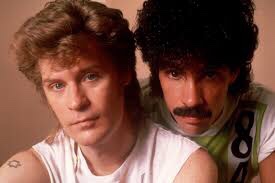
Hall, Daryl and John Oates (2004). “Someone Like You” (https://youtu.be/AI7rwDeaaX8)

Hall, Tom (2019). “Made in the USA” (https://youtu.be/iEiw4VhiCVQ)

Hamlisch, Marvin (1986). “What I Did for Love” with Idina Menzel (https://youtu.be/89byDuKcaSI)

Hammerstein, Oscar II (1970). “A Tribute” (https://youtu.be/3SxEhF16cCQ) Add to blog.

Hammond, Albert (2008). “The Air that I Breath” (1975). (https://youtu.be/qiL9vO8E6tE)

Handy, W.C. (1970). “The Handyman” with Peter Berrymam. (https://youtu.be/ds03Lf5Y6LE)

Hanley, James F. (1970). “Zing Went the Strings of My Heart” vocal: Lalit Worathepnitinan. (https://youtu.be/WbuxQMaAJBY)

Harbock, Otto (1970). “Smoke Gets in Your Eyes” with Madison Cunningham. (https://youtu.be/o3tftJav9x0)

Harburg, Yip (1972). “Somewhere Over the Rainbow” Judy Garland in Wizard of Oz. (https://youtu.be/PSZxmZmBfnU)

Harnick, Sheldon (1972). “An Evening With” (https://youtu.be/Aj_3tF8ua3U)

Harris, Charles K. (1970). “After the Ball” cello quintet. (https://youtu.be/AuWQHaDoG1w)

Hart, Lorenz (1970). “My Funny Valentine” with Richard Rogers. (https://youtu.be/iHC9b2uAGXs)

Hatch, Tony (2013). “Top Tracks” (https://youtu.be/jHPxxwYbENo)

Hayes, Issac (2005).  See Posts 3 and 41. “Walk on By” with the Bar-Kays. (https://youtu.be/iqR4CZj0mJQ)

Henderson, Ray (1970). “The Old Gang of Mine” Vaudeville piano.  (https://youtu.be/DFrPYG1Th1I)

Henley, Don (2000). Eagles. “All She Wants to do is Dance” (https://youtu.be/wFBHBSPvZbw)

Herbert, Victor (1970). “Serenade for Strings” Los Angeles Chamber Orchestra (https://youtu.be/myByu13LMUA)

Herman, Jerry (1982). “Broadway Kennedy Center tribute” (https://youtu.be/dUFXAn9fJvw)

Hernandez, Myriam (2015). “El Hombre Que Yo Amo” (https://youtu.be/1ddK89KqVe8)

Heusen, Jimmy (1971). “Jimmy Smith Plays” (https://youtu.be/j8lcnBq_vA4)

Heyman, Edward (1975). “When I Fall in Love” with Tayla Smilowitz (https://youtu.be/VdAUnR_9nI4)

Hill, Billy (1970). “Like This” (https://youtu.be/HaoSSeIM9WI) Rapper.

Hilliard, Bob (1983). “Alice in Wonderland” Andrea Walker cover. (https://youtu.be/yVrZOIlKl0M)

Hoffman, Al (1984). “Cinderella” cover: Bruna Fonseca. (https://youtu.be/AbrGTnqrT64)

Holland, Brian (1988). “I’m So Glad” (https://youtu.be/4RVcB76FOc4)

Holland, Eddie (1988). “Jamie” (https://youtu.be/CNz7zyUAWM4) Add to blog.

Holly, Buddy (1986).  See Post 41. “Greatest Hits” (https://youtu.be/uTDrMKjw2uc)

Howard, Harlan (1997). “Heartaches by the Number” (https://youtu.be/rQrl0psSau4) Add to Blog.

Howard, Joseph E. (1970). “Oh Gee” (https://youtu.be/CGab0_g9w54)

Howe, Julia Ward (1970). “Battle Hymm of the Republic” (https://youtu.be/lPbgTz9pCvM)

Huff, Leon (1995). “I Ain’t Jivin I’m Jammin” (https://youtu.be/W1KUO2LOvLg)

Hugo, Chad (2020) Neptunes. “Top 10 Beats” (https://youtu.be/j-Yn2lIyabo)

Hunter, Robert (2015) “Jack ‘O Roses” (https://youtu.be/uEoUNwPChig)

J’s:

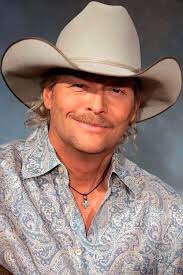
Jackson, Alan (2018). “Greatest Country Songs” (https://youtu.be/UrI_KKeIMTU)

Jackson, Michael (2002). See Posts 17, 18 and 41. “Billy Jean” (https://youtu.be/Zi_XLOBDo_Y)

Jacobs-Bond, Carrie (1970). “A Perfect Day” (https://youtu.be/vlnIphAJGxM)

Jagger, Mick (1993). The Rolling Stones. “Gimmie Shelter” (https://youtu.be/RbmS3tQJ7Os) Add to blog.

Jimmy Jam & Terry Lewis (2017).  “Greatest Hits” (https://youtu.be/Z_LRqVOEB8U)

James, Mark (2014). “Suspicious Minds” (https://youtu.be/r2Ip_3tdpBk)

Jay Z (2017). “The Story of O.J.” (https://youtu.be/RM7lw0Ovzq0)

Jenkins, Gordon (1982). “Night Dreams” (https://youtu.be/DkMjPohG7vM)

Jennings, Will (2006). “Texas Voices” (https://youtu.be/CzsG16-O2SM)

Jobim, Antonio (1991). “Wave” Cool easy listening. (https://youtu.be/a6KDpB6skA4)

Joel, Billy (1992). See Post 17. “Piano Man” (https://youtu.be/gxEPV4kolz0)

John, Elton (1992). See Posts 17 and 41. “Rocket Man” (https://youtu.be/DtVBCG6ThDk)

Johnson, Arthur (1970). “He’s Our God” (https://youtu.be/q5p5XwhtCjY)

Johnson, Howard (1970). “So Fine” (https://youtu.be/xwJZjbP4VXc)

Johnson, James P. (1970). ”Carolina Shout” (https://youtu.be/nSFGyipsNsg) Fox Trot piano.

Johnson, James Welden (1970). “Lift Every Voice & Sing” (https://youtu.be/Eo74Q3N9Cm8)

Jones, Isham (1970). “Farewell Blues” (https://youtu.be/K5tIwtl7IcY) 1922.

Jones, Mick (2013) Foreigner. “Rarities” (https://youtube.com/playlist?list=OLAK5uy_m9M6dh5Ped5-zK1jKxNqWEJB0m34agmr4) Add to Blog.

Jones, Tom (2012). See Posts 32 and 41. “She’s a Lady” (https://youtu.be/V43fGInXiLE)

Joplin, Scott (1970). “New Orleans Piano Rags” (https://youtu.be/r1yqBt-PkT4)

K’s:

Kaempfert, Bert (1993). “25 Golden Hits” (https://youtu.be/K_WwLYjwd78) Add to blog.

Kahal, Irving (1970). “I’ll Be Seeing You” Cover by Sarah Moyer on uke (https://youtu.be/n1n99W5BcW0)

Kahn, Gus (1970). “Yes Sir That’s My Baby” Lee Morse 1925. (https://youtu.be/LF8ZPIFj0VQ)

Kalmar, Bert (1970). “A Kiss to Build a Dream On” Cover by Petra Ernyeiova (https://youtu.be/2EtqkOVCQG0)

Kander, John (1983). “Chicago” Taiwan Soloists Symphony (https://youtu.be/KBx9U91KWOg)

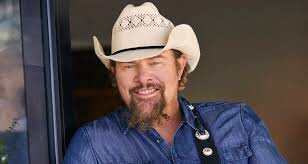
Keith, Toby (2015). “How Do You like Me Now” (https://youtu.be/3umaLe37-LE) Great country song.

Kelly, Tom (2011). “Alone” with Billy Steinberg (https://youtu.be/EXt8iTyX7JE)

Kennedy, Jimmy (1997). “Tell You Something” Instrumental. (https://youtu.be/bv3XpdsPDSo)

Kern, Jerome (1970). “Overture: Showboat” (https://youtu.be/hbrQzZDXfaA)

Key, Francis Scott (1970). “Star Spangled Banner” History and song. (https://youtu.be/YaxGNQE5ZLA)

King, Carole (1987). See Posts 36 and 41.  “Greatest Hits” (https://youtu.be/DcF4zYtMJxg)

Knight, Holly (2013). “Ten Best” (https://youtu.be/tqED_NN5o3Y)

Koehler, Ted (1972). “I’ve  Got a World On a String” with Harold Arlen. (https://youtu.be/_A-KxwYlEOg)

Kristofferson, Kris (1985). “Greatest Hits” (https://youtu.be/cW3zJbHnKEA) Add to blog.

L’s:

Lamm, Robert (2017) Chicago. “I Fall to Pieces” Featuring: Keith Howland (https://youtu.be/m5K7MRPPAkY)

Lane, Burton. (1972). “Finian’s Rainbow” (https://youtu.be/mfaz6vjNGEQ)

Lauper, Cyndi. (2015). “Girls Just Want to Have Fun” (https://youtu.be/PIb6AZdTr-A)

Lawrence, Jack (1975). “Eight More Miles to Louisville” Master flat picker guitarist. (https://youtu.be/WP6M4YA1zMg)

Lecuona, Ernesto (1997). “Rapidsodia Cubana”. (https://youtu.be/vXMt-I-6luA) Add to Blog: pianists.

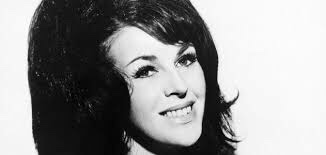
Lee, Peggy (1999). “Fever” (https://youtu.be/JGb5IweiYG8) One of the best songs ever. See Post 36.

Legrand, Michel (1990). “Paris Was Made for Lovers” (https://youtu.be/eIAJgTA_c-s)

Leiber, Jerry (1985). “Hound Dog” by Elvis Presley. (https://youtu.be/mbinW9clGnY)

Leigh, Carolyn (1985). “Greatest Hits” (https://youtu.be/sS7wxekj8go)

Lennon, John. (1987). “Imagine” with Plastic Ono Band. (https://youtu.be/YkgkThdzX-8) See Posts 38, 41 and 47.

Lennox, Annie (2020). Eurythmics. “Sweet Dreams” (https://youtu.be/qeMFqkcPYcg) One of the great songs.

Lerner, Alan Jay (1971). “My Fair Lady” (https://youtu.be/3a9sgfLZARs)

Lewis, Sam M.  (1970). “Just Friends” with John Klenner (https://youtu.be/GWXJe89pdmE) Classical finger picking.

Lightfoot, Gordon (2012). “If You Read My Mind”. (https://youtu.be/v5tr_L31StI) One of the best songs. Add to blog.

Livingston, Joy (1981). “Pride and Joy” (https://youtu.be/9VfYJSgH6sY)

Livingston, Jay (1977). “Tammy” by Debbie Reynolds (https://youtu.be/HgVPyW9U1sY). Add to blog.

Loesser, Frank (1970). “Baby Its Cold Outside” duet with wife Lynn Loesser (https://youtu.be/0pfvZo2gmm8)

Loewe, Frederick (1972). “Brigadoon” (https://youtu.be/BTHpFFm7RAY)

Lynn, Loretta (2008). “Everybody’s Somebody’s Fool” (https://youtu.be/BCu83KvIb7M) See Post 36.

M’s:

MacDermot, Galt (2009). “Leap of Faith” Current upbeat instrumental. (https://youtu.be/5wX-XD8gaSU)

MacDonald, Ballard (1970). “State Song of Ohio” (https://youtu.be/LL-HuATrKSE)

Madden, Edward (1970). “Can’t Get Used to Losing You” (https://youtu.be/uuKQQvuCxmo)

Magidson, Herb (1980). “Send in the Clowns” by Judy Collins (https://youtu.be/8L6KGuTr9TI)

Mancini, Henry (1984). “Greatest Hits” (https://youtu.be/HgAJD0eiqJ0) Add to blog.

Mandel, Johnny (2010). “Theme from M.A.S.H.”(https://youtu.be/cO329NOzU2M)

Manilow, Barry (2002). “Greatest Hits” (https://youtu.be/qK7UCPBywss)

Mann, Barry (1987). “Who Put the Bomp” (https://youtu.be/lXmsLe8t_gg)

Marks. Johnny (1981). “A Little Spot in Heaven” (https://youtu.be/3YOUwk8M7Vo)

Marley, Bob (2010). “The Best of the Wailers” See Post 41. (https://youtu.be/7IFZnyQhgfU)

Martin, Hugh (1983). “Have Yourself a Merry Little Christmas” (https://youtu.be/I6y1DL3rn78)

Martin, Max (2017). “Beats Journey” Style reminds me of an Oriental beat. (https://youtu.be/1TEuQDl9XDI)

Masser, Michael (2007) “Piano Covers” (https://youtu.be/slQQ1HaRhOI)

May, Brian (2003) Queen. “Best Solo Ever” (https://youtu.be/JYabmM-uxdE) See 46th Post.

Mayfield, Curtis (2000). See Posts 42 and 46. “Diamond in Black” (https://youtu.be/ZVANQheoRUw)

McCartney, Paul (1987). “Hey Jude” (https://youtu.be/tRnFHfI7WAQ) See Posts 12 and 41.

McHugh, Jimmy (1970). “I Don’t Want Everything” 1963. Add to Blog. (https://youtu.be/Bjp7bBGPHhw)

McKay, Al (2010). Earth, Wind & Fire “Isolated Guitar” (https://youtu.be/w0xLFbF3BsU)

McLean, Don (2004). “Castles in the Air” (https://youtu.be/TI9NjQK_xm8)

Mellencamp, John (2018). “Small Town” (https://youtu.be/0CVLVaBECuc)

Menken, Alan (2008). “Mirror Mirror” (https://youtu.be/E8-bMgDANEk)

Mercer, Johnny (1971). “Autumn Leaves” (https://youtu.be/i6e1-2yxQPs)

Mercury, Freddie (2003). Queen. “Bohemian Rhapsody” (https://youtu.be/fJ9rUzIMcZQ)

Merrill, Bob (1987). “Honeysuckle Rose” with Pearl Bailey (https://youtu.be/8vjCqjLw1mI)

Meyer, George W. (1970). “One Home” The Simpsons (https://youtu.be/GMPrduOUKhs)

Meyer, Joseph (1972). “California Here I Come” (https://youtu.be/ZEN0BBFBVYk)

Miller, Steve Band (2020). “The Joker” (https://youtu.be/dV3AziKTBUo) Super classic song.  Add to blog.

Mitchell, Joni (1997). “Big Yellow Taxi and Both Sides Now” (https://youtu.be/GFB-d-8_bvY) Makes playing the guitar while singing look easy. See Post 41.

Monaco, James V. (1970). “Ah Ha” Piano by Zez Confry.  Ragtime like. (https://youtu.be/Mhc5Wdee03U)

Moret, Neil (1970). “Peggy” (https://youtu.be/85IdQprMiwg)

Morrison, Van (2003).”Brown-Eyed Girl” (https://youtu.be/UfmkgQRmmeE) See Posts 31 and 41. Best all time song.

Morse, Theodore F. (1970). “Ragtime Buck Dance” (https://youtu.be/_sJGxl04LRY)

Moy, Sylvia (2006).  “My Cherie Amour” (https://youtu.be/O799e2Q1tqs)

Muir, Lewis (1970). “Play That Barbershop Chord” 1910 Ragtime (https://youtu.be/IK-_PHRoibg)

N’s:

Nash, Graham (2009). “Prison Song” (https://youtu.be/ukO2t_j–Kc) Add to blog.

Nelson, Willie (2001). “Always on My Mind” (https://youtu.be/R7f189Z0v0Y) See Posts 7, 38 and 41.

Nevin, Ethelbert (1970) “A Day in Venice” (https://youtu.be/dy-yXJD-opI)

Newly, Anthony (1989). “Why” (https://youtu.be/G8iFpJ7_xZA)

Newman, Randy (2002). “I Love L.A.” (https://youtu.be/KcADqxnQA_4)

Noble, Ray (1996). “Try a Little Tenderness” (https://youtu.be/iXF-HRP1KBI). 1932.

Nowels, Rick (2020). “West Coast” with Lana delRey (https://youtu.be/7BYTTRLsTyE)

Nyro, Laura (2010). “Stoned Soul Picnic” (https://youtu.be/N1CfSgsvqJE) See Post 36.

O’s:

Oates, John (2004). “Maneater” (https://youtu.be/0yB0sS7w7SE) Add to Guitarist Post.

Olcott, Chauncey (1970) “My Wild Irish Rose” (https://youtu.be/KqaVX3UReG0)

Orbison, Roy (1989). “Only the Lonely” (https://youtu.be/kjq4wYuwgxs) See Posts 8 and 41.

P’s:

Pankow, James (2017). “Trombone Jazz Solo” (https://youtu.be/n2wNI5UvHLo) Chicago.

Parish, Mitchell (1972). “Stardust” by Doris Day. (https://youtu.be/lYa2IkEzKh4)

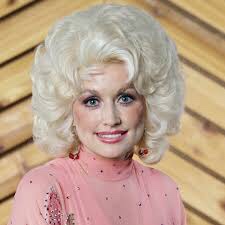
Pardon, Dolly (2001). “Jolene” (https://youtube.com/playlist?list=RDL0eeSoU35wM&playnext=1). See Post 38.

Payne, John Howard (1970). “Home Sweet Home” (https://youtu.be/ue_OjlP0wQo)

Perry, Joe (2013) Aerosmith. “Crazy Guitar Solo” (https://youtu.be/jo6-wRbZnmI) Add to Guitarist in Blog.

Perry, Linda (2015). “What’s Up” (https://youtu.be/Hdc9tmH7310)

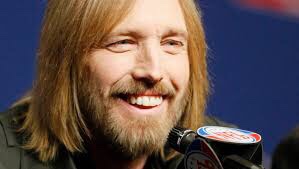
Petty, Tom (2016) “You Don’t Know How It Feels” (https://youtu.be/9TlBTPITo1I) See Post 41.

Piermont, James (1970). “One Horse Open Sleigh” 1857 sung by the Robert DeCormier Singers (https://youtu.be/O_g0OTuwduQ)

Pinkard, Maceo (1984). “Sugar” 1897 sung by Ethel Waters (https://youtu.be/S16cP4F1Wno)

Pollack, Lew (1970). “That’s A Plenty” 1914 (https://youtu.be/9HfPJWng4s0) Ragtime piano.

Pomus, Mort (1992). “Little Sister” with Mort Schuman – Rock & Roll. (https://youtu.be/-I38-iUIMwM)

Porter, Cole (1970). “What Is This Thing Called Love “ 1929 with Leslie Hutchinson (https://youtu.be/RCmn61kOVoQ)

Porter, David (2005). “The Masquerade is Over”. R&B. (https://youtu.be/rTpR1tQ4cGE)

Prine, John (2019). “In Spite of Ourselves” with Iris DeMent. Twangy voices duet. (https://youtu.be/P8tTwXv4glY)

R’s:

Rado, James (2009).  “Hair – One Thousand Year Old Man” (https://youtu.be/ZZNdH8mL9YA)

Ragni, Gerome (2009). “Easy to Be Hard” with Maria Wirries (https://youtu.be/dtQ-SZ5eZGw)

Rainger, Ralph (1970). “June in January” sung by Kitty Carlisle. 1936. (https://youtu.be/mNIsm6Ic7Sk)

Randazzo, Teddy (2007).  “Teenage Senorita” (https://youtu.be/pg1Iabf_IfM) Add to blog.

Raye, Don (1985). “Standing in the Rain” (https://youtu.be/pNVNn46YeY0)

Razaf, Andy (1972).”In the Mood” 1940. (https://youtu.be/Tg0eQfijMMc)

Redding, Otis (1994). “Sittin on the Dock of the Bay” (https://youtu.be/rTVjnBo96Ug) See Post 41.

Rehbein, Herb (1993). “Malaysian Melody” (https://youtu.be/6ysF4BpHnJk)

Revel, Harry (1970). “Don’t Make a Fool Out of Me” (https://youtu.be/eBPOvSiCjB8)

Rexford, Ebon E. (1970). “On My Way” (https://youtu.be/vd51LvYrW_Q)

Rice, Tim (1999). “Circle of Life” by U.S. Navy Band (https://youtu.be/hlfTP7wYVzs)

Richard, Little (2003). “Lucille” 1957. (https://youtu.be/u0Ujb6lJ_mM) See Posts 36 and 41.

Richards, Keith (1993). The Rolling Stones. “Best Guitar Solo ever” (https://youtu.be/oZUp1gUQLyg) See Post 46.

Richie, Lionel (1994). “All Night Long” (https://youtu.be/nqAvFx3NxUM) Add to blog.

Robin, Leo (1972). “Blue Hawaii” by Haunani Kahalewai (https://youtu.be/eA1mqLWAQ54)

Robinson, Smokey (1990). “Being with You” (https://youtu.be/0P2a6aLDkkM) See Posts 11 and 41.

Rodgers, Jimmie (1970). “Train Whistle Blues” 1928. (https://youtu.be/J6KjvAC8l38)

Rodgers, Nile (2016). “Everybody Dance” with Chic. (https://youtu.be/7Jpc0E3ubug)

Rodgers, Richard (1970). “My Funny Valentine” with Judy Blazer. (https://youtu.be/iHC9b2uAGXs)

Romberg, Sigmund (1970). “Romance” sung by Doretta Morrow. (https://youtu.be/fS_UhW8Rzhc)

Rome, Harold (1982). “Fanny” by William Tabbert (https://youtu.be/aNAHywGXG_s)

Root, George F. (1970). “Battle Cry of Freedom” 1862. (https://youtu.be/l352d002di0)

Rose, Billy (1970). “Me and My Shadow” by Whispering Jack Smith. 1927. (https://youtu.be/RftR-G-c6XM)

Rose, Fred (1985). “Blue Eyes Crying in the Rain”  Willie Nelson cover. (https://youtu.be/JA644rSZX1A)

Rose, Vincent (1970). “All Night” (https://youtu.be/n2GU21sIRec)

Ross, Jerry (1982). “Everybody’s Trying to be my Baby” (https://youtu.be/ffX69XUEwkk)

Ruby, Harry (1970). “Thinking of You” with Bert Kalmar. Symphonic instramental. (https://youtu.be/Pi-FYhzVEtI)

Russell, Bobby (1970). Saturday Morning Confusion” (https://youtu.be/S3ZqjvfirtU)

Russell, Leon (2011). “Tightrope”. Pianist. (https://youtu.be/Qvep3Vsv_uQ) See Post 19.

S’s:

Sambora, Richie (2009). “I’ll Be There for You” (https://youtu.be/UyurkgEW0HM) Bon Jovi.

Schiltz, Don (2012). “The Gambler” (https://youtu.be/cO4C4To56kc)

Schmidt, Harvey (2012). “Try to Remember” on piano. (https://youtu.be/GoAgFMx2O8c)

Schwartz, Arthur (1972). “Dancing in the Dark” (https://youtu.be/4vPm8Ztp06Y)

Schwartz, Jean (1970). “Radium Dance” 1904. Piano. (https://youtu.be/Cvn3Kr15azg)

Schwartz, Stephen (2009). “Alive” with Krewella – robodic sound. (https://youtu.be/7x-F-hH6nyk)

Sebastian, John (2008). Lovin Spoonful. “Younger Generation” at Woodstock in 1969. (https://youtu.be/XnsB4Ck__OE) Add to blog.

Sedaka, Neil (1983). “Calendar Girl” 1961. (https://youtu.be/qUlOyj9F5gM) See Posts 36 and 41.

Seeger, Pete (1972). “Turn, Turn, Turn” with Judy Collins. (https://youtu.be/n0xzyhoeu1Y) See Post 18.

Seger, Bob (2012).  “Night Moves” (https://youtu.be/_mRFWQoXq4c) Add to blog.

Sherman, Robert (2005). “Hushabye Mountain” by New Zealand Chorus (https://youtu.be/e61i2Vg37I4)

Shuman, Mort (1992). “Un été de porcelaine” (https://youtu.be/64GLj8yz6R0)

Sigman, Carl (1972). “Love Story” with Lai Fracis. Piano. (https://youtu.be/puRfNTmIXB0)

Simon, Carly. (1994) “Coming Around Again” (https://youtu.be/c0A7jAVDPJU) Add to blog.

Simon, Paul (1972). “You Can Call Me Al” (https://youtu.be/uq-gYOrU8bA). See Post 41.

Simpson, Valerie (2002). “Ain’t No Mountain High Enough” (https://youtu.be/2Pf6ru9vfVI)

Skylar, Sunny (2010). “Park Your Pistols at the Box Office” 1948. (https://youtu.be/D1Ioa3OWA-g)

Smith, Harry (1970). “Fatinitza” 1861. (https://youtu.be/pdceSJu0mnU)

Smith, Samuel Francis (1970). “America – My Country Tis of Thee” (https://youtu.be/gsGI1qJQV0o)

Snyder, Ted (1970). “The Sheik of Araby” 1921. Piano. (https://youtu.be/38KZroWx1ag)

Sondheim, Stephen (1975) “Top Ten Musicals” including “Sweeney Todd” (https://youtu.be/aXRivxyJhnU)

Sousa, John Philip (1970). “The Stars and Stripes Forever” United States Marine Band. 1896. (https://youtu.be/a-7XWhyvIpE)

Souther, J. D. (2013).  “You’re Only Lonely”. Pop song. (https://youtu.be/quglprlSQ8k)

Spector, Phil (1997). “Wall of Sound” “Da Doo Run Run” (https://youtu.be/LRmRBrnQq8o) See Post 41.

Springsteen, Bruce (1999). “Dancing in the Dark” (https://youtu.be/129kuDCQtHs) See Post 41.

Steinberg, Billy (2011). “Like a Virgin” for Madonna (Also: True Colors for Cyndi Lauper, etc.) (https://youtu.be/wf1MRb6PvQM)

Steiner, Max (1995). “Casablanca” (https://youtu.be/JsjPVNJlk_I) 1942.

Steinman, Jim (2012). With Bonnie Tyler “Total Eclipse of the Heart” (https://youtu.be/owv_cL3bTDU)

Sterling, Andrew B. (1970).  “Meet Me in St. Louis” 1904. (https://youtu.be/P_mAqa1PpYg)

Stevens, Cat (Yusuf) (2019). “Father and Son” (https://youtu.be/P6zaCV4niKk) One of the best ever songs. Add to blog.

Stevenson, William “Mickey.” (2020). “Dancing in the Streets” for Martha and the Vandellas and many other Motown recordings. (https://youtu.be/CdvITn5cAVc) Add to blog.

Stewart, David A. (2020).  Eurythmics. “Lily Was Here” with Candy Dulfer on sax. (https://youtu.be/86BmSaXZMHw)

Stillman, Al (1982). “Keep Movin On” (https://youtu.be/6Sh_1YjABAg)

Stills, Stephen (2009). “Love the One You’re With” (https://youtu.be/HH3ruuml-R4) See Post 46.

Sting.  (2002).  Gordon Sumner. “Shape of My Heart” (https://youtu.be/NlwIDxCjL-8)

Stock, Larry (1988). “Blueberry Hill” for Fats Domino. 1957. (https://youtu.be/bQQCPrwKzdo) Add to blog.

Stoller, Mike (1985). “Hound Dog” with Jerry Lieber for Elvis Presley. (https://youtu.be/mbinW9clGnY)

Stone, Jessie. (2010). “Night Passage movie” (https://youtu.be/xATPM2HqSHI)

Strayhorn, Billie (1984). “Lush Life” (https://youtu.be/Znf6DYfaLpM)

Strong, Barrett (2004). “Money” (https://youtu.be/yeVx1C73o8k)

Strouse, Charles (1985). “Tomorrow” with Julia Murney (https://youtu.be/IxX1r9uzOGo)

Styne, Jule (1972). “Time After Time” classical guitar solo. (https://youtu.be/Q5PdkRLssbk)

T’s:

Taupin, Bernie (1992). “Tribe” (https://youtu.be/5cA1Cth_FS8)

Taylor, J.T. James (2018). Kool & The Gang. “Ladies of Soul” (https://youtu.be/ceXcCWXDSB0)

Taylor, Roger (2003). Queen. “Somebody to Love” (https://youtu.be/CLZA575USmc)

Tempchin, Jack (2019). “Slow Dancing” with Rita Coolidge. (https://youtu.be/hB8HNj_MoKU)

The Isley Brothers (2020). “For the Love of You” (https://youtu.be/23W3wqAvsLg) See Post 36.

Tierney, Harry (1979). “Black Canary Rag (piano)” 1911. (https://youtu.be/zbPr0qoxdRI)

Tobias, Charles (1970). “Prusser’s Painkiller” (https://youtu.be/iTowbOom2KQ)

Tobias, Harry (1970). “Sweet and Lovely” with Welk Orchestra (https://youtu.be/Ft_KVv-aZRI)

Toussaint, Allen (2011). “Southern Nights” (https://youtu.be/3lY8kmocAjE) Add to blog.

Turk, Roy (1970). “Are You Lonesome Tonight” with Lou Handman. (https://youtu.be/cW5sipSfNno)

Tyler, Steven (2013). Aerosmith. “Dream On” (https://youtu.be/YONpMf_TKLU)

V’s:

VanAlstyne, Egbert (1970). “Memories” with Al Jolston.  (https://youtu.be/3CAKtchltAs)

VonTilzer, Harry (1970). “Ragtime Cake Walk” 1898. (https://youtu.be/OVqp-tAYQ78)

W’s:

Waller, Fats (1970). “The Joint is Jumping” (https://youtu.be/LKe6yH3ZwGo)

Ward, Samuel A. (1970). “America the Beautiful” (https://youtu.be/msK6MpnPF5o)

Warren, Diane (2001). “How Do I Live” duet with LeAnn Rimes and Due Voci. (https://youtu.be/3I2CBA6NQ1E)

Warwick, Dionne. “I Say a Little Prayer” (https://youtu.be/kafVkPxjLYg)

Washington, Ned (1972). “High Noon Theme” with Dimitri Tiomkin. (https://youtu.be/QJSO2JTcnfo)

Wayne, Mabel (1972). “Ramona” (https://youtu.be/C5iosYqbfWA)

Weatherly, Jim (2014). “Midnight Plane to Houston” (https://youtu.be/J3_JQr6RqWs)

Webb, Jimmy (1986). “MacArthur Park” (https://youtu.be/73v1RqRPKGk)

Webber, Andrew Lloyd (1995). “Think of Me” by Emmy Rossum in Phantom of the Opera. (https://youtu.be/XfTgCPUJwRk) Add to blog.

Webster, Paul (1972). “Time” techno beat. (https://youtu.be/V5pcFujHNuc)

Weil, Cynthia (1987). “Never Gonna to Let You Go” with Barry Mann. Sung by Sergio Mendes. (https://youtu.be/fmTDERxQUm0)

Weill, Kurt (1970). “Pirate Jenny” sung by Lotte Kenya. (https://youtu.be/oZecKsm0Mfw)

Weinstein, Bobby (2007). “Going Out of My Head” by Little Anthony & The Imperials (https://youtu.be/v3j9bAVqt3c)

Weiss, George (1984). “The Lion Sleeps Tonight” by Dagilelis Boys Choir. (https://youtu.be/HOIzRdDo_3I)

Wenrich, Percy (1970). “Peaches and Cream “ 1905 ragtime piano. (https://youtu.be/KaqUW__5IPs)

White, Maurice (2010). “I Need You” (https://youtu.be/bWb6MJ_lTPw) Earth, Wind & Fire.

White, Verdine (2010). “September” bass guitar player. (https://youtu.be/U-a09ZkSfi4) Earth, Wind & Fire.

Whitfield, Norman (2004). “Smiling Faces Sometimes” by the T(https://youtu.be/m7g3pLtgkK0)

Whiting, Richard A. (1979). “Till We Meet Again” (https://youtu.be/B82Y7lkxD2g)

Wilder, Alec (1983). “Serenade for the Winds” Kammerwerke Double Wind Quartet (https://youtu.be/3qM4ZmWy9o8)

Williams, Hank (1970). “Greatest Hits” (https://youtu.be/DAa2C9vqnM8) See Posts 18, 38 and 41.

Williams, Paul (2001). “For Once in My Life”. One of the best songs. (https://youtu.be/5DN3FRUPLh0)

Williams, Pharrell (2020).  The Neptunes. “Happy” (https://youtu.be/ZbZSe6N_BXs)

Williams, Spencer (1970). “Tishomingo Blues” piano 1917. (https://youtu.be/7E2SnhTSLbE)

Willis, Allee (2018). “Childstar” 1974. (https://youtu.be/pMxvVsIMstQ)

Willson, Meredith (1982). The Music Man. (https://youtu.be/PD3ypmrTSRg)

Wilson, Brian (2000). The Beach Boys.  “Wouldn’t It Be Nice” Duet with Elton John. (https://youtu.be/L5N1B-gESSQ). Add to blog.

Winner, Septimus (1970). “Gentleman’s Bloomer Waltz” Piano. (https://youtu.be/-jL6wNb4JpA

Withers, Bill (2005). “Ain’t No Sunshine” (https://youtu.be/CICIOJqEb5c) Add to blog.

Wonder, Stevie (1983). “Superstition” (https://youtu.be/0CFuCYNx-1g) See Post 41.

Woods, Harry M. (1970). “What a Little Moonlight Can Do” by the Hot Sugar Band, singer Nicolle Rochelle (https://youtu.be/W1CqMLW7Zqg)

Work, Henry Clay (1970). “Crossing the Grand Sierras” by the Fourth Coast Ensemble (https://youtu.be/bMKQVBFHoTs)

Wrubel, Allie (1970). “Gone with the Wind” Loek Hagen guitar solo. (https://youtu.be/QbVGETzb0jU)

Y’s:

Yellen, Jack (1972). “Happy Days Are Here Again” 1929. (https://youtu.be/J7Oukhkdg0U)

Youmans, Vincent (1970). “Without a Song” by the Chicago Chamber Choir. 1929. (https://youtu.be/eKspZz_FVWM)

NYU Steinhardt Songwriting Scholar Awards

Established in 2011, the NYU Steinhardt Songwriting Scholar Award is presented to a music composition student whose work holds great potential for success in the field, and embodies the art, craft, individuality and qualities of communication of the best songwriting. To date thirteen young songwriters have been recognized:

Julia Shuren – 2021
Photo credit: songhall.org

Just a few years into her musical journey, Julia Shuren has already made quite a mark. As a singer, songwriter, and pianist, she: caught the attention of legendary Motown arranger/songwriter Paul Riser, and developed a mentorship; has been featured on PBS Television and CBC News for songwriting achievements; wrote instrumental compositions for iHeart Media podcast “Hitman” which reached #1 on Apple Podcasts; was chosen to attend the Buddy Holly Songwriting Retreat in Lubbock Texas; and accompanied GRAMMY® Award-winning artist Alessia Cara on piano. Julia’s musical instincts kicked in at the age of seven, learning to play the piano by ear, and composing instrumental jazz. Growing up she was heavily involved in competitive sports, and songwriting came into play only about three years ago. As a business major at Rollins College, she took a songwriting class as an elective and from there everything clicked. With a limited background in music theory, she attended the Detroit Institute of Music Education for two years, and from there she decided to take her education further. Attending NYU Steinhardt for a Master’s in Music Theory & Composition is a dream come true for her. Her musical inspiration covers a diverse range, including, Stevie Wonder, Kirk Franklin, and Joni Mitchell to name a few. As a firm believer in breaking the boundaries of musical genres, she proves to do exactly that in her unique cross-genre blend. Her layered background vocal arrangements, complex chord progressions, and soaring melodies, immerse you in the raw emotion and authenticity of her art. Currently, Julia is working on her debut EP which will be released in the summer of 2021. She is regularly co-writing and toplining with other artists and producers, and has teamed up with Italian producer duo “WAMI” for multiple upcoming projects. A recent recording: “Life is Good:(https://youtu.be/t9lW2nrm_Qg) (RQ 7). “The creative process entails a great deal of rawness, authenticity and just pure freedom…from there everything else becomes second nature. For my next project, I’m about to go beyond all boundaries musically and lyrically, I can’t wait for the world to hear what’s coming next…”

David Mercado – 2021
Photo credit: songhall.org

David Mercado is a native of the Bronx, NYC. He is an alumnus of Nyack College, where he earned his Bachelor of Arts in Music Composition. An accomplished vocalist, David has had the opportunity to perform at Carnegie Hall, Alice Tully Hall, and, internationally, in Brazil, London, Germany, and Italy. A recent recording: “Reckless Love”(https://youtu.be/DHs69s6nOCg) (RQ 9). Currently, he is a candidate for the Master’s in Music in NYU Steinhardt’s Songwriting program and the Music Director at Hope Hill Church and Cross Roads Christian Team in NYC. He hopes to soon start a Christian label and to continue to perform his music around the world.

Nono Chen – 2020
Photo credit: songhall.org

Nono Chen, the 2020 NYU Songwriting Scholar, is a Chinese singer-songwriter, producer, media composer, arranger, and pianist based in New York City. Nono began playing piano at the age of four and was trained in classical composition at Shanghai Music Middle School. She completed her Bachelor’s degree in Contemporary Writing and Production at the Berklee College of Music in 2017. During her time at Berklee, she was selected as an arranger for several large-scale shows, among them, the Singers’ Showcase and the Commencement Concert. In 2019, she was admitted to NYU Steinhardt’s Master’s program in Songwriting, where her teachers include Phil Galdston, Barry Eastmond, Dana Calitri, David Wolfert, and David Swagg R’Celious Harris. Nono started her stylistic expansion and sonic exploration under the influence of such artists as Jacob Collier, Bruno Mars, and Dua Lipa. Her husky voice soars over a remarkable variety of genres and styles and her innovative and unpredictable musical moves take her audience on an exciting and unique journey. On her latest single, “School of Losers,”(https://youtu.be/zpjHcga2Cx0) (RQ 9). Nono surprised her fans by employing Latin rhythms and harmony. She’s in the process of shooting and producing a one-woman music video for her upcoming single, “Would You Read My Mind.” She performs live at various New York City venues, including Pianos, The West End Lounge, and Pete’s Candy Store. Nono was named a Mentee in the 2019 Society of Composers & Lyricists’ Mentor Program. She was the recipient of the 2018 American Society of Music Arrangers and Composers’ Ray and Jon Charles Scholarship for Vocal Arranging, the 2019 Berklee Contemporary Writing and Production Achievement Award, and NYU’s 2019-20 Paul Simon Scholarship.

Pance Pony – 2019
Photo credit: songhall.org

Pance Pony is a songwriter, producer, music publisher, and teacher. Before enrolling in the NYU Steinhardt Master’s degree Program in Songwriting, Pance Pony was the Director of Recording Studies at Williamsburg Charter High School in Brooklyn. There, she founded Wolverine Studios, an independent record label run by students, and the first label to operate out of a public high school. She was winner of the 2017 Global Music Awards for best songwriter. She addressed the 2017 NYU International IMPACT Conference, discussing her innovative work in music education. She was also the cellist for NBC-TV’s weekly musical drama, “Rise.” While studying at NYU, Pance is continuing her songwriting and production work, completing a children’s album, and working as comedy songwriter and sound engineer for “Views from NYU,” the student talk show at NYU Tisch. She also launched Pance Sounds, a music publishing LLC, through which she has released several of her own works and those of her peers. She is continuing her educational pursuits as a teacher at the Blue Balloon Songwriting School. Two of her recent recordings: “Cello Reel” (https://youtu.be/kTUr_OzhB5I) (RQ 8) and “Bloodthirsty” (https://youtu.be/_OSvx5BWCDE) (RQ 10).

Alexandra James – 2019
Photo credit: songhall.org

Blending neo-soul and R&B, 24 year-old New York City vocalist and songwriter Alexandra James offers a fresh take on pop music, influenced by the jazz tradition. James attended the New England Conservatory of Music in Boston, where she earned her Bachelor’s in Jazz Performance. Her original music is raw and personal, currently being honed through New York University’s graduate Program in Songwriting. James is an engaging lyricist with a compelling voice, unafraid to take on bold, sometimes controversial subject matter, which she presents with strength and self-assuredness. She delivers her thought-provoking lyrics with a resonant voice rooted in honest emotion. Raised by a single mother, James’ emphasis on the strength in and of femininity and independence within womanhood reflect an authenticity based in experience. This boldness and conviction can be heard in the recently released “Ascension,” (https://youtu.be/TBl68Up79Z8) (RQ 10 her debut EP. Comprised of seven tracks ranging from a Gospel-influenced acapella piece about exploring the thin line of battling or befriending inner-demons to a victorious neo-soul anthem of self-love. Though her music reflects a multitude of genres, themes, and influences, one thing is clear: James is a tenacious and spirited artist on the rise, whose voice is only growing louder and clearer.

Oskari Nurminen – 2018
Photo credit: song

Oskari Nurminen, the 2018 NYU Songwriting Scholar, is a songwriter, guitar player, and aspiring producer from Helsinki, Finland. His sound is deeply rooted in the classic and timeless melodies of singer-songwriters like James Taylor, but he also never shies away from exploring new musical frontiers through collaboration. Raised in Munich, Germany, Oskari played guitar, drums, bass, and sang in bands throughout his teenage years. But it wasn’t until a trip to Nashville, Tennessee, in 2010, that he fell in love with the craft of songwriting. He hasn’t stopped pursuing that love since. Oskari received a Bachelor of Arts in Musicology from Humboldt University of Berlin, Germany, in 2015. During his undergraduate career, he was also very fortunate to be able to spend a year as an exchange student at UCLA’s Herb Alpert School of Music. Oskari has worked in artist management for one of the biggest pop stars in his home country, overseen record releases as a product manager at a boutique indie label, and he had the opportunity to co-write two tracks for an album by Finnish 90s pop icon, Mika Ikonen. However, his hunger for knowledge drew him back to school, and in 2017, he started in NYU Steinhardt’s unique graduate program in Songwriting. Without a doubt, Oskari is eager to see what this new chapter has in store for him. Recently, he was a semi-finalist at the Unsigned Only music competition (“Why You Should Enter – https://youtu.be/Zr5rELbcDaY) and a finalist in the best male artist category at the International Acoustic Music Awards. He continues to hone his craft one song at a time and he is looking forward to shaping the future of popular music, while constantly trying to share his knowledge with new generations of music creators.

Lauren Scales – 2017
Photo credit: songhall.org

Lauren Scales, a candidate for the Masters of Music in Songwriting, has been named the 2017 NYU Songwriting Scholar. A Detroit native, Lauren is the daughter of internationally-acclaimed jazz artists Charles and Gwen Scales. She began playing piano at 4. By 12, she was singing with the celebrated Mosaic Youth Theatre. By high school she was a featured soloist with the respected Renaissance High School Jazz band and began to sing professionally with her parents. She earned a Bachelor’s of Musical Arts in Jazz Studies from the University of Michigan, where she studied with such giants as Robert Hurst, Marian Hayden, Geri Allen, Ellen Rowe, Benny Greene, Sunny Wilkinson, Dennis Wilson, and Vincent Chandler. Lauren claimed Second Runner Up in NJPAC’s 2016 Sarah Vaughan International Jazz Vocal Competition, judged by jazz icons like Christian McBride and Dianne Reeves. She received national recognition for her compositions during the Kennedy Center’s 2016 Betty Carter Jazz Ahead program. A recent recording: “Love Will Survive” (https://youtu.be/aiLwwsZwuYU) (RQ 7). Lauren’s aim is “To create a song that is all at once uplifting, poetic and emotionally honest, and that is accessible across genres and generations,” an aim reflected in writing that crosses musical boundaries, creating a distinct voice from a flurry of influences from all over the musical spectrum.

Nils Becker – 2016
Photo credit: songhall.org

Nils Becker, the 2016 NYU Steinhardt Songwriting Scholar, is a songwriter, guitar player, and producer based in Brooklyn, New York. Born in Germany, his early musical influences included English-speaking songwriters, like Bob Dylan and Mark Knopfler. After playing in several pop and rock combos in his teenage years, Nils moved on to pursue a degree in Jazz Guitar at The Nuremberg University of Music. While composing and arranging for and performing with jazz bands in Germany, he rediscovered his affinity for songwriting. He began writing songs for himself and, eventually, co-produced his first solo EP. Because of the influence of American music on his songwriting, he felt the need to further develop his ability to truly capture American culture in song. He moved to New York to join the unique graduate songwriting program at NYU Steinhardt’s Department of Music and Performing Arts. He is studying with renowned professionals, like Barry Eastmond and GRAMMY®-nominee Phil Galdston, and has had the opportunity to work with outstanding professionals, like Shelly Peiken and Rosanne Cash. At New York University, Nils is leading the new founded Songwriting Circle, a group created for songwriters to share ideas and experiences and support and assist collaboration. While exploring different genres, collaborating with other writers, and writing for other artists, Nils remains committed to the music that he loves the most: pop-rock, country, and folk. With that in mind, he will spent the summer of 2016 in Nashville, Tennessee. A recent recording: “Masterpiece-IndieVibes” (https://youtu.be/shIJ9fRHhaQ) (RQ 10).

Shan Gao 2015
Photo credit: songhall.org

Shan Gao is an award-winning singer-songwriter and recording artist. Her songs and recordings have been featured in the hit Chinese TV series Boss & Me and You Are My Sunshine. Released in January 2015, her songs “To April” and “The Road Not Taken,” both of which appear in You Are My Sunshine, have hit number one on most of China’s major music charts, including QQ Music, Kugou Music, Weibo Music, Xiami Cheng Live, Netease Original Music, and Baidu Original Music. “To April” was the weekly champion on the Mainland China charts and remained in the top 10 for more than a month following its release. The TV series has already received more than six billion hits online. Shan’s work was named the pop single of the year honor by the Abilu Music Awards, Sina Music, and Xiami Music. In 2013, her music video School Phobia became the hottest topic in Weibo and attracted more than six million visits within a week after its release. She has been recognized by the Chinese Mengniu Billboard Music Awards, appeared on magazine covers, and been featured in numerous publications. Shan is a graduate of Peking University, China’s most prestigious institution of higher learning. In 2014, Shan was accepted by Songwriting Master’s degree program at New York University’s Steinhardt School, one the first such courses of study in the world. At NYU, Shan is writing in a far wider range of genres, developing her English lyricizing, experimenting with new technologies and collaborators, and studying with a faculty that includes Rosanne Cash, Barry Eastmond, Glenn Frey, and Phil Galdston. A recent recording: “Roll the Dice” (https://youtube.com/playlist?list=RDEMs8_RCrFpp-dlq8CRkkGQwg&playnext=1) (RQ 9).

Monica Cialona – 2014
Photo credit: songhall.org

Monica Cialona is a Singer-Songwriter, Composer, and Producer based in New York. She was born to Italian-Africans parents and grew up in Milan, Italy. At the age of 6, she approached singing as a game when she took part in a televised singing competition for children. On her 9th birthday her parents enrolled her in classical piano lessons; that was the best gift she could have received, because from that moment she completely fell in love with music. Her approach to singing was derived largely from listening to great artists like Whitney Houston, Mariah Carey, and Celine Dion, whose songs she used to sing at the top of her voice when nobody was home. With time she realized that her voice was her main instrument and that she had stories to tell with it. She simply woke up one morning and realized that she wanted to sing. At 12 she started taking voice lessons and began putting in major effort toward fulfilling her dream. Monica began studying singing and piano at her town’s music school, the Green Music School, and after a few years she continued her piano studies at the Civic Music Institute “G. Puccini”. After high school she enrolled at the MAS (Music, Arts & Show) Modern Music Academy in Milan and simultaneously enrolled at the University Politecnico di Milano to study another passion, Architecture. These years were very intense, because she had to divide her efforts between University and the Music Academy every day; however, her passion has sustained her. In 2008 she graduated from the Music Academy, and in 2009 she completed her degree in Architecture with a thesis in “Acoustic Architecture,” where she developed a unique project about the relationship between Music and Architecture. During these collegiate years, she participated in several performances. Perhaps the most important was when she was selected to be one of the eight backgrounds singers of the renowned Italian singer Andrea Bocelli, participating at his televised tribute at the Italian Talk-show “Che tempo che fa”. Other significant collaborations included performing with a big Gospel Choir directed by the American Gospel singer and composer Richard Smallwood at the “Auditorium of Milano,” and singing at the Blue Note in Milan with the MAS Gospel Choir and American singer CeCe Rogers. She later started singing as one of the vocalists of the Italian Music TV Show CD Live aired nationwide on Rai2. She lent her voice to the recording of the opening theme song “Idols” for the Italian TV Show “Wanna Dance” on Boing TV and also voiced the character Aisha, acting and singing part, of the cartoon Winx for the musical “Winx on Ice.” Her last significant performance in Italy was on the Gospel Show “Stand up! A Gospel Revolution,” where she was chosen as one of the soloists, touring to several major theatres throughout Italy. In 2009 Monica was accepted at the Berklee College of Music in Boston with a scholarship award. The Berklee experience enabled her to meet talented musicians from all over the world and professors who transmitted their love of music into their profession. One of them was the Professor Dennis Montgomery III, Director of the Gospel Choirs at Berklee, who was a very important figure to Monica. From the beginning he really believed in her vocal potential and approached her with various performance opportunities, including joining the Gospel choir in his church. While in Boston, one of her original songs was selected to be performed at the CWP/EPD Writer Showcase at the Berklee Performance Center. In 2012 she performed at the “Regent Theatre” in Arlington, MA, for the funeral/memorial concert in honor of Herb Reed, vocalist and founding member of The Platters. At the end of 2012 she graduated with Summa Cum Laude with the Major in Contemporary Writing and Production. Recently she recorded “On the Edge of the Earth” (https://youtu.be/odhATsQMJWA) (RQ 8). A Scholarship Award allowed Monica to study Songwriting at NYU Steinhardt in New York where she is pursuing a Master of Music Degree in Music Theory and Composition with a concentration in Songwriting and a additional focus in Film Scoring. During her first semester at NYU she had the honor to meet and collaborate in the studio with the Grammy-Award Winner Lisa Fischer, who selected and recorded one of her original songs.

Tiger Darrow – 2013
Photo credit: songhall.org

Tiger has gotten many testimonials: Bill Wisener of Bill’s Records in Dallas, Texas said of Tiger Darrow in an article published in The New York Times, “Her music is her music, and it doesn’t sound like anyone else.”Pete Freedman of Central Track calls her a “talented, alluring vocalist.”The Dallas Observer called her “One to Watch.”Stephen Becker of Art and Seek: “Darrow’s ready to spread her wings.”Robert Jenkins and Nicholas Leggatt: “The talent and energy coming from the ! stage was so palpable that from the first song we knew Tiger Darrow was someone to watch… there’s no reason she shouldn’t be huge.”Gadi Elkon, Pearl Snap Discount: “Tiger‘s name invokes a lot of the qualities in !her singing. She’s powerful, vibrant, enchanting and striking.”Jessica Harp, Pegasus News: “She is charming and lovable, with the type of personality and talent to make it big. It’s only a matter of time before she takes the world by storm…”Scott Straley of AOL’s City’s Best: “In a music world that’s continually bombarded by next-big-thing wannabes with big-time backing and bought-and-paid-for media coverage, every so often an actual diamond finds a way to gleam through the glitz. By all indications, Tiger Darrow has a real shot at that distinction.” Tiger is a Music Composition major with a focus on songwriting at New York University, where she is honored to be the 2013 recipient of the Carol Bayer Sager Songwriting Scholarship, and most recently, the recipient of the Fall 2013 Steinhardt Songwriting Scholar Award (in tandem with the Songwriters Hall of Fame). Prior to making the move to NYC, she was a music major at the prestigious Booker T. Washington High School for the Performing and Visual Arts in Dallas, Texas. Austin raised, Tiger is a singer, songwriter, guitarist, cellist who appears regularly as a headlining performer at theaters, nightclubs, special events, and private parties nationally and internationally. An accomplished singer/songwriter and multi-instrumentalist, Tiger has had the honor of opening for many artists including The Eagles, Edie Brickell, Erykah Badu, Loudon Wainwright III, and Zoe Keating. Tiger has been nominated as Best Female Vocalist and Best Solo Act by the Dallas Observer Music Awards, she was a finalist in the John Lennon Songwriter’s Competition, and she won Downbeat Awards for Engineering in 2010, and 2011. Her work as a composer has also been featured in the Robert Rodriguez film, Machete, and in a host of short films. She has mixed albums and songs for a number of artists, collaborating with them as a songwriter, singer, and instrumentalist as well. Tiger has appeared on magazine covers, been featured in numerous publications, and has appeared in more than a dozen films. Tiger’s albums, You Know Who You Are (self-released), and HELLO (foreverything records) were released in 2011. She is currently at work on her next album. A recent single: “Thinkin About You” (https://youtu.be/S-SyQvtF3R0) (RQ 10). Fun fact: Tiger appears as Snow White in the AVByte Disney Princess videos which, within days of release, went viral. The first video,Hipster Disney Princess: THE MUSICAL-garnered 2.5 million hits within a week of release. The second (which also featured Tiger as Snow White),
Disney Princess Leia saw 2.5 million hits within days of its release.

AJ Smith – 2012
Photo credit: songhall.org

An explorer since a young age, one of AJ Smith’s first musical experiences nearly gave his parents matching heart attacks. Somehow, at three-years-old, AJ had snuck out of the house to listen in on a piano recital at his godmother’s piano studio two houses down the street. In order to discontinue these spontaneous escapades, it was decided that, for his safety, AJ needed to start taking piano lessons. Since then, AJ’s curious explorer has never slowed down, constantly trying out new instruments and taking on fresh challenges. After attending the prestigious Thomas Jefferson High School for Science and Technology, AJ was presented with the Optical Society of America’s Achievement in Optics award and new paths to continue his education in physics and optics were highlighted in a nearly irresistible shade. But there was no doubt in AJ’s mind that music needed to be at the foreground of his college education so in the fall of 2009, AJ packed up his keyboard and began his studies at NYU Steinhardt as an undergraduate Music Theory/Composition student. In NYU’s 2011 UltraViolet Live (UVL) talent competition, AJ was awarded best solo performance in the final round after improvising an entirely new song using a loop machine, audience voted genre specification, and three words from the judges. Since UVL, AJ has redoubled his focus on songwriting as a profession thanks to the guidance of his teacher, composer Herschel Garfein as well as songwriters Alex Forbes, Billy Seidman, and Phil Galdston. Whether inking in clever hip-hop rhymes or penning heart-wrenching blues melodies, AJ hopes to develop into an “any genre”professional songwriter and continue conversing with curiosity as he begins to enter into the fray of the music industry, once again feeling like a young explorer. A current example of his work “Confetti” (https://youtu.be/maG6Gg0Mmjk) (RQ 10). AJ is currently an undergraduate Music Composition major in NYU Steinhardt, who plans to enter the Masters Program in Songwriting and Film Scoring after graduation in 2013.

David Marenberg2011
Photo credit: songhall.org

David Marenberg’s road to songwriting was unexpected. Just your average college kid, bored with his economics classes, he began writing music for groups around campus and found it far more fulfilling. At the age of 21, with a little more formal training under his belt, he wrote his first symphony, “California,” an unprecedented senior thesis for his alma mater, Amherst College. Eager to explore the world of visual sound, David enrolled in the NYU Steinhardt School of Scoring for Film and Multimedia. His ambition and success took many by surprise when after only 6 months of scoring to film, he earned a spot at the Aspen Summer Music Festival with professional film scorers David Newman, Jack Smalley and Jeff Rona. Encouraged by Dr. Ron Sadoff, director of the Steinhardt program, David began to seriously consider songwriting, and through NYU was exposed to songwriters Alex Forbes, Billy Seidman, and Phil Galdston. Grateful to be pulled in so many directions, David is embracing his new opportunities as he crosses over. David writes with a keen sense of orchestral color and dramatic arc, due in no small part to his work with film. Drawing equally from Ravel and Dr. Luke, David crafts his lyrics and melodies with the bigger picture in mind, the synthesis of emotional impact and evocative soundscape. His award-winning song, “We’ll Catch Fire,” (https://youtu.be/gIDc9JUdsDM) (RQ 10) draws you in with undeniable intensity and whimsy. He credits his college a cappella group for his musical “incubation”, where he was allowed to improvise (sometimes disastrously) with pop and indie arrangements. Merging his own experiences with the pulse of popular eclecticism, David’s style is noticeably influenced by multimedia artists Imogen Heap and Rufus Wainwright. He is uniquely attuned to the expressive possibilities of the human voice, both solo and in chorus, and is eager to continue giving that voice to others in addition to developing his own.

55th Post: (26) A Cappella & (20) Choral Music

As you read through this post, I’d like to make an observational comment. Many of the higher rated choral groups are supported with professional instrument players and sometimes even full orchestras. There are a number of exceptions that choose to perform in cappella (with no accompaniment). These groups deserve higher ratings as the focus becomes solely on them. I will footnote groups that sing A Cappella.

Here are two playlists for your enjoyment:

Top 25 A Capella groups (26 videos): https://youtube.com/playlist?list=PLqptie5CKN1gGSBoFJbtYZ55LJQT5N7_M

VOCES8 A Capella group (14 videos): https://youtube.com/playlist?list=PLqptie5CKN1j2eqnrV5YXLtJQNiC3LmVc

A Capella music

New Featured A Capella Group: VOCES8

The British vocal ensemble VOCES8 is proud to inspire people through music and share the joy of singing. Touring globally, the group performs an extensive repertoire both in its a cappella concerts and in collaborations with leading orchestras, conductors and soloists. Versatility and a celebration of diverse musical expression are central to the ensemble’s performance and education ethos. VOCES8 has performed at many notable venues in its 15-year career, including Wigmore Hall, Elbphilharmonie Hamburg, Cité de la Musique Paris, Vienna Konzerthaus, Tokyo Opera City, NCPA Beijing, Sydney Opera House, Mariinsky Theatre Concert Hall, Victoria Concert Hall Singapore, Palacio de Bellas Artes Mexico City amongst many others. In the 2020-2021 season they are scheduled to perform concerts in the UK and across Europe, in the USA and Japan. Summer 2020 saw the launch of LIVE From London, the ground-breaking global streaming festival hosted by the VOCES8 Foundation that connects performers with audiences around the world. It was followed by a Christmas festival featuring musicians from around the world, premieres of new music, and a young performer feature. Spring and Summer festivals continue the success of ‘LIVE From London’. This season also sees the launch of the VOCES8 Digital Academy, an online choral programme for high schools and colleges featuring live interaction with members of the ensemble, live and recorded lectures, and video resources to learn and perform music from the renaissance to today.

Some of their recordings: “Send in the Clowns” https://youtu.be/QLw9EN94wDk, “Pie Jusu” https://youtu.be/o9al6HNOgSo, “Hallelujah” https://youtu.be/Qac_VUxlE7o, “The Sound of Silence” https://youtu.be/KXJNLb71VH4, “Shenandoah” https://youtu.be/t8xbY9Iyxpo, “Underneath the Stars” https://youtu.be/DvmU-ppORGM, “Ave Maria” https://youtu.be/ycAtH_b7PnI, “Goodnight My Angel” https://youtu.be/YUumh6vgRhE, “This is My Song” (Finlandia) https://youtu.be/eXooDIWVRZs, “Abendlied” https://youtu.be/sIOagJryMik, “Kylie from Mass in E flat” https://youtu.be/TSStTxoDbko, “Ne Irascaris Domine” https://youtu.be/Wo8qfyK9c3c, “Nach dir, Herr, verlanget mich” https://youtu.be/wPdh0loM2yM, “Lux Aeterna” https://youtu.be/IwdeqVmXlHk

(8) Members of VOCES8:

Andrea Haines – soprano

Andrea began her career singing in her small parish church in Kent and as part of the Royal School of Church Music’s youth choirs. She joined VOCES8 fresh from Cardiff University in 2008. As one of the ensemble’s longest serving members, Andrea brings a level of mindfulness to the group environment, and always tries to find time on tour for a spot of yoga, watercolour painting and writing.

Molly Noon – soprano

Molly began her musical upbringing as a violinist, attending Chetham’s School of Music, where she went on to become a chorister at Manchester Cathedral. She subsequently gained a place at The University of Cambridge to read music, and held a Choral Scholarship at Trinity College. A self confessed choral fanatic, Molly attended classes given by VOCES8 whilst in Cambridge, and was delighted to apply for the job in her final year as an undergraduate. Still more thrilled to be appointed, Molly is now loving life in the group, but is very eager to begin touring and meet VOCES8 audiences in person.

Katie Jeffries-Harris – alto

Katie discovered her love of choral music whilst part of the National Youth Choirs of Great Britain. An alumna of Chetham’s School of Music, she went on to study Music at Oxford University. Following university, Katie had the privilege of taking part in both VOCES8 and The Sixteen’s choral training programmes — the VOCES8 Scholars and Genesis Sixteen — coupled with freelance singing and working with amateur choirs, including the award-winning Peterborough Sings! charity. When not singing, Katie can usually be found in the garden, reading about plants or exploring new green spaces — a hobby she takes on the road with her when on tour.

Barnaby Smith – artistic director

Barnaby Smith is Artistic Director of the internationally renowned vocal ensemble VOCES8, LIVE From London digital festivals, and the UK and US branches of The VOCES8 Foundation charity including its Digital Academy and Milton Abbey Festival. He is in demand as a conductor, choir trainer, teacher, countertenor and arranger. With a schedule that takes him around the world, Barnaby has performed at many of the world’s prestigious festivals and halls including BBC Proms, Royal Albert Hall, the Barbican Centre, Wigmore Hall, Bridgewater Hall, Sydney Opera House, Muziekgebouw Amsterdam, La Seine Musicale and Cité de la Musique in Paris, Elbphilharmonie Hamburg, BOZAR in Brussels, Tokyo Opera City, NCPA Beijing, Mariinsky Theatre Concert Hall, Victoria Concert Hall in Singapore, Palacio de Bellas Artes in Mexico City and Vienna Konzerthaus. Barnaby has conducted orchestras including the Philharmonia Orchestra, the Academy of Ancient Music, Australian National Academy of Music, English Chamber Orchestra, London Philharmonic Orchestra, Tokyo Philharmonic Orchestra, Monte Carlo Symphony and he directed the music for the Olympic Mascots Film Scores at Abbey Road Studios with the British Film Orchestra. Barnaby’s collaborations have included projects with Rachel Podger, Roderick Williams, Christina Pluhar, Masaki Suzuki, Jacob Collier, Ola Gjeilo, Eric Whitacre, Jonathan Dove and Christopher Tin amongst others. Digital collaborations have included The Sixteen, the English Chamber Orchestra, Gabrieli Consort & Players, The King’s Singers, The Tallis Scholars, the Academy of Ancient Music and Chanticleer. A passionate pedagogue, he has taught at Academies and Universities across the world including co-curating the Masters course in ensemble singing at the University of Cambridge. On disc Barnaby has released albums with record labels including Decca Classics, Universal, Sony, Warner, Naxos, Signum Classics and VOCES8 Records. He has five No.1 albums to his credit and has won numerous awards including Classic FM Album of the Year. Upcoming releases include his first solo album Handel (VOCES8 Records) with guest Mary Bevan and conducting the Philharmonia for the world premiere recording of Mårtin Jansson and Charles Anthony Silvestri’s Requiem Novum. Recent releases with VOCES8 include Infinity (Decca Classics) and After Silence (VOCES8 Records). Barnaby completed his studies in Specialist Early Music Performance at the Schola Cantorum Basiliensis where he was a pupil of Andreas Scholl and Ulrich Messthaler. He is an alumnus of the Britten-Pears Young Artists Programme and began his career singing as a treble in The Choir of Westminster Abbey.

Blake Morgan – tenor

Blake is a native of Detroit, Michigan where he studied both Classical and Jazz singing. After a very successful career in American A Cappella, singing with supergroups Chanticleer and Cantus, Blake moved to the UK to take up his position in VOCES8. When he isn’t indulging in madly improvised scat singing and barbershop tags, Blake’s serene and easy high tenor voice floats him into the hearts of the group’s audience. Away from singing he loves to write and record his own music, in which he not only sings but also plays the guitar and drums.

Euan Williamson – Tenor

Euan joined VOCES8 after completing music degrees at Newcastle University and the Royal Conservatoire of Scotland. Originally from Edinburgh, his love of choral singing began as part of the National Youth Choir of Scotland, continuing with the award-winning chamber choir Voices of Hope and, during the 2018/19 season, the VOCES8 Scholars. Euan is also an avid football fan, following his adopted hometown club, Newcastle United, from afar whilst on tour.

Chris Moore – baritone

Chris’ love of singing began as a chorister in his local church choir and at school. He joined VOCES8 soon after graduating from the University of Cambridge, where he read music and sang in Trinity College Choir under Stephen Layton. In addition to singing, he enjoys conducting and composing, and when not on stage with VOCES8 he can probably be found either in the kitchen, up a mountain or looking at trains.

Johnathan Pacey – bass

Jonathan started his singing career as a chorister in the choir of Winchester Cathedral, under David Hill and Andrew Lumsden and won a choral scholarship to Trinity College, Cambridge, under Stephen Layton, where he read Music. He joined VOCES8 in 2015 directly after graduating. In addition to his vocal work, Jonathan is also an experienced music typesetter and editor, specialising in the English renaissance, and has lectured at institutions such as Western Michigan University and Shenandoah University. His editions are published by Edition Peters. Outside of music Jonathan enjoys walking, especially in his beloved Lake District, and is a keen cook.

Top 25 Groups (by Theodorus II of list25.com)

Ever wondered what acapella music is? Or where it got its name from? Or how it started? Well, we got the answers for you. A cappella music is choral singing but performed without instruments. The name derives from “capella,” which in Italian means chapel. See, a few centuries ago, religious music destined for use in chapels was for voices only. Why? Because unlike big churches, chapels didn’t have any musical instruments. That’s how the whole “a cappella” genre was born, even though some historians may disagree and claim that cavemen humming to themselves were singing a cappella too. One way or another, a cappella has come a long way since those days. The 25 Best Acapella Groups that follow, demonstrates best that many musicians from around the world are hitting stardom nowadays, without the use of musical instruments or expensive music videos to accompany their undeniable vocal skills.

No1 – Pentatonix (5 Members)

Photo credit: USA Today

Since 2011 that the band won the third season of The Sing-Off, things have been wild for Pentatonix. Two #1 albums in the US – an unprecedented feat for an a cappella group – several multi-platinum, platinum and gold albums and singles, three Grammys and numerous other awards, are just a few accomplishments of the band. With their YouTube channel currently having over 17 million subscribers and 4 billion views, Pentatonix can easily claim that they are the most influential a cappella band of all time, popularizing the genre more than any other a cappella artist or group in history. An example of their work: “Hallelujah” (https://youtu.be/LRP8d7hhpoQ).

No2 – Swingle Singers (8 Members)

Photo Credit: Outer Banks This Week

Originally a French vocal group, founded in 1962 by Ward Swingle, the Swingle Singers specialized in singing classical songs with a capella and jazz arrangement. They were also doing background vocals for singers such as Charles Aznavour and the legendary Edith Piaf. They became very popular in the US and managed to win three Grammy Awards during the 1960s. The group continues to this day with a turnover of new members. More than 50 singers have been a Swingle during the long “life” of the legendary group (nearly fifty years old). An example of their work: “Libertango” (https://youtu.be/-uiG5jJavTU).

No3 – Manhattan Transfer (4 Members)

Photo Credit: discogs.com

It’s been forty years since Tim Hauser, a former Madison Avenue marketing executive, formed this harmony vocal quartet. The group’s name comes from John Dos Passos’ 1925 novel “Manhattan Transfer” and refers to the band’s roots. The band has won more Grammy Awards than any other a capella group in history, grabbing ten of them. An example of their work: “Velvet Voices” (https://youtu.be/-KAedDHKGKg).

No4 – The Real Group (5 members)

Photo credit: jazzarchives.com

This awesome Swedish a cappella group was formed in 1984, when its members were still students at the Royal College of Music in Stockholm. Since then, the band has performed more than 2000 concerts worldwide. In 2002, they performed at the opening ceremony of the FIFA World Cup in Seoul, South Korea, to an audience of 60,000. There are not many (if any) other a cappella bands who can claim performing live in front of such a massive audience. An example of their work: “Pass Me The Jazz – Södermalm Sessions” (https://youtu.be/bRqOjKWobSI).

No5 – The Kings Singers (6 Members)

Photo Credit: wikipedia.com

The King’s Singers are a British a cappella vocal ensemble founded in 1968. They are named after King’s College in Cambridge, England. In 2009, the band’s album titled Simple Gifts, won a Grammy Award for Best Classical Crossover Album. Three years later they won another Grammy for Best Choral Performance. The group has always consisted of six singers in total, with their membership changing over the years. None of the original members remain. An example of their work: “Danny Boy” (https://youtu.be/SfGTq71VXfo).

No6 – Take 6 (6 Members)

Photo credit: singers.com

Take 6 is an American a cappella gospel group formed in 1980 on the campus of Oakwood College in Huntsville, Alabama. The band’s definitely one of the most decorated a cappella groups in history with an incredible career that includes 8 Grammy Awards and the release of a gold and platinum album in the US. The band has worked with several great musicians such as Ray Charles, Whitney Houston, Quincy Jones and Stevie Wonder just to name a few. An example of their work: “The Most Awarded Group in History” (https://youtu.be/NZepKMnGOX8).

No7 – House Jacks (5 Members)

Photo Credit: mellowarts.com

The House Jacks is a professional a cappella quintet from San Francisco. The group was founded in 1991 by Deke Sharon, the man who’s also known as “the father of contemporary a cappella.” The group mainly performs original material unlike most modern a cappella groups who focus on cover songs. The House Jacks are considered the first professional a cappella group to have a dedicated vocal percussionist and has won a total of 22 Contemporary A Cappella Recording and A Cappella Community Awards. An example of their work: “Cause You Kissed Me” (https://youtu.be/9vt4PIJj0ow).

No8 – The Filharmonic (6 Members)

Photo Credit: Northwest Asian Weekly

The Filharmonic is an Los Angeles based a cappella group of Filipino-American singers. In 2016, the band made some noise with their unique blend of hip hop, pop and 90’s nostalgic sound to more than 150 college stages all over America. The band was named the #1 college booked entertainment group of the year. An example of their work: “Bruno Mars Greatest Hits – 24k Magic Medley” (https://youtu.be/vpUPa9h1j2Q).

No9 – Rockapella (5 Members)

Photo credit: YouTube.com

Rockapella is an American a cappella musical group formed in 1986 in New York. Thirty-three years and 19 albums later, even though the band has seen many members from the original lineup departing, it still continues to do what knows best: perform a cappella covers of pop and rock songs live on stage. An example of their work: “Pretty Woman” (https://youtu.be/VxtBufHWvB4).

No10 – Straight No Chaser (10 Members)

Photo Credit: lastfm.com

Straight No Chaser’s members turned a collegiate hobby into a recording career that has taken them around the world on tour. They performed well enough to capture the NCAA A Cappella singing national championship held at Carnegie Hall. Back in November of 2018, the group released an album titled “One Shot,” where they tell us (by singing of course) their story from 1996 that they were formed to 2018. My wife and I enjoyed an inside view of this group as my daughter dated one of the original singers while in college at Indiana University. An example of their work: “Stand by Me” (https://youtu.be/p5XPQwel8uE).

No11 – VoicePlay (5 Members)

Photo credit: Elko Daily Free Press

With more than one million followers on Facebook, VoicePlay isn’t just one of the best modern a capella groups in the world, but one of the most popular as well. This award winning a cappella quintet based in Orlando, Florida, do something right…obviously. An example of their work: “Can’t Help Falling in Love” (https://youtu.be/786-XvOK8rM).

No12 – Metro Vocal Group (4 Members)

Photo Credit: mylifestylenews.com

Hailing from the Midwest, the Metro Vocal Group performs a cappella versions of Cantonese and Mandarin pop songs, besides singing in their native English. That alone makes them as unique as it gets. An example of their work: “Drifter’s Song” (https://youtu.be/qfpRMGo2E_k).

No13 – Vocal Point (9 Members)

Photo credit: desecretnews.com

Vocal Point is a nine-member, male a cappella group at Brigham Young University (BYU). Founded by students in 1991, Vocal Point operates under the direction of BYU’s Performing Arts Management. The group has won three Pearl Awards and it was the winner of the 2006 International Championship of Collegiate A Cappella. An example of their work: “It Is Well with My Soul” (https://youtu.be/FexGqNDBK3g).

No14 – Home Free (5 Members)

Photo Credit: soundslikenashville.com

Home Free is country music’s most recognized and popular cappella group. Starting as a show group back in 2000, they are performing an average 200 shows a year across the United States. Home Free released their first album under a major label, Crazy Life, in 2014. An example of their work: “Man of Constant Sorrow” (https://youtu.be/-ew_bfFvros).

No15 – The Puppini Sisters (3 Members)

Photo credit: lastfm.com

The Puppini Sisters are an English close harmony vocal trio composed of Italian-born singer Marcella Puppini and English singers Kate Mullins and Emma Smith. Heavily inspired by The Andrew Sisters and 40s music, the Puppini Sisters’s debut album became gold in the UK, while band has collaborated more than once with the great Michael Bublé. An example of their work: “Puttin on the Ritz” (https://youtu.be/lcgdnfzLup4).

No16 – Gentleman’s Rule (7 Members)

Photo Credit: Davis Enterprise

Gentleman’s Rule is a male a cappella group based in Chicago. The band’s fans call them “the next generation of vocal entertainment.”Founded in 2012, G-Rule stepped on the scene with their viral hit “The Pachanelly Canon” (https://youtu.be/SzbiqPJBATc). Since then, the band has appeared on MTV, Billboard.com, BuzzFeed and The Huffington Post among other outlets. Not bad.

No17 – The Idea of North (4 Members)

Photo Credit: dailytelegraph.com

This quintet of musicians from Australia was founded in Canberra in 1993. The band includes a tenor, an alto and a soprano. They claim to be “deadly” serious about their music without taking themselves too seriously though. With two ARIA awards, a wide local and international fan base, and 10 studio albums released during the past 25 years, this is probably the most decorated a acapella band in Australia. An example of their work: “Singin’ A Capella” (https://youtu.be/-GJ9INcBkjE).

No18 – The Voca People (8 Members)

Photo credit: DC Metro Theatre Arts

The Voca People is an Israeli band performing vocal theater combining a cappella and beat box vocals to reproduce the sounds of an entire orchestra. Their motto is: “Life is music and music is life.” An example of their work: “Bruno Mars Cover” (https://youtu.be/C42TdtfmW_c).

No19 – Acapella (5 Members)

Photo Credit: acadisk.com

During the Renaissance, sacred choral music was the principal type of formally notated music in Western Europe. Music for divided choirs, or cori spezzati, was developed in the early 16th century and reached a peak of excellence in the late 16th- and early 17th-century works of Giovanni Gabrieli. Music from this period continues to be popular with many choirs throughout the world today. The madrigal, a partsong conceived for amateurs to sing in a chamber setting, originated at this period. Though Gabrieli composed in many of the forms current at the time, he preferred sacred vocal and instrumental music. All of his secular vocal music is relatively early in his career; he never wrote lighter forms, such as dances; and later he concentrated on sacred vocal and instrumental music that exploited sonority for maximum effect. Among the innovations credited to him – and while he was not always the first to use them, he was the most famous of his period to do so – were dynamics; specifically notated instrumentation, as in the famous Sonata pian’ e forte (https://youtu.be/1ilLF8zbzTI); and massive forces arrayed in multiple, spatially separated groups, an idea which was to be the genesis of the Baroque concertato style, and which spread quickly to northern Europe, both by the report of visitors to Venice and by Gabrieli’s students, which included Hans Leo Hassler and Heinrich Schütz. Like composers before and after him, he would use the unusual layout of the San Marco church, with its two choir lofts facing each other, to create striking spatial effects. Most of his pieces are written so that a choir or instrumental group will first be heard on one side, followed by a response from the musicians on the other side; often there was a third group situated on a stage near the main altar in the center of the church. While this polychoral style had been extant for decades (Adrian Willaert may have made use of it first, at least in Venice), Gabrieli pioneered the use of carefully specified groups of instruments and singers, with precise directions for instrumentation, and in more than two groups. The acoustics were and are such in the church that instruments, correctly positioned, could be heard with perfect clarity at distant points. Thus instrumentation which looks strange on paper, for instance a single string player set against a large group of brass instruments, can be made to sound, in San Marco, in perfect balance. A fine example of these techniques can be seen in the scoring of In Ecclesiis (https://youtu.be/mcfdtdQHvfQ) Gabrieli’s first motets were published alongside his uncle Andrea’s compositions in his 1587 volume of Concerti. These pieces show much influence of his uncle’s style in the use of dialogue and echo effects. There are low and high choirs and the difference between their pitches is marked by the use of instrumental accompaniment. The motets published in Giovanni’s 1597 Sacrae Symphoniae (https://youtu.be/CBobif_00UA) seem to move away from this technique of close antiphony towards a model in which musical material is not simply echoed, but developed by successive choral entries. Some motets, such as Omnes Gentes (https://youtu.be/wLGgLtfzYF0) developed the model almost to its limits. In these motets, instruments are an integral part of the performance, and only the choirs marked “Capella” are to be performed by singers for each part. There seems to be a distinct change in Gabrieli’s style after 1605, the year of publication of Monteverdi’s Quinto libro di madrigali (https://youtu.be/r-JX4Lo-WwA), and Gabrieli’s compositions are in a much more homophonic style as a result. There are sections purely for instruments – called “Sinfonia” – and small sections for soloists singing florid lines, accompanied simply by a basso continuo. “Alleluia” refrains provide refrains within the structure, forming rondo patterns in the motets, with close dialogue between choirs and soloists. In particular, one of his best-known pieces, In Ecclesiis, is a showcase of such poly choral techniques, making use of four separate groups of instrumental and singing performers, underpinned by the omnipresent organ and continuo.

Founded back in the early 1980’s, Acapella is an all-male Contemporary Christian vocal group. It was founded in 1982 by a guy who has been the singer, songwriter, and producer of the group for the past 37 years. One way or another, a group named Acapella just couldn’t miss from a list about a capella groups, right? An example of their work: “Warriors-Imagine Dragons” (https://youtu.be/DNh6_XubM2A).

No20Naturally 7 (7 Members)

Photo credit: naturallyseven.com

These seven guys met for the first time at the gospel choir of their school. They quickly discovered that every band member had his own style and favorite songs. So, they decided to create a musical “cocktail.” If you want to combine soul, rap, rock and folk in one harmonious balance, Naturally 7 are your guys. An example of their work: “Fix You” (https://youtu.be/-Mxjmti325o).

No21 – Street Corner Symphony (6 Members)

Photo Credit: singers.com

Street Corner Symphony is an a cappella group from Nashville, Tennessee and a contestant on the second season of NBC’s reality show The Sing-Off. The group has also been featured in many commercial advertisements for the show, which can be seen on YouTube. An example of their work: “Uptown Funk” (https://youtu.be/OPjSpsNpuQ4).

No22 – Vocal Majority (>30 Members)

Photo credit: barbershopharmonysociety.com

Vocal Majority is a Dallas-based men’s chorus of 100+ volunteer musicians who have performed throughout the U.S., Canada and the UK. They have won a total thirteen gold medals in BHS chorus competitions, with their most recent win being in 2018. An example of their work: “A Million Dreams” (https://youtu.be/jB_Z2OfyKyg).

No23 – Voice Male (6 Members)

Photo Credit: Voice Male

Voice Male is a six-man contemporary a cappella group based in Utah. These guys have been singing together since 1994 and have remained good friends who still get to have fun and be slightly silly on stage. Other than good vocal skills, they also have a very good sense of humor. An example of their work: “Prayer of the Children” (https://youtu.be/jGSKwxnGLW4).

No24 – Face (6 Members)

Photo Credit: Vail Daily

Face is an American group from Boulder, Colorado. They started doing their thing back in 2002 and seventeen years later they’ve won every a cappela award there is, including “A Cappella Music Awards Quintet of the Year 2019.” An example of their work: “The Parting Glass” (https://youtu.be/2Sql9X4H0VY).

No25 – Witloof Bay (6 Members)

Photo credit: Eurovision Song Contest

Almost fifteen years ago, six friends who share the same passion for jazz, pop, a cappella and beatbox decided to perform as a group. In 2011, the group represented Belgium in the prestigious Eurovision Song Contest. An example of their work: “With Love Baby” (https://youtu.be/22xexkRESXw).

Barbershop Quartets

Barbershop harmony is a style of unaccompanied vocal music, similar to the a capella groups highlighted previously, characterized by consonant four-part chords for every melody note in a primarily homorhythmic (the same word sounds at the same time) texture. The melody is consistently sung by the lead (second tenor). The (first) tenor harmonizes above the melody, the bass sings the lowest harmonizing notes, and the baritone completes the chord.

Barbershop harmony is rooted in African-American traditions of the late 1800s in the South. There thousands of quartets that perform at the highest professional level, but here is one of the best:

Quorum
2022 Barbershop Quartet Champions
Photo credit: singers.com

Members: Chris Vaughn (lead), Jacob Ross (tenor), Nathan Johnston (baritone) and Gary Lewis (bass).

Presented stunning overtones in intricate arrangements powered veteran quartet Quorum to victory in the 2022 International Quartet Contest presented by the Barbershop Harmony Society. Here is a sample of one of their best songs: “Them Their Eyes:” https://youtu.be/63a04A7WV6k?feature=shared.

With the win, bass Gary Lewis became the first singer in the 85-year history of the Society to win gold in three different voice parts. He previously won as bari of Max Q (2007) and tenor of Platinum (2000). Lead singer Chris Vaughn picked up his second gold medal, previously winning with Gotcha! in 2004.

CHORAL MUSIC

Giovanni Gabrieli 1554-1612
Founder of Choral Music
Photo credit: napster.com

Modern Day Choirs – Worthy of Listening To:

Northwell Health Nurse Choir (18 members, cappella). The Northwell Health Nurse Choir’s journey began in 2020 when a group of motivated philanthropists and celebrities founded Nurse Heroes—a nonprofit initiative to help solve the global nurse shortage by raising awareness and providing much needed funds for nursing scholarships. Nurse Heroes, in collaboration with Grammy Award-winning producer Emilio Estefan and Times Square Media Live, created and produced the inaugural Nurse Heroes Live! celebrity concert with performances by Andrea Bocelli, Céline Dion, Gloria Estefan, Leslie Odom Jr., Stevie Wonder and many others—including the Northwell Health Nurse Choir. Broadcast on Thanksgiving Day 2020, the concert was hosted by Oprah Winfrey and Whoopi Goldberg and has been viewed by over 10 million people to date. Our singing Northwell nurses didn’t know each other before joining their voices to support Nurse Heroes—they came from different hospitals, nursing specialties and areas of New York. That’s when the power of music lifted their spirits and helped them forge a special bond—something they treasure, as the COVID-19 pandemic has been especially challenging for nurses. Northwell is grateful to Nurse Heroes, as well as the philanthropists and celebrities who produced the all-star concert, for providing our nurses with this opportunity. Particular thanks go to philanthropists Sandi and Bill Nicholson, Eliot and Lori Tawil and Times Square Live Media. An example of their work: “Stand by Me” (https://youtu.be/s1w8B1eYRQQ).

Choral Groups – Best in World

Grammophone – January 10, 2010. By Martin Cullingford

Gramophone’s January issue asked an international jury to name the world’s leading choirs, and then invited American composer Eric Whitacre to reflect on why the list is dominated by British ensembles.

At the age of 18, when I first began singing in choirs, I devoured every choral recording I could find. I collected a huge and varied number of choral discs but over time realised that I was partial to those albums performed by British choirs. Three recordings stand out in my memory: Vaughan Williams’s An Oxford Elegy, Stephen Darlington conducting Christ Church Cathedral Choir; Arvo Pärt’s Passio from the Hilliard Ensemble; and “The Treasures of English Church Music”, John Rutter conducting the Cambridge Singers. I loved these recordings and marvelled at such perfect singing.

Then suddenly, five years ago, I received an e‑mail from Stephen Layton, letting me know that he had discovered a few pieces of mine in a music store in Amsterdam and would I be kind enough to send him everything I’d ever written. I did – and one year later he sent me the finished disc “Cloudburst”, performed by his incredible choir Polyphony. Never had I dreamt that my music would one day be so beautifully and masterfully recorded by such a quintessentially British choir.

Since that time I have had the great privilege to work with a number of choirs in the UK, with each experience being a thrill: writing a piece for the The King’s Singers and the National Youth Choirs of Great Britain; recording my album “Light & Gold” with the Eric Whitacre Singers (all Brits) and Laudibus; and, most recently, concerts with the London Symphony Chorus and the Welsh choir Cordydd. After much thought I’m finally beginning to understand what makes these British choirs so incredible.

Tuning: perhaps the most powerful weapon in the technical arsenal of a choir, choristers in the UK are taught from a very early age not only to sing in tune but to listen to those around them. A perfect example is Alamire, David Skinner’s phenomenal early music group to which I have recently been introduced, a choir that sings so in tune that the music seems to shimmer and float in front of the speakers.

Sight-reading: the Brits are possibly the world’s greatest sight-readers. In my travels I’ve certainly never seen anything like it. Every time I rehearse a choir here I am astonished at how quickly they parse the music and absorb it. When we recorded “Light & Gold”, the Eric Whitacre Singers and Laudibus had just six hours to read through and rehearse 80 minutes of my music. Good singers here are simply expected to read.

Tone: bright and clear, with a healthy spin and not too much vibrato. I love the warm, long, open vowels, the purity of the vowel colour being perfect for the close harmonies in my music. I love the way the women can sing in their upper registers, rich and crystalline. And when a British choir truly dedicate themselves to the consonants – like in the line “giving their kisses like clouds exchanging foam”, a line from my a cappella work A Boy and a Girl – there is little that’s more sweet or more affecting.

Knowledge: British choirs simply get it. I’m sure it comes from the centuries-old tradition of singing but there is a seasoned polish and an attitude about the music-making that is at once soulful and unsentimental, expressive without being maudlin. They have the beating hearts of singers and the brains of trained musicians and this places them among the most potent and versatile artists on the planet.

I certainly do not underestimate the influence of such extraordinary choral conductors as John Eliot Gardiner, Stephen Layton and Harry Christophers. What can I say? I am genuinely in awe of the British choral tradition and look forward to each opportunity that I have to listen to and work with the many and varied exceptional choirs.

And the the choirs in ascending order of votes  (20-1) are:

20 I Fagiolini (5 members, one string, one piano)

Specialising in Renaissance and contemporary music, I Fagiolini are a British solo-voice ensemble directed by Robert Hollingworth. The group are renowned for their themed performances – “The Full Monteverdi” and “Tallis in Wonderland”, for example – and are also active in commissioning new works. An example of their work: “Claudio Monteverdi songs” (https://youtu.be/Alss4PAU4-I).

19 Arnold Schoenberg Choir (29 members, cappella, two pianos in foreground not used)

Founded in 1972, the Arnold Schoenberg Choir have enjoyed a close association with director Nikolas Harnoncourt for the past 25 years and remain one of the most versatile and sought-after vocal ensembles in Austria. An example of their work: “Friede Auf Erden” (https://youtu.be/WIlYVjV_Crc).

18 Stile Antico (12 members, cappella)

Including three sisters among their ranks, Stile Antico rehearse and perform without a conductor and have experienced exponential success since they won the audience prize at the Early Music Network Young Artists’ Competition in 2005. The group have released five discs with Harmonia Mundi since 2007, including one Gramophone Award winner. An example of their work: “O Magnum Mysterium” (https://youtu.be/vo7_Hn6WoQE).

17 The Balthasar-Neumann Choir (26 members, full orchestra)

Unusually founded before the orchestra of the same name, the Balthasar-Neumann Choir, so-called after the Baroque architect, perform as a free association of singers under creator and director Thomas Hengelbrock. An example of their work: “B Minor Mass-h-Moll-Messe” (https://youtu.be/fmcJQCGACnE).

16 Westminster Abbey Choir (14 members, cappella)

The blend of tradition and versatility of the Westminster Abbey Choir, combined with a unique polish and personality, has resulted in numerous recordings with Hyperion. The choir have continued to flourish under James O’Donnell’s direction during the past decade. An example of their work: “Miserere Mei, Deus” (https://youtu.be/Psf5Cqjpt7I).

15 Les Arts Florissants (12+ actors, full orchestra)

The 30-year-old Les Arts Florissants have, under William Christie’s direction, consistently won critical plaudits, drawing praise for their vivid performances and for giving up-and-coming singers opportunities to flourish and develop. An example of their work: “L’Orfeo – Monteverdi” (https://youtu.be/25ofpbjIFwg).

14 Choir of New College, Oxford (>20 members, cappella)

The sound of the trebles is what many people prize in this very impressive choir – bright, incisive and intense. A daily helping of liturgical music keeps the choir grounded in sacred music, but there’s also a flexibility and elegance there too that brings a wide range of music within the choir’s unique embrace. An example of their work: “Miserere Mei Deu” (https://youtu.be/ZfmTIRN3efs).

13 The Tallis Scholars (9 members, cappella)

Founded by Peter Phillips in 1973, The Tallis Scholars’ sound has become, for many, synonymous with early polyphonic repertoire (music of the 15th, 16th and 17th centuries). The Tallis Scholars’ sound is flexible, full but always full of power – and with their own recording label, Gimell, it’s a sound that has reached the four corners of the planet. An example of their work: “Victoria’s First Lamentation for Maundy Thursday” (https://youtu.be/f510B8GFZzI).

12 Choir of King’s College, Cambridge (22 members, cappella)

One of the most famous choirs in the world, with an immediately recognisable sound – thanks in large part to the remarkable acoustic of King’s College Chapel – it remains quintessentially English in timbre. Each new music director has not only put his stamp on the King’s music-making, but has also broadened the Choir’s repertoire. An example of their work: “Miserere mei” (https://youtu.be/IX1zicNRLmY).

11 The Dunedin Consort (10 members, full orchestra)

One of the youngest choral contenders, the Scottish Dunedin Consort was founded in 1996 and have, since 2000, been conducted in the larger choral repertoire by John Butt – an association that has produced a string of impressive recordings for Linn Records (including the Gramophone Award-winning set of Handel’s Messiah). An example of their work: “Bach’s Magnificat” (https://youtu.be/QA7pe_j0P7c).

10 Swedish Radio Choir (24 members, cappella)

One of mainland Europe’s great vocal ensembles, the Swedish Radio Choir is the one that Claudio Abbado would regularly call on when he performed choral music: and their EMI recording of the Verdi Requiem, made in 2001, is a tribute to their power and personality, one that always stays intensely human. An example of their work: “Ich bin der welt abhanden gekommen” (https://youtu.be/iuXQjx3lnGU).

9 RIAS Kammerchor (25 members, two stringed instruments)

Well known internationally through their very fine recordings for Harmonia Mundi (mainly under Marcus Creed and his successor Daniel Reuss), the RIAS Kammerchor have a remarkably homogenous sound and terrific power. They sing a wide repertoire and bring a great sense of bite and concentration of sound that makes a deep impression in music as different as Mozart’s Idomeneo and Frank Martin’s Golgotha. An example of their work: “Lobet den Herrn” (https://youtu.be/InrxMA1ID0I).

8 Accentus (20 members, full orchestra)

Founded in 1991 by the conductor Laurence Equilbey, Accentus are a virtuoso chamber choir with a huge following thanks to their superb series of recordings of transcriptions for Naïve. Accentus’s repertoire stretches from the romantic masters of the 19th century to music of the 20th century. An example of their work: “Requiem de Fauré” (https://youtu.be/PnQl18sVyig).

7 Collegium Vocale Ghent (9 members, cappella)

Founded 40 years ago by Philippe Herreweghe as a 16-voice chamber choir, Collegium Vocale have various different “guises” for different repertoires, though a composer central to the choir’s work remains JS Bach. An example of their work: “Coventry Carol” (https://youtu.be/Y-x-zS9ex58).

6 Wells Cathedral Choir (18 children, cappella)

One of the oldest choirs in the UK, Wells Cathedral Choir are made up of lay clerks who live in the famous 14th-century Vicars Close and sing in a choral tradition that has remained unbroken for around 800 years (though now they have girls singing alongside the trebles). An example of their work: “Oh Lord Support Us” (https://youtu.be/C6snzF-i5Sw).

5 Choir of Trinity College, Cambridge (26 members, best soloist, cappella)

It’s only a few years since Stephen Layton – who appears further up the list with Polyphony – took over as director of music at Trinity College. In that time, numerous recordings, not least that of music by David Briggs, have revealed what an accomplished, committed choir they are. An example of their work: “Only in Sleep” (https://youtu.be/fvPynMI6Umc).

4 The Sixteen (14 members, cappella)

Under the expert command of founder Harry Christophers, The Sixteen have combined musical excellence with bold, well-thought-out programmes, to become one of today’s greatest of all choral ambassadors. An example of their work: “Allegri’s Miserere” (https://youtu.be/hAwzChKpDi0).

3 The Cardinall’s Musick (10 members, cappella)

This year’s Gramophone Recording of the Year winners – for the final disc in their exploration of the music of William Byrd – thrive on a musical approach making the most of the virtuosity of their individual voices. An example of their work: “Te Deum” (https://youtu.be/8bMiYnzkZx4).

2 Polyphony (30 members, piano and five strings, pop style)

Stephen Layton’s choir have become renowned for both their sound and versatility – whether in early music, or contemporary works such as those of Eric Whitacre, they embody the remarkable tradition of British choral excellence at its finest. An example of their work: “Just Like in Heaven – The Cure” (https://youtu.be/DqNrZeJ6TQ0).

1 The Monteverdi Choir (26 members, full orchestra)

For 40 years, Sir John Eliot Gardiner’s Monteverdi Choir have been the voices behind some of the most powerful and perceptive Baroque recordings in the catalogue, not least the hugely ambitious Bach Cantata Pilgrimage of the year 2000, but the choir’s range is also a strength (this past year has found them singing Bizet’s Carmen, Brahms’s A German Requiem and the Monteverdi Vespers among much else, and Weber’s Der Freischütz looms large on the horizon). An example of their work: 1610: “Vesperae Virginis” (https://youtu.be/ZVhsw-BIZOI).

Martin Cullingford – Overlooked these (5) choirs in their top 20:

The Tabernacle Choir (360 members, full orchestra). Choirs come in all shapes and sizes, and at around 360-strong The Tabernacle Choir at Temple Square is one of the largest. It is also one of the most famous. Formerly known as the Mormon Tabernacle Choir, it was founded in Salt Lake City in 1847 and has become a cornerstone of US choral tradition, performing at several U.S. presidential inaugurations. An example of their work: “Amazing Grace” (https://youtu.be/C2arm5ydeJc).

Escolania de Montserrat, Barcelona, Spain (30+ boys members, one lead female singer, cappella) , is an all-boys choir which traces its roots to the 1200s and sings for services at the Abbey of Montserrat. An example of their work: “Jo em rebel·lo” (https://youtu.be/up06KSoQgoM).

Estonian Philharmonic Chamber Choir (46 boys, cappella) founded in 1981 has a tradition of fine choral music and a repertoire of Estonian composers. An example of their work: “Salve Regina” (https://youtu.be/lPGgDfO6yXo).

Mississippi Mass Choir (>75 members, one lead male pastor, cappella), one of the two American choirs on the list, is known for its preeminent gospel music, has won countless awards, and has toured widely. An example of their work: “Old Time Church” (https://youtu.be/MRTggpaBR6o).

St Paul’s Cathedral Choir, England (>20 members, cappella) sprang from a ramshackle outfit in the 1870s to one of England’s preeminent choirs performing at the wedding of Prince Charles and Lady Diana in 1981. An example of their work: “The Lord Bless You and Keep You” (https://youtu.be/bvyCQTDxpBc).

54th Post: Dance (20 Types) 1950-1960s

We have highlighted 20 artists and groups that were created in the 1950s and 60s:

Fred Astaire, Chubby Checker, Danny & The Juniors, Guillermo Del Toro, Diana Divine, Bob Fosse, Bobby Freeman, Annette Funicello, Jerry Lewis, Marvin Gaye, RJ & The Del Guapos, Renata & Samuel, Ginger Rodgers, Dee Dee Sharp, The Diamonds, The Orlons, Gene Vincent, and Lawrence Welk. Their links to the dance types follow…

Fred Astaire & Ginger Rodgers
Photo credit: bookesther.wordpress.com
“Night and Day” (RQ 7 live) https://youtu.be/N3FeMCh3yNk

Fred Astaire (May 10, 1899 – June 22, 1987) and Ginger Rogers (July 16, 1911 – April 25, 1995) were dance partners in a total of 10 films, nine of them with RKO Radio Pictures from 1933 to 1939, and one, The Barkleys of Broadway, with MGM in 1949, their only color film. The best all-time dance partners!

In 1950, Rogers presented an honorary Academy Award to Astaire “for his unique artistry and his contributions to the technique of musical pictures.” Throughout the 1950s, Rogers’ film career declined, and she began to focus more on Broadway roles; she received great acclaim for her portrayals of the title characters in Mame and Hello, Dolly!.

The Impact of Dance

The impact of dance during the two decades between 1950-1970 can be as dramatic as the singers that lived during the time. For starters, there were seventeen new types of dance types that were created (see the details that follow below). I am not counting two of them (i.e., Jitterbug and Swing) as they started between 1920-1930. I would challenge you to think of another period of history that initiated more types of dances.

As a result of people immersing themselves into such a variety of new ways to dance to their favorite songs, this led to greater overall enjoyment for music during these years. While a person gains enrichment and appreciation for music by listening, adding dancing further reinforces their love for the artist that is singing and/or playing instruments. As you listen and watch these dance videos, pay specific attention to the individual dancer’s facial expressions and try to imagine what they are thinking about and how they are feeling inside. I believe you will conclude that they are enjoying themselves and all seem very happy.

Photo credit: Fortnite Jitterbug Dance

The Madison (line dance) Annette Funicello: https://youtu.be/07R_Ne5J4AQ (RQ 6 live)

The Swim – Bobby Freeman: https://youtu.be/h6S5v6lLEgs (RQ 8 live)

The Mashed Potato – Dee Dee Sharp: https://youtu.be/51eJ3-h86JQ (RQ 7 live)

The Twist – Chubby Checker: https://youtu.be/im9XuJJXylw (RQ 6 live)

The Frug – Bob Fosse: https://youtu.be/mcrZIK3gqbU (RQ 9 live)

The Wah Watusi – James Copeland: https://youtu.be/OcQQi9vbZZE (RQ 8 live)

The Shake – RJ & The Del Guapos: https://youtu.be/LD3NdJF2NqM (RQ 7 live)

The Hitch Hike – Marvin Gaye: https://youtu.be/hqukP-JABKI (RQ 8 live)

The Chicken – Lawrence Welk: https://youtu.be/6UV3kRV46Zs (RQ 7 live)

The Pony – Chubby Checker: https://youtu.be/JyaxcvHSyZY (RQ 6 live)

The Dog – Diana Divine: https://youtu.be/n4fX2zQ2Jp0 (RQ 7 live)

The Boogie Woogie (Jungle Jive) – Oleg Astakhov: https://youtube.com/shorts/7ngvfrZkTPc?feature=share (RQ 8 live)

The Bop – Gene Vincent & His Blue Caps: https://youtu.be/ezpRXPn_UxU (RQ 8 live). Gene also recorded another hit “Lotta Lovin” (https://youtu.be/oNeY_czZ7Zo) (RQ 10) which continues to be played on the radio.

The Bunny Hop – Ray Anthony: https://youtu.be/EmC1KyxhEJU (RQ 5 live)

The Calypso – Guillermo Del Toro: https://youtu.be/R3DXyhxx8b0 (RQ 7 live)

The Jive – Julianne and Derek Hough: https://youtu.be/7KChBpxOA1M (RQ 7 live)

The Jitterbug – Jerry Lewis: https://youtu.be/CowekQq6kY8 (RQ 6 live) (Note: The Jitterbug actually originated in the 1930s)

The Rock n’ Roll (or the Swing) – Ludo and Stacy: https://youtu.be/bLAD4borMbg (RQ 7 live)

The Stroll – The Diamonds: https://youtu.be/aEGMm0Dgsbs (RQ 7 live)

53rd Post: The Voice: 59 Singers

The Voice is an American singing competition television series broadcast on NBC. It premiered during the spring television cycle on April 26, 2011. Based on the original The Voice of Holland and part of The Voice franchise, it has aired twenty seasons and aims to find unsigned singing talent (solo or duets, professional and amateur) contested by aspiring singers, age 13 or over, drawn from public auditions.

The winner is determined by television viewers voting by telephone, internet, SMS text, and iTunes Store purchases of the audio-recorded artists’ vocal performances. They receive US$100,000 and a record deal with Universal Music Group for winning the competition. The winners of the twenty seasons have been:

Javier Colon (2011)
https://youtu.be/9g23jo8XBMg
“Time After Time”
Jermaine Paul (2012)
“Butterfly Kisses”
https://youtu.be/1zmj_AdF0po
Cassadee Pope (2012)
“Say It First”
https://youtu.be/gfeZ9q8ANeY
Danielle Bradbery (2013)
“The Heart of Dixie”
https://youtu.be/BylRObFjmaE
Tessanne Chin (2013)
“I Have Nothing”
https://youtu.be/vZ7Cp3_H9mg
Josh Kaufman (2014)
“One More Try”
https://youtu.be/7yAe0m_stgs
Craig Wayne Boyd (2014)
“Can’t You See”
https://youtu.be/B5V6p4ZA6Wc
Sawyer Fredericks (2015)
“What a Wonderful World”
https://youtu.be/cbjkdbpkcq4
Jordan Smith (2015)
“Only Love”
https://youtu.be/l6DPyiE5e3M
Alisan Porter (2016)
(Curley Sue movie actor)
“Blue Bayou”
https://youtu.be/jhfpAmHkgcA
Sundance Head (2016)
“I’ve Been Loving You Too Long”
https://youtu.be/0dUXuDt-et4
Chris Blue (2017)
“Tracks of My Tears”
https://youtu.be/V6tvrUTY0Sk
Chloe Kohanski (2017)
“Landslide”
https://youtu.be/4jiMqAMH2ms
Brynn Cartelli (2018)
“Here Comes Goodbye”
https://youtu.be/XtcQDHBf0R0
Chevel Shepherd (2018)
“The Letter”
https://youtu.be/h1kvOzH18r8
Maelyn Jarmon (2019)
“Fields of Gold”
https://youtu.be/XeNKsWdM630
Jake Hoot (2019)
“Cover Me Up”
https://youtu.be/AGgEzfbn5No
Todd Tilghman (2020)
“Sandcastles”
https://youtu.be/RQV3MW8LZp8
Carter Rubin (2020)
“Before You Go”
https://youtu.be/w4lF4CxdO2I
Cam Anthony (2021)
“The Best Of”
https://youtu.be/xi7TTi3J2rw
Photo Credit: The Voice Fandom
Bryce Leatherneck (2022)
“Best Performances”
https://youtu.be/1Wn4fcfrfLY
Photo Credit: People

The series employs a panel of four coaches who critique the artists’ performances and guide their teams of selected artists through the remainder of the season. They also compete to ensure that their act wins the competition, thus making them the winning coach. The original panel featured Christina Aguilera, CeeLo Green, Adam Levine, and Blake Shelton; the panel for the upcoming twenty-first season features Shelton, Kelly Clarkson, John Legend and Ariana Grande.

Other coaches from previous seasons include Shakira, Usher, Gwen Stefani, Pharrell Williams, Miley Cyrus, Alicia Keys, Jennifer Hudson and Nick Jonas. In the fifteenth season, Kelsea Ballerini was featured as an off-screen fifth coach for “Comeback Stage” contestants. Bebe Rexha took over as the “Comeback Stage” coach for the sixteenth season.

Cam Anthony Wins!

FOUR COACH BIOS:

Blake Sheldon
Photo credit: biography.com
Bio: https://www.google.com/amp/s/www.biography.com/.amp/musician/blake-shelton
John Legend
Photo credit: blackenterprise.com
Bio: https://www.google.com/amp/s/www.biography.com/.amp/musician/john-legend
Kelly Clarkson
Photo credit: deadline.com
Bio: https://www.google.com/amp/s/www.biography.com/.amp/musician/kelly-clarkson
Nick Jonas
Photo credit: vogue.co.uk
Bio: https://www.google.com/amp/s/www.biography.com/.amp/musician/nick-jonas

TEAM BLAKE (All portraits by Chris Haston):

Cam Anthony (19)
Status: Won Battle
“Lay Me Down”
https://youtu.be/KsIeUCVO1vE
“Feeling Good”
https://youtu.be/QytWDkkstg4
From: Philadelphia, PA
Very smooth (RQ 10)
Status: The Winner!
Pete Mroz (45)
Status: Won Battle
“Can’t Find My Way Home”
https://youtu.be/EpQc_mddvRQ
“Before You Go”
https://youtu.be/V2-0yNc6IMk
From: Nashville, TN
Brassy voice, classic rock (RQ 10)
Status: Finalist
Jordan Matthew Young (34)
Status: Won Battle
“I’m No Stranger to the Rain”
https://youtu.be/QF4Fd8kYr50
From: Austin, TX
Acoustic guitar. Perfect country (RQ 10+)
Status: Eliminated
Ethan Lively (17)
Status: Won Battle
“You Look So Good in Love”
https://youtu.be/d24zyOjPbXc
From: Oliver Springs, TN
Classic cowboy (RQ 10)
Status: Eliminated

Emma Caroline (25)
Status: Lost Battle. Saved
“Slow Burn”
https://youtu.be/p3EpTSsG-_g
From: Nashville, TN
Unique country (RQ 9)
Status: Eliminated
Savanna Chestnut (25)
Status: Eliminated
“Hold Me Now”
https://youtu.be/QCMDmMn5Rew
From: Emporia, KS
Acoustic guitar, country (RQ 9)
Status: Eliminated
Conner Christian (23)
Status: Won Battle (beat Konzelman)
“Bright Lights”
https://youtu.be/OyEcc-7Bw7Q
From: Denver, CO
Bluesy, ok (RQ 8)
Status: Eliminated
Aaron Konzelman (39)
Status: Eliminated by Conner Christian
“Ordinary World”
https://youtu.be/dmuap5jgtcc
From: Waco, TX
Status: Eliminated

TEAM KELLY:

Kenzie Wheeler (22)
Status: Won Battle
“Don’t Close Your Eyes”
https://youtu.be/5bFfeiVrE_I
“Tomorrow”
https://youtu.be/Gy0cz0CfYZA
From: Dover, FL
4 chair turn, perfect 10 country
Status: Finalist
Corey Ward (34)
Status: Won Battle
“Dancing On My Own”
https://youtu.be/4mB-kNNgjwM
“Already Gone”
https://youtu.be/p-b7q9_EVFE
From: Hartsville, SC
Raspy sound (RQ 8)
Status: Finalist
Gihanna Zoe (17)
Status: Won Battle
“She Used to Be Mine”
https://youtu.be/F4cY9WhDPOc
“Glitter in the Air”
https://youtu.be/NLUhVVYcgZo
From: Riverside, CA
Piano background, beautiful vibrato, (RQ 10)
Status: Finalist
Zae Romeo (21)
Status: Won Battle
“Falling”
https://youtu.be/Hwd1dyXzGog
“Electric Love”
https://youtu.be/dwmZmYmGTNM
From: McKinney, TX
Good pop sound (RQ 9)
Status: Finalist
Anna Grace (20)
Status: Won Battle
“My Future”
https://youtu.be/Z1CDLAbHIu4
From: Milwaukee, WI
4 chair turn, slow dance (RQ 9)
Status: Eliminated

Avery Roberson (20)
Status: Stolen from Blake
“If Your Reading This”
https://youtu.be/DKDV00jg-4M
From: Forest City, NC
Excellent country singer (RQ 10)
Status: eliminated
Savannah Woods (26)
Status: Lost Battle, Saved
“Zombie”
https://youtu.be/xifes5b0g2k
From: Stanwood, WA
Acoustic guitar, raspy (RQ 9)
Status: Eliminated
JD Casper (38)
Status: Eliminated
“How To Save a Life”
https://youtu.be/6ocymEK7pFY
From: Bradford, PA
Acoustic guitar, country (RQ 9)
Status: Eliminated
Ainae (21)
Status: Eliminated
“Best Part”
https://youtu.be/n99yqhmV6uQ
From: Washington, D.C.
Soft, sweet, looks the part (RQ 9)
Status: Eliminated
Halley Greg (29)
Status: Eliminated
“I’m Like a Bird”
https://youtu.be/S36ki3LI52o
From: Kennewick, WA
Sweet, very clear (RQ 8)
Status: Elininated

TEAM JOHN:

Victor Soloman (22)
Status: Won Battle
“Glory”
https://youtu.be/VfQg9wdgy4k
“My Girl”
https://youtu.be/w9AxNbsywMw
From: Peoria, IL
Clear ballad style (RQ 10)
Status: Finalist
Ryleigh Modig (18)
Status: Won Battle over Gean Garcia
“When the Party’s Over”
https://youtu.be/VsSf2R6Rego
“Use Somebody”
https://youtu.be/p-b7q9_EVFE
From: Spencer, MA
Lower voice, potential winner (RQ 10+)
Status: Finalist
Zania Alake (34)
Status: Won Battle
“Sweet Love”
https://youtu.be/4_it7B5gp20
“If I Were Your Woman”
https://youtu.be/O1xfUCyhI2E
From: Detroit, MI
Prediction: perfect ballad! (RQ 10+)
Status: Finalist
Pia Renee (37)
Status: Won Battle, beat Christine Cain
“Master Blaster (Jammin’)”
https://youtu.be/8rY2ZF8jHDM
“What the World Needs Now is Love”
https://youtu.be/kIGts9Cgg_o
From: Chicago, IL
Strong, clear voice (RQ 10+)
Status: Finalist
Ciana Pelekai (20)
Status: Won Battle
“Dance Monkey”
https://youtu.be/VYzzzLdU2D4
From: Waianae, HI
Clear voice, perfect, winner? (RQ 10+)
Status: Eliminated
Durrell Anthony (22)
Status: Eliminated
“What’s Going On”
https://youtu.be/RXDKYSiExTU
From: McKinney, TX
Keyboard, classic, unique (RQ 10+)
Status: Eliminated
Rio Doyle (16)
Status: Won Battle
“When We Were Young”
https://youtu.be/_91VhDvD30o
From: Adrian, MI
Looks older, deep voice (RQ 10)
Status: Eliminated
Carolina Rial (17)
Status: Lost Battle, saved
“Stay With Me”
https://youtu.be/XhQ–DaBrpw
From: Weehawken, NJ
Classic style, great range (RQ 10)
Status: Eliminated
Deion Warren (28)
Status: Eliminated
“Shallow”
https://youtu.be/JYegKnJYiE0
From: Conway, NC
Guitar background, cool voice (RQ 10)
Status: Eliminated
Denisha Dalton (22)
Status: Eliminated
“Pillowtalk”
https://youtu.be/xt_s68VYt5U
From: Warwick, NY
Strong voice (RQ 9)
Status: Eliminated
Gean Garcia (19)
Status: Stolen from Kelly.
“All I Want”
https://youtu.be/uyODWh_DtFg
From: New York, NY
Acoustic guitar, unique (RQ 8)
Status: Eliminated
Christine Cain (27)
Status: Eliminated
“Watermelon Sugar”
https://youtu.be/FFBpYyPZyb0
From: Pasadena, CA
Status: Eliminated in Round One

TEAM NICK:

Jose Figueroa (34)
Status: Won Battle, beat Awari
“At This Moment”
https://youtu.be/jeIdXOXRJ0Q
“Break Every Chain”
https://youtu.be/hZeO_nsEd5w
From: New York, NY
Talking style, high range (RQ 10)
Status: Finalist
Andrew Marshall (21)
Status: stolen from Nick
“Gravity”
https://youtu.be/-eI18Jpd00s
“I Won’t Give Up”
https://youtu.be/V2-0yNc6IMk
From: Boxford, MA
Acoustic guitar, pop classic (RQ 10)
Status: Finalist
Dana Monique (41)
Status: Won Battle, Beat Blake Jones
“Freeway of Love”
https://youtu.be/uQSyoHPSumM
“Nutbush City Limits”
https://youtu.be/No2Mii4m9s0
From: Houston, TX
Disco pop sound (RQ 8)
Status: Finalist
Rachel Mac (15)
Status: Won Battle
“Let Him Fly”
https://youtu.be/8bK6s1O0IW0
“Foolish Games”
https://youtu.be/dwmZmYmGTNM
From: Romeo, MI
Unique vibrato (slow, loud) (RQ 8)
Status: Finalist
Lindsay Joan (22)
Status: Eliminated
“Nightmare”
https://youtu.be/Jn0hBB5lgxs
From: San Diego, CA
Prediction: powerful, potential winner
Status: Eliminated
Bradley Sinclair (22)
Status: Eliminated
“You Say You Won’t Let Go”
https://youtu.be/GtaekRHXCqY
From: Rockford, MI
Great pop voice (RQ 10)
Status: Eliminated
Raine Stern (22)
Status: Won Battle
“Electric Feel”
https://youtu.be/I9BhldMN8IY
From: New Glarus, WI
Quirky song, yells (RQ 8)
Status: Eliminated
Keegan Farrell (21)
Status: Stolen from Blake
“She Will Be Loved”
https://youtu.be/7-Mtct8oOCw
From: Fort Wayne, IN
Keyboard, ok (RQ 8)
Status: Eliminated
Devan Blake Jones (35)
Status: beaten by Monique, Saved.
“Hardplace”
https://youtu.be/w7-fXX3Ep20
From: Aurora, CO
Pop electric guitar (RQ 8)
Status: Eliminated
Awari (35)
Status: Lost Battle, eliminated
“Weak”
https://youtu.be/K4OjRB7vn8o
From: Virginia Beach, VA
Status: Eliminated

52nd Post: American Idol – 40 Singers

American Idol is an American singing competition television series created by Simon Fuller, produced by Fremantle North America and 19 Entertainment, and distributed by Fremantle North America. It initially aired on Fox from June 11, 2002, to April 7, 2016, for 15 seasons. It was on hiatus for two years until March 11, 2018, when a revival of the series began airing on ABC.

It started as an addition to the Idols format that was based on Pop Idol from British television, and became one of the most successful shows in the history of American television. The concept of the series involves discovering recording stars from unsigned singing talents, with the winner determined by American viewers using phones, Internet, and SMS text voting.

We Ani (McDonald)
Photo credit: TV Shows Ace

In 2023, I thought the final three (Megan Danielle, Colin Stough and Iam Tongi) were popularity favorites rather than having the best vocals. Tongi ended up winning. I thought We Ani had by far the best voice. The Jersey “Idol” contestant is no stranger to national TV, having competed on “The Voice” in 2016, making it all the way to second runner-up. At the time, she competed as Wé McDonald. Both “Idol” and “The Voice” have highlighted the sizable difference between Ani’s high-pitched speaking voice and deeper singing voice. An example of hers is a cover of Aretha Franklin’s “Ain’t No Way” (https://youtu.be/zbD2NRR5XL4).

The winners of the first nineteen seasons, as chosen by viewers, are:

Kelly Clarkson
Photo Credit: Today (20th Anniversary)

Kelly Clarkson (2002) “Greatest Hits” (https://youtu.be/sB1YL6qzD5c) (RQ 10). Most successful with 15 Grammy nominations and 25M records sold.

Ruben Studdard
Photo Credit: Pop Sugar

Ruben Studdard (2003) “Sorry” (https://youtu.be/fRuzeZKYN-I) (RC 10). Clay Aiken was second but more successful including one platinum album.

Fantasia Barrino
Photo Credit: The Boston Globe

Fantasia Barrino (2004) “Greatest Hits” (https://youtube.com/playlist?list=PLC5BFB0A96759A167). She also has been successful with three Grammy nominations. Also, Jennifer Hudson has won two Grammys but was eliminated from the competition.

Carrie Underwood
Photo Credit: SHEfinds

Carrie Underwood (2005) “Best of” (https://youtube.com/playlist?list=PL8Azn9c5KxlZR7mU0aY4NZI-j1iQQshtd). She is second to Kelly with 7 Grammy nominations and 9 CMAs. She also has sold 23M records.

Taylor Hicks
Photo Credit: The University of Alabama

Taylor Hicks (2006) “Idol Performance Compilation” (https://youtu.be/8gKLrXZNQu0)

Jordin Sparks
Photo Credit: InStyle

Jordin Sparks (2007) “Greatest Hits” (https://youtu.be/g8lFXzcZJ7Y).

David Cook
Photo Credit: MediaMass

David Cook (2008) “Best Love Songs” (https://youtube.com/playlist?list=PLLPbtdpukiW_FrI8ARSwXShjG2k70X7Qk)

Kris Allen
Photo Credit: SecondHandSongs

Kris Allen (2009) “Nonstop Songs” (https://youtu.be/MTnE6YvDOHs)

Scotty McCreery
Photo Credit: Billboard

Scotty McCreery (2011) “Hits Collection” (https://youtu.be/lUVigaiu768).

Lee DeWyze
Photo Credit: Entertainment Weekly

Lee DeWyze (2010) “Winning Song” (https://youtu.be/E-BHypuw_2w).

Phillip Phillips
Photo Credit: Brittanica Kids

Phillip Phillips (2012) “Greatest Hits” (https://youtu.be/9wSZ5OhEZRo).

Candice Glover
Photo Credit: Discogs

Candice Glover (2013) “Greatest Hits” (https://youtube.com/playlist?list=PLKo3PnTgZu1NLce6shTa7d8tQpCss8Q5D).

Caleb Johnson
Photo Credit: Famous Birthdays

Caleb Johnson (2014) “Fighting Gravity” (https://youtu.be/kxDyjZ1aFEI).

Nick Fradiani
Photo Credit: A Taste of Country

Nick Fradiani (2015) “Mix Playlist” (https://youtube.com/playlist?list=RDEMH1WHLu4yDaLwgZ_ed6bw3w&playnext=1).

Trent Harmon
Photo Credit: Famous People Today

Trent Harmon (2016) “Mix Playlist” (https://youtube.com/playlist?list=RDEMqrw7Koe2yaNEin3w1FeT5Q&playnext=1).

Maddie Poppe
Photo Credit: Just Jared Jr.

Maddie Poppe (2018) “Greatest Hits” (https://youtu.be/w8BZ3eD0Z8U).

Laine Hardy
Photo Credit: The Advocate

Laine Hardy (2019) “Full Idol Performances and Judges Comments” (https://youtube.com/playlist?list=PLvmgxIqmMRxshZtcSqYSE5vesN9u9ACoE).

Just Sam (Samantha Diaz)
Photo Credit: TV Insider

Just Sam (Samantha Diaz) (2020) “All Idol Performances” (https://youtu.be/ef1Gh4SVga8).

Chayce Beckham
Photo Credit: Hollywood Life

Chayce Beckham (2021) “Official Video Summary” (https://youtu.be/hwRSxthuP-I).

Noah Thompson
Photo Credit: MEAWW

Noah Thompson (2022) “Talent Recap” (https://youtu.be/O2EG26X2EdQ).

American Idol employs a panel of vocal judges who critique the contestants’ performances. The original judges, for the first through eighth seasons, were record producer and music manager Randy Jackson, singer and choreographer Paula Abdul, and music executive and manager Simon Cowell. The judging panel for the last three seasons on Fox consisted of singers Keith Urban, Jennifer Lopez, and Harry Connick Jr. The sixteenth season brought three new judges: singers Lionel Richie, Katy Perry, and Luke Bryan. The first season was hosted by radio personality Ryan Seacrest and comedian Brian Dunkleman, but Seacrest has been the sole master of ceremonies since the second season.

The success of American Idol has been described as “unparalleled in broadcasting history”. A rival TV executive said the series was “the most impactful show in the history of television”. It became a recognized springboard for launching the career of many artists as bona fide stars. According to Billboard magazine, in its first ten years, “Idol has spawned 345 Billboard chart-toppers and a platoon of pop idols, including Kelly Clarkson, Carrie Underwood, Chris Daughtry, Fantasia, Ruben Studdard, Jennifer Hudson, Clay Aiken, Adam Lambert, Gabby Barrett and Jordin Sparks while remaining a TV ratings juggernaut.”

For an unprecedented eight consecutive years, from the 2003–04 television season through the 2010–11 season, either its performance show or result show was ranked number one in U.S. television ratings.

2022: Singers given tickets to Hollywood that look like possible winners:

Betty Maxwell
“A Moment Like This”
https://youtu.be/fG0K6egK_A0
Betty was Miss America in 2016
She also does impersonations well…
hopes for a Disney career
Photo Credit: neaww.com
Mike Parker
“Strawberry Wine”
Audition: https://youtu.be/dQKzNH3utus
Photo Credit: countrynow.com
Leah Marlene
Audition: https://youtu.be/UViB0lEj-dE
Very cool “quirky” style
Photo Credit: showbizcorner.com
Christian Guardino
Full Audition: https://youtu.be/3YFjKx7XVa0
Christian tried out in 2017
Photo Credit: mobile.twitter.com
Kenedi Anderson
Lady Gaga cover: https://youtu.be/7h28guGJ82I
Given a Platinum ticket (one free advancement)
Photo Credit: goadnews.com

2021: Chayce Beckham WINS!!

Chayce Beckham (24)
“Everything I Do (I Do It for You)”
https://youtu.be/MddfN5ryJ18
“You Should Probably Leave”
https://youtu.be/g2EN5CDRyfY
“Baby Mine”
https://youtu.be/7flH51QjqtM
“Mamma” an original
https://youtu.be/FqQkmeG7Jyk
“23” an original
https://youtu.be/cuMJxfAKiSM
Status: The Winner!
Willie Spence (21)
“Stand Up” https://youtu.be/0X67riLY0k4
“I Will Was Here”
https://youtu.be/BN_cSLBH0_o
“Circle of Life”
https://youtu.be/3YaE2g1MC1c
“Yellow”
https://youtu.be/6STAPESnOlQ
“Never Be Alone”
https://youtu.be/RYp9hhZQgiA
“Stand Up”
https://youtu.be/Z2crFmW_e6o
Status: Made Top Three
Grace Kinstler (20)
“Happy”
https://youtu.be/PKa1YA1yg0c
“Father”
https://youtu.be/ANHGp6bqXTM
“Into the Unknown”
https://youtu.be/6JLPYDgjdis
“When We Were Young”
https://youtu.be/-s-7oYA9-rw
“A Moment Like This”
https://youtu.be/7n5g-zTAbuE
Duet with Alessia Cara “Scars to Your Beautiful”
https://youtu.be/fr9j0EFDI4E
Status: Made Top Three
Casey Bishop (16)
“Over the Rainbow”
https://youtu.be/5PJPpd4HCAo
“She Talks to Angels”
https://youtu.be/9YUCwpD2FDY
“When She Loved Me”
https://youtu.be/14yLXEVNqEI
“Ironic”
https://youtu.be/Xj6R0b7RnW8
“Live Wire”
https://youtu.be/OWE6Kxwish0
Duet with Luke Bryan “Living on a Prayer”
https://youtu.be/UpVTL_VtC9U
Status: Made Top Four
Caleb Kennedy (16)
“On the Road Again”
https://youtu.be/b0CrU_HvTM8
“Real Gone”
https://youtu.be/Iy49pUx07s4
“Mamma Said” an original
https://youtu.be/1jjE1nnHKFU
Status: Made Top Five
Backed Out of Competition

Hunter Metts (22)
“Falling Slowly”
https://youtu.be/RjYU0jrj0Cw
“July”
https://youtu.be/KimilRQtQh4
“You’ll Be in My Heart”
https://youtu.be/SJXhvoNLo50
“The River”
https://youtu.be/24B4YD7DTtg
Duet with Katy Perry “Thinking of You”
https://youtu.be/VhxlFQmtjhc
Status: Made Top Seven, then eliminated
Arthur Gunn
“Remember Me”
https://youtu.be/GPgs4yoJyv4
“Simple Man”
https://youtu.be/vLLdVKiwPQY
Special guest appearance “Am I Still Mine?”
https://youtu.be/MPi9pz3WX4c
Status: Brought back to make 10 finalists,
Made Top Seven, then eliminated.
Deshawn Goncalves (20)
“The Way We Were”
https://youtu.be/YzoXSoX7Zcc
“Over the Rainbow”
https://youtu.be/0jawFynabQI
“When You Wish Upon a Star”
https://youtu.be/h5LSC7BfHtA
Special guest appearance, medley with Chaka Kahn:
https://youtu.be/sT5sUuneRMc
Status: Top 9 – Eliminated
Alyssa Wray (18)
“This Is Me”
https://youtu.be/6M_gXD5Alh8
“I’m Here”
https://youtu.be/_giKl2z98gQ
“A Dream is a Wish Your Heart Makes”
https://youtu.be/escE-goW9Vs
Special guest appearance, duet with Mickey Guyton:
“Black Like Me”
https://youtu.be/5FtmEtXehik
Status: Top 9 – Eliminated
Cassandra Coleman (24)
“Writing on the Wall”
https://youtu.be/eF_STU0KG_w
“Running with Wolves”
https://youtu.be/gt9hX6c8sZw
“Go the Distance”
https://youtu.be/Hs3vJYlzQWk
Special guest appearance,
duet with Lindsey Buckingham (Fleetwood Mac)
“Go Your Own Way”
https://youtu.be/ZWEjpV_BE-Q
Status: Top 9 – Eliminated
Beane (23)
“The Time of My Life”
https://youtu.be/qXfzfRqjk3E
“What’s Goin On”
https://youtu.be/5XLAuSwOOxk
Status: Top 12 (Saved), Eliminated
Madison Watkins (25)
“Run to You” https://youtu.be/TmkzIKrBIe8
“Its a Man’s World” https://youtu.be/feQaoaqGmKM
Status: Top 12 (Saved), Eliminated
Ava August (15)
“City of Stars”
https://youtu.be/uKbrxErfeMQ
“Ghost of You”
https://youtu.be/w09MmzK4TfQ
Status: Top 12, eliminated
Alanis Sophie (19)
“Uninvited”
https://youtu.be/C0lPeQ8KDDQ
Status: Top 16 – Eliminated
Wyatt Pike (19)
“Blame It on Me” https://youtu.be/2UucrGoKJpE
Status: Out of Competition (Health Issues)
Colin Jamieson (22)
“Sugar We’re Goin Down”
https://youtu.be/S4u9de6DehI
Status: Top 16 – Eliminated
Graham DeFranco (27)
“Beautiful War”
https://youtu.be/4OtbyUvvjP0
Status: Top 16 – Eliminated
Mary Jo Young (19)
“Us” https://youtu.be/NIDr2SDDYA8
Status: Eliminated from Top 24
Anilee List (20)
“Blue” https://youtu.be/gd8fYsnYJGc
Status: Eliminated from Top 24
Liahona Olayan (16)
“Me Too” https://youtu.be/ukpEPHmI2B0
Status: Eliminated from Top 24
Jason Warrior (25)
“Believer”
https://youtu.be/Bkq3DxhRcuI
Status: Eliminated from Top 24
Alana Sherman (22)
“Blow Your Mind”
https://youtu.be/IfCULBpD364
Status: Eliminated from Top 24
Hanna Everhart (17)
“Wrecking Ball”
https://youtu.be/K6tP3h32V1E
Status: Eliminated from Top 24
Andrea Valles (23)
“Blinding Lights” https://youtu.be/w2YnuV2DNS0
Status: Eliminated from Top 24
Cecil Ray (20)
“Beyond”
https://youtu.be/CACdJu2xluI
Status: Eliminated from Top 24

BRING BACK: (BAD CUT)

Laila Mach (15)
“If I Ain’t Got You”
https://youtu.be/Z908qgHNJWg
Status: Failed to make Top 24

51st Post: (74 Artists) Classics Forever

My intention with this “Classics Forever” post is to include artists that have produced records that were extremely popular back in the 1950s and 1960s and will continue to be played on the radio for generations to come.

Below you will find seven playlists that fall under Classics Forever for your enjoyment:

Len Barry-Jim Croce (25 videos): https://youtube.com/playlist?list=PLqptie5CKN1hmKOd4CS-Jv-yGeedbL4Hf

Danny and The Juniors-Connie Francis (23 videos): https://youtube.com/playlist?list=PLqptie5CKN1jnaQhHTB4duC_Ai1nvVhxR

Bobby Freeman-Eartha Kitt (23 videos): https://youtube.com/playlist?list=PLqptie5CKN1j9aBFC9bU1TzrcZgkbNLOP

Brenda Lee-Little Richard (25 videos): https://youtube.com/playlist?list=PLqptie5CKN1jHLv3mmBmvYovhvfkB-D_J

Eileen Rodgers-The Diamonds (24 videos): https://youtube.com/playlist?list=PLqptie5CKN1iRguzfGMpH8kA0JgtVLqsi

Irma Thomas-Timi Yuro (19 videos): https://youtube.com/playlist?list=PLqptie5CKN1gA8v4QrxW48j0mPJxTZsZh

To date I have 74 (30 of which played at Woodstock) artists or bands that meet this criteria:

Paul Anka, Gene Autry, Mo Bandy, Brook Benton, Blood, Sweat & Tears, Booker T & The MGs, Earl Bostic, Jan Bradley, Arthur Brown, James Brown, Betsy Brye, Canned Heat, Jimmy Charles, Ray Charles, Don Cherry, Lou Christie, Jimmy Clanton, Mary Clanton, Patsy Cline, Sam Cooke, Cream, Creedence Clearwater Revival, Bing Crosby, Crosby, Stills & Nash, Danny and The Juniors, Dave Clark Five, Mac Davis, Skeeter Davis, Deep Purple, Bo Didley, Dion and The Belmonts, Fats Domino, Patti Drew, Giorgia Todrani, Bobby Hebb, John Fogarty, Four Jacks and a Jill, Jay and the Americans, Smily Lewis, Bob Lind, Ricky Nelson, Marty Robbins, The Animals, The Association, The Beach Boys, The Beatles, Joe Bennett & The Sparkletones, The Big Bopper, The Box Tops, The Browns, The Bryds, The Buckinghams, Paul Butterfield Blues Band, The Chiffons, The Chordettes, The Cowsills, The Crew Cuts, The Critters, The Del-Vikings, The Doors, The Drifters, The Guess Who, The Ink Spots, The Ronettes, The Tonettes, Ricky Valance, Richie Valens, The We Five and Neil Young.

In 1969, the three-day Woodstock music festival gathered more than 100,000 fans on a large farm in northern New York state. Thirty famous artists and bands played:

Joan Baez, Blood, Sweat & Tears, Canned Heat, Joe Cocker, Country Joe and The Fish, Crosby, Stills, Nash & Young, Grateful Dead, Arlo Guthrie, Tom Hardin, Richie Havens, Jimi Hendrix, Jefferson Airplane, Janis Joplin, Keef Hardley Band, Incredible String Band, Mountain, Paul Butterfield Blues Band, Melanie Safja, Santana, John B. Sabastian, Sha Na Na, Ravi Shankar, Sly and The Family Stone, Burt Sommer, Sweetwater, Ten Years After, The Band, The Who, Quill, and Johnny Winter.

1. Guy Mitchell: “Singing the Blues” (https://youtu.be/MgZLUGFWiVM). (RQ 8).

2. Elvis Presley: “Too Much” (https://youtu.be/GPc8XNtlDk4). (RQ 9).

3. Tab Hunter: “Young Love” (https://youtu.be/maEdj2qeEnY) (RQ 10).

4. Bobby Knox: “Party Doll” (https://youtu.be/subQklC5U_g) (RQ 9).

5. Perry Como: “Round and Round” (https://youtu.be/L6G1v4zADjI) (RQ 10).

6. Elvis Presley: “All Shook Up” (https://youtu.be/23zLefwiii4) (RQ 10).

7. Pat Boone: “Love Letters in the Sand” (https://youtu.be/gRDLTF0djHg) (RQ 9).

8. Elvis Presley: “Let Me Be Your Teddy Bear” (https://youtu.be/NkDbk-egHH4) (RQ 10).

9. Debbie Reynolds: “Tammy” (https://youtube.com/playlist?list=RDEw-5rO8b67I&playnext=1) (RQ 10).

10. Paul Anka: “Diana” (https://youtu.be/S9zqAj1xoRA) (RQ 7).

11. The Crickets: “That’ll Be the Day” (https://youtu.be/X4iFeXSggpk) (RQ 9).

12. Jimmy Rogers: “Honeycomb” (https://youtu.be/D9jKYDv7NG8) (RQ 10).

13. The Everly Brothers: “Wake Up Little Susie” (https://youtu.be/w1AcbP0_SYs) (RQ 9).

14. Elvis Presley: “Jailhouse Rock” (https://youtu.be/PpsUOOfb-vE) (RQ 10). Should be No1!

15. Sam Cooke: “You Send Me”. (https://youtu.be/_y3VnMm53pc). (RQ 9).

16. Pat Boone: “April Love“ (https://youtu.be/ooll-Yby_0o) (RQ 9).


1. Brenda Lee: “I’m Sorry”
(https://youtu.be/elrFu9V40PM) (RQ10).

2. Percy Faith: “A Theme from a Summer Place” (https://youtu.be/fRV0yHiEua8) (RQ 10).

3. Elvis Presley: “Its Now or Never” (https://youtu.be/Uwelrtb8Oho) (RQ 10).

4. The Shirelles: “Will You Love Me Tomorrow” (https://youtu.be/UDy5BJ_GAyg) (RQ 8).

5. Connie Francis: “Everybody’s Somebody’s Fool” (https://youtu.be/-kFks3gMnDM) (RQ 9).

6. Chubby Checker: “The Twist” (https://youtu.be/-CCgDvUM4TM) (RQ 8).

7. The Drifters: “Save the Last Dance for Me” (https://youtu.be/VAKimpus2ic) (RQ 10).

8. Maurice Williams & The Zodiacs: “Stay” (https://youtu.be/YbCV_fTyedk) (RQ 8).

9. The Everly Brothers: “Cathy’s Clown”. (https://youtu.be/yyeryRobP2g) (RQ 10).

10. Connie Francis: “My Heart Has a Mind of Its Own” (https://youtu.be/pLF5jWGefy4) (RQ 10).

11. Bert Kaempfert & His Orchestra: “Wonderland by Night” (https://youtu.be/6R5wpe33SmQ) (RQ 10).

12. Lawrence Welk: “Calcutta“ (https://youtu.be/NyHCw-c_ivI) (RQ 7).

13. Elvis Presley: “Stuck on You” (https://youtu.be/jVqR2PwX428) (RQ 10).

14. Elvis Presley: “Are You Lonesome Tonight” (https://youtu.be/9XVdtX7uSnk) (RQ 10).

15. Hollywood Argyles: “Alley-Oop” (https://youtu.be/SeU5CjSoRZ8) (TQ 10).

16. Brian Hyland: “Little Bitsey Teenie Wennie Yellow Polka Dot Bikini” (https://youtu.be/y6kie3FMM-0) (RQ 10).

17. Brenda Lee: “ I Want to be Wanted” (https://youtu.be/ZPcSrFFMIBs) (RQ 10).
18. Larry Verne: “Mr. Custer” (https://youtu.be/EH5A29ZGFng) (RQ 8).

19. Ray Charles: “Georgia on My Mind” (https://youtu.be/qIp9TwSEgFg). (RQ 9).

Neil Young
Photo Credit: loudersound.com

Neil Percival Young (born November 12, 1945) is a Canadian-American singer, musician and songwriter. After embarking on a music career in Winnipeg in the 1960s, Young moved to Los Angeles, joining Buffalo Springfield with Stephen Stills, Richie Furay and others. Since the beginning of his solo career (“Heart of Gold” (https://youtu.be/WZn9QZykx10) and “Mansion on the Hill” (https://youtu.be/XIiQETWm3j0) with his backing band Crazy Horse, Young has released many critically acclaimed and important albums, such as Everybody Knows This Is Nowhere, After the Gold Rush, Harvest, On The Beach and Rust Never Sleeps. He was a part-time member of Crosby, Stills & Nash. Young has received several Grammy and Juno Awards. The Rock and Roll Hall of Fameinducted him twice: in 1995 as a solo artist and in 1997 as a member of Buffalo Springfield. In 2000, Rolling Stone named Young No. 34 on their list of the 100 greatest musical artists. According to Acclaimed Music, he is the seventh most celebrated artist in popular music history. His guitar work, deeply personal lyrics and signature high tenor singing voice define his long career. He also plays piano and harmonica on many albums, which frequently combine folk, rock, country and other musical genres. His often distorted electric guitar playing, especially with Crazy Horse, earned him the nickname “Godfather of Grunge” and led to his 1995 album Mirror Ball with Pearl Jam. More recently he has been backed by Promise of the Real. 21 of his albums and singles have been certified Gold and Platinum in U.S by RIAA certification. Young directed (or co-directed) films using the pseudonym “Bernard Shakey”, including Journey Through the Past (1973), Rust Never Sleeps (1979), Human Highway (1982), Greendale (2003), and CSNY/Déjà Vu (2008). He also contributed to the soundtracks of the films Philadelphia (1993) and Dead Man (1995). Young has lived in California since the 1960s but retains Canadian citizenship. He was awarded the Order of Manitoba in 2006 and was made an Officer of the Order of Canada in 2009. He became a United States citizen, taking dual citizenship, in 2020.

Giorgia Todrani, best known as Giorgia, born 26 April 1971) is an Italian singer, songwriter, musician, record producer and radio host. Known for her soulful voice, aided by a wide vocal range, high belting register and great vocal abilities. Her vocal range spans 4 octaves. One of the most iconic and famous Italian singers, she has released ten studio albums all enjoying commercial success. Giorgia has become fairly well known throughout Europe as an ambassador for Italian pop music, and has also achieved moderate success in Canada and Latin America. For her voice’s qualities she has been compared to Whitney Houston and Mina, and has been defined “fourth-best voice in the world”. Billboard magazine called her “one of the most popular Italian singers” and stated that “she could have made it (a great success) in the USA too”Giorgia holds the first place among the artists Italian women of her generation for number of weeks in the Fimi-Nielsen chart, and she has sold over 7 million records worldwide, with 12 top-ten albums of which 5 number-one on the Italian album chart, and 24 top-ten singles of which 5 number-one hits on the Italian singles chart. She has participated three times at the Sanremo Music Festival, in 1995, in 1996 and in 2001, resulting at the first, third and second place respectively. At the Sanremo Music Festival 1995, she has won 4 prizes in the same night (Festival First Awards, Radio/TV Awards, Authors Awards and “Mia Martini” Awards). In her career Giorgia has won 8 Italian and Wind Music Awards, a David di Donatello, a Nastro d’argento and a “Premio Lunezia”. One of her newest recordings is “Credo” (https://youtu.be/iFLrnLRzqto) (RQ 10).
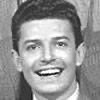
John Fogarty
Photo credit: festicket.com

John Cameron Fogerty is an American musician, singer, and songwriter. Together with Doug Clifford, Stu Cook, and his brother Tom Fogerty, he founded the band Creedence Clearwater Revival, for which he was the lead singer, lead guitarist, and principal songwriter. One of their top songs was: “Fortunate Son” (https://youtu.be/ec0XKhAHR5I) (RQ 10). They also had other hits including: “Have You Ever Seen the Rain” and “Bad Moon Rising.”
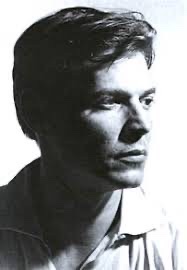
Ricky Valance
Photo credit: peoplepill

David Spencer (10 April 1936 – 12 June 2020), known professionally as Ricky Valance, was a Welsh pop singer. He was best known for the UK number one single “Tell Laura I Love Her” (https://youtu.be/TL4dICC1T10) (RQ 9), which sold over a million copies in 1960. He was the first male Welsh singer to have a UK number one single hit.

The Big Bopper
Photo credit: whosdatingwho

Jiles Perry Richardson Jr. (October 24, 1930 – February 3, 1959), known as The Big Bopper, was an American musician, singer, songwriter, and disc jockey. His best known compositions include “Chantilly Lace” (https://youtu.be/6LWBX97qDFk) (RQ 10) and “White Lightning”, the latter of which became George Jones’ first number-one hit in 1959. Richardson was killed in a plane crash in Clear Lake, Iowa in 1959, along with fellow musicians Buddy Holly and Ritchie Valens, and the pilot Roger Peterson. The accident was famously referred to as “The Day the Music Died” in Don McLean’s 1971 song “American Pie”.

Mac Davis
Photo credit: noise11.com

Scott Mac Davis (January 21, 1942 – September 29, 2020) was an American country music singer, songwriter, and actor. He first recorded five singles beginning in 1962 which failed to chart. A native of Lubbock, Texas, he enjoyed success as a crossover artist, and during his early career wrote for Elvis Presley, providing him with the hits “Memories”, “In the Ghetto”, “Don’t Cry Daddy”, and “A Little Less Conversation”. A subsequent solo career in the 1970s produced hits such as “Baby, Don’t Get Hooked on Me” (https://youtu.be/JZwiIiWBx24) (RQ10). Davis also starred in his own variety show, a Broadway musical, and various films and TV shows.

We Five
Photo credit: oocities.com

We Five was a 1960s folk rock musical group based in San Francisco, California. Their best-known hit was their 1965 remake of Ian & Sylvia’s “You Were on My Mind” (https://youtu.be/c7YSANg8vgw) (RQ 10), which reached No. 1 on the Cashbox chart, #3 on the BillboardHot 100, and #1 on the Adult Contemporary chart. The original group split after recording their second album in 1967, but a re-formed band produced three more albums between 1968 and 1977.

The Tonettes
Photo credit: The History of Rock & Roll

The Tonettes, an all girl doo wop group from the Bronx, New York city consisted of sisters Diana and Sylvia Sanchez with Josephine Allen. Manager Lou Ezzo having licensed their debut effort, “Why Keep Me Dreaming,” to the Apollo Record label, sold the girls’ contract to Apollo vice president Charles Merenstein. When Merenstein launched his own label, Doe Records, he brought The Claremonts with him, rechristening the group The Tonettes. He reasoned that the new name had a “snappier” sound that teenagers would better relate to. This was also the reason that he recorded the group on his new label thinking that the Apollo Records label was too historically aligned with the basic sound of R & B. And so in February of 1958 came “Oh What A Baby” (https://youtu.be/rha5gPr56sQ) (RQ 8) backed with “Howie” on the B side. “Baby” was an immediate success, and beside the name change, the sound of the record certainly had a “snappy” sound. It took off up and down the East Coast and had that certain something that made it a favorite at record hops and dances everywhere. Soon Doe Records realized the extent of the appeal of the record and leased the master to ABC-Paramount which gave the record access to nationwide distribution. “Oh What A Baby” was a good seller and a mainstay on radio playlists, throughout the spring.The single hit retail in early 1958, and proved so popular on East Coast radio that ABC-Paramount licensed the disc for national release. Despite charting in pockets of the U.S., “Oh! What a Baby” failed to reach the Billboard Hot 100.After contributing un-credited backing vocals to singer Vince Castro’s single “Bong Bong (I Love You Madly),” The Tonettes cut their follow-up, “Uh-Oh”. When the single failed to catch fire, the trio’s recording career came to a close, and they split in 1962. The Sanchez sisters, Diana and Sylvia, are alive and well. Sylvia is still on the east coast where as Diana has moved out on the West. Sadly, Josie Allen has passed on, and is missed by both of the Sanchez sisters. Diana and Sylvia continue to sing and do little writing,

Marty Robbins
Photo credit: Nashville Songwriters Hall of Fame

Marty Robbins was born in Glendale, Arizona, Robbins taught himself guitar while serving in the United States Navy during World War II, and subsequently drew fame performing in clubs in and around his hometown. In 1956, he released his first No. 1 country song, “Singing the Blues” and one year later, released two more No. 1 hits, “A White Sport Coat” and “The Story of My Life”. In 1959, Robbins released his signature song, “El Paso” (https://youtu.be/zWm5WErkffQ) (RQ 10), for which he won the Grammy Award for Best Country & Western Recording. The song began Robbins’ association with western balladry, a style which would become a staple of his career. Later releases that drew critical acclaim include “Don’t Worry”, “Big Iron” and “Honkytonk Man”, the last for which the 1982 Clint Eastwood film is named, and in which Robbins made his final appearance before death.

Over the course of his career, Robbins recorded more than 500 songs and 60 albums, and won two Grammy Awards, was elected to the Country Music Hall of Fame and Nashville Songwriters Hall of Fame, and was named the 1960s Artist of the Decade by the Academy of Country Music. Robbins was a commercial success in both the country and pop genres, and his songs were covered by many other famous artists, including Johnny Cash, the Grateful Dead and Elvis Presley. His music continues to have an influence in pop culture today, having recently appeared in several contemporary pop culture features, including the video game Fallout: New Vegas, and the series finale of AMC’s Breaking Bad.

Paul Anka
Photo credit: HollywoodStarWeek

Paul Albert Anka (born July 30, 1941) is a Canadian-American singer, songwriter, and actor. He became famous with hit songs including “Diana” (https://youtu.be/1Nie88qy6I4) (RQ 10), “Lonely Boy” (https://youtu.be/fv-Gjc6fzlc) (RQ 10), “Put Your Head on My Shoulder” (https://youtu.be/D-Z9szBmK2A) RQ 9) and “(You’re) Having My Baby”. He wrote the theme for The Tonight Show Starring Johnny Carson, one of Tom Jones’ biggest hits “She’s a Lady”, and the English lyrics to Claude François and Jacques Revaux’s music for Frank Sinatra’s signature song “My Way”, which has been recorded by many, including Elvis Presley. Two songs he co-wrote with Michael Jackson, “This Is It” (originally titled “I Never Heard”) and “Love Never Felt So Good”, became posthumous hits for Jackson.

Dion and the Belmonts
Photo credit: MyRadioLink

Dion and the Belmonts were a leading American vocal group of the late 1950s. All of its members were from the Bronx, New York City. In 1957, Dion DiMucci (born July 18, 1939) joined the vocal group The Belmonts. The established trio of Angelo D’Aleo (born February 3, 1940), Carlo Mastrangelo (October 5, 1937 – April 4, 2016), and Fred Milano (August 26, 1939 – January 1, 2012), formed a quartet with DiMucci. The name the Belmonts was derived from the fact that two of the four singers lived on Belmont Avenue in the Bronx, and the other two lived near Belmont Avenue. After unsuccessful singles on Mohawk Records in 1957 and then on Jubilee Records (“The Chosen Few”; Dion & the Timberlanes not the Belmonts), Dion was paired with The Belmonts. The group signed with Laurie Records in early 1958. The breakthrough came when their first Laurie release, “I Wonder Why” (https://youtu.be/ylnQXpMd1Yg) (RQ 10), reached No. 22 on the Billboard Top 100 chart, and they appeared for the first time on the nationally televised American Bandstand show, hosted by Dick Clark. Dion said of the Belmonts, “I’d give ’em sounds. I’d give ’em parts and stuff. That’s what ‘I Wonder Why’ was about. We kind of invented this percussive rhythmic sound. If you listen to that song, everybody was doing something different. It was totally amazing. When I listen to it today, often times I think, ‘Man, those kids are talented’.” Dion and the Belmonts were the sound of the city. Their roots were doo-wop groups like the Flamingos, the Five Satins, the Dells, acts who developed their sound in urban settings on street corners, mimicking instruments with their voices, even complex jazz arrangements. They followed the hit with the ballads “No One Knows” (No. 19) and “Don’t Pity Me” (No. 40), which they also performed on Bandstand. This early success brought them their first major tour in late 1958, with the Coasters, Buddy Holly and Bobby Darin, followed by the historic and tragic Winter Dance Party tour featuring Holly, Ritchie Valens and the Big Bopper. On February 2, 1959, after playing the Surf Ballroom, Holly arranged to charter a plane. Dion decided he could not afford the $36 cost to fly to the next venue. According to Dion, $36 was the same price his parents paid for monthly rent. He told Holly no. Shortly after midnight, on February 3, 1959, the plane crashed near Clear Lake, Iowa, with Holly, Valens, The Big Bopper, and the pilot, Roger Peterson, all being killed. Bobby Vee, then an unknown artist, performed in Holly’s place at the next concert. Later, Jimmy Clanton, Frankie Avalon, and Fabian were hired to finish the tour in place of the three deceased headliners. As of January 11, 2017 with the death of Holly’s tour guitarist Tommy Allsup, Dion is the lone surviving member of the original Winter Dance Party lineup. (The lone surviving Belmont, Angelo D’Aleo, was not on the tour, as he was in the US Navy at the time.). In March 1959, Dion and the Belmonts’ next single, “A Teenager in Love” (https://youtu.be/1fgnEDi7bq0) (RQ 10), broke the Top Ten, reaching No. 5 on the Billboard Hot 100 and No. 28 on the UK Singles Chart. Written by Doc Pomus and Mort Shuman, it’s considered one of the greatest songs in rock and roll history. It was followed by their first album, Presenting Dion and the Belmonts. Their biggest hit, “Where or When”, was released in November 1959, and reached No. 3 on the Billboard Hot 100 with the group making another national appearance on American Bandstand. Although publicity photos show the group as a trio without Angelo D’Aleo, he performed on all of their recorded material; these photos were presented for promotional reasons owing to his departure to serve in the U.S. Navy. After leaving the Belmonts, he recorded “Runaround Sue” in 1961 (https://youtu.be/ik57HLn0Nm0) (RQ 10).
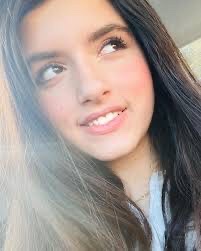
Woodstock Music Festival
August 15-17, 1969
Photo credit: Pinterest

The Woodstock Music Festival began on August 15, 1969, as half a million people waited on a dairy farm in Bethel, New York, for the three-day music festival to start. Billed as “An Aquarian Experience: 3 Days of Peace and Music,” the epic event would later be known simply as Woodstock and become synonymous with the counterculture movement of the 1960s. Woodstock was a success, but the massive concert didn’t come off without a hitch: Last-minute venue changes, bad weather and the hordes of attendees caused major headaches. Still, despite Woodstock was a peaceful celebration and earned its hallowed place in pop culture history. The Woodstock Music Festival was the brainchild of four men, all age 27 or younger, looking for an investment opportunity: John Roberts, Joel Rosenman, Artie Kornfeld and Michael Lang. Lang had organized the successful Miami Music Festival in 1968 and Kornfeld was the youngest vice president at Capitol Records. Roberts and Rosenman were New York entrepreneurs involved in building a Manhattan recording studio. The four men formed Woodstock Ventures, Inc., and decided to host a music festival. The initial plan for Woodstock called for the event to be held at Howard Mills Industrial Park in Wallkill, New York. Wallkill town officials got spooked, however, and backed out of the deal, passing a law that eliminated any possibility of holding the concert on their turf. Woodstock Ventures explored a few other venues, but none panned out. Finally, just a month ahead of the concert, 49-year-old dairy farmer Max Yasgur offered to rent them part of his land in the White Lake area of Bethel, New York, surrounded by the verdant Catskill Mountains. With the concert just a month away, the four frantic partners jumped at the opportunity and paid his asking price. With no efficient way to charge concert-goers, Lang and his partners decided to make Woodstock a free event. Originally, about 50,000 people were expected. But by August 13, at least that number were already camped out on location and over 100,000 tickets pre-sold. As an estimated one million people descended on Woodstock, its organizers scrambled to add more facilities. Highways and local roads came to a standstill and many concert-goers simply abandoned their cars and trekked the rest of the way on foot. Eventually, about half a million people reached the venue. Woodstock officially ended on Monday, August 18, after Hendrix left the stage. Leaving Woodstock wasn’t much easier than getting there. Roads and highways quickly became jammed again as festival-goers made their way home. Cleaning up the venue was a mammoth task and required several days, many bulldozers and tens of thousands of dollars. In 2006, Bethel Woods Center for the Arts opened on the hill where the Woodstock Music Festival took place. Today, it hosts outdoor concerts in its beautiful pavilion. There’s also a 1960s museum on site. Many popular musicians have performed at Bethel Woods, including some who took the stage at Woodstock such as Crosby Stills Nash and Young, Santana, Arlo Guthrie and Joe Cocker. Woodstock is perhaps best described by Max Yasgur, the humble farmer who lent his land for the occasion. Addressing the audience on day three he said, “…You’ve proven something to the world…the important thing that you’ve proven to the world is that a half a million kids, and I call you kids because I have children who are older than you are, a half a million young people can get together and have three days of fun and music and have nothing but fun and music and God bless you for it!”

Day One Performers (Friday, August 19, 1969). Including one of their songs:

Sri Swami Saldidananda (Opening speech)

Richie Havens “Here Comes the Sun” https://youtu.be/I9KSxqCShBY

Sweetwater “Motherless Child” https://youtu.be/xE-kpa-8_Ik

Bert Sommer “She’s Gone” https://youtu.be/IAP3m9WfvHo

Ravi Shankar “Complete Recording” https://youtu.be/zVE_eNVZyRo

Tom Hardin “If I Were a Carpenter” https://youtu.be/3s7mh_Uda6c

Melanie Safka “Lay Down” https://youtu.be/zDQcgVJuGbk

Arlo Gutherie “Alice’s Restaurant” https://youtu.be/m57gzA2JCcM

Joan Baez “We Shall Overcome” https://youtu.be/RkNsEH1GD7Q

Day Two Performers (Saturday, August 20, 1969). Including one of their songs:

Quill “Drifting” https://youtu.be/zU_00XFFZQM

Country Joe (McDonald) & The Fish (See Post 6: Failing to Produce a Million Dollar Record). “Not so Sweet Martha Lorraine” https://youtu.be/ha-3Dg-PP1U?feature=shared

Santana “Evil Ways” https://youtu.be/nPauXWjY4T

John B. Sebastian “Darling Be Home Soon” https://youtu.be/rBXL7FaPod4

Keef Hartley Band “Rock Me Baby” https://youtu.be/mc8-QXY4SdA

Incredible String Band “Come With Me” https://youtu.be/2uIyxn9PCr8

Canned Heat “On the Road Again” https://youtu.be/6smtAY8dXSI

Mountain “Beside the Sea” https://youtu.be/Jl6kAHO-cVc

The Grateful Dead “Turn On Your Lovelight” https://youtu.be/aJhnOq2q3ag

Day Three Performers (Sunday, August 21, 1969). Including one of their songs:

The Who (See Post 21: Featured Artists from the 50s and 60s) Full concert: https://youtu.be/E1Y-QKgmYYQ

Jefferson Airplane “White Rabbit” https://youtu.be/pnJM_jC7j_4

Joe Cocker “With a Little Help from My Friends” https://youtu.be/nCrlyX6XbTU

Country Joe and The Fish “Thing Called Love” https://youtu.be/5RiLM4Id1SY

Janis Joplin (See Post 4: Featured Artist of the 50s and 60s) “Piece of My Heart” https://youtu.be/7uG2gYE5KOs

Ten Years After “I’m Going Home” https://youtu.be/3_p_CoubEYI

The Band (See Post 6: Artists Failing to Make a Million Dollar Recording) “The Weight” https://youtu.be/64JdzV4_rDI

Johnny Winter “I Can’t Stand It” https://youtu.be/3CTfwAg_k9Q

Sly and The Family Stone (See Post 14: Featured Artists of the 50s and 60s) “Everyday People” https://youtu.be/YUUhDoCx8zc

Blood, Sweat and Tears (See Post 12: Featured Artists of the 50s and Live: https://youtube.com/playlist?list=PL4-oCE2y-CrE-j_6QhOHTTS5rCsxYYPMW

Crosby, Stills, Nash and Young (See Post 51: Classics Forever) Greatest Hits: https://youtube.com/playlist?list=PLrpyDacBCh7AFnLhxNjOmBdpX5MXEe-Uc

Paul Butterfield Blues Band (See Post 12: Featured Artist of the 50s and 60s). Everything’s Gonna Be Alright: https://youtu.be/h62W2ARtwU8

Sha Na Na “Duke of Earl” https://youtu.be/2a3FtmVpvtk

Jimi Hendrix (See Post 3: Featured Artist of the 50s and 60s). “Purple Haze” https://youtu.be/rrE3jFPA43o

The Guess Who
Photo credit: kirbyguitarlessons.com

The origins of the Guess Who date back to 1958, when Winnipeg singer/guitarist Chad Allan formed a local rock band called Allan and the Silvertones. After several lineup changes, the band stabilized in 1962 under the name Chad Allan and the Reflections, which included Allan and keyboardist Bob Ashley, plus future Guess Who mainstays Randy Bachmanon guitar, Jim Kale on bass, and Garry Peterson on drums. The band released their first single, “Tribute To Buddy Holly”, on Canadian-American Records in 1962. They then signed with Quality Records and released several singles in 1963–64, which gained some regional notice around Winnipeg but made little impact in the rest of Canada. One single was mis-credited to Bob Ashley and the Reflections. In 1965, the group changed their name to Chad Allan and the Expressions after an American group called The Reflections released the hit single “(Just Like) Romeo and Juliet” (https://youtu.be/T-gB8AILvrk) (RQ 9) They released the garage rock album Shakin’ All Overin January 1965. That album’s single, a cover of “Shakin’ All Over” by Johnny Kidd & the Pirates, was the band’s first major hit, reaching No1 in Canada, No. 22 in the United States, and No27 in Australia. Their American label, Quality Records, disguised the single by crediting it to Guess Who?, as a publicity stunt to generate speculation that it was by a more famous British Invasion band working incognito. After Quality Records revealed the band to be Chad Allan and the Expressions, disc jockeys continued to announce the group as Guess Who?, effectively forcing the band to accept the new name. They released their second album, Hey Ho (What You Do to Me!) in late 1965; it was credited to Chad Allan and the Expressions with “Guess Who?” displayed prominently on the cover.

Transitional Years (1966–1968)

Keyboardist Bob Ashley left the band in late 1965 due to the rigors of touring. He was replaced by 18 year-old Burton Cummings, formerly of Winnipeg group the Deverons, who also took on lead vocal duties in conjunction with Chad Allan. Just a few months later, Allan departed; he returned to college and then became a media personality with the CBC . This left Cummings as the sole lead singer. With Allan departed, the “Chad Allan and the Expressions” subtitle was dropped from the band’s releases, and they were billed solely as The Guess Who?. (The question mark would be dropped in 1968.) After Allan’s departure in 1966, guitarist Bruce Decker, a former bandmate of Cummings in the Deverons, joined for a few months. The band then settled as a quartet with Cummings on vocals and keyboards, Bachman on guitar, Kale on bass, and Peterson on drums. This lineup released the album It’s Time in the summer of 1966. Decker, despite being pictured on the cover of the album, did not participate in the recording. Conversely, some contributions by Allan (recorded before he left the group) can be heard on the album, though he is not credited. The band continued to release singles that were moderately successful in Canada, and “His Girl” entered the UK charts in 1967. The band traveled to the United Kingdom to promote the single, but this was a financial mistake as the song quickly dropped off the charts. They were unable to book shows or obtain work visas while in the UK, and returned to Canada heavily in debt. Later in 1967, the Guess Who were hired as the house band for the CBC radio show The Swingers, and as the house band for CBC television program Let’s Go, which was hosted by their former bandmate Chad Allan. They initially performed hit singles by other artists, but the CBC producers encouraged them to develop more of their own music as well. This gave the Guess Who greater exposure in Canada and financial stability for the next two years. After seeing the Guess Who on Let’s Go, record producer/sales executive Jack Richardsoncontacted the band about participating in an advertising project for Coca-Cola. This project became a split album titled A Wild Pair with Ottawa band the Staccatos (soon to rename themselves Five Man Electrical Band). The album could only be purchased by mail order from Coca-Cola. Richardson served as the Guess Who’s producer until their classic-era dissolution in 1975, and they were managed during that entire period by Don Hunter.

The beginning of their Classic Era (1968–1970)

Richardson signed the Guess Who to his Nimbus 9 label and production company, and personally financed the recording of a new album in late 1968. They were also signed to RCA for distribution outside of Canada. The band transitioned from their original garage rock roots to a more mature pop-rock sound with soul and jazz influences. Wheatfield Soul was released in early 1969 and achieved success in both Canada and the United States. The single “These Eyes” (https://youtu.be/ARoqKjb3lWo) (RQ 10) reached the top ten in the United States and became a gold record with sales of more than one million copies. The follow-up album Canned Wheat was released in September 1969, and featured the double-sided hit single “Laughing”/”Undun”. For their next album, the band adopted more hard rock influences. American Woman was released in January 1970 and became a substantial worldwide hit. It was their first album to top the Canadian albums chart, and their first to reach the top ten on the American albums chart. The title track reached No1 in both countries and was also a substantial hit in the United Kingdom. This made the Guess Who the first Canadian band to achieve a chart-topping single in the United States during the Billboard Hot 100 era. (Canadian doo-wop group The Crew Cuts had a number one single in 1954, before that chart was instituted.) “No Time” (https://youtu.be/Gzlq_aEJ008) (RQ 10) and “No Sugar Tonight/New Mother Nature” (https://youtu.be/yMG-Mi9I0-k) (RQ 9) also reached high on the singles charts in both Canada and the United States.

Smiley Lewis
Photo credit: Spontaneous Lunacy

Overton Amos Lemons (July 5, 1913 – October 7, 1966), known as Smiley Lewis, was an American New Orleans rhythm and blues singer and guitarist. The music journalist Tony Russell wrote that “Lewis was the unluckiest man in New Orleans. He hit on a formula for slow-rocking, small-band numbers like ‘The Bells Are Ringing’ (https://youtu.be/AKsnw0ZH7gY) (RQ 7) and ‘I Hear You Knocking’ (https://youtu.be/Jz6jIcLAnmg) (RQ 7) only to have Fats Domino come up behind him with similar music with a more ingratiating delivery. Lewis was practically drowned in Domino’s backwash.”

The Crew-Cuts
Photo credit: medium.com

The Crew-Cuts were a Canadian vocal quartet, that made a number of popular records that charted in the United States and worldwide. They named themselves after the then popular crew cut haircut, one of the first connections made between pop music and hairstyle. They were most famous for their recording of The Chords’ hit record, “Sh-Boom”. They all had been members of the St. Michael’s Choir School in Toronto, which also spawned another famous quartet, The Four Lads. Maugeri, John Perkins, and two others (Bernard Toorish and Connie Codarini) who later were among the Four Lads first formed a group called The Jordonaires (not to be confused with a similarly named group, The Jordanaires, that was known for singing backup vocals on Elvis Presley’s hits) and also The Otnorots (“Toronto” spelled backwards being “Otnorot”), but they split from the group to finish high school. When the Four Lads returned to Toronto for a homecoming concert, John Perkins and Maugeri ran into each other and decided that they could themselves have a musical future. They joined with Barrett and Ray Perkins in March 1952. cord, “Sh-Boom” (https://youtu.be/CikEbEtnBcE) (RQ 10). Another hit that plays on the radio today is “Earth Angel” (https://youtu.be/–8_OFubJLM) (RQ 9).
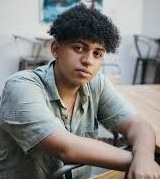
Betsy Brye
Photo credit: discogs

“Sleep Walk” (https://youtu.be/xGc7oRXObCs) (RQ 10) is an instrumental steel guitar-based song written, recorded, and released in 1959 by brothers Santo & Johnny Farina. (The BMI Repertoire database and the original release credits three Farinas as composers including sister Ann.) It was recorded at Trinity Music in Manhattan, New York City, New York. “Sleep Walk” entered Billboard’s Top 40 on August 17, 1959. It rose to the number-one position for two weeks in September (the 21st and the 28th) and remained in the Top 40 until November 9. “Sleep Walk” also reached number four on the R&B chart. It was the last instrumental to hit number one in the 1950s and earned Santo & Johnny a gold record. One of the first covers was by Betsy Brye (stage name of Bette Anne Steele), also in 1959. It was released on a single by Columbia Records as catalog number DB 4530. Although Santo & Johnny wrote lyrics for “Sleep Walk”, they never recorded a version with the lyrics; Brye’s version includes these lyrics.

The Chordettes
Photo credit: geezermusicclub.com

The Chordettes were an American female popular singing quartet, usually singing a cappella, and specializing in traditional popular music. They are best known for their songs “Mr. Sandman” (https://youtu.be/PKnPrbPK5vA) (RQ 10) and “Lollipop” (https://youtu.be/vaXmOBVqkBg) (RQ 9).

After performing locally in Sheboygan, they won on Arthur Godfrey’s radio program Talent Scouts in 1949. They held feature status on Godfrey’s daily program, and in 1950 cut their first LP, a collection of standards titled Harmony Time. for Columbia Records. Three more LPs followed.

In 1953, Godfrey’s music director and orchestra leader, Archie Bleyer, founded Cadence Records. He signed a number of Godfrey regulars and former regulars, including the Chordettes, who had a number of hit records for Cadence. Beginning in January 1954, the group sang on the Robert Q. Lewis Show, a weekday afternoon program on CBS-TV.

The Chordettes had released a couple of singles with Arthur Godfrey on Columbia in 1950-51 but didn’t cut a solo single until their breakout hit Mr. Sandman, released in late 1954 and which went on to become a #1 1955 hit. Archie Bleyer himself is on that record along with the group; Bleyer stripped down the sound to highlight the girls’ voices. They also hit #2 with 1958’s “Lollipop” and also charted with a vocal version of the themes from Disney’s Zorro (U.S. #17) (1959) and the film Never on Sunday (U.S. #13) (1961). Other hits for the group included “Eddie My Love” (U.S. #14), “Born to Be With You” (U.S. #5), “Lay Down Your Arms” in 1956, and “Just Between You and Me” (U.S. #8) in 1957. Their cover of “The White Rose Of Athens” hit the Australian Top 15 in May, 1962. The US single “In The Deep Blue Sea” was a one-week Music Vendor entry four months later (#128).

Crosby, Stills & Nash
Photo credit: consequence.ner

Crosby, Stills & Nash (CSN) was a folk rock supergroup made up of American singer-songwriters David Crosby and Stephen Stills, and English singer-songwriter Graham Nash. They are noted for their lasting influence on American music and culture, and for their intricate vocal harmonies, often tumultuous interpersonal relationships, and political activism. CSN formed in 1968 shortly after Crosby, Stills and Nash performed together informally in July of that year, discovering they harmonized well. Crosby had been asked to leave The Byrds in late 1967, and Stills’ band Buffalo Springfield had broken up in early 1968; Nash left his band The Hollies in December, and by early 1969 the trio had signed a recording contract with Atlantic Records. Their first album, Crosby, Stills & Nash, was released in May 1969, from which came two Top 40 hits, “Judy Blue Eyes” [#21] (https://youtu.be/kVUwrifwKrI) (RQ 7) and “Marrakesh Express” [#28] (https://youtu.be/0TYq9RjdYYU) (RQ 9). They still needed a keyboardist; Ahmet Ertegun suggested Canadian Neil Young, who had played with Stills in Buffalo Springfield, and after some initial reluctance, the trio agreed, signing him on as a full member. The band, was then named Crosby, Stills, Nash & Young, started their tour, and played their second gig at Woodstock Festival in the early morning hours of August 18, 1969.

Ritchie Valens
Photo credit: quoteslab.net

Richard Steven Valenzuela (Born in Los Angeles, CA on May 13, 1941 – February 3, 1959), known professionally as Ritchie Valens, was an American singer, songwriter, and guitarist. A rock and roll pioneer and a forefather of the Chicano rock movement, Valens was killed in a plane crash eight months into his recording career. He was only 17 years old at the time. After the February 2, 1959, performance in Clear Lake, Iowa (which ended around midnight), Holly, Richardson, and Valens flew out of the Mason City airport in a small plane that Holly had chartered. Valens was on the plane because he won a coin toss with Holly’s backup guitarist Tommy Allsup. Holly’s bassist, Waylon Jennings, voluntarily gave up his seat on the plane to J.P. Richardson, who was ill with the flu. Around 12:55 am on February 3, 1959, the three-passenger Beechcraft Bonanza departed for Fargo, North Dakota, and crashed a few minutes after takeoff for reasons still unknown. The crash killed all three passengers and pilot Roger Peterson instantly upon impact. As with Holly and Richardson, Valens suffered massive and unsurvivable head injuries along with blunt-force trauma to the chest. Valens was the youngest to die in the crash Valens had several hits, most notably “La Bamba” (https://youtu.be/Coy8Hoa1DNw) (RQ 10), which he had adapted from a Mexican folk song (an interesting side note: he didn’t speak Spanish, he just memorized the lyrics). Valens transformed the song into one with a rock rhythm and beat, and it became a hit in 1958, making Valens a pioneer of the Spanish-speaking rock and roll movement. He also had an American number-two hit with “Donna” (https://youtu.be/20cFuSHzJrg) (RQ 9) and “Come On Lets Go” (https://youtu.be/rEuBtgmlqI8) (RQ 9).

The Ronettes
Photo credit: 500songs.com

The Ronettes were an American girl group from Spanish Harlem, New York. The group consisted of lead singer Veronica Bennett (later known as Ronnie Spector), her older sister Estelle Bennett, and their cousin Nedra Talley. They had sung together since they were teenagers, then known as “The Darling Sisters”. Signed first by Colpix Records in 1961, they moved to Phil Spector’s Philles Records in March 1963 and changed their name to “The Ronettes”. The Ronettes placed nine songs on the Billboard Hot 100, five of which became Top 40 hits. Among their most famous songs are: “Be My Baby” (https://youtu.be/jSPpbOGnFgk) (RQ 10), “Baby, I Love You” (https://youtu.be/zgOONhI3FnM) (RQ 8), “(The Best Part of) Breakin’ Up” (https://youtu.be/K04WwAL-3eg) (RQ 9) and “Walking in the Rain” (https://youtu.be/tBBys5TLxCI) (RQ 10). In 1964, the group released their only studio album, Presenting the Fabulous Ronettes Featuring Veronica. That year, the Rolling Stones were their opening act when they toured the UK. The Ronettes opened for the Beatles on their 1966 US tour, becoming the only girl group to tour with them, before splitting up in 1967. In the 1970s, the group was briefly revived as Ronnie Spector and the Ronettes. Their song “Be My Baby” was inducted into the Grammy Hall of Fame in 1999. Rolling Stoneranked their album Presenting the Fabulous Ronettes Featuring Veronica No. 422 on its list of The 500 Greatest Albums of All Time. The Ronettes were inducted into the Vocal Group Hall of Fame in 2004, and into the Rock and Roll Hall of Fame in 2007.

The Cowsills
Photo credit: grambo.com

The Cowsills were formed in the spring of 1965 by brothers Bill, Bob, and Barry Cowsill; their brother John joined shortly thereafter. Originally Bill and Bob played guitar and Barry played the drums. When John learned to play drums and joined the band, Barry began playing bass. After their initial success, the brothers were joined by their siblings Susan and Paul along with their mother, Barbara. A seventh sibling, Bob’s twin brother Richard, was never part of the band during its heyday, although he occasionally appeared with them in later years. The band’s road manager for most of their career was Richard “Biggie” Korn. When the group expanded to its full family membership by 1967, the six siblings ranged in age from 8 to 19. Joined by their mother, Barbara Cowsill (née Russell), the group inspired the 1970s television show The Partridge Family. Barbara, who would become known to their fans affectionately as “Mini-Mom” due to her diminutive stature, joined the group just in time to record the band’s first album, including the hit single “The Rain, The Park & Other Things” (https://youtu.be/uC9tALmALh0) (RQ 8) with Bill on lead vocals. It sold over one million copies and was awarded a gold record. With the success of “The Rain …”, the band quickly became a popular act in the U.S., and achieved significant airplay in England and other parts of Europe. “The Rain, The Park and Other Things” reached No. 2 on the Billboard Hot 100.

Four Jacks and a Jill
Photo credit: secondhandsongs

Four Jacks and a Jill originally formed in 1964 without a “Jill” under the name “The Nevadas”. Subsequently, they became the first group in South Africa to wear their hair long and they changed their name to “The Zombies” (different from the well-known British group). Later they added lead singer Glenys Lynne and changed the group’s name to “Four Jacks and A Jill”. The group included Clive Harding (bass guitar), Keith Andrews (rhythm guitar and organ), replaced by the late Mark Poulos (guitar and organ) 1966-1967 and subsequently Till Hanneman who joined in 1967 (rhythm guitar, organ and trumpet), Bruce Bark (lead guitar, harmonica and saxophone), Tony Hughes (drums) and Glenys Lynne (lead vocal and organ). In South Africa, they had a hit song, “Timothy”. In 1968 they cracked the American charts with the song “Master Jack” (https://youtu.be/A0WvXpyufT8) RQ 6), hitting the Billboard Hot 100 at no. 18 and reaching no. 3 on the Adult Contemporary chart. The song also reached no. 10 on Cashbox and went to no. 1 in South Africa, Canada, Australia, New Zealand, Malaysia, and Rhodesia (now Zimbabwe). The follow-up single, “Mr. Nico”, peaked at no. 98 in the United States. That was their last hit in the U.S., but the group continued to score hits in their native country.

Jay and the Americans
Photo credit: live.kixi.com

Jay and the Americans are an American rockgroup popular in the 1960s. Their initial line-up consisted of John “Jay” Traynor, Howard Kane (born Howard Kirschenbaum), Kenny Vance (born Kenneth Rosenberg) and Sandy Deanne (born Sandy Yaguda), though their greatest success on the charts came after Traynor had been replaced as lead singer by Jay Black. Soon they signed with United Artists Records. With Jay Traynor singing lead, they first hit the Billboard charts in 1962 with the tune “She Cried,” which reached #5 (later covered by The Shangri-Las, Aerosmith, and others). The next two singles did not fare as well, and Traynor left the group. Empires’ guitarist Marty Sanders (né Kupersmith) joined the group. He brought David Black (né Blatt) of “The Empires” in to take Traynor’s place (after David first agreed to adopt the name Jay Black), and Black sang lead for the rest of the group’s major hits. They recorded “Only in America”, a song originally meant for The Drifters. Other notable hits for Jay and the Americans were “Come a Little Bit Closer” (https://youtu.be/ZuWkVqum6a8) (RQ 10) in 1964, which hit #3, and “Cara Mia” (https://youtu.be/pXfNGRcDYpM) (RQ 10+) in 1965, which hit #4. They also recorded a commercial for H.I.S. Slacks and a public service announcement for the Ad Council, featuring a backing track by Brian Wilson and Phil Spector. Two tracks from this era later found favor with the Northern Soul crowd: “Got Hung Up Along The Way” and “Living Above Your Head”. In 1966, the group was featured in the Universalcomedy film, Wild Wild Winter, singing “Two of a Kind” at the film’s finale, with surf band The Astronauts depicted as providing backup instrumentals. As of February 2017, the song has been released only on the 1966 soundtrack LP. In 1969, they rcorded an album of their favorite oldies called Sands of Time, which included “This Magic Moment” (https://youtu.be/pKfASw6qoag) (RQ 10), which was originally done by the Drifters. The single went to #6 in early 1969. It sold over one million copies, and was awarded a gold disc by the R.I.A.A. in May 1969. “This Magic Moment” was the last top ten record for Jay and the Americans, although a follow-up album, Wax Museum, in January 1970, did yield the #19 hit single “Walkin’ In The Rain” (https://youtu.be/xrkJoTaHqvc) (RQ 10+), first recorded by The Ronettes. Their next singles failed to chart, and the band grew apart, but the demand for appearances remained. (Around the same time the band recorded “This Magic Moment,” Jay and the Americans member Sandy Yaguda produced a Long Island teen sextet called The Tuneful Trolley. Their late-1968 Capitol LP, Island In The Sky — a hybrid of Beach Boys and Beatlesque psych-pop—was reissued in 2008 in the UK on Now Sounds.) From 1970 to 1971 Jay and the Americans’ recording band included Walter Becker and Donald Fagen (of later Steely Dan fame) on backup bass guitar and electric organ.

The Chiffons
Photo credit: soulwalking.co.uk

The Chiffons were an American girl group originating from the Bronx, a borough of New York City, in 1960. The group was originally a trio of schoolmates: Judy Craig, Patricia Bennett and Barbara Lee; at James Monroe High School in the Bronx in 1960. In 1962, at the suggestion of songwriter Ronnie Mack, the group added Sylvia Peterson, who had sung with Little Jimmy & the Tops at age 14, sharing lead vocals with Jimmy on “Say You Love Me”, the B-side of the Tops’ 1959 local hit “Puppy Love”. The group was named the Chiffons when recording and releasing their first single, “He’s So Fine”, written by Ronnie Mack, produced by The Tokens of “The Lion Sleeps Tonight” fame, and released on the Laurie Records label. “He’s So Fine” hit No. 1 in the United States, selling over one million copies, and was awarded a gold disc. (This sales figure would have qualified the record for platinum status under the current [as of 2011] RIAA certification standards, effective since 1975, that lowered the “gold” certification threshold to 500,000 copies and set the “platinum” threshold at 1 million.). The Chiffons immediately released their first LP He’s So Fine (which charted at #97) and began a round of touring around the US. Within a few months, the group released their second LP, One Fine Day (https://youtu.be/KvyOqKhKWQ4) (RQ 10). The group also released two singles in 1963 as the Four Pennies (with Sylvia on lead) on the Laurie Records subsidiary Rust, but they abandoned the Four Pennies name as the success of “He’s So Fine” became clear. This first hit was followed by other notable tunes such as Gerry Goffin and Carole King’s “One Fine Day”, “Sweet Talkin’ Guy” (https://youtu.be/UAPaGi7HuKo) (RQ 10) and “I Have A Boyfriend” (This last song was playing on the Dallas, Texas radio station KLIF on November 22, 1963 when the announcement was made that President John F. Kennedy had been shot). As the 1960s progressed, Peterson assumed a more prominent role in the group, singing lead on the Chiffons’ “Why Am I So Shy”, “Strange, Strange Feeling”, “The Real Thing”, “Up On The Bridge” and “My Block” (written by Jimmy Radcliffe, Carl Spencer and Bert Berns).
Ricky Nelson
Photo credit: mafiagame.fandom.com

Eric Hilliard Nelson (Born in Teaneck, N.J. on May 8, 1940 – died in a DC3 plane crash on December 31, 1985). Sadly, he was only 45 years old at the time. Known professionally as Ricky Nelson until his 21st birthday when he officially dropped the “y” and simply became Rick Nelson, was an American rock ‘n’ roll star, pop pioneer, musician, singer-songwriter and actor. From age eight he starred alongside his family in the radio and television series The Adventures of Ozzie and Harriet. As the result of his early success as an actor, he became one of the greatest “heartthrobs” in history. As a teenager, he fell in love with two young ladies (as they were teenagers at the time, no long term relationship developed). Ricky ended up marrying Kris Harmon on April 20, 1963. They had four children together. Kris was the daughter of Tom Harmon, an American football player. Their marriage was rocky at times as Kris wanted Ricky to stop traveling doing concerts. Ultimately, in December of 1982, they were divorced. In 1957, he began a long and successful career as a popular recording artist. As one of the top “teen idols” of the 1950s, his fame led to a motion picture role co-starring alongside John Wayne and Dean Martin in Howard Hawks’s western feature film Rio Bravo (1959). He placed 53 songs on the Billboard Hot 100, and its predecessors, between 1957 and 1973, including “Poor Little Fool” in 1958, which was the first number 1 song on Billboard magazine’s then-newly created Hot 100 chart. He recorded 19 additional Top 10 hits including: “Stood Up” in 1957, “Be-Bop Baby” (https://youtu.be/DK90tMEJax8) (RQ10) in 1957, “Never Be Anyone Else But You” (https://youtu.be/ft8d5Ik8jeE) (RQ 10) in 1959, “Hello Mary Lou” (https://youtu.be/zLkCWT2neuI) (RQ 10) in 1960, “Travelin’ Man” (https://youtu.be/CZ_973A44mA) (RQ 10) and “Garden Party” (https://youtu.be/TwLwOxZz-y8) (RQ 10) in 1972. He was inducted into the Rock and Roll Hall of Fame on January 21, 1987. In 1996 Nelson was ranked No. 49 on TV Guide’s 50 Greatest TV Stars of All Time.

Bobby Hebb
Photo credit: vancouversignaturesounds.com

Robert VonBobbyHebb (July 26, 1938 – August 3, 2010) was an American R&B and soul singer, musician, songwriter, recording artist, and performer known for his 1966 hit entitled “Sunny” (https://youtu.be/ubvYQxTXO3U) (RQ 10).
Hebb was born in Nashville, Tennessee. His parents, William and Ovalla Hebb, were both blind musicians. Hebb and older brother, Harold Hebb, performed as a song-and-dance team in Nashville beginning when Bobby was three and Harold was nine. Hebb performed on a TV show hosted by country music record producer Owen Bradley, which earned him a place with Grand Ole Opry star Roy Acuff. Hebb played spoons and other instruments in Acuff’s band. Harold later became a member of Johnny Bragg and the Marigolds. Bobby Hebb sang backup on Bo Diddley’s “Diddley Daddy”. Hebb played “West-coast-style” trumpet in a United States Navy jazz band, and replaced Mickey Baker in Mickey and Sylvia.

On November 23, 1963, the day after John F. Kennedy’s assassination, Bobby Hebb’s brother, Harold, was killed in a knife fight outside a Nashville nightclub. Hebb was devastated by both events and sought comfort in songwriting. Though many claim that the song he wrote after both tragedies was the optimistic “Sunny”, Hebb himself stated otherwise. He immersed himself in the Gerald Wilson album, You Better Believe It!, for comfort.

“Sunny” was recorded in New York City after demos were made with the record producer Jerry Ross. Released as a single in 1966, “Sunny” reached No. 3 on the R&B charts, No. 14 on the Billboard Hot 100, and No. 12 in the United Kingdom. When Hebb toured with The Beatles in 1966 his “Sunny” was, at the time of the tour, ranked higher than any Beatles song then on the Billboard Hot 100 chart. BMI rated “Sunny” number 25 in its “Top 100 songs of the century”.

The Ink Spots
Photo credit: deezer.com

The Ink Spots were an American vocal jazzgroup who gained international fame in the 1930s and 1940s. Their unique musical style presaged the rhythm and blues and rock and roll musical genres, and the subgenre doo-wop. The Ink Spots were widely accepted in both the white and black communities, largely due to the ballad style introduced to the group by lead singer Bill Kenny.

They charted 48 songs between 1939-1952. Seven of their recordings were No1 hits:

“Address Unknown” (https://youtu.be/B00wg2o-SG4) (RQ 9). 1939.

“We Three” (https://youtu.be/AQ_Lzh_S-2c) (RQ 8). 1940.

“I’m Making Believe” (https://youtu.be/BuO5Jiqn9q4) (RQ 8). 1944.

“Into Each Life Rain Must Fall” (https://youtu.be/ayGkA-vxrMc) (RQ 8) With Ella Fitzgerald. 1944.

“The Gypsy” (https://youtu.be/yovIyTnUr5I) (RQ 10). 1946.

“To Each His Own” (https://youtu.be/0G5wqiLiPHg) (RQ 10). 1946.
The Critters
Photo credit: last.fm

The Critters were an American pop group with several hits in the 1960s, most notably “Mr. Dieingly Sad” (https://youtu.be/KYjI7S8pEZU) (RQ 10+), a U.S. and Canadian Top 20 hit in 1966. As in this example, The Critters produced wonderful harmonies together! The group formed in Plainfield, New Jersey, United States, in 1964 when singer-guitarist Don Ciccone (February 28, 1946 – October 8, 2016) went to see the band in which a friend of his, saxophonist Bob Podstawski, was a member. This local group was the Vibratones, comprising Jim Ryan (lead guitar), Ken Gorka (bass), Jack Decker (drums), and Chris Darway (keyboards) along with Podstawski. Ciccone was impressed by the group and asked Podstawski if he could arrange an audition with them. The group was taken by Ciccone’s playing ability and the fact that he also wrote songs. Ciccone was asked to join with the group renaming themselves “The Critters”, in emulation of similar band names like the Animals.

Bob Lind
Photo credit: colomusic.org

Bob Lind (born Robert Neale Lind, November 25, 1942) is an American folk music singer-lyricist, who helped define the 1960s folk rockmovement in the U.S. and U.K. Lind is well known for his transatlantic hit record, “Elusive Butterfly” (https://youtu.be/T5mD_loFlfg) (RQ 10), which reached number 5 on both the US and UK charts in 1966. Many musicians have recorded songs by Lind, who continues to write, record and perform.

Johnny Desmond
Photo credit: geezermusicclub.com

Johnny Desmond (born Giovanni Alfredo De Simone; November 14, 1919 – September 6, 1985) was an American singer who was popular in the 1940s, 1950s and 1960s. Desmond was born in Detroit, Michigan, United States;. As a boy he sang on a local radio station, but at age 15 he quit to work at his father’s grocery. He retained a love of music, and briefly attended the Detroit Conservatory of Music before heading to the nightclub circuit, playing piano and singing. In 1939, he formed his own singing group. The group was first called the Downbeats. After being hired to work with Bob Crosby’s big band in 1940, it was renamed the Bob-O-Links. The group appeared on 15 commercial recordings by the Crosby orchestra, including two charted hits, “You Forgot About Me” (which reached No. 15), and “Do You Care?” In 1953 he recorded “So Nice” (to be your neighbor). (https://youtu.be/wEUgy5yUceU) (RQ 10).

Louis Prima
Photo. credit: projects.latimes.com

Louis Leo Prima (Born in New Orleans on December 7, 1910 – August 24, 1978) was an American singer, songwriter, bandleader, and trumpeter. While rooted in New Orleans jazz, swing music, and jump blues, Prima touched on various genres throughout his career: he formed a seven-piece New Orleans-style jazz band in the late 1920s, fronted a swing combo in the 1930s and a big band group in the 1940s, helped to popularize jump blues in the late 1940s and early to mid 1950s, and performed frequently as a Vegaslounge act beginning in the 1950s. An example of one of his recordings with Keely Smith: “Just a Gigilo” (https://youtu.be/seKzd3Jm_Dw) (RQ 8). From the 1940s through the 1960s, his music further encompassed early R&B and rock ‘n’ roll, boogie-woogie, and Italian folk music, such as the tarantella. Prima made prominent use of Italian music and language in his songs, blending elements of his Italian and Sicilian identity with jazz and swing music. At a time when ethnic musicians were often discouraged from openly stressing their ethnicity, Prima’s conspicuous embrace of his Sicilian ethnicity opened the doors for other Italian-American and ethnic American musicians to display their ethnic roots.

Keely Smith
Photo credit: theguardian.com

Dorothy Jacqueline Keely (March 9, 1928 – December 16, 2017), better known as Keely Smith, was an American jazz and popular music singer, who performed and recorded extensively in the 1950s with then-husband Louis Prima, and throughout the 1960s as a solo artist Prima and Ms. Smith’s act offered a seamless blend of anarchy and sophistication, with his sassy beast to her cool beauty. A sampling of Keely’s singing: “A Tribute to Keely Smith” (https://youtu.be/UdKPbF2y_0A) (RQ 10). Their physical and musical chemistry brought them a mass following, hit records and $25,000 a week on the Las Vegas Strip, helping make Sin City, then a second-tier desert outpost, a major show-business destination.

The Happenings
Photo credit: last.fm

The Happenings are a pop music group that originated in Paterson, N. J. in the 1960s. Members of the original group, created in the spring of 1961 and initially called “The Four Graduates” because all had just graduated from high school in Paterson, New Jersey, were Bob Miranda (lead singer), David Libert, Tom Giuliano, and Ralph DiVito. In 1968 DiVito was replaced by Bernie LaPorta and Lenny Conforti also joined to play drums in the touring band.

The band’s original concept and much of its commercial success came as a cover bandplaying classic songs in a unique style. Said Miranda, the group’s concept was to “take a song that’s already proven it could be a hit and put our spin on it”. That “spin” consisted of a combination of rich harmonies on vocals and upbeat tempos marked by prominent percussion and sometimes elaborate orchestration. The group later composed its own songs. The group’s major hits were “See You In September” (1966) (https://youtu.be/7JQS6H2AXdM) (RQ 9), which was originally recorded by The Tempos in 1959, and a cover version of the George Gershwin/Ira Gershwinsong, “I Got Rhythm” (1967) (https://youtu.be/FK62pW35GIw) (RQ 8) updated for the group’s sunshine pop musical style. “See You In September” and “I Got Rhythm” were on the Billboard Hot 100 Singles charts for 14 weeks in 1966 and 13 weeks in 1967, respectively.

The Delfonics
Photo credit: studio album cover

The Delfonics are an American R&B/soul vocal group from Philadelphia, Pennsylvania, United States. The Delfonics were most popular in the late 1960s and early 1970s. Their most notable hits include “La-La (Means I Love You)” (https://youtu.be/baNbyst7aW0) (RQ 10), “Didn’t I (Blow Your Mind This Time)”, “Break Your Promise”, “I’m Sorry”, and “Ready or Not Here I Come (Can’t Hide from Love)”. Their hit songs were primarily written/composed and produced by lead vocalist and founding member William “Poogie” Hart and the musical instrumentation was arranged/conducted by songwriter and producer Thom Bell.

Billy Joe Royal
Photo credit: billboard.com

Billy Joe Royal was Born in Valdosta, Georgia (April 3, 1942 – October 6, 2015) to Mary Sue Smith and Clarence Royal, and raised in Marietta, Georgia, Royal performed at the Georgia Jubilee in Atlanta during his teens. He formed his own rock and roll band, and became a local star at the Bamboo Ranch in Savannah in the late 1950s and early 1960s, where his singing style was influenced by African-American performers, including Sam Cooke. Royal was a friend of performer and songwriter Joe South, and recorded what was intended as a demo of South’s song “Down in the Boondocks” (https://youtu.be/dWw9-iygCfM) (RQ 10+). The recording was heard at Columbia Records, who offered Royal a singing contract in 1965 and released his version of the song, produced by South. “Down in the Boondocks” remained his best-known song, reaching number 9 on the Billboard Hot 100, and number 38 in the UK. He followed up his initial success with the singles “I Knew You When” (Top 20, 1965) and “Hush” (1967), also written and produced by Joe South. Another South composition, “Yo-Yo,” just missed the top 40 in Canada and charted poorly in the U.S. when Royal released it in 1967, but a later remake by The Osmonds was a much greater success. His 1969 single, “Cherry Hill Park”, peaked at No. 15 on the Billboard Hot 100. In the 1970s his recording of “Heart’s Desire” gained popularity among Northern soul enthusiasts and was regularly played in Northern soul nightclubs.

Glenn Yarbrough
Photo credit: aspentimes.com

Glenn Robertson Yarbrough (January 12, 1930 – August 11, 2016) was an American folk singer and guitarist. He was the lead singer (tenor, with a unique high frequency vibrato) with the Limeliters from 1959 to 1963. He also had a prolific solo career, recording on various labels. His most known song was “Baby the Rain Must Fall” (https://youtu.be/IoidePq4szw) (RQ 10). By the late 1960s he was miserable and was looking for something else. He quit entertaining to sail around the world. While sailing to Hawaii, he asked himself what he really wanted out of life and he decided that he would rather teach than sing. He sold his Rolls-Royce, Porsche, Bentley and two Ferraris and his house in New Zealand, his banana plantation in Jamaica and an apartment building he owned in Beverly Hills. He used the money to start a school in the mountains outside Los Angeles for disadvantaged, mostly African-American children. He was incredibly gifted as a singer, but he lacked the knowledge and discipline to run a school, so the school ran out of money and he had to close it down in the early 70s. He divorced his first wife, Peggy Goodhart, and married his second, Annie Graves, built and moved into a 57-foot sailboat and spent the next five years on the high seas. Through these years, promoters sent sporadic requests for the Limeliters to get back together, and in 1973 they gave a reunion concert at Chicago’s Orchestra Hall to a sold-out audience. As a singer he was successful, but he was never satisfied. He spent most of his life running away from his great talent and returned to use his gift only when he needed money to support himself.

Madeline Bell
Photo credit: networthroll.com

Madeline Bell (born July 23, 1942) is an American soul singer, who became famous as a performer in the UK during the 1960s and 70s with pop group Blue Mink, having arrived from the US in the gospel show Black Nativity in 1962, with the vocal group Bradford Singers. Bell was born in Newark, New Jersey, United States. She worked as a session singer, most notably backing Dusty Springfield, and can be found on early Donna Summer material as well. Her first major solo hit was a cover version of Dee Dee Warwick’s single “I’m Gonna Make You Love Me” (https://youtu.be/c8Rg5kFU1oA) (RQ 10) which performed better on the US Billboard Hot 100 than the original. In 1969, she contributed backing vocals on the Rolling Stones song “You Can’t Always Get What You Want”.

Chad & Jeremy
Photo credit: pinterest

Chad & Jeremy were a British musical duo consisting of Chad Stuart and Jeremy Clyde, which began working in 1962 and had its first hit song in the UK with “Yesterday’s Gone”. That song became a hit in the United States in the following year as part of the British Invasion. Unlike the rock-music sounds of their peers, Chad & Jeremy performed in a soft, folk-inflected style that is characterised by hushed and whispered vocals. The duo had a string of hits in the United States, including “Willow Weep for Me” (produced by Shel Talmy), “Before and After”, and their biggest hit, “A Summer Song” (https://youtu.be/VvD0_aeAf2E) (RQ 10) (produced by Shel Talmy). After some commercial failures and divergent personal ambitions, Chad & Jeremy disbanded in 1968.

Robert Knight
Photo credit: bestclassicbands.com

Robert Knight (born Robert Henry Peebles,April 24, 1940 – November 5, 2017) was an American singer, best known for his 1967 recording of the song “Everlasting Love” (https://youtu.be/bCMmyT33Gic) (RQ 10). Robert Peebles was born in Franklin, Tennessee, United States, in 1940 according to family and official records, though some sources give the year 1945. As Robert Knight, he made his professional vocal debut with the Paramounts, a quintet consisting of school friends. Signed to Dot Records in 1960, they recorded “Free Me” in 1961, a US R&B hit single that outsold a rival version by Johnny Preston.

Chad Mitchell Trio
Photo credit: gonzaga.edu

The Chad Mitchell Trio – later known as The Mitchell Trio – were a North American vocal group who became known during the 1960s. They performed traditional folk songs and some of John Denver’s early compositions. They were particularly notable for performing satirical songs that criticized current events during the time of the cold war, the civil rights movement, and the Vietnam War. An example of which is: “The Marvelous Toy” (https://youtu.be/Z6LbjUt-J7A) (RQ 10). The original group was formed in 1958, by William Chadbourne “Chad” Mitchell (from Portland, Oregon, born December 5, 1936), Mike Kobluk (from Trail, British Columbia, Canada, born December 10, 1937), and Mike Pugh (from Pasco, Washington) when they were students and glee club members at Gonzaga University in Spokane, Washington, United States. They were encouraged by Spokane Catholic priest Reinard W. Beaver, who invited the three to travel with him to New York City in the summer of 1959 and to try performing in the burgeoning folk-music scene.

The Clovers
Photo credit: discogs.com

The Clovers are an American rhythm and blues/doo-wop vocal group who became one of the biggest selling acts of the 1950s. They had a top 30 US hit in 1959 with the Leiber and Stoller song “Love Potion No. 9” (https://youtu.be/Nt7htnE1s4o) (RQ 10+).
Doo-wop – rhythm ‘n’ blues vocal ensemble
Formed in Washington, D.C., in 1946 with constantly changing line-up. After their first single at Rainbow Records, their manager Louis Krefetz brought them to Atlantic in February 1951. There were several incarnations of the group by one or the other of the starting formation. In 1989 they received the Rhythm and Blues Foundation Pioneer Award. In 1991 they were inducted in the United in Group Harmony (UGHA) Hall of Fame. In 2002 they were inducted into The Vocal Group Hall of Fame. In 2003 The Clovers were inducted into The Doo Wop Hall of Fame.

Scott McKenzie
Photo credit: talkaboutpopmusic.com

Scott McKenzie (born Philip Wallach Blondheim III; January 10, 1939 – August 18, 2012) was an American singer and songwriter. He was best known for his 1967 hit single and generational anthem, “San Francisco” (Be Sure to Wear Flowers in Your Hair) (https://youtu.be/7I0vkKy504U) (RQ 10).

Ray Stevens
Photo credit: homecomingmagazine.com

Harold Ray Ragsdale (born January 24, 1939), known professionally as Ray Stevens, is an American country and pop singer-songwriter and comedian, known for his two Grammy-winning recordings: “Everything Is Beautiful” (https://youtu.be/0a45z_HG3WU) (RQ 10) and “Misty” (https://youtu.be/dSO8IzLkkts) (RQ 10). “Everything is Beautiful” was recorded over fifty years ago. As one associated YouTube comment reads “This song wants me to get along with someone.” Oh, how we need this desire in 2021. He also had comedic hits such as “Gitarzan” and “The Streak”. He has worked as a producer, music arranger, songwriter, television host, and solo artist; been inducted into the Nashville Songwriters Hall of Fame, the Georgia Music Hall of Fame, and the Christian Music Hall of Fame; and received gold albums for his music sales.
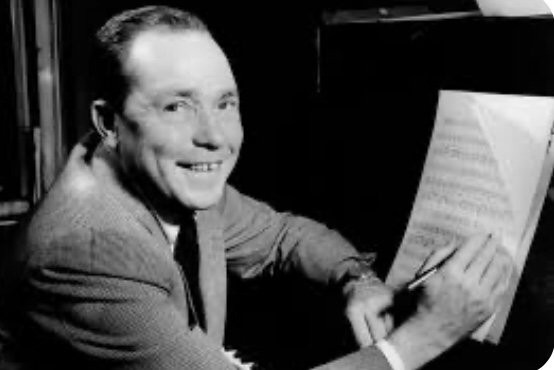
Johnny Burnette
Photo credit: secondhandsongs.com

John Joseph Burnette (March 25, 1934 – August 14, 1964) was an American singer-songwriter of rockabilly and pop music. Johnny was born to Willie May and Dorsey Burnett Sr. in Memphis, Tennessee, United States. (The “e” at the end of his name was added later.) Johnny grew up with his parents and Dorsey Jr. in a public housing project in the Lauderdale Courts area of Memphis, which from 1948 until 1954 was also the home of Gladys and Vernon Presley and their son, Elvis.

Johnny attended Blessed Sacrament School, and after graduating from eighth grade he went to Catholic High School, in Memphis. (Early press reports, dating back to 1956, stated erroneously that Johnny attended Humes High School with Presley.) He showed an aptitude for sports, being on the school baseball team and playing linebacker on the football team. Both he and Dorsey were also keen amateur boxers and later became Golden Gloves champions. After leaving high school, Burnette tried his hand at becoming a professional boxer, but after one fight with a sixty-dollar purse and a broken nose or an encounter with Norris Ray, a top paycheck of $150, he decided to quit boxing. He went to work on barges traversing the Mississippi River, where Dorsey also worked. Johnny worked mainly as a deck hand; Dorsey worked as an oiler. After work, they would go back to Memphis and perform songs in local bars with a varying array of sidemen, including another former Golden Gloves champion, Paul Burlison, whom Dorsey had met at an amateur boxing tournament in Memphis in 1949. In 1952, he and his brother, Dorsey Burnette, and their friend Paul Burlison formed the band that became known as the Rock and Roll Trio.

He experienced some success after his Rock and Roll Trio including his third single, “Dreamin” (https://youtu.be/TnkjOHVK-H4) (RQ 10) backed with “Cincinnati Fireball” (Liberty F-55285), released on May 4, 1960, reached number 11 on the Billboard Hot 100 and number 5 in Britain. It sold over one million copies and was awarded a gold disc by the RIAA.

Natalie Imbruglia
Photo credit: YouTube screenshot

Natalie Jane Imbruglia (born in Sydney, Australia on 4 February 1975) is a singer-songwriter, model and actress. In the early 1990s, she played Beth Brennan in the Australian soap opera Neighbours. Three years after leaving the programme, she began a singing career with her chart-topping cover of Ednaswap’s song “Torn” (https://youtu.be/xSZBIs0gs0E) (RQ 10+).

Her subsequent album, Left of the Middle (1997), sold 7 million copies worldwide. Imbruglia’s five subsequent albums have combined sales of 3 million copies worldwide, and her accolades include eight ARIA Awards, two Brit Awards, one Billboard Music Award, and three Grammy nominations.

Imbruglia has appeared in several films, including the 2003 release Johnny English and the 2009 Australian indie film Closed for Winter. She has modelled for several brands, such as L’Oreal, Gap, and Kailis.

Amongst other philanthropic work, Imbruglia served as a longtime spokesperson for Virgin Unite and campaigns to raise awareness of obstetric fistula.

50th Post: (5 Artists) Diamonds in Rough

What’s the origin of the phrase ‘A diamond in the rough’?

The phrase is a metaphor clearly referring to the original unpolished state of diamond gemstones, especially those that have the potential to become high quality jewels. It is more commonly expressed in the form ‘rough diamond’. So, these artists represented here typically have dramatically improved in their singing and/or playing instruments over time.

To date, we have included five artists: Davon Fleming, Donald Gould, Dorota Osinka, Barry Sadler, and Courtney Timmons.

Photo credit: INDIAmart
Dorota Osinska
Photo credit: kultura.onet.pl

Dorota Osińska (born November 12, 1978 in Wroclaw, Dolnoslaskie, Poland). She is a Polish musical theatre actress and pop singer. While Dorota is mostly self-taught, when younger, her vocal chords were to delicate for classical training. So, as a result, today she has an unusual wide range and pitch which produces a very strong emotional effect.

Her first solo album was recorded in 2004. Eventually, her greatest achievement was earning second place in the Voice of Poland talent show in 2013. During this Voice competition she sang “Calling You” (https://youtu.be/_LNcX1eS6qA) (RQ 10+). I believe this is one of the best auditions I have ever witnessed! This led to her second full-length album in 2014. All the while, she also had numerous guest appearances on many compilations with religious or poerty-based productions.

Davon Fleming
Photo credit: mjsbigblog.com

Davon Fleming (25 years old) recently was a contestant on The Voice Season 13 and a member of Team Jennifer. His blind audition of the Amy Winehouse song “Me & Mr. Jones”(https://youtu.be/0YYFTUBmTGQ) (RQ 10) turned all four chairs. He was instantly eliminated alongside Keisha Renee in the Top 8, after both contestants received the least amount of votes in that week.

Davon (hometown: Baltimore, MD) grew up in a rough neighborhood, experienced a lot of poverty and witnessed hustling on the streets, but he was never caught on the wrong side of the law. Instead, he was known as the singer in his neighborhood. Davon knew he wanted to sing at three years old after watching his mother perform in the church choir. Being a singer was always his mom’s dream before she had kids, but she had to give up that dream in order to support her family. Currently, Davon works as a worship leader and assists with the musical arrangements for the church choir performances.

Courtney Timmons
From: Georgia
Security Guard, to an Idols backdoor tryout, to pro
American Idols: “Rise Up” (RQ 7)
https://youtu.be/CuBp4-C-hVI
Photo credit: YouTube screenshot
Donald Gould
“Yesterday”
https://youtu.be/PjYUODTUsvc
Photo credit: YouTube screenshot
Donald Gould “Today”
Photo credit: YouTube screenshot

Donald Gould (aka The Homeless Piano Man) is an American musician, composer and U.S military veteran. Originally from Michigan, Gould played the clarinet from an early age. When he served in the United States Marine Corps, he played for the Marine Corps Band. Once he left the Marines, he studied music education at Spring Arbor University but due to financial difficulties was unable to complete his studies.

When his wife committed suicide in 1998, Gould developed a substance abuse addiction and he eventually became homeless. It wasn’t until 2015 when he sat down at an outdoor piano in Sarasota, Florida and played ‘Come Sail Away’ by American rock band STYX that his musical talent was discovered. The performance video was recorded by a passerby and became viral overnight with millions of views on YouTube. He has signed with the independent record label Triple Pop and has released one studio album, “Walk On Water” (https://youtu.be/-aMJS6uNsX4) (RQ 8).

Barry Sadler – Green Beret (Viet Nam War 1964-65)
Photo credit: devianart.co
Barry Sadler
Photo credit: genius.com

Barry Allen Sadler (November 1, 1940 – November 5, 1989) was an American soldier, singer/songwriter, and author. Sadler served as a Green Beret medic, achieving the rank of Staff Sergeant. He served in the Vietnam War from late December 1964 to late May 1965. Most of his work has a military theme, and he is best known for his patriotic “Ballad of the Green Berets” (https://youtu.be/BugBwt2ESpo) (RQ 10) a #1 hit in 1966.

49th Post: (29) Rare Instruments

UNIQUE NEW INSTRUMENTS & COMPONENTS:

Section includes the following (29) new/rare instrument types:

Aerophone

Artiohon Orba

BeatBearing

Drawdio

Eigen Harp

Electric Violin

Electroencrphalophone

Electromagnetic Piano

Evolane

Game Leste

Hapi Dram

Hashem guitar

Hydraulophone

Irish Concertina

Microtonal Lego Guitar

MiMa Glove

Moog Theremini

Ocarnino

Samchillian

Sinus Smart Guitar

Stratocaster, 75th Anniversary

Tenori-On

Theorbo

Ukelin

Venova

Verselab

War Tubas

Wintergarden Marble Machine

Yuybahar

Hashem guitar – Esteban Antonio
https://www.facebook.com/RareAndStrangeInstruments/videos/1117274455024824/?d=n
Sensus Smart Guitar – Mind Music Games
https://www.facebook.com/RareAndStrangeInstruments/videos/1114792678606335/?d=n
Theorbo – Bruno Helstroffer
At least fifteen strings
https://www.facebook.com/RareAndStrangeInstruments/videos/1101205866631683/?d=n
Ukelin
“Amazing Grace”
https://www.facebook.com/RareAndStrangeInstruments/videos/1003240823094855/?d=n
Irish Concertina
https://www.facebook.com/RareAndStrangeInstruments/videos/975510025867935/?d=n
War Tuba
https://youtu.be/ley0JsOc0DM

Steve Parker’s musical instruments make no sound. Instead, this trombonist repurposes brass instruments as sculptural listening devices. His inspirations are the early-20th-century military sound locaters — some called war tubas — that were used to detect approaching enemy aircraft before the invention of radar. Parker’s instruments exude a similar gangly menace, with yards of Seussian tubing ending in the flared bells of trombones and sousaphones.

Parker’s devices — some wearable, some attached to a gallery wall — become part of compositions that play with the dimensionality of sound. They also connect music with aggressive modes of listening like surveillance and espionage.

“They are picture frames — but they are more than that,” Parker said in a video interview from the American Academy in Rome, where he is currently a fellow. “They not only select and amplify certain sounds; they also resonate at certain frequencies. Because the instrument vibrates when the sound hits it, it harmonizes it in a subtle way.”

Parker says the effect on the listener is disorienting. He likes how the repurposed marching band instruments — rich in associations with warfare, protests and modern gladiator sports — can be transformed into tools for communal listening. And he enjoys the “bit of bricolage” that goes into disassembling instruments and soldering their components with copper pipes from the hardware store. In the process, he said, “I’ve become quite friendly with my plumber.”

Evolano
https://youtu.be/Qp49l6ruhHY

“I’m basically an unreasonable cellist with guitar envy,” Clark Battle said. As an improviser, he admired the chordal flexibility of a piano or guitar. But, as he explained in an email exchange, he wasn’t willing to give up the flexible pitch of his chosen instrument, the cello. He began to wonder what a piano might look like that allowed a musician to vibrate and slide notes — as you can on the cello.

The result is the Evolano — an “evolved piano.” The instrument has keys, action and hammers like a piano, aligned along a central ruler. The strings move with the keys, sliding over a curved fret that determines pitch. Chords are played much in the traditional way of a keyboard, by pressing multiple keys. But by moving the hands, the entire chord structure can travel smoothly, as in a cello glissando.

Battle said that his study of kung fu had impressed upon him the importance “of honoring the natural vertical symmetry of the human body.” As for the sound, he added, “I honestly had no expectation for the tonal aspects of the instrument. Since there’s no precedent for the tonality it would sound like whatever it did.”

Microtonal Lego Guitar
https://youtu.be/rPCEImSfCwc

For years, Tolgahan Cogulu has been teaching the guitar to play new notes. “I love the guitar,” he said speaking in a video interview recently. “However, I cannot play my own music.”

Turkish music relies on microtones, while the traditional guitar has frets that arrange pitch according to Western tuning systems. In 2008, Cogulu designed a microtonal lego guitar with movable frets, but it has remained a specialist instrument.

One day his young son Atlas made a Lego replica of his father’s microtonal fretboard. Cogulu immediately realized its potential. “It is a miracle idea,” he said. “It’s the most popular toy in the world, and it’s the most popular instrument. And if you combine them it becomes a microtonal guitar — because you can move the frets on the Lego studs.”

Rusan Can Acet, an engineer and graduate student at Istanbul Technical University, came up with the idea to 3D-print a base plate for the fretboard. The Lego pieces are snapped into place, and a set of 3D-printed movable frets are attached on top. Production was almost laughably cheap, Cogulu said, and only briefly halted when they had used up all the thin single square pieces in Atlas’s Lego collection that are essential to their design.

In lessons with his students, Cogulu realized he had hit on a tool for teaching music theory. With its movable frets, the Lego microtonal guitar makes visible the changing intervals in various Western, Turkish and Balinese modes. Cogulu and his team are making the 3D-printable files available to anyone for a modest contribution. He also plans to build fully assembled versions that he hopes will be useful in music schools.

Electromagnetic Piano
https://youtu.be/sodLGtA6fvI

Experimental pianists have long toyed with hand-held electromagnetic devices called EBows that make the piano’s strings vibrate without direct contact. Prototypes exist of pianos with a built-in electromagnetic component, but their size and expense keep them out of reach of most performers.

The composer David Shea dreamed of an instrument that would turn any concert grand into an electromagnetic piano capable of producing both traditional sounds and the evenly sustained drones of electronic music. “I thought, could there be a traveling version that would be modular and could be constantly adapted by anyone playing it?” he said in a video interview with Monica Lim, a fellow pianist-composer who helped shape the design.

Their breakthrough idea was a mini computer for each note that hovers above the string without touching it. A pianist can play both the electromagnetic component and the traditional keyboard at the same time — “a dialogue,” Shea said, “between the old and the new” — or perform in duet with another person (or a computer) making the drones sing. The device is portable and easy to install.

“It’s more like a layer that sits on top of the other, more percussive sound activated by the keyboard,” Lin said.

Georgia Tech
https://guthman.gatech.edu/winners

The Guthman Musical Instrument Competition celebrates the best new ideas in music, design, and engineering. This year, 29 finalists from 15 different countries competed for prizes awarded by a panel of judges and by popular vote.

Ulfur Hansson – The Winner (Iceland)
Segulharpa (https://youtu.be/rXlZRGOuxvg)

The Segulharpa is new and unique among electro-acoustic instruments. This large circular walnut instrument holds 25 steel strings, which are “bowed” by powerful magnetic fields. Touch sensors are embedded into the grain of the wood, and as the player touches the surface, wonderfully complex interactions are created inside. Unlike traditional wooden stringed instruments, the strings oscillate from intentionally played notes as well as from frequencies of nearby vibrating strings. Inventor Ulfur Hansson said it took him seven years to finish this instrument.

by Ricky O’Bannon

No matter the design or invention of an instrument maker, the fate of a new instrument is dependent on a virtuoso musician showing its potential or a composer writing a magnum opus that utilizes it well. In many cases, that takes a great deal of time. For Adolphe Sax’s invention, even today musicians like Colon Stetson are experimenting with modern techniques to make new music for the instrument in ways Adolph Sax never imagined back in the mid-1800s. In honor of Sax’s 200 birthday, below is a list of newly invented instruments. Like for the saxophone, whether they eventually find a place in the musical world or fall away as a novel footnote in history will depend on the creative people who might champion their cause in this century or the next.

Mi.Mu Glove


Singer Imogen Heap has been leading the charge to develop the Mi.Mu Glove. (https://youtu.be/CvyVQqCO8pY) (RQ 10). In a promotional fundraiser video, Heap said she uses computers and electronic effects in her music, but she wanted a way to play her computer as expressively as she would an instrument. The result is the Mi.Mu Glove, which allows pre-programmed sounds to be triggered and manipulated by the wearer’s gestures, motions or place on the stage. Sensor-based instruments that make use of gesture or the performer’s position is actually a somewhat crowded competition. Efforts at build a “data glove” date back to 2005, and students at Cornell created the Aura data glove earlier this year.
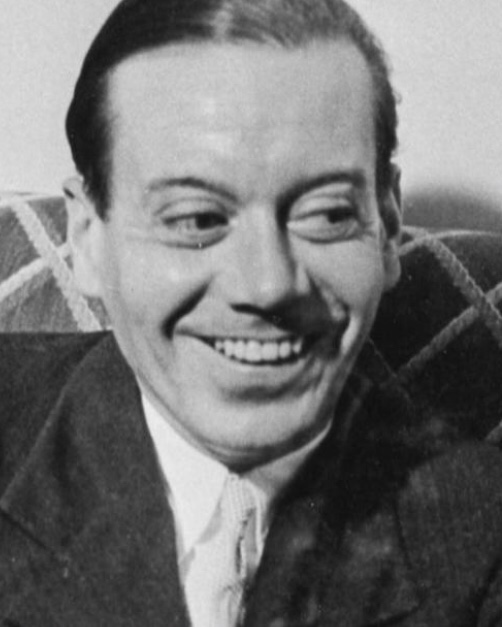
Yaybahar
Photo credit: instruments.fandom.com no

The yaybahar is a Turkic acoustic string instrument invented in 2009 by Görkem Şen. (https://youtu.be/_aY6TxC1ojA) (RQ 8). The instrument is played with a bow on two strings with two metal wires connecting to frames amplifying the sound.

Gameleste
Photo credit: daily.social

Bjork (1966-) is an Icelandic pop singer and songwriter who has made an name for herself by pushing the boundaries of music. In her music she features her own ethereal style of singing along with different combinations of sound, sometimes even inventing her own instruments to create it. As Iceland’s most famous pop musician she continues to make though-provoking and eccentric music.

In 2011 she released her album Biophilia, which features her unique sound along with new instruments she commissioned just for it. This album incorporates new instruments, music videos, online apps, and other mediums to create a musical experience all its own. One of the main new instruments featured on this album is the Gameleste, played on the song “Virus.” The Gameleste is a combination of a gamelan and a celeste. It incorporates bronze bars into a celeste housing to create a toy piano like high register and a lower register that is reminiscent to the also newly created Hang drum. By combining the two styles this instrument creates a juxtaposition of very simple and pure as well as deep and ethereal sounds.

The song “Virus” (https://youtu.be/VJ7p5uvm0RU) (RQ 10) in which it is featured, tells the story of a cell being taken over by a virus. The music starts of very simple and light to show the microscopic world within our bodies. After this intro Bjork beings to sing and the song becomes increasingly complex using many rhythmic and melodic patterns found within Balinese Gamelan music. Along with the gamelan rhythms and tones the gameleste creates the sound of wind chimes giving the song even more of an ethereal and other worldly feel.

The gameleste expands the possibilities for new and creative sounds and allows the musician to experiment with sounds that would other wise be nearly impossible to harness. For instance, gamelan requires a large group of trained musicians to play, but with this instrument a single person can use the general timbre of a gamelan for their own musical experimentation. Considering that this instrument retains the form of the celeste as a keyed instrument it can still be notated like a piano in western staff notation, which further extends the possibility of its use to all musicians.

Bjorks creativity with the invention and use of the gameleste shows that new instruments can be created and explored without hindering the music itself. New instruments can only be beneficial for music. They sometimes may not be appealing to the musical community but without them progress within music cannot be made. I think the gameleste is a wonderful invention that helps span the gap between western music and that of Indonesia. Bjork’s “Virus” pushes music into new territories and I happily travel along as I listen to this music.

The study of musical instruments (‘organology’) is the study of the human condition. Every culture is defined by its own distinctive set of trills, whistles, parps, honks and beats, and every corner of the world has evolved its own location-specific indigenous instrument to renew a sense of cultural identity through noisy self-expression. And instruments evolve – never more so than now, in the midst of a technological revolution that has opened up entirely new ways to make music. So settle back and compose yourself as we look at new instruments that look set to accompany us into the world of tomorrow:

Eigenharp
Photo credit: Eigenlabs

In development for 8 years with funding of over £10m / $16.5m, the Eigenharp is a slow-crafted technological marvel. 120 keys (each one tilting to give a flexible tone), percussion buttons, built-in sound management capabilities including recording, playback and looping, and a potentially limitless range of noises thanks to running on uploaded digitally sampled sounds. It is played via keyboard, tap-pad and mouthpiece – and the result is an instrument that sounds like a band. An example: “The Bond Theme” (https://youtu.be/zcVqJh0qEMc) (RQ 9).

Electric Violin
Photo credit: Riverstring

Similarly digitally enhanced are the electric violins, a family of new hybrid instruments that are sufficiently well-established to become a mainstay of the modern music scene. Thanks to electrical pickups inside or outside the instrument’s body, the violin’s vibrations are run through electronic processing and transformed into any sound under the sun – most effectively, the noise of an electric guitar. Witness the magic of Ed Alleyne-Johnson (https://youtu.be/vUO6kYLb6As)(RQ 7) performing on the streets of Chester, England.

Tenori-On
Photo credit: Yahmaha

No, this isn’t the first good-to-go version of Minesweeper: this baby is for making beautiful music with. The 16 x 16 grid of LED lights on the Tenori-On responds to touch and to real-time looped programming, creating soaring, rippling compositions that mesmerise beginners and experts alike (Peter Gabriel is a fan). If you want a hands-on demonstration of its power, listen to Andre Michelle’s ToneMatrix, an online AudioTool-powered simulation (https://youtu.be/xy4c_ScANcY).

Samchillian
Photo credit: Eitan Shefer

Musical instrument or chest expander? You’d be forgiven for asking – but the Samchillian is a new, ergonomic-minded take on the keyed instrument, with each key representing a relative, not fixed, note. As the musician plays, the function of each part of the instrument is constantly changing, allowing a full range of musical expression (provided the player has a really good memory, of course). Here’s a demo by Eitan Shefer: (https://youtu.be/DbOIBIwg_E4) (RQ 10).

BeatBearing
Photo credit: beatbearing

Moving further into the realm of instruments that look like anything but – we have the BeatBearing. Instead of generating noise itself, the BB triggers the timing of preselected types of percussion – simply drop a steel ball-bearing in the right slot to get the beat you want, when you want. The inventor isn’t interested in manufacturing his design: instead, he has published the plans on DIY-tech online magazine MakeZine to encourage people to build their own – and with more than 1 million views of this YouTube demo: (https://youtu.be/wreP8FMupyM) (RQ 9). At the start of this year, we reckon there will be plenty of takers.

Hapi Drum
Photo credit: OrangeHat

At least the Hapi looks like what it is (well, kinda) – a steel drum with a hole in the base that allows the player to control the amount of noise emerging, using their lap. Since each key (or “tongue”) is part of the main body of the instrument, each note is accompanied by a subtle resonant harmony from other musically compatible notes. Time for a demonstration: https://youtu.be/PW-GZ05htLE (RQ 8).

Electroencephalophone
Photo credit: Glogger

At first sight, you’re looking at a lady trying to listen to her iPod underwater, and a collection of buff young people stood up in a hot-tub. In fact in both pictures depict music-making, via an electroencephalophone – a device that converts brainwaves into sound (and therefore a quintephone). The lady is psychotherapist Ariel Garten participating in a concert performance – and the “hot-tub” trio are an electroencephalophonist and two assistants accompanying on electrocardiopgones (https://youtu.be/oNlDb5toEBE).

Drawdio
Photo credit: Wired

Daring you to not burst out laughing when it gets underway is the Drawdio, a homespun theramin. There are a number of ways to make one (cheaply and easily), but the working principle remains the same in all models – it runs a current through the graphite deposited from the end of your pencil (or any other appropriate medium, including yourself), and translates it through a synthesizer to create a noise like a kazoo in a gale. Here is a sample: https://youtu.be/PV_w38ldZaE (RQ 8).

Ocarino
Photo credit: Smule

But for breadth of lateral thinking, hats off to Smule, the inventors of the Ocarina iPhone application. Using the phone’s built-in movement sensors and touch screen, your phone becomes either a wholly keyed instrument…or a kind of flute, by detecting the passage of your blown breath and translating it into intensity of sound. Once you’ve finished your piece, upload it to the Ocarina online community and listen to the work of others. A virtual instrument that automatically shares its output online – can you get more contemporary than that? Have a listen: https://youtu.be/RhCJq7EAJJA (RQ 9).

Moog Theremini ($300-349)
Photo credit: reverb.com

A Theremin experience has never been more accessible than with the Moog Theremini. The unique instrument is updated by Moog to be incredibly player-friendly while retaining an authentic Theremin experience. A built-in feature allows players to quantize their playing using selectable scales while controlling the amount of their pitch quantization. This function can be disabled to use the Theremini with an original Theremin tone, freeform and unquantized. Along with built-in scales and quantization, an onboard tuner and thirty-two sounds can give the Theremini a voice that can be vintage or modern for a variety of tonal possibilities. With the Theremini, Moog has brought a Theremin experience that is functionally thorough, inventively designed, and deeply musical. A tutorial: https://youtu.be/8bakI0ITCqQ.

VERSELAB – MV-1 ($700)
Photo credit: roland.com

VERSELAB helps you capture, refine, and finish your ideas. The fluid, hands-on workflow simplifies music making with modern vocal recording, pattern generators, thousands of ZEN-Core sounds, mastering effects, and more. Plug-and-play integration with Roland’s Zenbeats app expands your production capabilities using your computer or mobile device. Make a song in less than 10 minutes: https://youtu.be/DBuX_cDCTdU.

75th Anniversary Commemorative Stratocaster
Cost as shown above: $1,949.99
Demo from: Eugene Edwards
(https://youtu.be/IEGG0ga7DNY)
More Options: shop.fender.com
Artiphon Orba Handheld Synth Looper and Controller ($100)

An Artiohon Orba is a handheld synth, looper, and MIDI controller that lets anyone make music immediately. Play notes and beats on its touch-sensitive surface, add effects with movement gestures, and layer your ideas into songs with the built-in looper. Connect to the Orba App to customize your instrument and share your creations with friends. It’s never been easier to make music, anywhere you go.

Overview and Demo: https://youtu.be/yoxUlNmhQWw

First Impressions: https://youtu.be/HhgMX41a6Bo

Make Songs in Seconds: https://youtu.be/Mvk5FiLjbsU

Make a Song (part 1): https://youtu.be/4IFwSKKg6Us

Make a Song (part 2): https://youtu.be/AV8MCylKQQk

Aerophone ($630)
Photo credit: roland.com

Aerophone AE-10 is a digital wind instrument that lets you play sax, clarinet, flute, violin, synth sounds and many more. Since it supports traditional sax fingering, the AE-10 is instantly familiar to acoustic sax players, especially with a mouthpiece-mounted breath sensor that responds like an acoustic horn. The AE-10 also features 128 high-quality sound models including soprano and baritone sax, clarinet, trumpet, string instruments, and an array of expressive synth sounds. And the integrated speaker and battery operation means that you can play these sounds anywhere. With built-in speakers, headphones for late-night practice, battery power capability, and DAW connectivity, the Roland Aerophone AE-10 is the versatile, play-anywhere choice that supports you in every musical scenario. An example of one application: Roland Aerophone “ensemble with acoustic saxophones” (https://youtu.be/j2OPsVJlpe4) (RQ 8). More examples follow…its simply amazing what one professional player can produce:

Roland Aerophone AE-10 Version 3.0:

Synth sounds:” (https://youtu.be/K7tpRw3NRh0) (RQ 10).
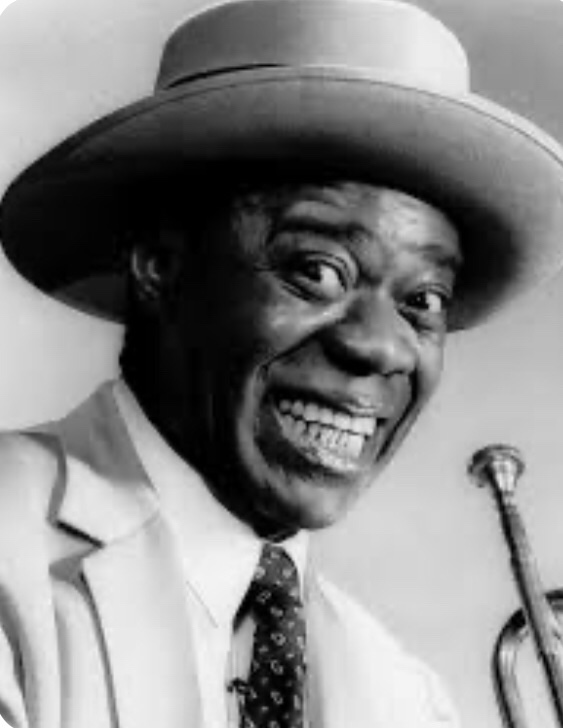
Looper performance with new synth sounds:” (https://youtu.be/OsD7vIa_Ovw) (RQ 10).
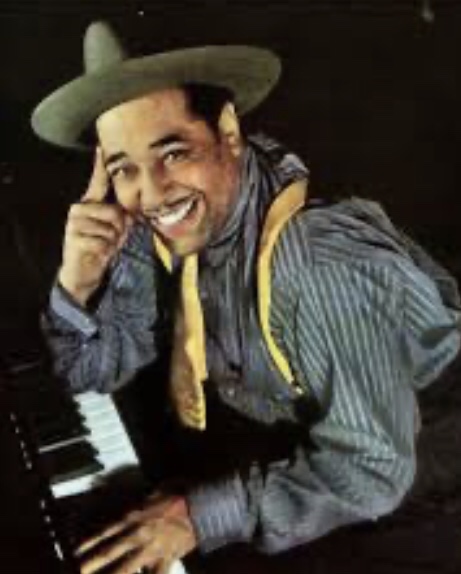
Wind and Brass sound:” (https://youtu.be/CcWwrRQld8c) (RQ 10).
Strings and world instruments:” (https://youtu.be/ZyxLgZVkwTw) (RQ 10).
Bass and Vocoder sound:” (https://youtu.be/Z8EnvHM9zXg) (RQ 10).

Sound customize examples:” (https://youtu.be/If518Tw8_Tk) (RQ 10).
Alistair Parnell`s performance featuring new synth sounds:” (https://youtu.be/BUVaLA0cstE) (RQ 10).
Nothing beats the sound of your favorite acoustic sax, but sometimes its tone might not be quite right for the job at hand. Whatever scenario you’re playing in, the Aerophone AE-10 has the onboard digital sax sounds you need. Choose from alto, tenor, soprano, and baritone sax types, all of which respond just like their acoustic counterparts. Playing dynamics, articulation, and even the organic overtone changes caused by your breathing are all reproduced thanks to Roland’s advanced SuperNATURAL modeling technology. A dedicated “Sax Section” layers four types of sax for playing together in unison, and you can pull off a seamless performance with the Full Range feature, which automatically switches between sax types by key range.
The Aerophone AE-10 also features sounds from other wind instruments including trumpet, trombone, clarinet, flute, oboe, bassoon, and more. Powered by Roland’s SuperNATURAL technology, which faithfully matches the behavior of the originals, these sounds help to expand your musical range. Ethnic instruments like shakuhachi and erhu are on hand too, offering authentic pitch and tonal fluctuations that echo their acoustic counterparts. Aerophone AE-10 even includes stringed instruments such as violin, cello, and contrabass, each one capable of unique musical expressions since you control them by breath and fingering instead of bowing. Once you’ve tried the individual sounds, you can create one-man ensembles by layering multiple wind instrument sounds with the Brass Section setting. The AE-10 is also packed with a selection of the latest synth sounds that are specially tailored for wind instrument performance with fully optimized breath control.

Venova ($170)
Photo credit: theguitarcenter.com

Venova: is a casual wind instrument, here with a limited-edition red body. Designed to be an inexpensive and accessible alternative to traditional winds, the Venova’s state-of-the-art design blends the simplicity of a recorder with the rich sound of a saxophone. An example from Yahmaha Music London: (https://youtu.be/h_p8z57IXkk) (RQ 6). The result is a fun-to-play instrument that’s equally at home in the hands of an experienced player or a complete beginner. Created with state-of-the-art Yamaha technology, the Venova features a branched-pipe structure that gives it a bright and rich timbre with plenty of volume. Its ABS resin body is smaller, lighter and more durable than conventional wind instruments. You can even get it wet – it’s water washable and easy to clean, making it perfect to take along to the park, a barbecue, or even the beach.

Hydraulophone ($10,000)
https://youtu.be/tnJb9WyhCUc (RQ 8)
Photo credit: YouTube screenshot
Wintergaten Marble Machine ($ unknown)
https://youtu.be/IvUU8joBb1Q (RQ 10)
Hammered Dulcimer ($399-850)
https://youtu.be/veuGTnzgNRU (RQ 7)
Photo credit: YouTube screenshot

48th Post: (90) World Music Types

MUSIC CATEGORIES IN OUR WORLD

Music is not only about charting recordings and signing lucrative contracts. This post documents 100s of cool musical performances, many of which will not generate any income at all. I have rated each song’s overall quality of recording (10 being the highest and 1 the lowest possible score).
They come to us from Six Geographical Areas:
Africa
Asia
Caribbean Sea
Europe
Latin & South America
North America
African – 21 Music Types
We can learn and appreciate the uniqueness of individual musical styles from the people of Africa.
“Afrobeats
NAIJA 2020
https://youtu.be/FrCUPRHNhOw (RQ 8)
Photo credit: YouTube screenshot
Benga”
Library of Congress (Kenya)
https://youtu.be/Bn4WOvCjoMc (RQ 7)
Photo credit: YouTube screenshot
“Chimurenga”
Thomas Mapfumo
(https://youtu.be/ISgeA3yZ-ww) (RQ 9)
Photo credit: YouTube screenshot
“Ethio-jazz
Malutu
https://youtu.be/mB5uUEr7pIA (RQ 6)
Photo credit: YouTube screenshot
“Gnawa-Ethno-Pop
Morocco
https://youtu.be/bnixGjMhBJE (RQ 8)
Photo credit: YouTube screenshot
Gwani Blues”
Kararan Al-Quran
https://youtu.be/2mViAfg8uWw (RQ 3)
Photo credit: YouTube screenshot
“Highlife”
Guitar LoopFeat MrEq
https://youtu.be/jmwZqp0npBk (RQ 7)
Photo credit: YouTube screenshot
“Hiplife”
Kuami Eugene
https://youtu.be/p7rHAeoSbYc (RQ 9)
Photo credit: YouTube screenshot
“Inkilanya”
Tuke Pameja
https://youtu.be/Njj4CX4OAMU (RQ 6)
Photo credit: YouTube screenshot
“Juju”
Ja Funmi
https://youtu.be/LIO9MjfOo48b (RQ 7)
Photo credit: YouTube screenshot
“Majika”
Kitchie Nadal – Meditation
https://youtu.be/OaLhSrdHCBs (RQ 9)
Photo credit: YouTube screenshot
“Mbalex”
Criollo Style Battle
https://youtu.be/8hZO1NprRIc (RQ 3)
Photo credit: YouTube screenshot

“Ndombolo”
Dance 2015
https://youtu.be/259ZmdHHeoY (RQ 7)
Photo credit: YouTube screenshot
“Palm Wine”
Fela Huti
https://youtu.be/FTIDUPStr2s (RQ 8)
Photo credit: YouTube screenshot
“Rababah”
Saiidi Musician
https://youtu.be/xIB7rqnnCho (RQ 5)
Photo credit: YouTube screenshot
“Shaabi”
Demugh Tanya
https://youtu.be/-OwUWriR6cE (RQ 8)
Photo credit: YouTube screenshot
“Somali Jazz”
Maryann Mursel (documentary)
https://youtu.be/NAlQZfY3gR8 (RQ 7)
Photo credit: YouTube screenshot
“Soukoul Rhumba”
Djonasig88
https://youtu.be/LBB9exySesg (RQ 9)
Photo credit: YouTube screenshot
“Ubongo Kids”
Decimals are not whole
https://youtu.be/pgkrkk4a1M0 (RQ 7)
Photo credit: YouTube screenshot
“Zinlin”
Holy Forest Africa Calling
https://youtu.be/WIA8Jt3aNVs (RQ 8)
Photo credit: YouTube screenshot
“Zouglou”
Petit Yode & Enfant Siro
https://youtu.be/_OoTJjMahik (RQ 8)
Photo credit: YouTube screenshot
Asian – 21 Music Types
Music from India
“Healing Ragas”.
https://youtu.be/TXSb_OIMNQg (RQ 9)
“Tala” by Sarah Geronimo (RQ 10)
https://youtu.be/ahpmuikko3U
Photo credit: Indian Classical Music
Japanese Music
Buddhist Ritual Chants:
https://youtu.be/xxlILylUCRY (RQ 9)
Gagaku (flute):
https://youtu.be/0T1pyZZiBO0 (RQ 10)
Seigaku (Pop):
https://youtu.be/Vc1bOXMNEUE (RQ 10)
Shamisen Girls Ki&Ki (three string “guitars”):
“Tsugaru Jongara Bushi”
https://youtu.be/RcqO0zkyQRo (RQ 8)
Koto “Sadness & Sorrow”:
https://youtu.be/LrQiEXOiEto (RQ 8)
SHAKUHACHI (flute):
https://youtu.be/hmRPECd9Yig (RQ 10)
Photo credit: Tokyo Restaurants Guide
Russian Music
Dudek Armenian Flute:
https://youtu.be/5NnvZ7Yb5OE (RQ 9)
Gulsi Olga Glazova
https://youtu.be/bo8vDU3G12M (RQ 8)
Balalaika Russian Folk
https://youtu.be/tUlIcoqM2UE (RQ 9)
Treshchotka
https://youtu.be/4Y1Er6Pmr4A (RQ 8)
Photo credit: Rochester Institute of Technology
Australian Aboriginal Didgerido
https://youtu.be/nN-542IYoE0 (RQ 8)
Photo credit: Sound Bar
Baila”
Tampa Curhat “Karl Wine”
https://youtu.be/S4ycaVcYKtw (RQ 7)
Photo credit: YouTube screenshot
“Bollywood”
Arjit Singh (Hindi)
https://youtu.be/HPkydJOXXNs (RQ 8)
Photo credit: YouTube screenshot
“Carnatic”
Arana Sairam
https://youtu.be/spRQEectgB8 (RQ 7)
Photo credit: YouTube screenshot
“Chinese Folk”
Work song
https://youtu.be/CBnyu6fYFkY (RQ 5)
Photo credit: YouTube screenshot


“Chinese Traditional Opera”
Peking Hello China (documentary)
https://youtu.be/PnMRIzpO4nU (RQ 7)
Photo credit: YouTube screenshot
“C-Pop”
LuHan “On Fire”
https://youtu.be/JKVTNzvniq8 (RQ 8)
Photo credit: YouTube screenshot
“Dangdut”
Terbara 2019
https://youtu.be/CSqZB06MgIU (RQ 8)
Photo credit: YouTube screenshot
“Gagaku Court”
UNESCO
https://youtu.be/5OA8HFUNfIk (RQ 4)
Photo credit: YouTube screenshot
“Goa Trance”
Old School
https://youtu.be/MpnT0rt3ZJQ (RQ 8)
Photo credit: YouTube screenshot
“Hindustani”
Bhimsen Joshi
https://youtu.be/SLVf9h2qROU (RQ 8)
Photo credit: YouTube screenshot
“Japanese Folk”
Fisherman Song
https://youtu.be/j967wyK7-40 (RQ 7)
Photo credit: YouTube screenshot
“J-Pop”
Baby Metal – Karate
https://youtu.be/knkX4gNW4xU (RQ 9)
Photo credit: YouTube screenshot
“K-Trot”
My Top 10
https://youtu.be/RYiFXYXxKKM (RQ 9)
Photo credit: YouTube screenshot
“Punjabi”
San Fer
https://youtu.be/d6zu-_XRv1c (RQ 10)
Photo credit: YouTube screenshot
“Rafi”
Antilogy
https://youtu.be/8Q7c3RGmD54 (RQ 7)
Photo credit: YouTube screenshot
“Raga Rock”
Folkswingers classics
https://youtu.be/Y8Ne1fPxVNg (RQ 8)
Photo credit: YouTube screenshot
“V-Pop”
Bong Bong Bang Bang
https://youtu.be/BwN3NiZt-PU (RQ 10)
Photo credit: YouTube screenshot
“Shuffle”
https://youtu.be/zyoIwHKQF8U
From Tibet
Photo credit: YouTube screenshot
Caribbean – 12 Music Types
Calypso”
Trinidad & Tobago
https://youtu.be/JpUh5wUBkbM (RQ 7)
Photo credit: YouTube screentrap

“Dancehall”
Best of Osocity
https://youtu.be/jA8yFCRlqXU (RQ 6)
Photo credit; YouTube screenshot

“Mambo”
Latin
https://youtu.be/3SWZIESB8ko (RQ 10)
Photo credit: YouTube screenshot
“Mento”
Hill and Gully Rider
https://youtu.be/tCpTkfYVHpQ (RQ 8)
Photo credit: YouTube screenshot
“Merengue”
Best of Osocity
https://youtu.be/U0V7ATX_2CY (RQ 7)
Photo credit: YouTube screenshot
“Reggae”
Popular songs 2020
https://youtu.be/fH8LyYh5VUM (RQ 9)
Photo credit: YouTube screenshot
“Rocksteady”
Studio One
(https://youtu.be/_7hf_saWs_wRQ 4)
Photo credit: YouTube screenshot
“Salsa”
Celia Cruz
https://youtu.be/d8kxCB8GMt0 (RQ 9)
Photo credit: YouTube screenshot
“Ska”
Gwen Stefani – “Sunday Morning”
https://youtu.be/PiBX-ESFDF0 (RQ 9)
Photo credit: YouTube screenshot
“Soca”
Best of Osocity
https://youtu.be/eHW-MspQSEA (RQ 10)
Photo credit: YouTube screenshot
“Steel Pan”
Sugar Bum Bum
https://youtu.be/KMoL_NSZbe4 (RQ 8)
Photo credit: YouTube screenshot
“Zouk”
Ou Le-Kassay
https://youtu.be/lHT_r_nunvg (RQ 9)
Photo credit: YouTube screenshot
European – 13 Music Types
Nordic/Norse – Viking Music
“Folkvanger”
https://youtu.be/VHxjyBtKxpM (RQ 9)
“Volur” (Relaxing)
https://youtu.be/rR5tQLix8uw (RQ 10)
Irish Music
Uilleann Pipes
Catherine Ashcroft “Tiamse im’ Chodiadh”
https://youtu.be/P40YOU8ggJk (RQ 10)
Bodhran
Sally Avant “Reel Around the Sun”
https://youtu.be/fulwoGMuV8I (RQ 9)
Celtic Harp
Nadia Birkenstock “A Trip to the Islands”
https://youtu.be/qvyijUMqp_U (RQ 10)
Irish Jig
“Riverdance” (https://youtu.be/HgGAzBDE454) (RQ 8)
Pope Saint Gregory I (590-604 AD)
“Gregorian Chant” Named After Him
Photo credit: Catholic.org

Gregorian Chant is the central tradition of Western plainchant , a form of monophonic unaccompanied sacred song in Latin (and occasionally Greek) of the Roman Catholic Church. Gregorian chant developed mainly in western and central Europe during the 9th and 10th centuries, with later additions and redactions. An example of Gregorian Chant: “Monks of the Abbey of St Ottilien, Germany” (https://youtu.be/rly1kJOaUxs) (RQ 10). Although popular legend credits Pope Gregory I with inventing Gregorian chant, scholars believe that it arose from a later Carolingian synthesis of Roman chant or Gallican chant. Some scholars speculate that it was named in honor of the contemporary Pope Gregory II. Nevertheless, the lore surrounding Pope Gregory I was sufficient to culminate in his portrayal as the actual author of Gregorian Chant.

Gregorian chant has in its long history been subjected to a series of redactions to bring it up to changing contemporary tastes and practice. The more recent redaction undertaken in the Benedictine Abbey of St. Pierre, Solesmes, has turned into a huge undertaking to restore the allegedly corrupted chant to a hypothetical “original” state. Early Gregorian chant was revised to conform to the theoretical structure of the modes. In 1562–63, the Council of Trent banned most sequences. Guidette’s Directorium chori, published in 1582, and the Editio medicea, published in 1614, drastically revised what was perceived as corrupt and flawed “barbarism” by making the chants conform to contemporary aesthetic standards. In 1811, the French musicologist Alexandre-Etienne Choron as part of a conservative backlash following the liberal Catholic orders’ inefficacy during the French Revolution, called for returning to the “purer” Gregorian chant of Rome over French corruptions.

“A – Capella”
Dublin College Trinitones
https://youtu.be/4oeYRpAdf-s (RQ 6)
Photo credit: YouTube screenshot
“Celtic Chant”
Melodies from Celtic lands
https://youtu.be/QayTXe_TXh4 (RQ 8)
Photo credit: YouTube screenshot
“Drum & Bass”
Mix 2019 Melodie
https://youtu.be/nodB5gqt_mU (RQ 8)
Photo credit: YouTube screenshot
“Euro-Disco”
Super Hits 80s and 90s
(https://youtu.be/XM0SfVg4RN0) (RQ 9)
Photo credit: YouTube screenshot
“Flamenco”
Greatest Spanish
https://youtu.be/wPJPmHSxKFc (RQ 8)
Photo credit: YouTube screenshot
Carmen Amaya – singer (1913-1963)
“Alegrias”
https://youtu.be/BXrSrjSia38 (RQ 7)

Sara Montiel – singer (1943-)
“La violetera” (RQ 8)
https://youtu.be/I1Rll1KKSB8

Ramon Montoya – guitar player (1880-1949)
“Solea”
https://youtu.be/h1SZXTiEshk (RQ 10)

Sabicas – guitar player (1912-1990)
“Fantasia”
https://youtu.be/ZnFtLjQ_rr8 (RQ 9)

Vincent Amigo Girol – guitar player (1967-Present)
“Tees Notas Para Decir Te Quiero”
https://youtu.be/_TzhCp9HNz8 (RQ 10)
Sara BarasSan Fernando, Spain
Flamenco Dance
https://youtu.be/QLnEjHuMFsA (RQ 10+)
Photo credit: Practica Espanol
“Glitch Pop”
Merlinsyoshi
https://youtu.be/bgPYV9dIvd4 (RQ 7)
Photo credit: YouTube screenshot
“Grime”
CJ – Whoopty
https://youtu.be/2xWkATdMQms (RQ 9)
Photo credit: YouTube screenshot
“Opera”
Must Know Songs Top 10
https://youtu.be/5ZDGPKcEPJ8 (RQ 10)
Photo credit: YouTube screenshot
“Polka”
German/Polish Best Of
https://youtu.be/D49URXZhDwU (RQ 7)
Photo credit: YouTube screenshot
“Trance”
Best Uplifting
https://youtu.be/iXAbte4QXKs (RQ 9)
Photo credit: YouTube screenshot
Latin & South American – 12 Music Types
“Bachata”
Best Mix Osocity
https://youtu.be/2T6YMokSM68 (RQ 8)
Photo credit: YouTube screenshot

“Balada
Las Mejeres Baladas
(https://youtu.be/AszHKzxqL1k) (RQ 10)
Photo credit: YouTube screenshot

“Bossa Nova”

Popular 2020
https://youtu.be/tPFD_LqFFDM (RQ 9)
Photo credit: YouTube screenshot

Clara Nunes – singer (1942-1982)
“Fiera de Mangaio” (RQ 10)
https://youtu.be/M-38_POSU1M

Joao & Astrud Giberto & Stan Getz (1963)
“The Girl from Ipanema”
https://youtu.be/c5QfXjsoNe4 (RQ 10)

Edu Lobo (1970)
“Zanzibar”
https://youtu.be/X8SWEZZJnRA (RQ 10)

Vinicius de Moraes (1970)
“La Fusa”
https://youtu.be/HYKxSlFuDVs (RQ 10)

Ivete Sangalo – singer (1972-)
“O Mundo Vai” (RQ 10+)
https://youtu.be/XzD3yaS9nRY

Adriana Calcanhotto – singer (1965-)
“Melhores Musicas” (RQ 10)
https://youtu.be/aQ6ee6wd9gw


Elis Regina – singer (1945-1982) overdose
“Como Nossos Pais” (RQ 9)
https://youtu.be/gdgj1kYqiFI

Antonio Carlos Jobim – singer (1927-1994)
“Stone Flower” (RQ 10+)
https://youtu.be/FWiV_bVawjI

Nara Leao – singer (1942-1989)
“Garota de Ipanema” (RQ 10+)
https://youtu.be/OLGpU2WsDwQ

Caetano Veloso (1994)
“Meia Lua Intera” (RQ 9)
https://youtu.be/GszhZlipskg


Carlos Lyra (2012)
“Primavara”
https://youtu.be/VnyTG_Pp3S4 (RQ 8)

Maria Rita (2012-2020)
“As Melhores”
https://youtu.be/p4manhBE0bU (RQ 10)
“Nao Deixe O Samba Morrer”
https://youtu.be/eaKhlTuhVXU

“Compas”
Haitian Kompa
https://youtu.be/R-g0pA4Oh5w (RQ 9)
Photo credit: YouTube screenshot
“Cumbia”
Obzesion
(https://youtu.be/BGNVOr-LIGE) (RQ 10)
Photo credit: YouTube screenshot
“Mariachi”
Happy Mexican
https://youtu.be/C-T100dNZXA (RQ 10)
Photo credit: YouTube screenshot
“Mesitzo”
La Braja
https://youtu.be/UBJXyifTT8w (RQ 8)
Photo credit YouTube screenshot
“Ranchera”
Corrido De Juanito
https://youtu.be/pC7a27zE2fs (RQ 10)
Photo credit: YouTube screenshot
“Reggaeton”
Besy of Osocity
https://youtu.be/Lby4YZx7x_k (RQ 8)
Photo credit: YouTube screenshot
“Tango”
Astor Piazzella with Gary Mulligan
(https://youtu.be/Urbj-xC9DX4) (RQ 9)
Photo credit: YouTube screenshot
“Vallenatto”
Romanticos
https://youtu.be/6tpMJAflZXM (RQ 10)
Photo credit: YouTube screenshot
Sergio Mendes – Brazil 66
“Greatest Hits”
https://youtu.be/MNZp200emfY (RQ 10)
Photo Credit: NTS Radio
North American – 11 Music Types
Hawaiian Music
Photo credit: Pinterest

The all-time best Hawaiian music playlist from Kings Hawaiian:

  1. lyggs – Don Ho. (RQ 8)
  2. Local Boys – Na Leo Pilimehana (RQ 6)
  3. Let’s Talk Story – Hawaiian Style Band (RQ 10)
  4. Hawaiian Roller Coaster Ride – Mark Keali’i Ho’omalu and the Kamehameha School Children’s Chorus (RQ 10)
  5. Na Hale O Naue https://youtu.be/du5G3EC-3Lw
  6. Waika – Brothers Cazimero. (RQ 10)
  7. Flying With Angels – Na Leo Pilimehana (RQ 10)
  8. Kona Red – Ho’aikane. (RQ 10+)
  9. Guava Jelly – Ka’au Crater Boys. (RQ 10)
  10. Home in the Islands – Brothers Cazimero. (RQ 10)
  11. Honolulu City Lights – Beamer Brothers. (RQ 10)
  12. Island Love – Peter Moon Band. (RQ 10+)
  13. Waikiki – Andy Cummings. (RQ 5)
  14. About You – Cecilio & Kapono (RQ 10)
  15. Akaka Falls Hula – Nathan Aweau. (RQ 7)
  16. Take Me Home Country Road – Israel “IZ” Kamakawiwo’ole. (RQ 9)
  17. Love & Honesty – Hawaiian Style Band. (RQ 10)
  18. I Miss You My Hawaii – Na Leo Pilimehana. (RQ 10)
  19. Waterfall – Willie K. (RQ 10)
  20. Island Style – John Cruz. (RQ 8)
  21. Hele On To Kauai – Israel “IZ” Kamakawiwo’ole. (RQ 10)
  22. Kokomo – The Beach Boys. (RQ 9)
  23. Shave Ice – Loyal Garner (RQ 10)
  24. Mr. Sun Cho Lee – Beamer Brothers (RQ 10)
  25. White Sandy Beaches – Israel “IZ” Kamakawiwo’ole. (RQ 8)
  26. “Drop Baby Drop” Sean Na’auao. https://youtu.be/ELhMo-Y_8YY (RQ10)
  27. Ku’u Home O Kahalu’u – Olomana. (RQ 10)
  28. Maunaleo Keali’i Reichel (https://youtu.be/u8L_sNPxLag)
  29. E O Mai – Keali’i Reichel (RQ 10)
  30. Better Together – Jack Johnson (RQ 8)
  31. “Spirits in the Wind” Willie Kahaiali’i (https://youtu.be/GeR1KazrHgA) (RQ 10)
  32. Lei Pua Kenikeni – Mark Yamanaka (RQ 6)
  33. The Pina Colada Song – Escape. (RQ 10). Artist: Rupert Holme
  34. Little Grass Shack – Melveen Leed. (RQ 4)
  35. Bubble Toes – Jack Johnson (RQ 8)
  36. Fish and Poi – Sean Na’auao. (RQ 10+)
  37. Menehune Beach Bum Boogie – Imua (RQ 10)
  38. Back to the Island – Leon Russell (RQ 10)
  39. Blue Hawaii – Elvis. (RQ 10)
  40. I’ll Remember You – Kui Lee. (RQ 10)
  41. Mermaid – Train. (RQ 10+)
  42. Kanaka Wai Wai – Olomana (RQ 10).
North American Indian
Navajo Happy Song”
https://youtu.be/DkWsToBM-Cs (RQ10)
Photo credit: Come Together Songs – Hagara Feinbier
“American Folk”
The Darlings “Dooley”
https://youtu.be/oELWmTVR_j4 (RQ 10)
Photo credit: YouTube screenshot
“Bluegrass”
The Dead South
https://youtu.be/B9FzVhw8_bY (RQ 9)
Photo credit: YouTube screenshot
“Blues”
30 Greatest Artists
https://youtu.be/HR6YqzNycuE (RQ 10)
Photo credit: YouTube screenshot
“Canadian Folk”
Breche-Grandir
(https://youtu.be/gzi1zFyPuMw) (RQ 8)
Photo credit: YouTube screenshot
“Gospel”
Rev. Milton Biggham
https://youtu.be/ifFNqwlEN7w (RQ 9)
Photo credit: YouTube screenshot
“Industrial”
Pete Seegar
“American Industrial Ballads”
https://youtu.be/8jfDljUZSOc (RQ 7)
Photo credit: YouTube screenshot
“Rock & Roll – Rockabilly”
100 Best
(https://youtu.be/ACWCj0Be2vA) (RQ 10)
Photo credit: YouTube screenshot

“Swing”
Speakeasy Three
“When I Get Low, I Get High”
https://youtu.be/acb-js00c40 (RQ 9)
Photo credit: YouTube screenshot
“Tjano”
Puro Party
https://youtu.be/O17Kc8RXPxU (RQ 10)
Photo credit: YouTube screenshot
“Zydeco”
Louisiana Creole
(https://youtu.be/jXId-5dYJjE) (RQ 7)
Photo credit: YouTube screenshot

47th Post: Lennon/Ono Peace

SEARCHING FOR PEACE…

Photo credit: Deposit Photos
John Lennon & Yoko Ono
Picture credit: Pinterest

John Winston Lennon (9 October 1940 – 8 December 1980) was an English singer, songwriter, musician and peace activist. He achieved worldwide fame as the founder, co-lead vocalist, and rhythm guitarist of the Beatles. His songwriting partnership with Paul McCartney remains the most successful in history. In 1969, he started the Plastic Ono Band with his second wife, Yoko Ono (1933-born in Tokyo, Japan). They were married in the same year. After the Beatles disbanded in 1970, Lennon continued a career as a solo artist and as Ono’s collaborator. Very sadly, John was murdered in 1980 at only 40 years of age. When I began writing this blog about a year ago, I included a picture of John as well as a quote from one of his No1 hits: “Imagine.” In these times, particularly here in the United States of America, listening to Imagine’s lyrics sure makes you feel the need for a much bigger brotherhood among all of us on this earth. Have a listen and try to put yourselves into John’s shoes and dream along with him: “Imagine” (https://youtu.be/YkgkThdzX-8 (RQ 10).