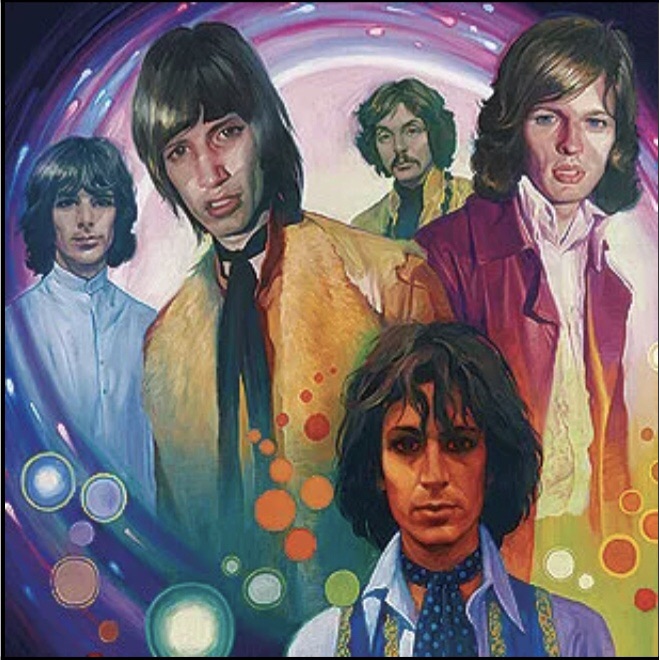
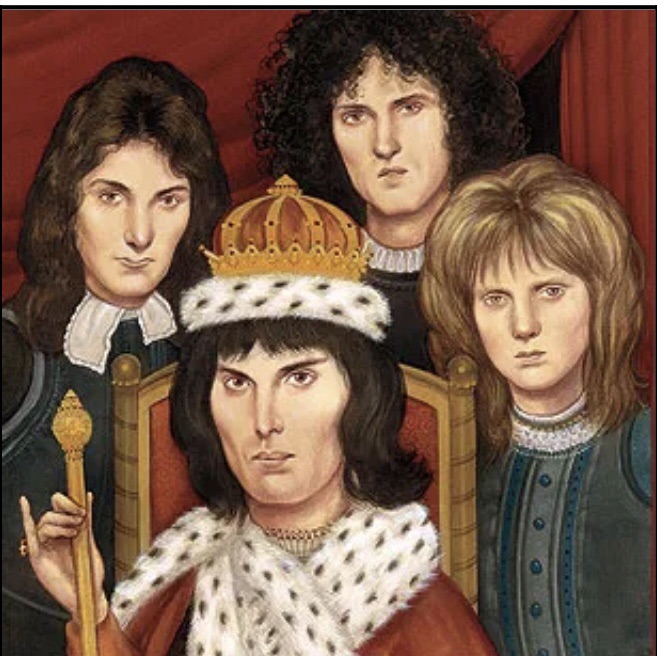
Rollingstone No51 Pink Floyd

By Wayne Coyne, Lead vocalist and guitarist for the psychedelic rick band The Flaming Lips which he formed in 1983. The band was active in the 1980s and 90s hitting the mainstream in 1993 with “She Don’t Use Jelly.”

Illustrator: Dale Stephanos

When I was growing up in the 1970s, Pink Floyd were ever-present. My brothers and my older sister and all their friends constantly played records in their rooms while they smoked pot. Especially Dark Side of the Moon.You heard that every day of your life, for at least three or four years around then.

Pink Floyd’s greatest hits playlist:

https://open.spotify.com/playlist/4pGo5YmyRxn9DF4wCwHStf?si=BBaFb2I-T4Si8XrMIjGifg&pi=kl_XF8tfSUu6n

Turning 14 years old is already a heavy combination of things. For Dark Side of the Moon to be playing in the background during that time was perfect. As you looked deeper into their music, everything you find out leads to something interesting. Pink Floyd were always a group of great creative minds who did whatever the f__k they wanted and didn’t worry about all the little rules.

They had an amazing ability to change between records. You don’t realize how powerful that is when you’re just a listener. But being a person who’s made 14 records, you see how big a deal it is. They have a phase one, a phase two, maybe even a phase three and four. A lot of groups — if they’re lucky — just have a phase one.

They started out with Syd Barrett writing these whimsical stories, these songs that were kind of surf-rock, kind of R&B, but in his own f__ked up way. Later you had Roger Waters evoking these big, universal landscapes of human crises. And Pink Floyd came to embrace this idea of “We can play stadiums and we can fill them up with giant fucking pig balloons.” Their music could just always hold that.

Yet, despite all these different pieces moving around, there is a lot of very simple musicality going on. Compared to the prog-rock groups they get thrown in with — King Crimson or Yes or Genesis — their music is actually very simple. You can grasp the chord progressions and melodies the first time you hear them. I love all those other groups but with Pink Floyd I understand the emotion.

Take a song like “Fat Old Sun,” from Atom Heart Mother. Living in Oklahoma, I sometimes can’t relate when English bands sing about English things. When David Gilmour sings about the sun going down, there’s something simple about it. It didn’t seem like the sunset was happening in some king’s country, in some other world. It seemed like he was singing about me walking in the sunsets in Oklahoma.

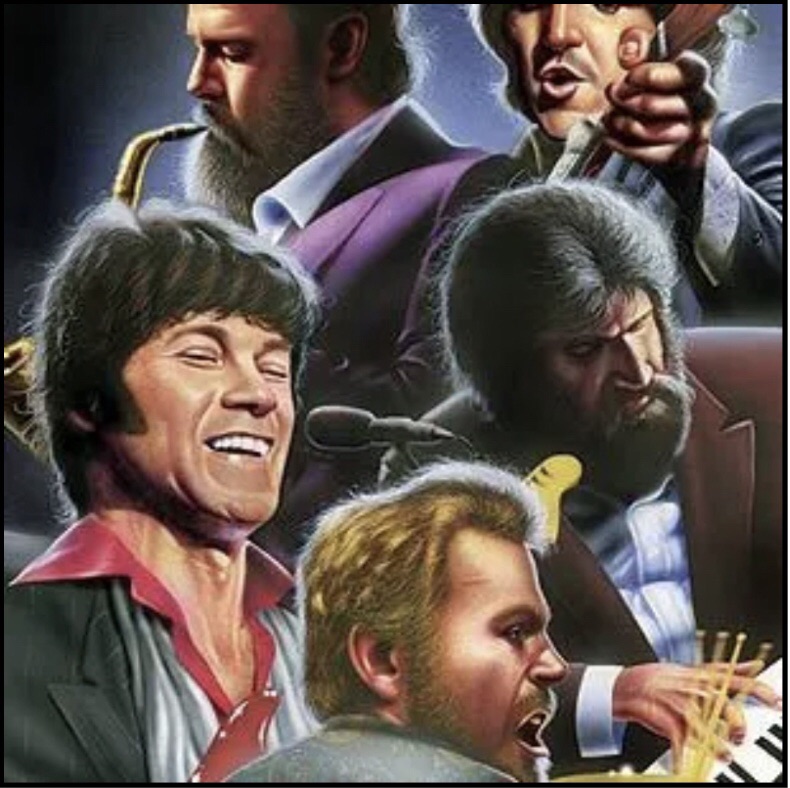
Rollingstone No50 The Band

By Lucinda Williams, acclaimed, award-winning singer/songwriter. Her music has been highly influential and covered by a multitude of artists. She is also known to be an extraordinary interpreter who, like all great interpreters, has the ability to inhabit a song and make it her own. Her singles “Right in Time” (1998) and Grammy nominated “Can’t Let Go” (1998) were her greatest commercial successes.

Illustrator: Dale Stephanos

I’ve used The Band as an example for my career. When I first tried to get record deals, nobody knew how to market me, because my sound didn’t necessarily fit into any stereotypes. But the Band did a little bit of everything.

I remember when Music From Big Pink came out, in 1968. I was living in Arkansas at the time. You couldn’t categorize the Band’s sound, but it was so organic — a little bit country, a little bit roots, a little bit mountain, a little bit rock — and their vocal styles and harmonies totally set them apart. Each member brought something, because they were all consummate musicians.

Their work as the Hawks on Bob Dylan’s 1966 tour is some of the best rock & roll ever made, with Robbie Robertson playing just amazing guitar. The Band let Dylan branch out stylistically. In his writing, Dylan was getting away from those heavy, metaphorical songs on Blonde on Blonde and writing cool little tunes.

The Band’s greatest hits playlist:

https://open.spotify.com/playlist/2QtF8RiTaWPoX7HTDaXCNl?si=0jzLooIzRqSDlXxnQkEz7A&pi=dHqdBzdPSpaVP

Their songs are uncoverable — who can pull off Richard Manuel’s incredible high voice? — but we tried. Any time we sat around singing songs, someone would inevitably pull out a version of “The Night They Drove Old Dixie Down.” My favorite song was “It Makes No Difference.” The sentiment of it is so heart-wrenching. This guy is saying that his lover has just left him, and he’s totally devastated. It’s one of the most beautiful melodies I’ve ever heard.

There is an element of sadness about the Band. The Last Waltz, despite its wonderful music, was sad to see because they had so much more to give. Richard Manuel’s death (committed suicide) was really tragic. I got to meet Garth Hudson when he played on a demo I did back in the mid-Eighties. I just remember he was really quiet, soft-spoken and real sweet. And he played like an angel.

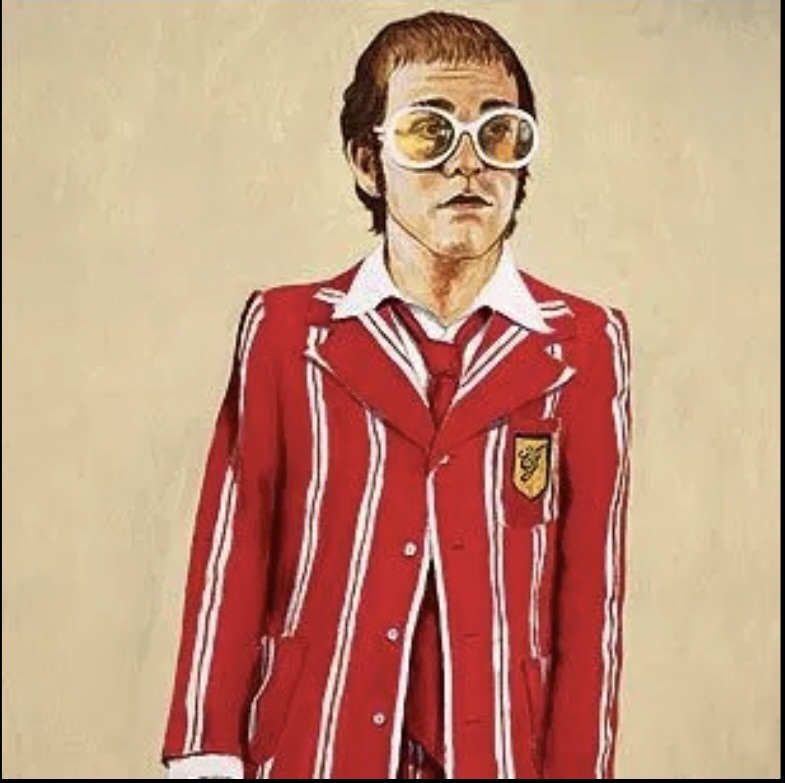
Rollingstone No49 Elton John

By Billy Joel

Illustrator: Charles Miller

Elton John defines himself as a rock star, and he really lives it. More like a Roman aristocrat rock star. I’ve noticed when we’ve toured together that backstage you’ll see young men with togas, dressed as centurions, with little fig leaves around their heads. Inside Elton’s dressing room there are a thousand pairs of sunglasses, a hundred pairs of shoes and about 50 Versace suits laid out. He’s f__king royalty, and I love it. My dressing room looks like the back of a deli. I have one of those meat platters that sea gulls circle around.

Elton kicks my ass on piano. He’s fantastic — a throwback to Jerry Lee Lewis and Fats Domino and Little Richard. His spontaneous, improvisational playing always challenges me. And that is his contribution to rock & roll and pop: his musicianship. Before him, rock was a bunch of James Taylors — guitar-based singer-songwriter stuff. Elton brought back fantastic piano-based rock. Elton knows what his instrument is capable of. The piano is a percussion instrument, like a drum. You don’t strum a piano. You don’t bow a piano. You bang and strike a piano. You beat the shit out of a piano. Elton knows exactly how to do that — he always had that rhythmic, very African, syncopated style that comes from being well versed in gospel and good old R&B. Elton and Bernie Taupin did some brilliant songwriting during the first part of his career, from Elton John to Goodbye Yellow Brick Road.

Elton John’s greatest hits playlist:

https://open.spotify.com/playlist/0ydfO36a9Dexg2voPXhhNS?si=Ke7LekKaSjOc104Uqbinzg&pi=ZwYNc1zaRI6Pi

The first time we met we were in Holland, at a hotel in Amsterdam. It was in the mid-Seventies, and he was at his peak — it was the height of the Elton John era — and I was just starting out as the “Piano Man” guy. We went into a private room and we just talked. I told him what a fan I was, and he said he knew my stuff. I thought this was so cool: There were a thousand guitar players, but there were only two of us. The English piano player and the American piano player. And, seminally, rock & roll was not just guitar. Elton gave a funny-looking guy like me — and so many others — an opportunity to be a singer-songwriter. When Elton was in his first band, Bluesology, he never thought he could be a rock star. Same as me. I didn’t look like Mick Jagger or Paul McCartney or Jim Morrison. Sure, we thought we’d be piano players for big rock bands, but funnily enough he ended up with big, silly glasses and crazy outfits, and I ended up with my dopey stage behavior, both of us rock stars. To this day we laugh about that. And he keeps going on and on. I haven’t put out a song since 1993, and he asks me, “Billy, why don’t you write some new songs?” I say, “Elton, why don’t you write lessnew songs?” At $200 a ticket, you can’t shove new stuff down people’s throats. So much of his stuff is amazing, though: “Rocket Man,” “Crocodile Rock,” “Bennie and the Jets,” “Tiny Dancer,” “Your Song” and “The Bitch Is Back.” That’s what they want to hear.

Any melodic songwriter owes a debt to Elton John, the supreme melodist. I don’t know shit about new bands, but anybody who plays the keyboard and likes melody must give a nod to Elton. Like Cole Porter, Richard Rodgers, Carole King and the Beatles, he carries on the rich tradition of writing beautiful melodies.

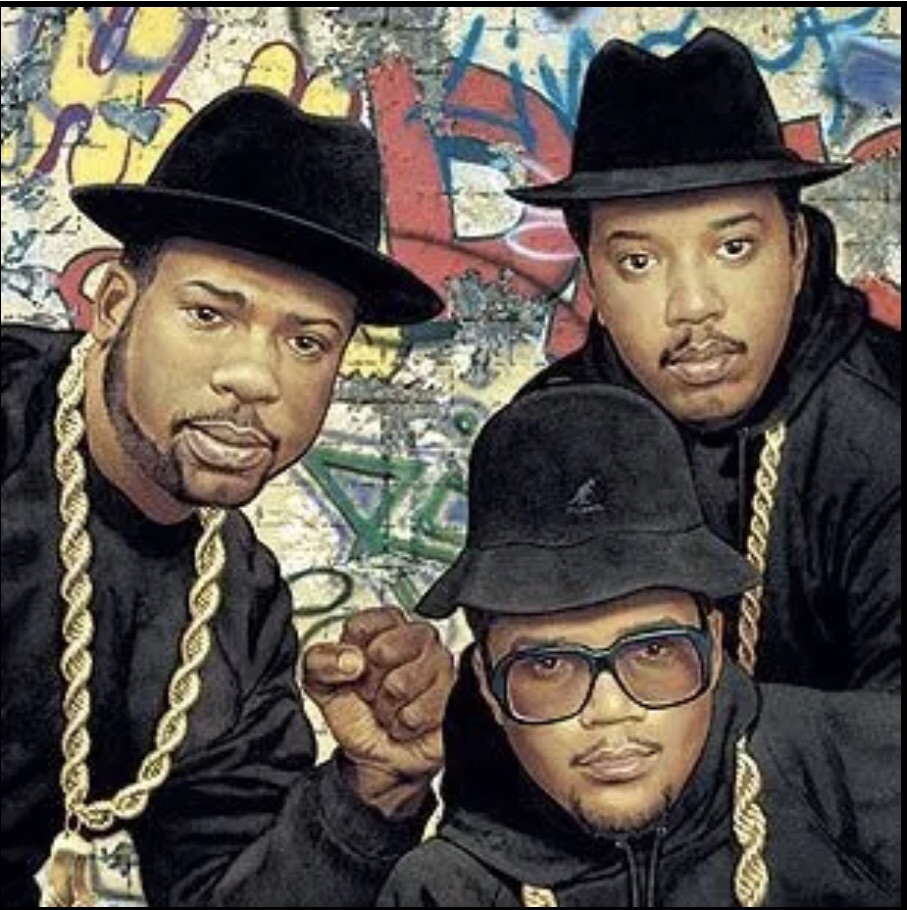
Rollingstone No48 Run – DMC

(This is the tenth artist that made this Top100 list that began producing records in 1983. So they are not part of the 1950s and 1960s generation).

By Chuck D, An American rapper best known as the leader and frontman of the hip hop group Public Enemy which he founded in 1985.

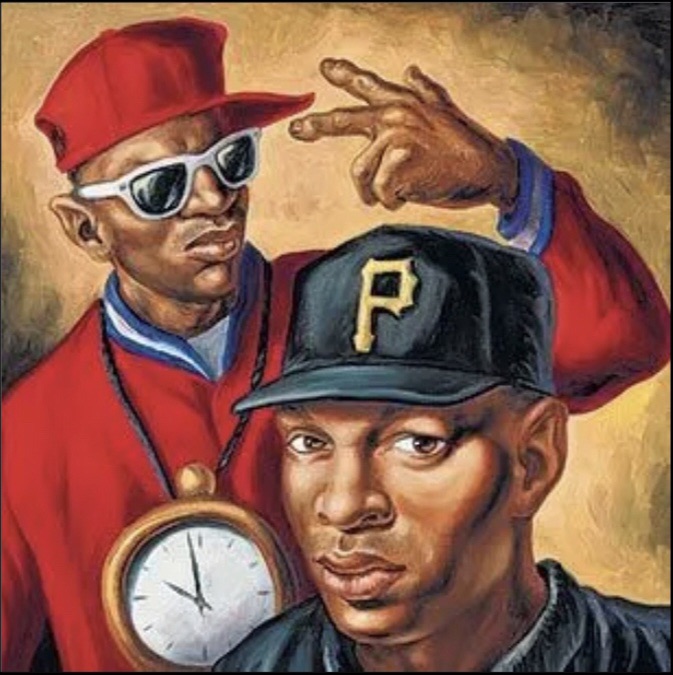
Illustrator: Mark Stutzman

Run-DMC were the Beatles of hip-hop — Run and DMC were Lennon and McCartney, and Jam Master Jay was George and Ringo rolled into one. Raising Hell was the first true rap album, a complete work of art as opposed to a collection of singles or a novelty item. It’s my favorite album of all time. It incorporated rock, but on rap’s terms. Everyone in hip-hop today can be traced back to Run-DMC.

Run-DMC’s greatest hits playlist:

https://open.spotify.com/album/5CFj95du24x9CwW0raRnmF?si=-qq0EL46QJK-CDBH6-3liQ

They had a whole new energy that revolutionized hip-hop. Older artists like Grandmaster Flash wore disco-style outfits, were from the Bronx and had a different kind of appeal. Run-DMC were from Hollis, Queens, about 15 minutes from where I lived. Hollis was a suburban, not urban, environment, but Run-DMC dressed more like cats off the street — and 25 years later, most rappers still dress the same way.

When I was doing college radio at WBAU on Long Island, we helped break Run-DMC. They were a model for Public Enemy in that we both made loud, blasting records for arenas, not clubs. They had to yell, because their beats and guitar riffs needed it. You couldn’t rap in a low tone over a blaring guitar in an arena.

I was at home in the fall of 2002, and I happened to turn on the TV. Some newscaster said that Jay had been shot and murdered, and I went into shock. Black musicians are not immune to the ills that afflict our community. It’s not popular to say, but it’s the truth, and we must address it to prevent these tragedies in the future.

One little story: In 1984, I told Jay that I was coming to the Spectrum in Philadelphia to check out the first Fresh Fest tour. When I got to the back gate, I sent a message and asked, could he meet me there? And sure enough, in the middle of a concert in front of 20,000 people, he took time out to walk down the ramp, past security and hit me off with two tickets. He gave me some good seats, too. I was forever grateful. That’s who Jay was. He was the type of cat who didn’t forget you. And I will never forget him.

Rollingstone No47 Patti Smith

(This is the nineth artist that made this Top100 list that began producing songs in 1971, so she just missed being a part of the 1950s and 1960s generation).

By Shirley Manson, a Scottish lead vocalist (also plays keyboard) for the rock band Garbage. They had three hit singles in 1995 and three more in 1998. She is known for her distinctive deep voice, forthright style and rebellious attitude.

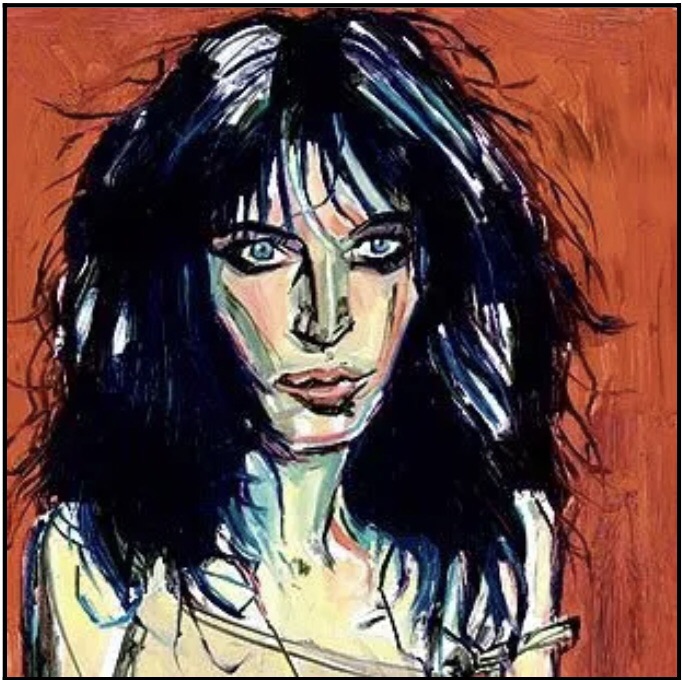
Illustrator: Johanna Goodman

I was about 19 when I first heard a Patti Smith record. It was Horses. I remember sitting there, very taken by the sound of her voice, this ferocious delivery. Later I was struck by how literate her lyrics were, how intellectual and political. I loved how, in her songs, she talked about anything other than the love in her heart for a man. And I loved her image: this non-glam look with the chopped-off hair, looking like a skinny boy. She was the complete opposite of the images that were pumped into me as a child, of what I was supposed to aspire to as a woman.

She is a folk artist, in the way that Bob Dylan is. I loved that she was a poet involved in visual art. It wasn’t just about the music for her. It was everything. And she knew how powerful her image was — that she was really sexy — and how to manipulate that for her art. What Madonna does today, Patti was doing from the beginning. Except Madonna was into selling, period. I felt that Patti’s goal was to use her art to bring comfort and grace — to me, personally. The opening lines of “Revenge,” on Wave, give me the chills to this day: “I feel upset/Let’s do some celebrating.”

Patti Smith’s greatest hits playlist:

https://open.spotify.com/playlist/0BWfn2Qyidbi0Fbq0Fjqbl?si=BQVjrmz-SvWr3g0qd2Zx-A&pi=vELXZUz-Q4aSP

Garbage played a festival with Patti in Athens years ago, and she signed a set list for me: “Power to the people, Patti Smith.” It’s a cliché. But clichés, she understands, can work. I once talked with a young man who was refusing to utilize his right to vote, out of principle. As much as I understood his point, I believe individuals are important. One person can make a difference. When Patti sings “People Have the Power,” it moves me, because I know I am not the only person out there feeling these things. I can only imagine there are millions of people out there whom she is singing to, who feel like me. And when you add up those millions of people, it’s worthwhile.

She is a soldier. She will not be defeated. I look at today’s charts, at the women who are selling the most records, getting the most column inches, and I’m terrified by how so many of them are controlled by a male corporate idea of what women and rebels should be. When some teen-pop singer is taken seriously as a rebellious figure, we have a huge problem. I’m just glad that Patti is still willing to get up there and fight for what she believes in. It makes me feel less alone.

Rollingstone No46 Janis Joplin

By Rosanne Cash, eldest daughter of Johnny Cash. Is successful in her own right. Began singing country in 1978, but achieved great success with her No1 hit “Seven Year Ache” in 1981 (she had two more).

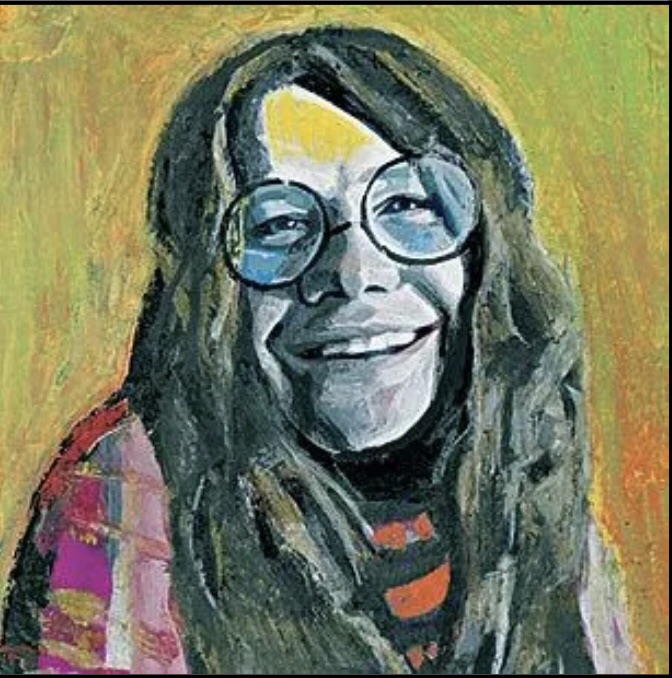
Illustrator: Andrea Ventura.

Janis Joplin was absolutely a barnstormer and a complete groundbreaker. She wasn’t just a great woman in rock — at the time she was the woman in rock. Janis really created this whole world of possibility for women in music: Without Janis Joplin, there would be no Melissa Etheridge. Without Janis, there would be no Chrissie Hynde, no Gwen Stefani. There would be no one.

I was a freshman or sophomore in high school when Janis first connected with me. Pearl was the first record I bought. I remember that I was kind of scared. I think that if Joni Mitchell gave me the idea that a woman could write about her life in a public forum, Janis gave me the idea that a woman could live a wild life and put that out there in a public forum, too. At the time, I was this very proper Catholic girl, and Janis was a frightening presence. But being scared didn’t stop me from buying Janis’ records, and it didn’t stop me from wearing a black armband to school the day she died.

It’s hard to imagine now the extent to which Janis was so completely shocking at the time. There had been blues singers who were wild and unrestrained — but even they tended to be a little more buttoned-down than Janis. She always seemed on the verge of being totally out of control. A few summers ago, I watched the Monterey Pop Festival film for the first time in ages, and I was absolutely stunned by Janis. She had this focus that was relentless. She was a spectacle, like some kind of nuclear being bearing down on the crowd. In the film, you see Mama Cass at the end of Janis’ performance just shaking her head, and applauding, like, “Oh, my God, what just happened?”

Janis Joplin’s greatest hits playlist:

https://open.spotify.com/playlist/3XDukDEqfGGsLiQFIVXuyW?si=NtfhDnZARtOLyZOIZkrD1w&pi=pSfEsgC_Ty-DR

She had an unshakable commitment to her own truth, no matter how destructive, how weird or how bad. Nothing else seemed to matter. She was such an individual in the way she dressed, the way she sang, the way she lived. She loved her whiskey and made no bones about it. This was a full-blown one-of-a-kind woman — no stylist, no publicist, no image-maker. It was just Janis.

The beauty and the power of Janis Joplin as a singer is her complete lack of fear. She held nothing back. She went to the edge every time she opened her mouth. She sang from her toes and from her soul. She could also destroy you when she got vulnerable, like on “Me and Bobby McGee,” where you saw the little girl underneath. But through it all, Janis never lightened up. She didn’t live long enough to lighten up. She was a very fierce, very beautiful bright light that burned out way, way too quickly.

Rollingstone No45 The Bryds

By Tom Petty, An American singer, guitarist and songwriter. Made the big time with The Heartbreakers known for anthems like: “American Girl (1976), Free Fallin (1989) , and I Won’t Back Down (1989).” Later on he was in the super group The Traveling Wilburys (1988-1990) whose other members were: Bob Dylan, George Harrison, Jeff Lynne, and Roy Orbison.

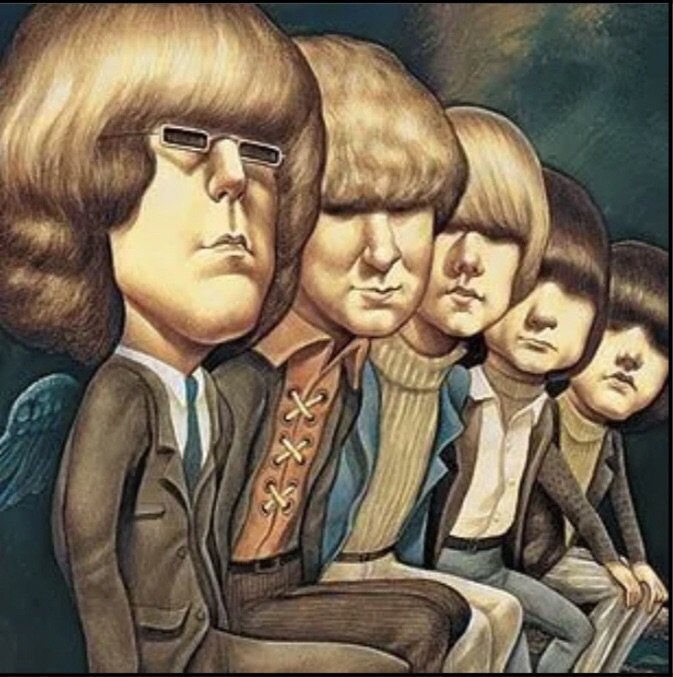
Illustrator: Anita Kunz

The Bryds are immortal because they flew so high. For me, they’re still way, way up there. They left a huge mark. First off, the Byrds were the first credible American answer to the British Invasion. All of folk rock — for lack of a better term — descends directly from the music the Byrds made. They were certainly the first to introduce any sort of country element into rock music. As if all that wasn’t enough, the Byrds spurred on a good degree of Bob Dylan’s popularity, too. And not to be too shallow, but they also were just the best-dressed band around. They had those great clothes and hairdos. That counted for something even then.

The Bryd’s greatest hits playlist:

https://open.spotify.com/album/29BAbRfSWHo4tvAiyOlHpj?si=hw9cAHqcSDeY2KDBgO9c3w

I’ll never forget hearing “Mr. Tambourine Man” for the first time on the radio — the feeling of that Rickenbacker twelve-string guitar and those incredible harmonies. Roger McGuinn told me he took that guitar sound from A Hard Day’s Night, but McGuinn was a banjo player, and he played the Rickenbacker in this rolling, fingerpicking style — no one had really tried it before. George Harrison admitted that “If I Needed Someone” was his take on the Byrds’ “The Bells of Rhymney.” The Byrds were the only American group that the Beatles were friendly with and had a dialogue with. Those original Byrds really changed the world in that short time they were together.

In some ways, they were an unlikely group to become rock & roll stars. Chris Hillman was from the bluegrass world. McGuinn had been in folk groups like the Limelighters and the Chad Mitchell Trio, as well as playing with Bobby Darin. David Crosby came out of the coffeehouse scene, too. Gene Clark played with the New Christy Minstrels. McGuinn once told me that the Byrds had to get together and really learn how to play rock & roll as a group. That was their first quest. Imagine a bunch of recovering folkies trying to learn how to make people dance.

The Byrds represented Los Angeles as much as the Beach Boys, except that the Byrds were the other side of the coin — they were L.A.’s whacked-out beatnik rock group. They’re part of what drew me to Los Angeles and made me want to be in a band. I got to see the Byrds once at the West Palm Beach pop festival on the same bill with the Rolling Stones. In the beginning, that was the original blueprint for the Heartbreakers — we wanted to be a mix of the Byrds and the Stones. We figured, “What could be cooler than that?”

Rollingstone No44 Public Enemy

(This is the eighth artist included in the Top100 list that started releasing records in 1986. Therefore, not a part of the 1950s and 60s generation)

By Adam Yauch (MCA), rapper, bassist, filmmaker and founding member of the hip hop group The Beastie Boys (Eight hits between 1986-2011).

Illustrator: Owen Smith.

No one has been able to approach the political power that Public Enemy brought to hip-hop. I put them on a level with Bob Marley and a handful of other artists — the rare artist who can make great music and also deliver a political and social message. But where Marley’s music sweetly lures you in, then sneaks in the message, Chuck D grabs you by the collar and makes you listen.

I remember the first time I heard “Rebel Without a Pause”: We were on tour with Run-DMC, and one day Chuck D put on a tape they had just finished. It was the first time they used those screeching horns along with this incredibly heavy beat — it was just unlike anything I had ever heard before. It blew my wig back. Later I remember listening to “Black Steel in the Hour of Chaos” over and over again on headphones after It Takes a Nation of Millions to Hold Us Back came out. The premise of it — that the current U.S. prison system has many parallels to slavery — blew my mind, and the music is incredible: that Isaac Hayes sample and Chuck D’s rhymes about a jailbreak. Like a lot of their songs, it’s like watching a movie.

Public Enemy’s greatest hits playlist:

https://open.spotify.com/playlist/0bGgyS5INYh5PnuzankoF5?si=JLaJTZALTLG6bt2OvA-tDA&pi=av04eX3QTA-Sa

PE completely changed the game musically. No one was just putting straight-out noise and atonal synthesizers into hip-hop, mixing elements of James Brown and Miles Davis; no one in hip-hop had ever been this hard, and perhaps no one has since. They made everything else sound clean and happy, and the power of the music perfectly matched the intention of the lyrics. They were also the first rap group to really focus on making albums — you can listen to Nation of Millions or Fear of a Black Planet from beginning to end. They aren’t just random songs tossed together.

To me, Chuck D is the most important MC in hip-hop. On a strictly MC’ing-skill basis, I rank him up there with the best: His power and cadences on lines like “Yes/The rhythm, the rebel/Without a pause/I’m lowering my level” is unmatched. Then if you take into account what he’s actually saying, it puts him on a different plane from any other MC. The combination of him and Flavor Flav is incredibly effective: Chuck is so straight and direct, and Flav brings this wild randomness to it. They complement each other perfectly.

Public Enemy made hip-hop that was more than entertainment. They inspired a lot of people who believed that you can effect change through music, and they’re still inspiring to me.

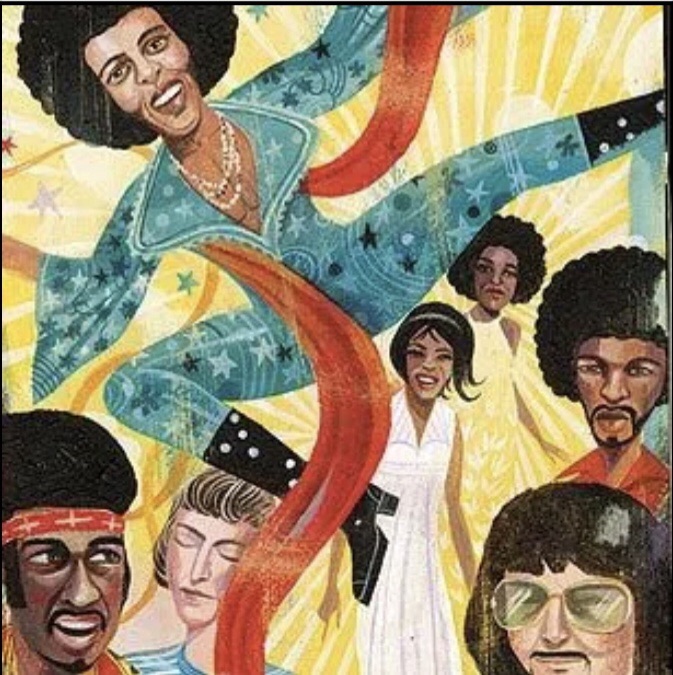
Rollingstone No43 Sly and The Family Stone

By Don Was, A musician, record producer (close to 100M albums), music director, film composer, documentary filmmaker and radio host. In recent years, is president of Blue Note Records (since 2011) and toured as bassist for Bob Weir and The Wolf Bros (since 2018). Produced records for a wide range of artists including: The Rolling Stones, Bob Dylan, Willie Nelson, John Mayer, Wayne Shorter, Kris Kristofferson, Iggy Pop, The B 52s, Brian Wilson, Elton John, Garth Brooks, Ryan Adams and Bonnie Raitt (whos “Nick of Time” album in 1989 won the album of the year). Illustrator: Olaf Hajek.

Sly and The Family Stone didn’t have to say, “Why can’t we all just get along?” Looking at the band members and listening to their shared sound made the statement. On the early Sly and the Family Stone records, there was just no acknowledgment of race; they’re truly utopian. A real idealism comes across loud and clear on songs like “Everyday People” and “Hot Fun in the Summertime,” and people need messages like that. The band had blacks and whites, men and women. Seeing this group that embraced so many elements of society sort of drew you in as an extended family member. This was a joyous noise and a joyful vision. Sly was monumental in his contribution to music.

Sly and The Family Stone’s greatest hits playlist:

https://open.spotify.com/playlist/1zt0DU3WTrrZkvVQP1BTui?si=ultOz-CcTeagUUbpF-4vIQ&pi=mSIQvIhwRCO0o

On musical terms, the Family Stone were an amazing band, but there was no doubt Sly Stone was the leader. He is a singular funk orchestrator; Duke Ellington is probably the best reference point. No one had taken elements of funk and combined them the way Sly did. Sly orchestrated those early records in very advanced ways — a little guitar thing here that would trigger the next part that would trigger the next part. Then, as time went on, Sly started using some more dissonant colors; he became like the Cézanne of funk. It’s like he took these traditional James Brown groove elements and started putting orange into the picture.

Somewhere along the way, around the time of There’s a Riot Goin’ On, Sly got disillusioned. I think he discovered that the utopian worldview worked in his band, but when he got out in everybody else’s world, he still couldn’t walk into a bar in Mobile, Alabama, without getting into a fight. That will change you. Freshis from a guy who realizes that nobody — not Sly Stone, not the Rothschilds — nobody can mess with the forces of history. Que será será.

Fresh is a very deep piece of work. It’s the sound of a guy who has hit the pinnacle and is free-falling. Why is Sly singing “Que Sera Sera” on the album? Because he’s got no f_____g control. When the magic hits, it’s a gift that can go away just as quickly as it came.

Without Sly, the world would be very different. Every R&B thing that came after him was influenced by this guy.

The so-called revolution that was coming at the end of the Sixties: We might have lost that one, but Sly won his own personal revolution, musically and in the minds of the audience. I just hope he knows that, I hope he’s not sitting around with any kind of remorse. Because by any real criteria that you measure success, this guy is a titan.

Rollingstone No42 Van Morrison

By Peter Wolf, The lead singer of The J. Geils Band from 1967-1983. They enjoyed heavy airplay of their videos “Centerfold” and “Love Stinks.”. Illustrator: Shawn Barber.

Back in 1968, the Boston Tea Party was the premier club for rock bands. My band, the Hallucinations, composed of art-school dropouts heavily drenched in R&B and Chicago blues, used the club as a rehearsal hall whenever it was available. The music we played could be described as primal, raw and heavy on attitude. We were in the midst of rehearsing one day, getting ready to open for the great bluesman Howlin’ Wolf, when something caught my eye, and I looked over to see a stranger looming in the doorway. I had no idea who he was or what he was doing there, so I went over to find out what he wanted. In a thick brogue, he asked about places to play in Boston.

Once I figured out who it was, I was both excited and perplexed. Excited because I’d known and admired Van Morrison’s work from his debut on the charts with his group, Them. Perplexed because he seemed so lost and adrift. Despite the recent Top 40 success of his song “Brown Eyed Girl,” he’d been having difficulty establishing his identity as a solo artist, but that couldn’t account for the bleakness of his mood.

Van Morrison’s greatest hits playlist:

https://open.spotify.com/playlist/5BfdroCg8KD9tUGFeb2mhi?si=uJPVgkveTVe8Usm-_HbvwQ&pi=akc5TBGpSbiKb

As we talked, it became clear that we shared a passion for the same kind of music. Van gradually loosened up, and we made plans to get together again. He started dropping by the FM station where I used to do an all-night radio show. Soon we began to hang together, going out carousing in the night and sometimes getting into more mischief than we bargained for.

Van was living in a small, street-level apartment in an old wooden house on Green Street in Cambridge. He, his new wife, her young son. They were flat-out broke. The place was bleak and barren, with little more than a mattress on the floor, a refrigerator, an acoustic guitar and a reel-to-reel tape recorder. They had no phone and little food. It was hard times: He was in exile, with a family to feed, no money, no band, no recording contract and no promise of any safe or legal way out. Even the reason he moved to Boston remained a mystery.

Whenever Van had to make business calls, he would walk several blocks to my place to use the phone. It seemed that my apartment also offered him a break from the near-despair of his complicated and unresolved life. He would spend endless hours going through my records. Over and over, we would listen to what he called “the gospel” of Jackie Wilson, Ray Charles, Hank Williams, Louis Jordan, Billy Stewart, Elvis and John Lee Hooker. “They’re the real deal,” he’d say. He played Gene Chandler’s live version of “Rainbow ’65” so much, I had to get a new needle for my turntable.

Many nights were spent checking out different clubs, but few people knew who Van was. Sometimes he would show up at my band’s gigs. One night, as we started the intro to his song “Gloria,” I called him onstage even though he was reluctant to sing it. When he came up, he went into a brilliant scat that rivaled King Pleasure himself. Unfortunately, the audience didn’t want this “unknown” singer changing the familiar delivery of a song that was fast becoming a true rock classic.

Eventually, Van managed to assemble a two-piece acoustic band and booked himself at a coffeehouse/jazz club that could only be described as subterranean. It was located three stories below a pool parlor and was deep, damp and dark. Egyptian motifs were painted on its yellow smoke-stained walls. The club justly deserved its name: the Catacombs. I borrowed a tape machine to capture the evening’s music. What he performed that night later turned out to be the song cycle that made up the groundbreaking Astral Weeks.Though only a handful of people showed up, when Van finished playing, there was no doubt that the few present had witnessed something extraordinary.

When I see Van now, I still see the same raw power and passion that he displayed more than 40 years ago in the long-forgotten Catacombs. I admire the strength and mysterious ability to transcend the despair and chaos that could have so easily trapped and overwhelmed him. He has created a body of work that reflects without imitation. The gospel according to Van: “Turn it up, turn it up, a little bit higher/You know it’s got soul” and “it’s too late to stop now!”