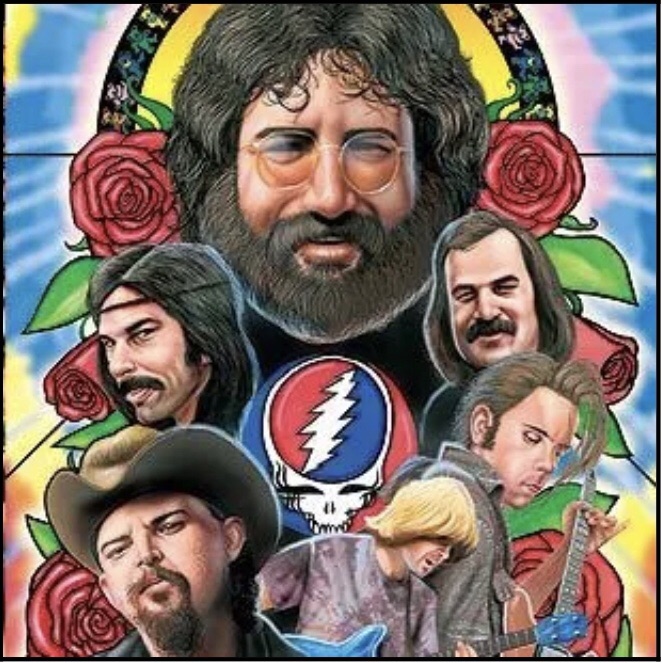
Rollingstone No57 Grateful Dead

By Warren Haynes, Best known for his work as a guitarist (Gibson remodeled his 1958 Les Paul to his specifications and then made it their signature model) with the Allman Brothers (1989). Also the founder of the jam band Gov’t Mule (1994).

Illustrator: Dale Stephanos.

I didn’t grow up a Deadhead. I didn’t become a big fan until 1989. I first saw the band in 1979 — I was 19 — but my head was somewhere else at the time. My wife, Stefani, was a Deadhead, though, and after we met, in 1989, we’d go to see them every chance we’d get. One night, at Madison Square Garden, Bruce Hornsby — who was playing keyboards with them — pulled us up onstage and sat us behind his piano. We were 10 feet from Jerry Garcia, and you could see how that audience zeroed in on him. He was the focus of everything. There was a synchronicity between the Deadand the crowd, and it was mesmerizing to watch Jerry, in his own understated way, steering that ship — knowing it was a big ship that could barely be steered, but if anybody could steer it, it was him.

Obviously, most of today’s jam bands are influenced by the Dead. But what disappoints me about a lot of current music is that you don’t hear any history in it.

The Dead were aficionados of folk, acoustic blues and bluegrass — particularly Garcia. In the songs he wrote with Robert Hunter, and in Bob Weir’s stuff too, you’re also hearing music from 40 years ago. Everyone focuses on the magic of Jerry’s guitar playing and the vulnerability of his voice, but his sense of melody and chord changes was unbelievable. The ballads especially connected with me: “Loser,” “Wharf Rat,” “Stella Blue.” My song “Lay of the Sunflower,” on the Gov’t Mule album The Deep End, has a lot of Garcia’s melodic sensibilities.

Grateful Dead’s greatest hits playlist:

https://open.spotify.com/album/4gEj5bUAYQI6Z9aCf6Ua5E?si=wcdfZo89QjK8gQQQRjigrA

Before I joined the Dead in 2004, I played with Phil Lesh for about five years. He is one of the most original bass players ever. His background was in classical music; he looks at the bass guitar as a piece of the orchestra, like a low-pitch brass instrument. His job isn’t just holding down the root notes — he and the drummers, Mickey Hart and Bill Kreutzmann, are moving all over the place. A lot of the magic in the Dead’s music came from Phil and Jerry learning how to play together, combining Phil’s approach with Jerry’s unique blend of influences.

Jerry is still one of the few guitarists where as soon as you hear him, you know instantly who it is. As a guitar player, that is the thing I strive for: the distinct, recognizable personality that comes out in every note. There was a humanity in Jerry’s guitar work as well as his singing that drew you in. He was a very personal guitarist; he played with more heart and soul than technique. And to me, that’s what the best music is made of.

As a band, the Dead also redefined success. They created this following that grew and grew, and they did it without compromising themselves. They survived in a world where survival didn’t seem possible. They bucked the system and encouraged their fans to do the same: to be free thinkers. There are a lot of Deadheads who were completely different people before they connected with the Grateful Dead.

The Dead still believe in that message. When I’m with the Allman Brothers, the band always leaves it up to me how much of Duane’s influence I should show. The Dead are like that too. They’re never going to tell me, “Play it more like Jerry” or “less like Jerry.” It’s always, “Do what you think is right.”

Rollingstone No56 Dr. Dre

(This is the twelfth artist that began producing music in 1985, or 25 years after the 1960s generation).

By Kanye West, a rapper, singer and record producer. He is known for his varying musical style and polarizing cultural and political commentary. He topped the charts four times: “Slow Jamz” (2004), “Gold Digger” (2005), “Stronger” (2007) and “E.T” (2011).

Illustrator: Sterling Hundley.

Do hip-hop producers hold Dr. Dre in high esteem? It’s like asking a Christian if he believes Christ died for his sins. Dre has a whole coast on his back. He discovered Snoop — one of the two greatest living rappers, along with Jay-Z — and signed Eminem, 50 Cent and the Game. He takes artists with great potential and makes them even better. I wonder where I’d be right now if Dre had discovered me.

I remember hearing Dre’s music before I really knew who he was. I had a tape of Eazy-E’s Eazy-Duz-Itwhen I was 11 years old (until my mother found out it had curses on it and confiscated it). I didn’t know what “production” was back then, but I knew I loved the music. The more I learned about producing hip-hop, the more I respected what Dre was doing. Think about how on old N.W.A records the beat would change four or five times in a single song. A million people can program beats, but can they put together an entire album like it’s a movie?

When I was learning to produce, working in a home studio in my mother’s crib, I tried to make beats that sounded exactly like Timbaland’s, DJ Premier’s, Pete Rock’s and, especially, Dr. Dre’s. Dre productions like Tupac’s “California Love” were just so far beyond what I was doing that I couldn’t even comprehend what was going on. I had no idea how to get to that point, how to layer all those instruments. The Chronic is still the hip-hop equivalent of Stevie Wonder’s Songs in the Key of Life. It’s the benchmark you measure your album against if you’re serious. But it’s “Xxplosive,” off 2001, that I got my entire sound from — if you listen to the track, it’s got a soul beat, but it’s done with those heavy Dre drums. Listen to “This Can’t Be Life,” a track I did for Jay-Z’s Dynasty album, and then listen to “Xxplosive.” It’s a direct bite.

Dr. Dre’s greatest hits playlist:

https://open.spotify.com/playlist/7LuTpRjNbOF5ITXiZkIS35?si=C2Jf2dn0Rx-B0MLaPyT_Yg&pi=dUEd3TTIRnmpa

I first met Dre in December of 2003. He asked me to produce a track for the Game. At first I was star-struck, but within 30 minutes I was begging him to mix my next album. He’s the definition of a true talent: Dre feels like God placed him here to make music, and no matter what forces are aligned against him, he always ends up on the mountaintop.

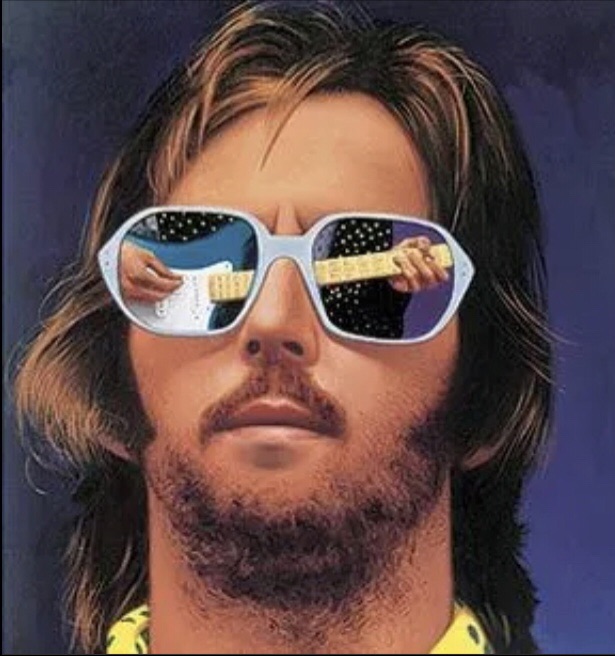
Rollingstone No55 Eric Clapton

By Steven Van Zandt, plays guitar and mandolin for Bruce Springsteen’s E Street band (1972-1995).

Illustrator: Dan Brown.

Eric Clapton is the most important and influential guitar player that has ever lived, is still living or ever will live. Do yourself a favor, and don’t debate me on this. Before Clapton, rock guitar was the Chuck Berry method, modernized by Keith Richards, and the rockabilly sound — Scotty Moore, Carl Perkins, Cliff Gallup — popularized by George Harrison. Clapton absorbed that, then introduced the essence of black electric blues: the power and vocabulary of Buddy Guy, Hubert Sumlin and the three Kings — B.B., Albert and Freddie — to create an attack that defined the fundamentals of rock & roll lead guitar.

Maybe most important of all, he turned the amp up — to 11. That alone blew everybody’s mind in the mid-Sixties. In the studio, he moved the mic across the room from the amp, which added ambience; everybody else was still close-miking. Then he cranked the f__king thing. Sustain happened; feedback happened. The guitar player suddenly became the most important guy in the band.

Intellectually, Clapton was a purist, although there was little evidence of it in the beginning. He supercharged every riff he knew, even things I remember as note-for-note tributes, like Freddie King’s “Hide Away,” on John Mayall’s Bluesbreakers With Eric Clapton. When he soloed, he wrote wonderful symphonies from classic blues licks in that fantastic tone, with all of the resonance that comes from distortion. You could sing his solos like songs in themselves.

I first saw Clapton with Cream, at the Cafe Au Go Go in New York in 1967 — sort of. I stood outside. It was sold out. I couldn’t get in. But you could see them — the band was right in the window. And it was loud, even outside. In those days, musically, Clapton was a total wild man. He stood there, not moving a muscle, while he issued the most savage assault you had ever experienced, unless you were at the debut of Tchaikovsky’s “1812 Overture” and your seat was in front of the cannon. And when his creativity, passion, frustration and anger all came together, it was frightening. His solo in “Crossroads” on Wheels of Fire is impossible: I don’t know how he kept time while he played.

Eric Clapton’s greatest hits playlist:

https://open.spotify.com/playlist/4zxVVklsStSRg57fKm1Z8z?si=MyowhHYRRneYXqZDPNVOqQ&pi=ucUiWGNvR5Wrx

I’ve never said more than a casual hello to Eric, so none of this is inside information. But I believe that his guitar playing changed radically in the early Seventies because singing and songwriting became more important to him, and Robert Johnson had a lot to do with that. Clapton was so moved by Johnson’s music that he wanted to write and sing with the same passion, clarity and truth. You hear the frustration — of not being able to do that — in his Sixties guitar work. The first time I heard real anger and aggressive sexuality expressed in guitar playing was on that Mayall record. If the solo in “Have You Heard” isn’t the sound of a cock ripping through trousers on its way to the promised land, I don’t know what is.

Bob Dylan’s Basement Tapes and the Band’s Music From Big Pinkstarted a move back to American traditional music, and those recordings were a big influence on Clapton. Around the same time, Delaney and Bonnie Bramlett were encouraging him to write and sing. You can hear how good he is at both on Eric Clapton, the album he made with them, as well as his change in tone from Gibson-dirty to Stratocaster-clean.

Layla was, for me, the last time everything — the singing, songwriting and guitar playing — were all at the same high intensity level. It’s Clapton’s most original interpretation of the blues, because the hellhounds on his trail had a face: unrequited love. But Clapton’s guitar playing is still terrific. The thing is, he had seven years of the most extraordinary, historic guitar playing ever — and 40 years of doing good work. Being the best has got to wear you out. So he pulled back, like Dylan and Lennon did. The sprint is cool — the marathon is better. Clapton has followed in the footsteps of his mentors: He’s become a journeyman.

Anyone who plays lead guitar owes him a debt of gratitude. He wrote the fundamental language, the binary code, that everyone uses to this day.

The day may come, if you’re a young rocker, when you’ll hear one of Clapton’s mellow, contemporary ballads on the radio and think, “What’s the big deal?” Put on “Steppin’ Out.” And bow down.

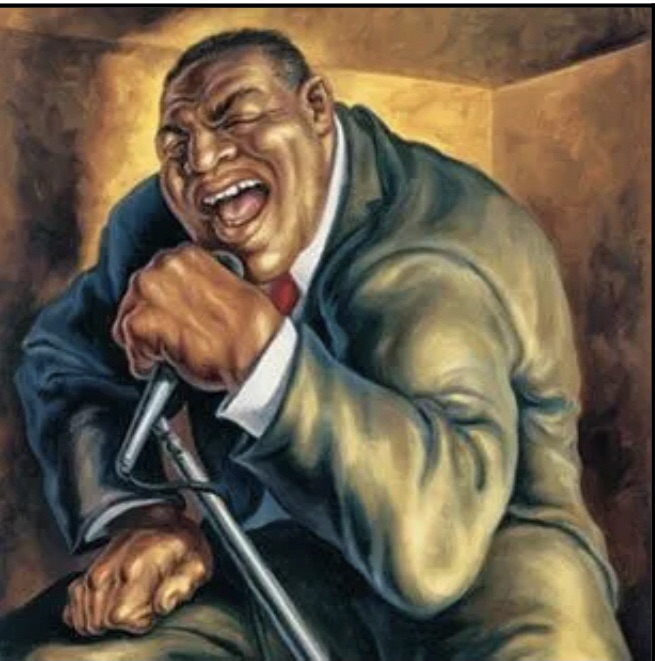
Rollingstone No54 Howlin’ Wolf

By Buddy Guy, an American Chicago blues guitarist. He has been active since 1953. He has won eight Grammy Awards. He was also a session guitarist for Muddy Waters. In 1957, he released one of his better albums: “I Left My Blues in San Francisco.”

Illustrator: Owen Smith.

That man was the natural stuff. When I first heard Howlin’ Wolf’s records, I thought that deep, scratchy voice was a fake voice, just the way he sang — until I met him. He said, “Hello,” and I thought, “Uh-oh, this isn’t fake. This is for real.” Wolf’s conversation was the same as his singing. Matter of fact, the first time I met him, I started tapping my feet as he was talking.

His first big records, like “Moanin’ at Midnight” and “How Many More Years” — I’d hear them on the radio when I was still in Louisiana, on WLAC out of Nashville. We had an old battery-powered radio, and we’d listen to this half-hour program that came on at night. I’d hear the man’s voice and try to picture what he looked like. I thought he was a big, light-skinned guy. Then I went up to Chicago — September 25th, 1957. The next year, I was meeting all of the great blues musicians: Muddy Waters, Sonny Boy Williamson, Howlin’ Wolf. And when I saw Wolf, yes, he was a big guy. But he wasn’t light-skinned at all. Boy, was I wrong.

Howlin’ Wolf’s greatest hits playlist:

https://open.spotify.com/album/5C3fhao58c0U8b59cD0PX7?si=P-rTsDwNQs6VuG-A0hKdOg

And he used to put on such a show. He would get down on the floor, crawl like a wolf and sing in that voice: “I’m a tail dragger.” He would do this boogie-woogie thing, around and around — like the kids used to do with the hula hoops, where you had to go around and around at your waist, to keep the hoop going. That was the kind of shit he was doing. I’d see that and think, “Man, there goes the Wolf.”

He was so exciting to be on a show with. Wolf was a big man, but he could really move. It was like when the Chicago Bears had that player the Refrigerator. People think football players can’t move when they’re that big. And people expected the Wolf, because he was such a big guy, to just sit in a chair and belt it out. No, man, he had all that action. He had everything you wanted to see. He’d crawl around, jump around. His fists were as big as a car tire. And he would ball that fist up. When I started getting calls to come and play on some cuts behind him, I’d think, “Oh, shit, I better play right.” I’d heard he was mean. I was told that. But, you know, I never had a cross word with the man the whole time, right up to when he passed away.

The reason I got a chance to play on sessions with him — on songs like “Killing Floor,” “Built for Comfort” and “300 Pounds of Joy” — and a lot of musicians better than me didn’t get those dates, was because they would come in thinking, “This is my opportunity to blow the Wolf offstage.” There was no way I could say that. This was my opportunity to learn something from the Wolf. But Wolf was not a demanding person. If you played something that made him smile, he would look back at you with that smile. When he did, to me, I was getting paid.

I played with Muddy, too, and it was so great to play with both of them. I heard a rumor that Wolf and Muddy didn’t get along — I never saw that. Jimmy Rogers, who played in Muddy’s band, used to laugh and joke about what Wolf had to say about Muddy and what Muddy would say back. But all of them talked bad about each other, calling everyone “motherf__ker.” That was their thing. With musicians, ” motherf__ker” was the love word. And when Wolf said, “Motherf__ker, you can’t play,” what he was really saying was, “I’m gonna fire your ass up. If I tell you you can’t play, then you’re gonna bring it on.” This is the way Wolf treated you. That would signify for you to show your shit.

Everything you wanted was right there, touchable to me, in that voice — even when Wolf wasn’t singing. We used to have these Blue Mondays in Chicago that would start at seven o’clock in the morning. That’s when we’d all get together after playing and just do a conversation, man. I would sit and listen to Wolf talk. It didn’t have to be about music. He loved fishing, he loved sports. To me, it all sounded like music from heaven.

People don’t know him the way they should now. When Muddy died, they interviewed me on television, and they asked me, “What should be done?” I said most cities with famous musicians, like Chicago — they end up naming a street or something after them. And they got the street that Muddy lived on most of his life named after him. But it never happened for Wolf. And the younger generation coming up now — if you don’t talk about the music or the artists, they don’t know them. My children didn’t know who I was until they were 21 and were able to come in the clubs and see me.

We got to go back and do some digging. We have to let people know that Howlin’ Wolf — and Muddy and Little Walter and all these cats — made Chicago the world capital of the blues. Chess Records is a landmark. But who made Chess Records? What about those people we done forgot about, like Wolf?

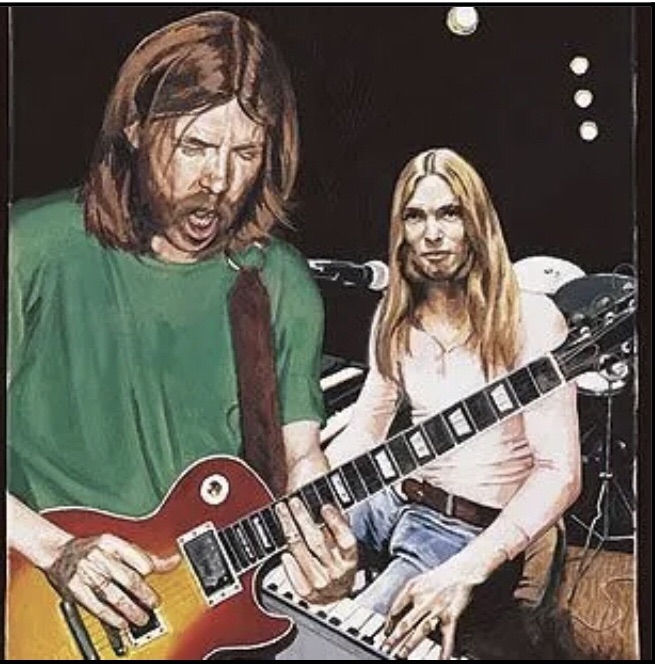
Rollingstone No53 The Allman Brothers

By Billy Gibbons, An American rock musician, best known as the primary vocalist and guitarist of the blues band ZZ Top (formed in 1969).

Illustrator: Josie Jammet

In a way, their name says it all. It wasn’t just about the fact that Duane and Gregg Allman had the same parents. The Allman Brothers Band was a true brotherhood of players — one that went beyond race and ego. It was a tlhing of be.

The Allmans were without question the first great jam band, and they took the jam to heights that it had not previously reached. They played traditional blues mixed with their own unique brand of rock & roll, and there was nothing but strength in that group.

Duane Allman played what he wanted to hear. There have been bottleneck-guitar players forever, from the Twenties through the Sixties, but Duane began doing things no one had ever done before. He had a tone and a style that were uniquely his. He was just a stunning and singular musician who was gone way too soon.

Then there was his kid brother, Gregg. His singing and keyboard playing had a dark richness, a soulfulness that added one more color to the Allmans’ rainbow. The Allman Brothers had respect for the roots of this music. They learned from the blues, and they continued to interpret the form in their own manner. They took something old and made something new.

The Allman Brother’s greatest hits playlist:

https://open.spotify.com/playlist/3xTk7HCdQixZ7Pdi9JbO0p?si=ym2f1S6qT_StILepsem5Hg&pi=le0-ecdaRJ6ZX

I was lucky enough to see the Allmans up close in the beginning. I first became aware of them when they were breaking out of Macon, Georgia. They had played Austin and made a tremendous noise down there. Word spread very quickly in those days. The next thing we knew we were on the road with these guys, opening up for them and Quicksilver Messenger Service, and witnessing music history.

We would linger by the stage after our set and listen to Duane and Dickey Betts play guitar together. It was like they were weaving a beautiful piece of cloth. Dickey was remarkable in his own right. Yet in the beginning, no one in that band — Duane, Dickey, Jaimoe Johanson or Butch Trucks — outshined the others.

There are a couple of moments on At Fillmore East that defy description — where the Allmans take the music to places it had never been. That extended version of “Whipping Post” is the all-time end-all for me. The Allmans were the great Southern-rock band, but they were more than that. They defined the best of every music from the American South in that time. They were the best of all of us.

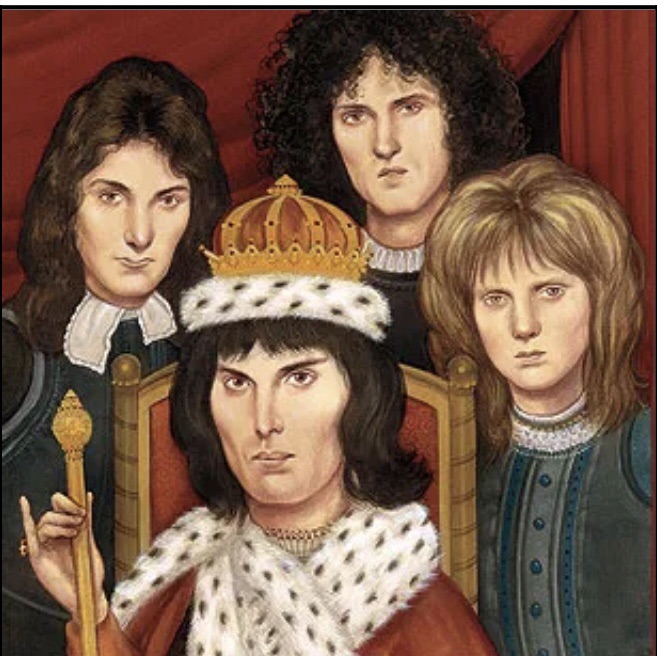
Rollingstone No52 Queen

(This is the eleventh artist included in this Top100 list that began producing music in 1970-1991 (with Freddie Mercury) therefore, just missing being a part of the 1950s or 1960s generation).

By Gerard Way, American singer, songwriter and comic book writer. Best known for being the lead singer and co-founder of the rock band My Chemical Romance (2001-2013). Fought depression, alcoholism and prescription drug abuse throughout his career.

Illustrator: Anita Kunz

My dad was a mechanic. He worked on a lot of bottom-of-the-rung cars that didn’t have cassette decks. But they had 8-tracks. Somebody left an 8-track tape of Queen’s Greatest Hits in a car — the one where they’re wearing leather jackets on the cover, and Freddie’s got the mustache. I loved it immediately, and I came to emulate Freddie both as a child and as an adult.

“Bohemian Rhapsody” is arguably the greatest song ever written. I’m sure people told them it was too long or had too many movements. But then it came out and just took hold of the world. When you’re in a band and you find something that breaks every rule, it gives you creative hope. And Queen were always trying something new; none of their hit songs were paint-by-numbers.

Queen’s greatest hits playlist:

https://open.spotify.com/playlist/5YUogDvvRbnLm0rScqLekR?si=mJnjldgGTyylGGOMvxQNNg&pi=-duaVKESSiyr2

When My Chemical Romance were making The Black Parade, we watched tons of documentary footage about A Night at the Opera, Queen’s best album. We used Brian May amps and wrote songs with different movements. But we didn’t try to make another “Bohemian Rhapsody.” Whenever someone tries to do that, they fail.

I love the way Freddie performed. He would strike amazing poses; maybe he practiced them in front of a mirror, but he wasn’t pretending to be somebody else. That was him telling the world, “This is who I am.” I remember when the surviving members of Queen were looking for a singer a few years ago, I was like, “I would love to try it.” Freddie’s songs are just so much fun to sing, and he had such stamina. I would definitely have to quit smoking to be able to do what he did.

Queen fell in and out of being cool, maybe because they were so sincere. Rock music is all about being phony sometimes. And they weren’t. They were obviously so psyched to be doing what they were doing.

They had a polarizing quality. I heard a story — maybe apocryphal — that Queen played a festival and got booed off the stage. Freddie vowed they would return as the biggest band in the world. And they did. When we played the Reading and Leeds festivals, we had to follow Slayer, and got bottles of piss thrown at us. I thought, “If we ever come back here, we’re gonna headline it.” I’ve always held on to the same dreams as Freddie.

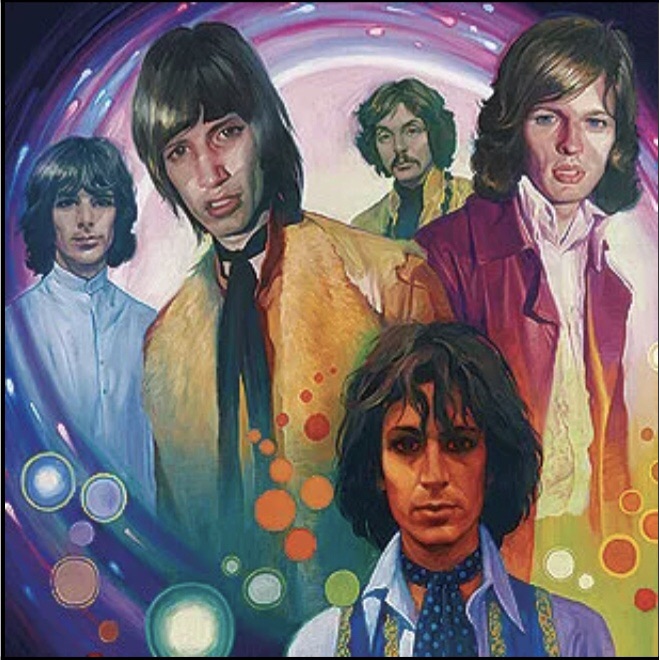
Rollingstone No51 Pink Floyd

By Wayne Coyne, Lead vocalist and guitarist for the psychedelic rick band The Flaming Lips which he formed in 1983. The band was active in the 1980s and 90s hitting the mainstream in 1993 with “She Don’t Use Jelly.”

Illustrator: Dale Stephanos

When I was growing up in the 1970s, Pink Floyd were ever-present. My brothers and my older sister and all their friends constantly played records in their rooms while they smoked pot. Especially Dark Side of the Moon.You heard that every day of your life, for at least three or four years around then.

Pink Floyd’s greatest hits playlist:

https://open.spotify.com/playlist/4pGo5YmyRxn9DF4wCwHStf?si=BBaFb2I-T4Si8XrMIjGifg&pi=kl_XF8tfSUu6n

Turning 14 years old is already a heavy combination of things. For Dark Side of the Moon to be playing in the background during that time was perfect. As you looked deeper into their music, everything you find out leads to something interesting. Pink Floyd were always a group of great creative minds who did whatever the f__k they wanted and didn’t worry about all the little rules.

They had an amazing ability to change between records. You don’t realize how powerful that is when you’re just a listener. But being a person who’s made 14 records, you see how big a deal it is. They have a phase one, a phase two, maybe even a phase three and four. A lot of groups — if they’re lucky — just have a phase one.

They started out with Syd Barrett writing these whimsical stories, these songs that were kind of surf-rock, kind of R&B, but in his own f__ked up way. Later you had Roger Waters evoking these big, universal landscapes of human crises. And Pink Floyd came to embrace this idea of “We can play stadiums and we can fill them up with giant fucking pig balloons.” Their music could just always hold that.

Yet, despite all these different pieces moving around, there is a lot of very simple musicality going on. Compared to the prog-rock groups they get thrown in with — King Crimson or Yes or Genesis — their music is actually very simple. You can grasp the chord progressions and melodies the first time you hear them. I love all those other groups but with Pink Floyd I understand the emotion.

Take a song like “Fat Old Sun,” from Atom Heart Mother. Living in Oklahoma, I sometimes can’t relate when English bands sing about English things. When David Gilmour sings about the sun going down, there’s something simple about it. It didn’t seem like the sunset was happening in some king’s country, in some other world. It seemed like he was singing about me walking in the sunsets in Oklahoma.

Rollingstone No50 The Band

By Lucinda Williams, acclaimed, award-winning singer/songwriter. Her music has been highly influential and covered by a multitude of artists. She is also known to be an extraordinary interpreter who, like all great interpreters, has the ability to inhabit a song and make it her own. Her singles “Right in Time” (1998) and Grammy nominated “Can’t Let Go” (1998) were her greatest commercial successes.

Illustrator: Dale Stephanos

I’ve used The Band as an example for my career. When I first tried to get record deals, nobody knew how to market me, because my sound didn’t necessarily fit into any stereotypes. But the Band did a little bit of everything.

I remember when Music From Big Pink came out, in 1968. I was living in Arkansas at the time. You couldn’t categorize the Band’s sound, but it was so organic — a little bit country, a little bit roots, a little bit mountain, a little bit rock — and their vocal styles and harmonies totally set them apart. Each member brought something, because they were all consummate musicians.

Their work as the Hawks on Bob Dylan’s 1966 tour is some of the best rock & roll ever made, with Robbie Robertson playing just amazing guitar. The Band let Dylan branch out stylistically. In his writing, Dylan was getting away from those heavy, metaphorical songs on Blonde on Blonde and writing cool little tunes.

The Band’s greatest hits playlist:

https://open.spotify.com/playlist/2QtF8RiTaWPoX7HTDaXCNl?si=0jzLooIzRqSDlXxnQkEz7A&pi=dHqdBzdPSpaVP

Their songs are uncoverable — who can pull off Richard Manuel’s incredible high voice? — but we tried. Any time we sat around singing songs, someone would inevitably pull out a version of “The Night They Drove Old Dixie Down.” My favorite song was “It Makes No Difference.” The sentiment of it is so heart-wrenching. This guy is saying that his lover has just left him, and he’s totally devastated. It’s one of the most beautiful melodies I’ve ever heard.

There is an element of sadness about the Band. The Last Waltz, despite its wonderful music, was sad to see because they had so much more to give. Richard Manuel’s death (committed suicide) was really tragic. I got to meet Garth Hudson when he played on a demo I did back in the mid-Eighties. I just remember he was really quiet, soft-spoken and real sweet. And he played like an angel.

Rollingstone No49 Elton John

By Billy Joel

Illustrator: Charles Miller

Elton John defines himself as a rock star, and he really lives it. More like a Roman aristocrat rock star. I’ve noticed when we’ve toured together that backstage you’ll see young men with togas, dressed as centurions, with little fig leaves around their heads. Inside Elton’s dressing room there are a thousand pairs of sunglasses, a hundred pairs of shoes and about 50 Versace suits laid out. He’s f__king royalty, and I love it. My dressing room looks like the back of a deli. I have one of those meat platters that sea gulls circle around.

Elton kicks my ass on piano. He’s fantastic — a throwback to Jerry Lee Lewis and Fats Domino and Little Richard. His spontaneous, improvisational playing always challenges me. And that is his contribution to rock & roll and pop: his musicianship. Before him, rock was a bunch of James Taylors — guitar-based singer-songwriter stuff. Elton brought back fantastic piano-based rock. Elton knows what his instrument is capable of. The piano is a percussion instrument, like a drum. You don’t strum a piano. You don’t bow a piano. You bang and strike a piano. You beat the shit out of a piano. Elton knows exactly how to do that — he always had that rhythmic, very African, syncopated style that comes from being well versed in gospel and good old R&B. Elton and Bernie Taupin did some brilliant songwriting during the first part of his career, from Elton John to Goodbye Yellow Brick Road.

Elton John’s greatest hits playlist:

https://open.spotify.com/playlist/0ydfO36a9Dexg2voPXhhNS?si=Ke7LekKaSjOc104Uqbinzg&pi=ZwYNc1zaRI6Pi

The first time we met we were in Holland, at a hotel in Amsterdam. It was in the mid-Seventies, and he was at his peak — it was the height of the Elton John era — and I was just starting out as the “Piano Man” guy. We went into a private room and we just talked. I told him what a fan I was, and he said he knew my stuff. I thought this was so cool: There were a thousand guitar players, but there were only two of us. The English piano player and the American piano player. And, seminally, rock & roll was not just guitar. Elton gave a funny-looking guy like me — and so many others — an opportunity to be a singer-songwriter. When Elton was in his first band, Bluesology, he never thought he could be a rock star. Same as me. I didn’t look like Mick Jagger or Paul McCartney or Jim Morrison. Sure, we thought we’d be piano players for big rock bands, but funnily enough he ended up with big, silly glasses and crazy outfits, and I ended up with my dopey stage behavior, both of us rock stars. To this day we laugh about that. And he keeps going on and on. I haven’t put out a song since 1993, and he asks me, “Billy, why don’t you write some new songs?” I say, “Elton, why don’t you write lessnew songs?” At $200 a ticket, you can’t shove new stuff down people’s throats. So much of his stuff is amazing, though: “Rocket Man,” “Crocodile Rock,” “Bennie and the Jets,” “Tiny Dancer,” “Your Song” and “The Bitch Is Back.” That’s what they want to hear.

Any melodic songwriter owes a debt to Elton John, the supreme melodist. I don’t know shit about new bands, but anybody who plays the keyboard and likes melody must give a nod to Elton. Like Cole Porter, Richard Rodgers, Carole King and the Beatles, he carries on the rich tradition of writing beautiful melodies.

Rollingstone No48 Run – DMC

(This is the tenth artist that made this Top100 list that began producing records in 1983. So they are not part of the 1950s and 1960s generation).

By Chuck D, An American rapper best known as the leader and frontman of the hip hop group Public Enemy which he founded in 1985.

Illustrator: Mark Stutzman

Run-DMC were the Beatles of hip-hop — Run and DMC were Lennon and McCartney, and Jam Master Jay was George and Ringo rolled into one. Raising Hell was the first true rap album, a complete work of art as opposed to a collection of singles or a novelty item. It’s my favorite album of all time. It incorporated rock, but on rap’s terms. Everyone in hip-hop today can be traced back to Run-DMC.

Run-DMC’s greatest hits playlist:

https://open.spotify.com/album/5CFj95du24x9CwW0raRnmF?si=-qq0EL46QJK-CDBH6-3liQ

They had a whole new energy that revolutionized hip-hop. Older artists like Grandmaster Flash wore disco-style outfits, were from the Bronx and had a different kind of appeal. Run-DMC were from Hollis, Queens, about 15 minutes from where I lived. Hollis was a suburban, not urban, environment, but Run-DMC dressed more like cats off the street — and 25 years later, most rappers still dress the same way.

When I was doing college radio at WBAU on Long Island, we helped break Run-DMC. They were a model for Public Enemy in that we both made loud, blasting records for arenas, not clubs. They had to yell, because their beats and guitar riffs needed it. You couldn’t rap in a low tone over a blaring guitar in an arena.

I was at home in the fall of 2002, and I happened to turn on the TV. Some newscaster said that Jay had been shot and murdered, and I went into shock. Black musicians are not immune to the ills that afflict our community. It’s not popular to say, but it’s the truth, and we must address it to prevent these tragedies in the future.

One little story: In 1984, I told Jay that I was coming to the Spectrum in Philadelphia to check out the first Fresh Fest tour. When I got to the back gate, I sent a message and asked, could he meet me there? And sure enough, in the middle of a concert in front of 20,000 people, he took time out to walk down the ramp, past security and hit me off with two tickets. He gave me some good seats, too. I was forever grateful. That’s who Jay was. He was the type of cat who didn’t forget you. And I will never forget him.