Rollingstone No77 Beastie Boys

(This is the twenty-first artist who made this Top100 list but didn’t begin recording until 1979. So, they were not a part of the 1950s or 1960s generation.)

By Darryl “DMC” McDaniels, an American rapper and record producer. Best known for being the founding member of the hip hop band Run-DMC.

Illustrator: Anita Kunz

In the early days of rap, the conventional wisdom was that only black people were supposed to like hip-hop and only white people were supposed to like rock. But it wasn’t like that. In Run-DMC, we were rapping over rock beats. The Beasties were a punk band listening to hip-hop.

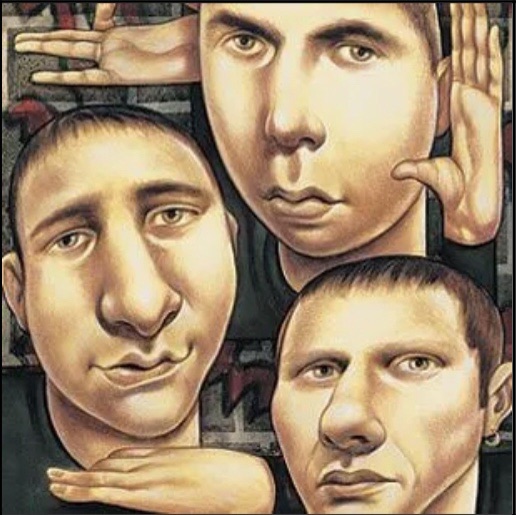
I met the Beastie Boys in Rick Rubin’s dorm room at NYU. What bugged me out about the Beasties was that they knew everything about hip-hop — the Cold Crush Brothers, the Treacherous Three and Afrika Bambaataa, all the old-school shit. In addition, they could rap, they could sing and they could play instruments.

Run-DMC gave “Slow and Low” to the Beastie Boys. The song was basically their blueprint. But then they started writing anita kunztheir own rhymes, and when Licensed to Ill came out, it went to Number One. They were writing songs we wished we had written, like “No Sleep Till Brooklyn.” They put rock with rap like we did, but it made so much sense when they did it because they were punk rockers.

The Beastie Boys greatest hits playlist:

https://open.spotify.com/playlist/6HMyz9WasDPETukqHfOnhc?si=qH0nVJ4bSqiDRVDEY-LT8g&pi=9zu0sg4EQ4WeQ

The first time we toured with the Beastie Boys was the Raising Helltour in 1986: Run-DMC, Whodini, LL Cool J and the Beastie Boys. We were playing the Deep South — Crunkville, before there was crunk — and it was just black people at those shows. The first night was somewhere in Georgia, and we were thinking, “I hope people don’t leave when they see them.” But the crowd loved them, because they weren’t trying to be black rappers. They rapped about shit they knew about: skateboarding, going to White Castle, angel dust and television. Real recognizes real.

One of the most significant things about the Beasties is their longevity. They’ve put out genius records for decades. When Paul’s Boutique came out, it didn’t sell as well as their debut. Now people realize it’s one of the best albums of the Eighties.

Each of the Beastie Boys has a different personality. Mike D is the examiner: He looks around, he takes in all the information, he’s a little laid-back. MCA was always the mature one, but he could be a fool when it was time to be a fool. And Ad-Rock is just full of life. He’s approachable, affectionate and funny. But maybe my favorite thing about the Beastie Boys is that they’re worldly. They taught me and many other people a lot about life, people and music.
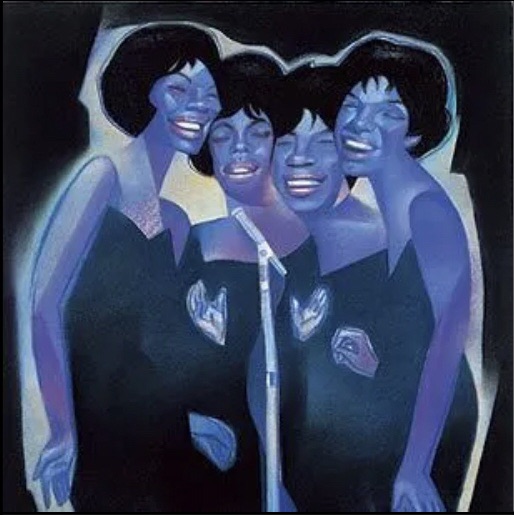
Rollingstone No76 The Shirelles

By Paul Shaffer, a Canadian musician that served on the David Letterman Show as bandleader from 1982-2015.

Illustrator: Gary Kelly

The Shirelles had a “sound,” a word that people from the Sixties vocal-group era use with a lot of reverence. Shirley Alston Reeves, who did most of the group’s lead vocals, wasn’t a gospel shouter like Arlene Smith of the Chantels. Shirley was more sentimental and street. When she said, “Baby, it’s you,” you thought, “Baby, it isme.”

They weren’t the first girl group, but the Shirelles were the first to have many hits. They influenced everyone from the Ronettes and Motown girl groups like the Supremes to the Beatles, who covered “Baby It’s You” and “Boys.” The Shirelles were given some of the all-time greatest songs to sing: “Will You Love Me Tomorrow,” “Soldier Boy,” “Tonight’s the Night,” “Mama Said.” But what’s interesting to me is that they wrote their very first hit, “I Met Him on a Sunday,” themselves, when they were still high school students in New Jersey. It was on this song that the group combined doo-wop with very accessible pop melodies: It began with the whole group singing, “Doo ron, day ron, day ron day papa, doo ron,” then one of them would sing, “Well, I met him on a Sunday.” It was the cutest thing.

The Shirelles greatest hits playlist:

https://open.spotify.com/album/483nAiMzsnzn1OJOSWyvuL?si=KiW8IjtvSIqvZ503FBS2mg

The girl-group sound was everything to me. As a kid, I used to sit at home after school and just bang out those songs on the piano. Later in life, in the early Nineties, I witnessed a wonderful moment, when the Shirelles were honored by the Rhythm & Blues Foundation. The three living members of the group — Shirley, Beverly Lee and Doris Jackson — were at the awards ceremony. The fourth member, Addie “Micki” Harris, had died in 1982. I had heard that they hadn’t seen each other in quite a while, so there was some apprehension when the three of them took the stage. They certainly hadn’t planned to perform. But when Doris took her award in hand, she said, “This is dedicated to the one I love,” and then they just started singing it.

They sounded fantastic. The band fell into place, and people in the audience just fell over. After that, Shirley, Beverly and Doris were having so much fun that they went into “Soldier Boy.” This was a group that hadn’t sung together in years, but they sounded heavenly. I was so inspired, I stood at attention and saluted. There was nothing else I could do.

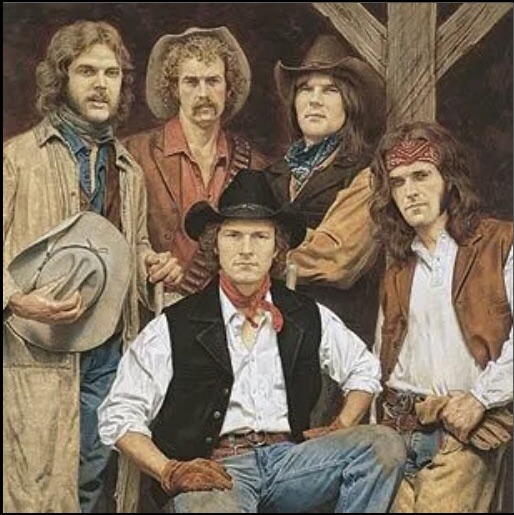
Rollingstone No75 The Eagles

(This is the twentieth artist included in this Top100 list that began producing records in 1971 so, therefore, just missed being included in the 1960s generation.)

By Sheryl Crow, An American singer-songwriter active in 1983-present. She is noted for her optimistic and idealistic subject matter, and incorporation of genres including rock, pop, country, folk, and blues. Has won nine Grammys. She had four Top10 hits including “All I Wanna Do” (1994) at No2.

Illustrator: Mark Stutzman

The Eagles forever changed country and rock, but I just think of what they did as being great American music. It’s amazing how one band could take all those influences — country and rock, of course, but also soul, R&B and folk — and still sound so distinctive.

The Eagles were a real band. After an album or two, Don Henley and Glenn Frey turned into one of rock’s all-time great songwriting teams. But everyone contributed material and incredible musicianship to the effort: Randy Meisner and Bernie Leadon, then Don Felder, and later Joe Walsh and Timothy B. Schmit. They started out in the age of the sensitive singer-songwriter, and their music was as smart and sensitive as anyone’s, but when they called upon it, they also had the power of a great rock & roll band.

The first song of theirs that I vividly remember hearing was “Take It Easy.” Those lyrics — by Frey and Jackson Browne — could have been from any Merle Haggard or Willie Nelson song, but the instrumentation and energy were decidedly rock. The combination sounded so powerful.

The Eagles greatest hits playlist:

https://open.spotify.com/album/2Lgsa7jbu86SK5zJVFCh3S?si=p5U905ycTburRVCUXU8Ysw

I also remember being on a long cross-country family road trip as a kid, driving across the Texas desert at night. The only radio station we could get was a scratchy AM station from who knows where. The haunting opening strains of “Hotel California” came on the radio. My father thought that all of us kids were asleep; I immediately assumed that he would shut the radio off. But he didn’t. He couldn’t resist it any more than I could.

The Eagles provided the soundtrack to so many of my summers, and likely many of yours, too. Their melodies and harmonies have always been instantly familiar. “Desperado,” “Take It to the Limit,” “Tequila Sunrise” and “Best of My Love” are some of the best pop songs ever written. To this day, it simply doesn’t get any better than that guitar riff from “Life in the Fast Lane.”

When I sang backup for Don Henley in the early Nineties, it was a surreal experience, supplying vocals every night to Eagles songs. The audience’s reaction to those classics cemented their value in my head. In my own way, I got to experience the power of the Eagles’ music. But then again, we all have.

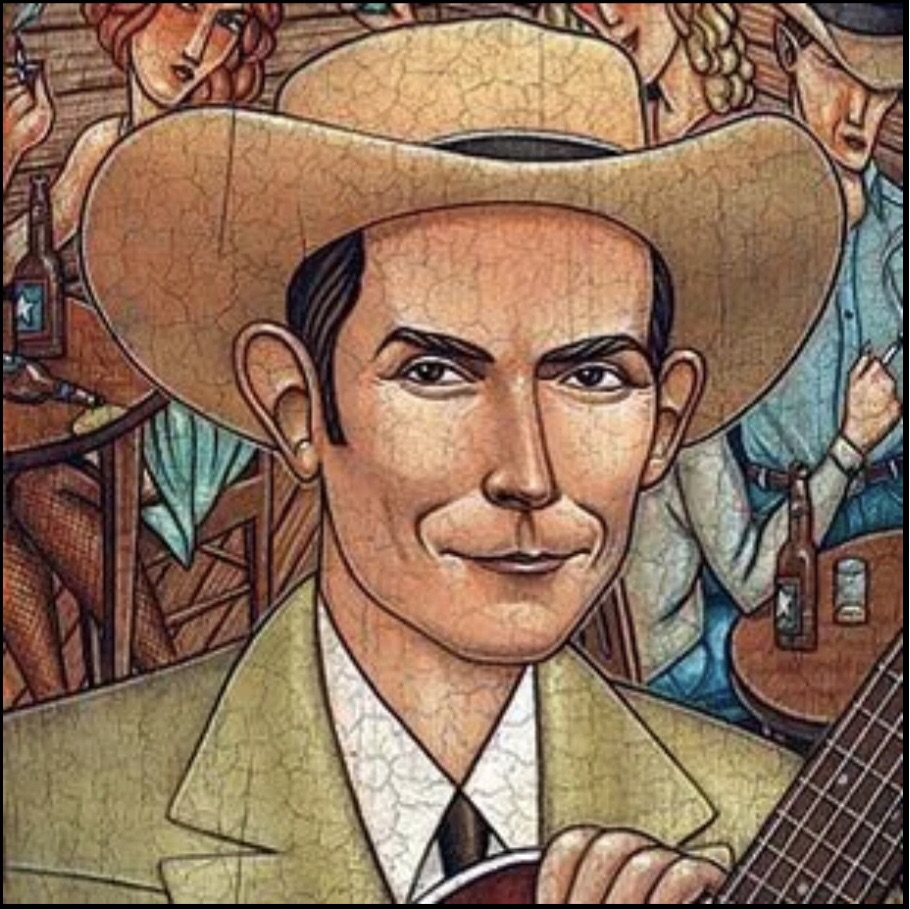
Rollingstone No74 Hank Williams

By Beck, involved in the anti-folk movement in New York City in 1989. Was a solo artist and had his commercial breakthrough in 1993 with his hit “Loser.”

Illustrator: Marc Burckhardt

Hank Williams songs like “Lonesome Whistle” and “Your Cheatin’ Heart” are wonderful to sing because there is no bullshit in them. The words, the melodies and the sentiment are all there, clear and true. It takes economy and simplicity to get to an idea or emotion in a song, and there’s no better example of that than Hank Williams.

Hank had a voice that split wood. From his records, it sounded like he was projecting from a completely different place in his body. It was a voice that could play roadhouses without amplification, that could cut through barroom crowds. The places he played were so tough that he hired a wrestler, Cannonball Nichols, to be his bass player. Hank lived what would have been a rock star’s life — full of touring, drinking and woman troubles.

I bought a 10-song Hank Williams collection on vinyl for $4.99. It was like I unlocked a box: His music spoke to me. His records are enormously important to country music, but I think I responded to them because they sounded so exotic. It’s significant that Hank learned to play guitar from an elderly black musician: Hank is the ultimate hillbilly, but there’s other stuff going on. For a while he was my only reference point; I’ve covered his songs for years. On Sea Change, I made a conscious effort to try to write songs as direct as Hank’s.

Hank Williams greatest hits playlist:

https://open.spotify.com/album/6zIYEv6soMoaZiypsHB5dd?si=0coA7MU5Ro-XQCTnX3I0-w

I see more and more people getting into his music today. When I played his songs early on, I used to get really sick of everyone in the crowd yelling “yee-haw” all the way through. But I’ve noticed that there’s been a rediscovery of the haunting quality of Hank Williams’ music. People are listening.

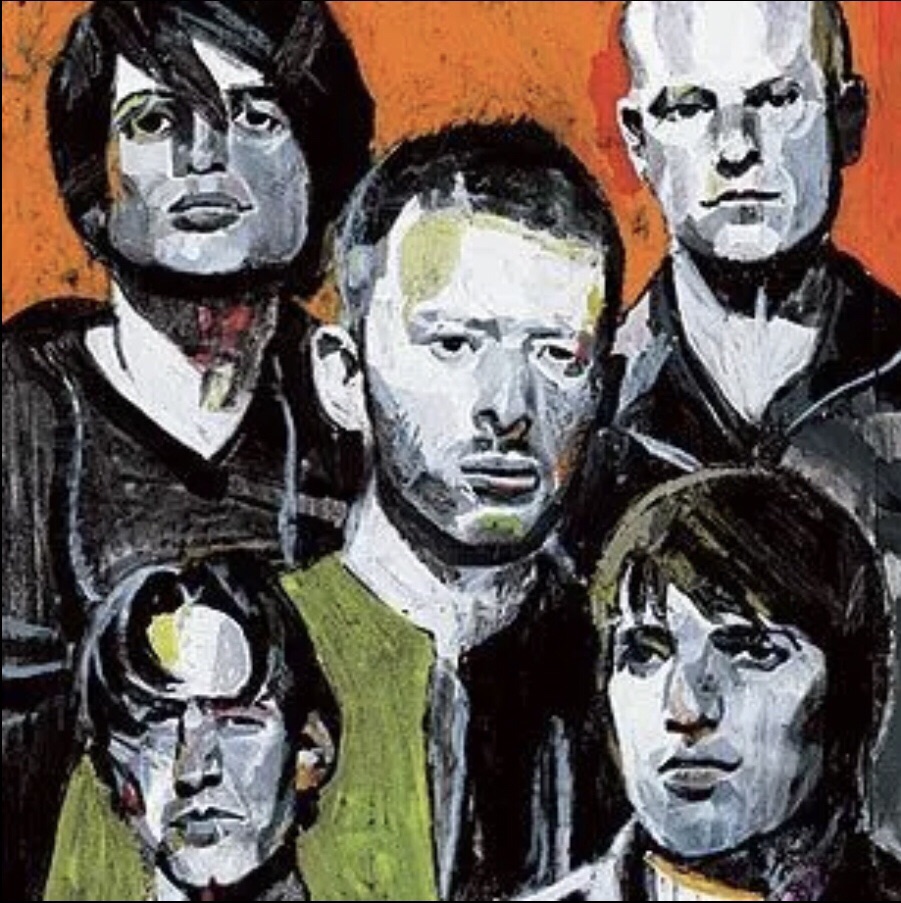
Rollingstone No73 Radiohead

(This is the nineteenth artist that made this Top100 list that began producing records in 1985 therefore not a part of the 1960s generation.)

By Dave Matthews, the leader of his Dave Matthews Band (active 1991-present). Was born in South Africa. Created 106 and sold more than 33M records. “Before These Crowded Streets” (1998) reached No1 on the charts.

Illustrator: Andrea Ventura

Every time I buy a Radiohead album, I have a moment where I say to myself, “Maybe this is the one that will suck.” But it never does. I wonder if it’s even possible for them to be bad on record.

It belittles Radiohead to describe their music as having “hooks.” Their music talks to you, in a real way. It can take you down a quiet street before it drops a beautiful musical bomb on you. It can build to where you think the whole thing will crumble beneath its own weight — and then Thom Yorke will sing some melody that just cuts your heart out of your chest. There’s a point on the album Kid A where I start feeling claustrophobic, stuck in a barbed-wire jungle — and then I suddenly fall out and I’m sitting by a pool with birds singing. Radiohead can do all of these things in a moment, and it drives me f__king crazy.

Radiohead greatest hits playlist:

https://open.spotify.com/playlist/6OKFkqo8EZeaDfsrKUwd3M?si=oD5f6xL1SsKm4m0Z55vC2g&pi=iID4P3BBT7u25

My reaction to Radiohead isn’t as simple as jealousy. Jealousy just burns; Radiohead infuriate me. But if it were only that, I wouldn’t go back and listen to those records again and again. Listening to Radiohead makes me feel like I’m a Salieri to their Mozart. Yorke’s lyrics make me want to give up. I could never in my wildest dreams find something as beautiful as they find for a single song — let alone album after album. And every time, they raise their finger to the press and the critics and say, “Nothing we do is for you!” They followed their most critically acclaimed record, OK Computer, with their most radical change, Kid A. It’s not that they’re indifferent — it’s that the strength of character in their music is beyond their control.

Seeing them perform makes me even angrier. No matter how much they let go in their shows, they never lose their clarity. There’s no point where Jonny Greenwood or Ed O’Brien will suddenly look up and say, “Where the fuck are we?” There are no train wrecks in Radiohead; every album and performance is wrenching. God, these guys have suffered, or they can fake it like nobody else.

Rollingstone No72 AC/DC

(This was the eighteenth artist that made this Top100 list that began producing records in 1973 therefore not a part of the 1960s generation.)

By Rick Rubin, record producer, co-founder of Def Jam Recordings and former co-president of Columbia Records..

Illustrator: Christopher Kasch

When I was in junior high, my classmates all liked Led Zeppelin. But I loved AC/DC. I got turned on to them when I heard them play “Problem Child” on The Midnight Special. Like Zeppelin, they were rooted in American R&B, but AC/DC took it to a minimal extreme that had never been heard before. Of course, I didn’t know that back then. I only knew that they sounded better than any other band.

For AC/DC, rock began with Chuck Berry and ended around Elvis. They poured their lifeblood into that groove, and they mastered it. Highway to Hell is probably the most natural-sounding rock record I’ve ever heard. There’s so little adornment. Nothing gets in the way of the push-and-pull between the guitarists Angus and Malcolm Young, bassist Cliff Williams and drummer Phil Rudd. For me, it’s the embodiment of rock & roll.

When I’m producing a rock band, I try to create albums that sound as powerful as Highway to Hell. Whether it’s the Cult or the Red Hot Chili Peppers, I apply the same basic formula: Keep it sparse. Make the guitar parts more rhythmic. It sounds simple, but what AC/DC did is almost impossible to duplicate. A great band like Metallica could play an AC/DC song note for note, and they still wouldn’t capture the tension and release that drive the music. There’s nothing like it.

AC/DC greatest hits playlist:

https://open.spotify.com/playlist/0wTrfNrOLJnH8XJed32zaE?si=jPGViY0OTFSBihTHt5RtIA&pi=SDoOIsvmRhCeI

The other thing that separates AC/DC as a hard-rock band is that you can dance to their music. They didn’t play funk, but everything they played was funky. And that beat could really get a crowd going. I first saw them play in 1979 at Madison Square Garden, before their singer Bon Scott died and was replaced by Brian Johnson. The crowd yanked all the chairs off the floor and piled them into a pyramid in front of the stage. It was a tribute to how great they were.

I’ll go on record as saying they’re the greatest rock & roll band of all time. They didn’t write emotional lyrics. They didn’t play emotional songs. The emotion is all in that groove. And that groove is timeless.

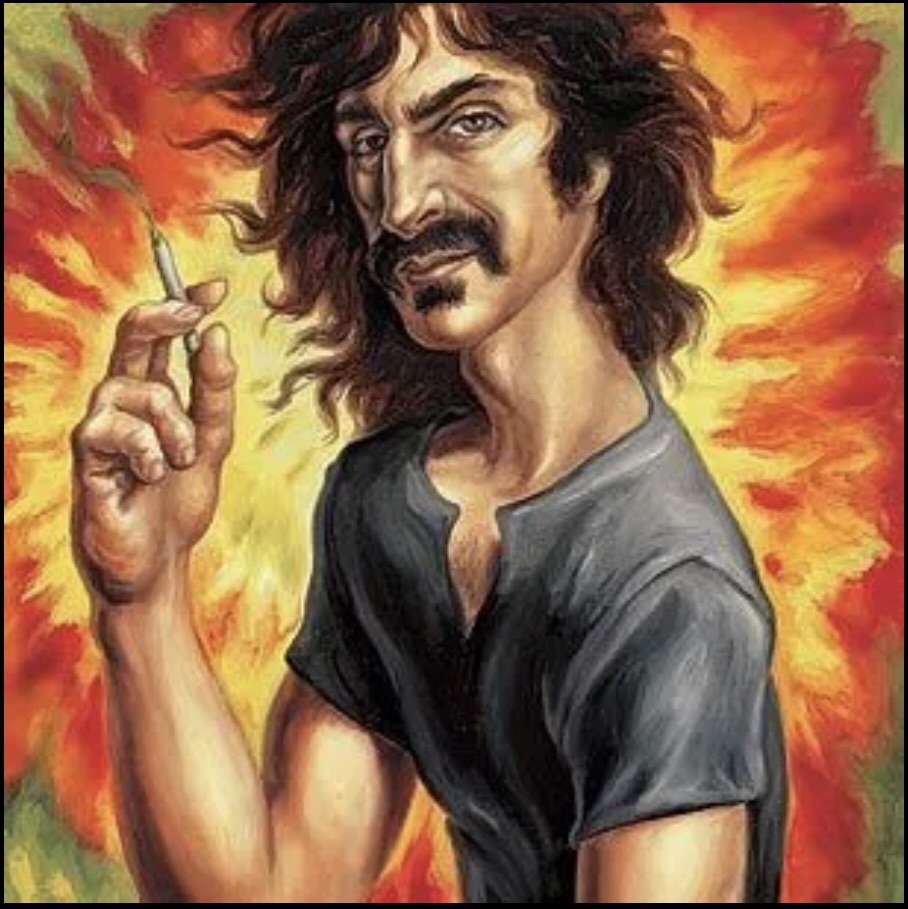
Rollingstone No71 Frank Zappa

By Trey Anastasio, singer-songwriter and best known for being the lead guitarist for the rock Band Plish (1983-present).

Illustrator: Owen Smith

In the early years of Phish, people often said we were like “Frank Zappa meets the Grateful Dead” — which sounds very bizarre. But Zappa was incredibly vital to me, as a composer and guitarist. I think he was the best electric-guitar player, other than Jimi Hendrix. Zappa conceptualized the instrument in a completely different way, rhythmically and sonically. Every boundary that was possible on the guitar was examined by him.

I’ll never forget the first time I saw him live, in New York, when I was in high school. He would leave his guitar on a stand as he conducted the band. And he would not pick up the guitar until everything was totally together. There would be this moment — this collective breath from the audience — as he walked over, picked it up and started playing the most ripping, beautiful solo. When he played, he was in communion with the instrument.

I also saw Zappa at Memorial Auditorium in Burlington, Vermont, on his last tour, in 1988. He did this guitar solo in “City of Tiny Lites” where everybody in the band dropped out except drummer Chad Wackerman. I was in the balcony near the side of the stage. When Zappa turned his back on the audience to play with Chad, I saw this huge smile on his face. But this was also the guy who did 87orchestral pieces like The Yellow Shark. It’s hard to believe somebody could do so many different things.

Zappa was a huge influence on how I wrote music for Phish. Songs like “You Enjoy Myself” and “Split Open and Melt” were completely charted out because he had shown me it was possible. And when I played at Bonnaroo with my 10-piece band, we did two covers, “The Devil Went Down to Georgia” and “Sultans of Swing.” In both songs, I had the horn section play the guitar solos, note for note. I never would have thought of doing that if I hadn’t seen Zappa do “Stairway to Heaven” in Burlington with the horns playing Jimmy Page’s entire guitar solo, in harmony.

Frank Zappa’s greatest hits playlist:

https://open.spotify.com/playlist/73YMgdF1X7feDGQ2ZwA3uC?si=IM7rRZATT4Gz28WNRSYnxw&pi=yZB5CaCXRpye8

There is a whole generation of musicians coming up who can’t play their instruments. Because of stuff like Pro Tools, they figure they can fix it all in the studio. With Frank, his musicians were pushed to the absolute brink. Phish tried hard to do that too: to take our four little instruments and do as much as we could with them. I would not have envisioned that without him.

Zappa gave me the faith that anything in music was possible. He demystified the whole thing for my generation: “Look, these are just instruments. Find out what the range is, and start writing.”

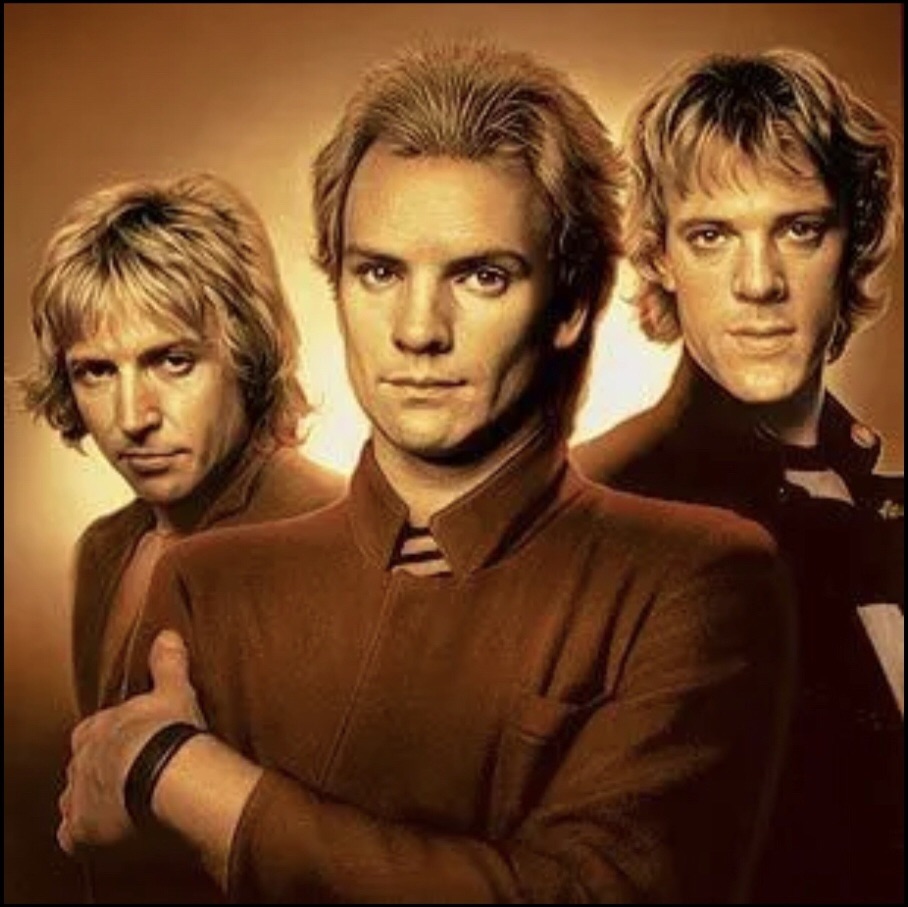
Rollingstone No70 The Police

(This is the seventeenth artist that made this Top100 list but didn’t start releasing records until 1977. So, they are not part of the 1960s generation).

By Brandon Flowers, he is best known for being the lead vocalist of the rock band The Killers which he co-founded in 2001. Using his captivating voice and stage presence he created such hits as “Mr. Brightside.”

Illustrator: Tim O’Brien

Oscar Wilde said that an artist has succeeded if people don’t understand his work but they still like it. By that standard, the Police were a huge success. Their songs are universal — they’re part of all of our lives. You hear them on both pop and classic-rock stations, and they’ll be played on the radio in Germany 100 years from now. At the same time, everything they did was really smart and worked on a few levels; you could love a particular song, then realize a year later that you had totally missed the meaning.

Take “Every Breath You Take.” It’s a great trick — it’s impossibly catchy, people play it at their weddings, but it’s a stalker song. “Roxanne” is blatantly about a hooker — it’s not about how Sting loves her and broke her heart, it’s just about how she’s a hooker. People don’t realize how unique that is. All of us are lucky to have heard songs as good as “Message in a Bottle,” “Walking on the Moon” and “King of Pain” on the radio. Sting already had a career and a degree when the Police made it; he wasn’t afraid of sounding like a grown-up.

My favorite is “Don’t Stand So Close to Me,” the one about the teacher and the young girl. That kind of storytelling has fallen out of pop music, for the most part. “Don’t Stand” would be great to listen to no matter what the lyrics were — it could have just been about some girl — but the story makes it spooky and powerful. My favorite line is “Wet bus stop/She’s waiting/His car is warm and dry” — he communicates the entire song with those 11 words.

The Police greatest hits playlist:

https://open.spotify.com/playlist/7KOWhTRkKr7zqIfx5Exu3N?si=EWZZigpCSie3J9PWz4RSWg&pi=h-79CGVPRgixb

Of course, the Police were amazing musicians. They were professionals who came up during the punk era and found their messages later on. I’m a big fan of how they used reggae. Bands like the Clash had already mixed it with punk, but the Police did it flat-out — it was like reggae for music geeks. Sting played bass and sang, which you don’t see very often. He commanded both the rhythm section and melodies in the band. Stewart Copeland is a great drummer — you have to be to give songs like “Roxanne” and “So Lonely” their drive and also throw that reggae in there. Andy Summers has both great technique and rhythmic sense. It’s amazing how many rock bands with serious grooves are made up of skinny English dudes.

The Police matured really quickly. All bands should pay attention to that. You should always try to keep moving forward.

Rollingstone No69 Jackie Wilson

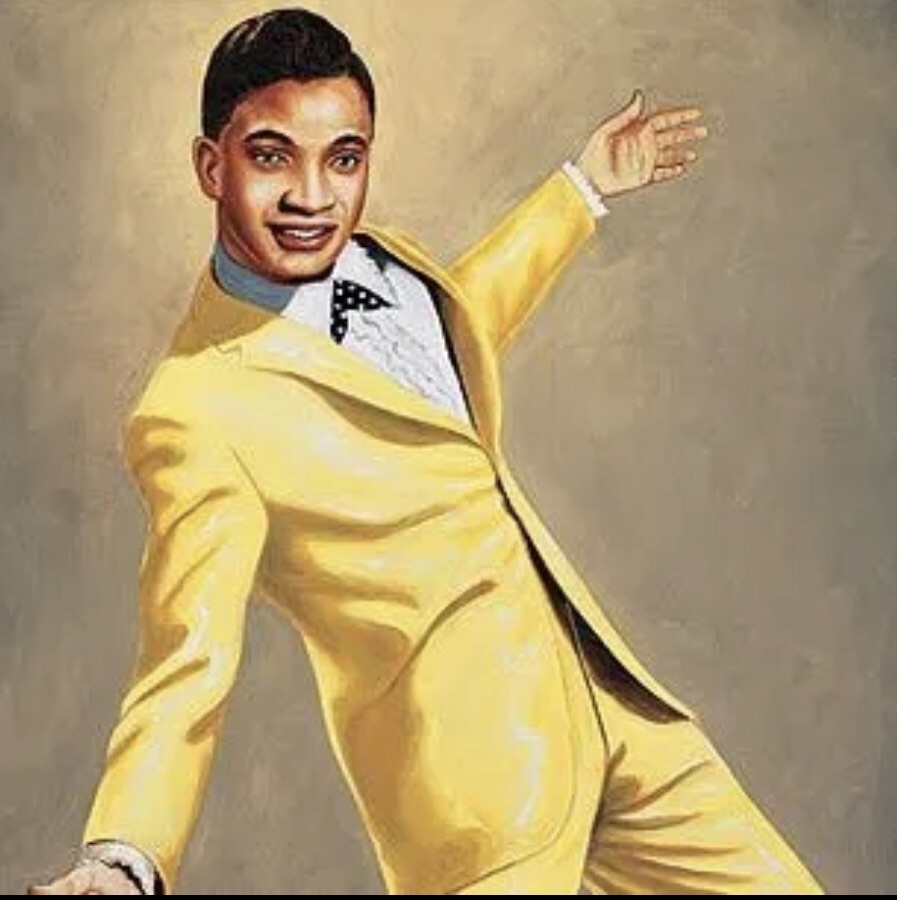
By Peter Wolf, an American best known as the lead singer of The J. Geils Band from 1967 to 1983. He had several popular songs including “Live Stinks.”

Illustrator: Charles Miller

Jackie Wilson was key in helping bridge the gap between an old-style R&B and a new incarnation of soul. Even Elvis Presley knew why Wilson was called “Mr. Excitement”: I heard that seeing Wilson perform made the King want to hide under the table. The most spectacular Jackie Wilson show I ever saw was at Harlem’s famed Apollo Theater, around 1960. When he took the stage, adorned in a magnificent white suit, he spread his arms open wide, as if trying to embrace the entire room. He started singing the opening notes of his song “Doggin’ Around.” The audience broke into screams. Even the way he casually held his hands while singing was hypnotic. His dancing was spellbinding — twists and splits that left me in total disbelief. Quickly soaked in sweat (nobody knew how to sweat as good as Jackie Wilson), he took off his jacket and pretended he was going to throw it to the crowd, creating a pure sexual enchantment. There were real women in that audience who knew what they wanted. And what they wanted was Jackie Wilson.

Jackie Wilson’s greatest hits playlist:

https://open.spotify.com/playlist/0SpXGhg6RjT8U14iW4kPCJ?si=1n8uFs-SSjeHEsoJloo8pg&pi=eOsBEtCNR6Can

He seemed destined for such greatness, and yet his life ended up playing itself out like some cheap B-grade film noir. There was violence — a crazed woman once shot him — as well as tax problems, drugs, divorce and mob associations that made demands he couldn’t refuse. While performing at the Latin Casino, in Cherry Hill, New Jersey, he had a massive coronary and hit his head hard as he fell. At the hospital, he lapsed into a coma. He remained in that state for eight years, as the people around him fought over his estate, before he died in 1984.

I had the honor of inducting Jackie Wilson into the Rock and Roll Hall of Fame. As I waited backstage to present my speech, I was approached by three women arguing with one another as to who should be the one to go onstage and claim the award that was to be given to Jackie. Mr. Excitement would still not have peace.

Rollingstone No68 The Temptations

By Rod Stewart (from London), got his start with the Dimensions and was focused on playing the harmonica as well as singing. Then sang with Long John Baldry and the Jeff Beck Group in 1967 before going solo. In the early 1970s he had several hits including “Maggie May.”. He was very popular selling more than 120M records worldwide.

Illustrator: Anita Kunz

I was on holiday with my parents in the late Sixties when I heard “I Wish It Would Rain.” I lived in England, where it f__king rains all the time, so it was appropriate. But that’s also when I fell in love with David Ruffin’s tenor — it jumped out of the speakers and ravished my soul.

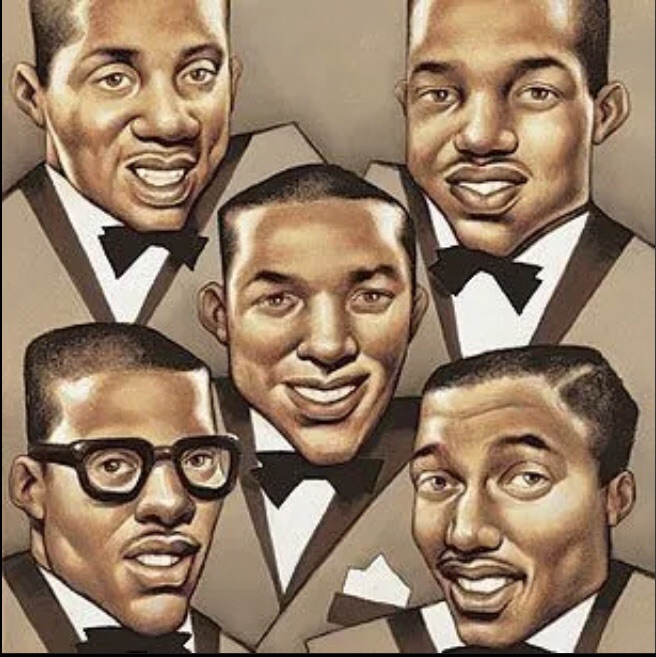
Whether it was Ruffin or Dennis Edwards or Eddie Kendricks or Paul Williams singing lead, the Trmpts were always an all-star vocal band. Throughout the Sixties and Seventies, the Tempts had an unprecedented string of hits: “My Girl,” “The Way You Do the Things You Do,” “Ain’t Too Proud to Beg,” “Just My Imagination.” Later on, they broke ground with the psychedelic soul of “Cloud Nine.” I remember listening to the high-hat rhythms on that record over and over with the guys in the Jeff Beck Group. We’d try to change every one of our songs to try and capture their drumbeats.

The Temptations greatest hits playlist:

https://open.spotify.com/playlist/6um7i7l8zFDe8jF8SkGX9f?si=qBPxg_r7Qxyt20v5D-1XpQ&pi=4bllylUxS5SCL

When I got home from holiday, I immediately bought Wish It Would Rain. At that time I was very much into folk music and turning the corner into R&B, and I’ll never forget seeing that cover, with all the Tempts dressed as Foreign Legionnaires, sitting in the desert. Their outfits were wonderful — I blame them for teaching me to wear loud colors. They also came up with the cutting-edge dance routines. Nobody moved like the Tempts.

I’d later become friends with David Ruffin — when our bands would play in Detroit, Ruffin would come to every show and we’d sing “(I Know) I’m Losing You,” a Temptations cover off my album Every Picture Tells a Story.His voice was so powerful — like a foghorn on the Queen Mary. He was so loud.

My children grew up loving the Temptations, and we tried to see them every time they came to town. They would always pick me out of the audience with a spotlight, trying to get me up to the stage. But I never did. I’m too frightened.