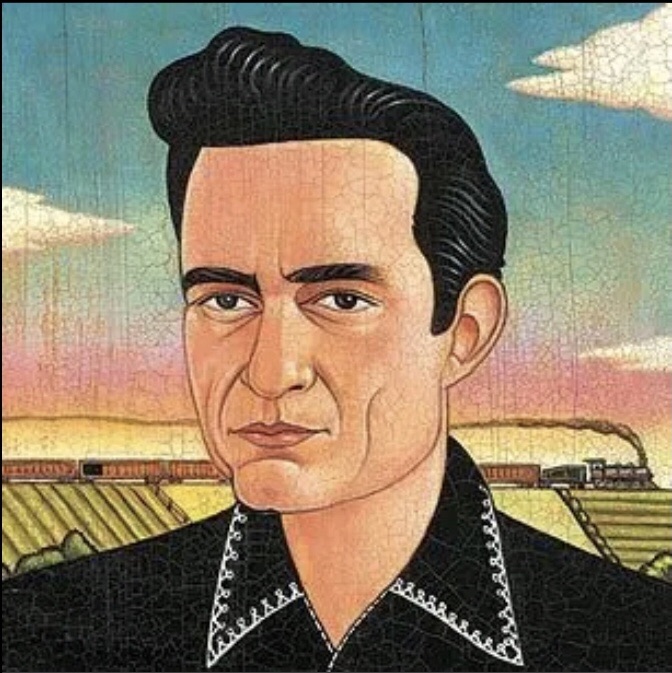
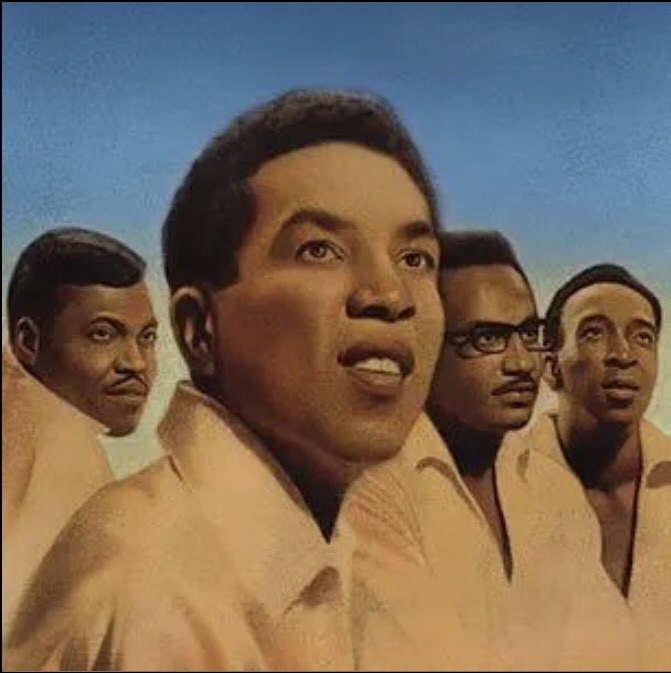
Rollingstone No31 Artist: Johnny Cash

By Kris Kristofferson, as a member of The Highwaymen, released “Me and Bobby McGee” in 2010. Illustrator: Marc Burckhardt.

Johnny Cash was a biblical character. He was like some old preacher, one of those dangerous old wild ones. He was like a hero you’d see in a Western. He was a giant. And he never lost that stature. I don’t think we’ll see anyone like him again. Of course, the first thing he’ll be remembered for is the power and originality of his music. The first time I heard Johnny Cash was when he released “I Walk the Line” in 1956. It was unlike anything I’d ever heard. Elvis had had a lot of hits by that point, but “I Walk the Line” was completely different. It didn’t sound much like any of the country music that was popular at the time, either. There was always a kind of dark energy around John and his music. My first hero, when I was a kid, was Hank Williams, and he had a similar energy. You could tell they were both wild men.

As a songwriter, I’ve always loved his lyrics. At the beginning of his career, John released a bunch of powerful songs in a very short time. For me, the best one was always “Big River.” It’s so well-written, so unlike anything else. The lines don’t even seem to rhyme. “I met him accidentally in St. Paul, Minnesota/And it tore me up every time I heard his drawl.” His imagery was so powerful: “Then you took me to St. Louis later on, down the river/A freighter said he’s been here/But he’s gone, boy, he’s gone/I found his trail in Memphis/But he just walked up the bluff/he raised a few eyebrows, and then he went on down alone.”

The first time I saw John live, I was on leave from the Army, visiting Nashville. He was playing the Grand Ole Opry, and I was watching from backstage — and he was the most exciting performer I’d ever seen. At the time, he was skinnier than a snake, and he was just electric. He used to prowl the stage like a panther. He looked like he might explode up there. And in fact, there were times when he did. One night at the Opry, he knocked out all of the footlights. I think they banned him for a while after that. But they banned Hank Williams, too. They were a pretty conservative crowd.

The main thing about John, though — the thing that everybody could sense — was his integrity, the integrity of his relationship with his music, with his life and with other people. He stood up for Bob Dylan when everyone in the music business was criticizing Dylan for going electric. And he did the same for me, in the Eighties, when I was taking a lot of criticism for going down to Nicaragua. That’s the kind of guy he always was. He stood up for the underdog.

I thought that The Man Comes Around, one of the last albums John did, was terrific. His version of “Danny Boy” kills me every time.

Johnny Cash’s greatest hits playlist:

https://open.spotify.com/playlist/0XoDr92gJT6CGzMiDIj3JV?si=qFDUGww2Sfy9B-WmROZPpQ&pi=AWdBty0zRZa8g

I think he’ll be remembered for the way he grew as a person and an artist. He went from being this guy who was as wild as Hank Williams to being almost as respected as one of the fathers of our country. He was friends with presidents and with Billy Graham. You felt like he should’ve had his face on Mount Rushmore.

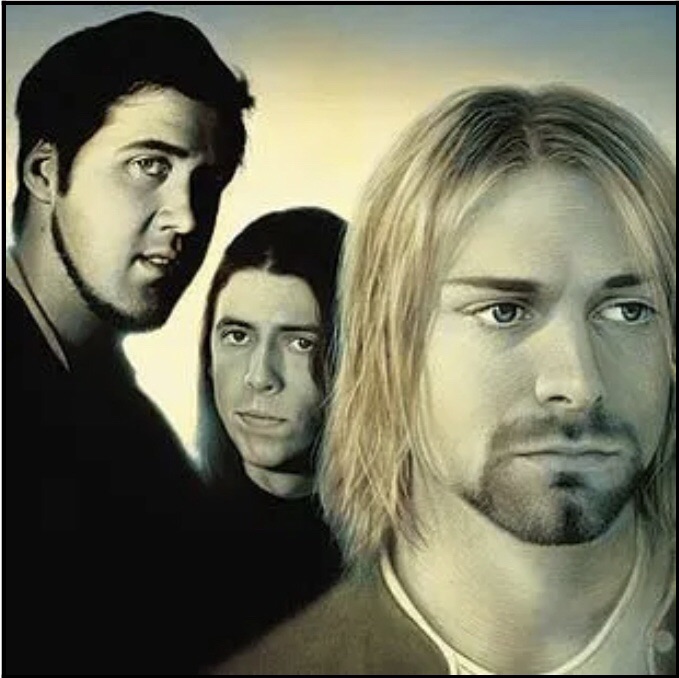
Rollingstone No30 Artist: Nirvana

(The sixth of 30 artists that began performing in 1987. Therefore, not a part of the 1950s or 60s generation.)

By Iggy Pop, Lead vocalist for The Stooges which he started in 1967. Illustrator: Tim O’Brien.

The first time I saw Nirvana was at the Pyramid Club, a rank, wonderful, anything-goes dive bar on Avenue A in New York. It wasn’t known for having live bands; it was known more for cross-dressing and bar dancing. I had a photographer friend, and he told me, “There’s a really hot band from Seattle you have to see. They’re gonna play the Pyramid, of all places!”

You could smell the talent on Kurt Cobain. He had this sort of elfin delivery, but it was not naval gazing. He was jumping around and throwing himself into every number. He’d sort of hunch over his guitar like an evil little troll, but you heard this throaty power in his voice. At the end of the set he tossed himself into the drums. It was one of maybe 15 performances I’ve seen where rock & roll is very, very good.

After that, I bought Bleach, and listened to it in Europe and Asia on tour. I still like this album very much, but there was one song, “About a Girl,” that’s not like the rest of the album. It sounded like someone gave Thorazine to the Beatles. And I thought, “If he puts out a record full of that, he’s gonna get really rich.” And sure enough …

Nirvana’s greatest hits playlist:

https://open.spotify.com/playlist/5mbj8ERZDjdAT3DuwnPmqs?si=f1D4CMYJTeGzEv1adQrrLQ&pi=kknY98nkRZuTh

I met Kurt at a club in L.A. right before Nevermind came out. We took a picture and he said, “Come on, let’s give the finger!” So we did. I bought Nevermind and I thought, “This has really got it.” Nirvana genuinely achieved dynamics. They took you down, they took you up, and when they pressed a certain button, they took you over. They rocked without rushing and they managed melody without being insipid. It was emotional without sounding dated or corny or weak.

Some time later, Kurt reached out to me. I missed the call, but my wife took the message: “Kurt Cobain wants to go into the studio with you.” See, I’m 113 years old now; I was about 72 in the Nineties, so I was going to bed at, like, 10 p.m., and he was just getting going around 11. I did call him back a couple of times. The number was from the Four Seasons in L.A., and I would get these responses like, “Mr. Cobain has not left the room for three days” or “Mr. Cobain is under the bed.”

As for his legacy: He was Johnny B. Goode. He was the last example that I can think of within rock & roll where a poor kid with no family backup from a small, rural area effected a serious emotional explosion in a significant sector of world youth. It was not made in Hollywood. There were no chrome parts. It was very down-home at its root. Somebody who is truly nobody from nowhere reached out and touched the world. He may have touched it right on its wound.

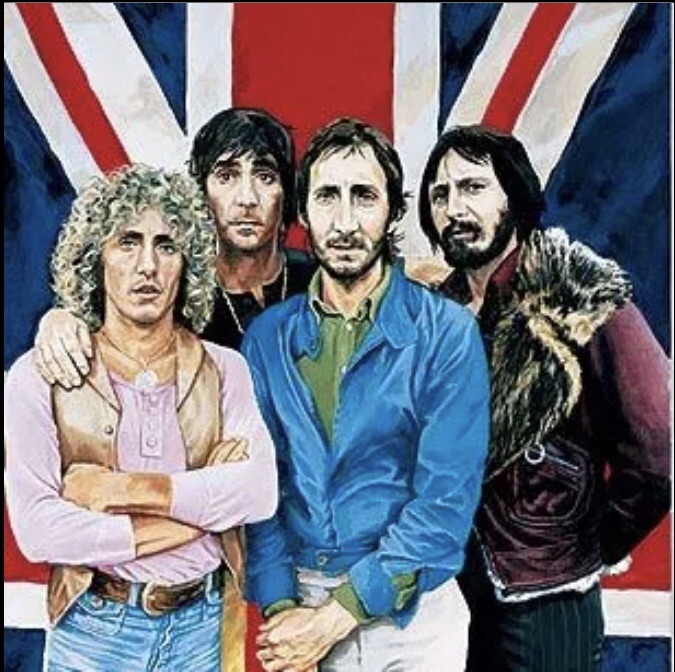
Rollingstone No29 Artist: The Who

By Eddie Vedder, the lead vocalist and guitarist for Pearl Jam. Illustrator: Josie Jammet

The Who began as spectacle. They became spectacular. Early on, the band was in pure demolition mode; later, on albums like Tommy and Quadrophenia, it coupled that raw energy with precision and desire to complete musical experiments on a grand scale. They asked, “What were the limits of rock & roll? Could the power of music actually change the way you feel?” Pete Townshend demanded that there be spiritual value in music. They were an incredible band whose main songwriter happened to be on a quest for reason and harmony in his life. He shared that journey with the listener, becoming an inspiration for others to seek out their own path. They did all this while also being in the Guinness Book of World Records as the world’s loudest band.

Presumptuously, I speak for all Who fans when I say being a fan of the Who has incalculably enriched my life. What disturbs me about the Who is the way they smashed through every door of rock & roll, leaving rubble and not much else for the rest of us to lay claim to. In the beginning they took on an arrogance when, as Pete says, “We were actually a very ordinary group.” As they became accomplished, this attitude stuck. Therein lies the thread to future punks. They wanted to be louder, so they had Jim Marshall invent the 100-watt amp. Needed more volume, so they began stacking them. It is said that some of the first guitar feedback ever to make it to record was on “Anyway, Anyhow, Anywhere,” in 1965. The Who told stories within the confines of a song and, over the course of an entire album, pushed boundaries. How big of a story could be told? And how would it transmit (pre-video screens, etc.) to a large crowd? Smash the instruments? Keith Moon said they wanted to grab the audience by the balls. Pete countered that like the German auto-destructive movement, where they made sculpture that would collapse and buildings that would explode, it was high art.

I was around nine when a baby sitter snuck Who’s Next onto the turntable. The parents were gone. The windows shook. The shelves were rattling. Rock & roll. That began an exploration into music that had soul, rebellion, aggression, affection. Destruction. And this was all Who music. There was the mid-Sixties maximum- R&B period, mini-operas, Woodstock, solo records. Imagine, as a kid, stumbling upon the locomotive that is Live at Leeds. “Hi, my name is Eddie. I’m 10 years old and I’m getting my fucking mind blown!” The Who on record were dynamic. Roger Daltrey’s delivery allowed vulnerability without weakness; doubt and confusion, but no plea for sympathy. (You should hear Roger’s vocal on a song called “Lubie [Come Back Home],” a bonus track from the reissue of their first album, The Who Sings My Generation. It’s top-gear.)

The Who’s greatest hits playlist:

https://open.spotify.com/playlist/7hO2nFEtNV1xGRd32FzWhM?si=EtgdlvVTTN2ZgIwWxPUA7Q&pi=2PQKAIipR76Yk

The Who quite possibly remain the greatest live band ever. Even the list-driven punk legend and music historian Johnny Ramone agreed with me on this. You can’t explain Keith Moon or his playing. John Entwistle was an enigma unto himself, another virtuoso musical oddity. Roger turned his mic into a weapon, seemingly in self-defense. All the while, Pete was leaping into the rafters wielding a Seventies Gibson Les Paul, which happens to be a stunningly heavy guitar. As a live group, they created momentum, and they seemed to be released by the ritual of their playing. (Check out “A Quick One While He’s Away,” from the Rolling Stones’ Rock and Roll Circus.)

A few years ago in Chicago, I saw Pete wring notes out of his guitar like a mechanic squeezing oil from a rag. I watched as the guitar became a living being, one getting its body bashed and its neck strangled. As Pete set it down, I swear I sensed relief coming from that guitar. A Stratocaster with sweat on it. The guitar’s sweat.

John and Keith made the Who what they were. Roger was the rock. And at this point, Pete has been through and survived more than anyone in rock royalty. Perhaps even beyond Keith Richards, who was actually guiltyof most things he was accused of.

The songwriter-listener relationship grows deeper after all the years. Pete saw that a celebrity in rock is charged by the audience with a function, like, “You stand there and we will know ourselves.” Not “You stand there and we will pay you loads of money to keep us entertained as we eat our oysters.” He saw the connection could be profound. He also realized the audience may say, “When we’re finished with you, we’ll replace you with somebody else.” For myself and so many others (including shopkeepers, foremen, professionals, bellboys, gravediggers, directors, musicians), they won’t be replaced. Yes, Pete, it’s true, music can change you.

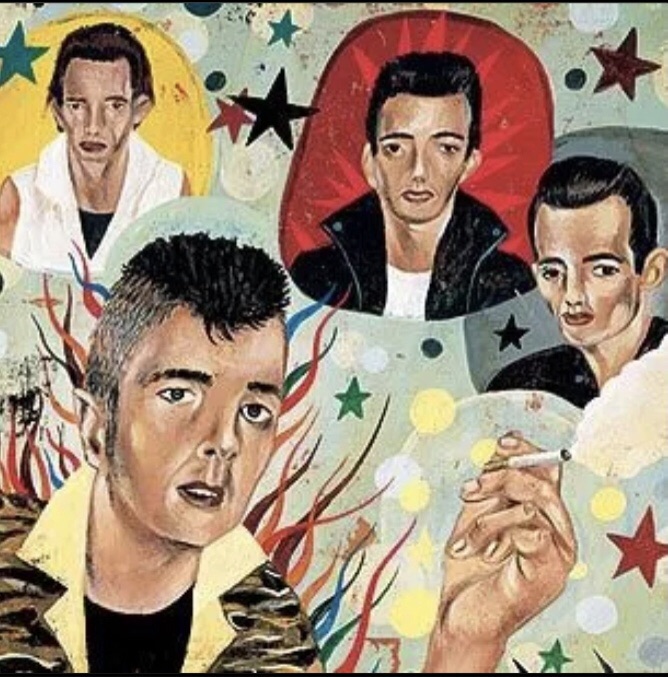
Rollingstone No28 Artist: The Clash

(This is the fifth of 28 artists that began playing in 1976 so not a part of the 1950s-60s generation)

By The Edge, Lead guitarist and vocalist for U2. Illustrator: Christian Clayton.

The Clash, more than any other group, kick-started a thousand garage bands across Ireland and the U.K. For U2 and other people of our generation, seeing them perform was a life-changing experience. There’s really no other way to describe it.

I can vividly remember when I first saw the Clash. It was in Dublin in October 1977. They were touring behind their first album, and they played a 1,200-capacity venue at Trinity College. Dublin had never seen anything like it. It really had a massive impact around here, and I still meet people who are in the music business today — maybe they are DJs, maybe they are in bands — because they saw that show.

U2 were a young band at the time, and it was a complete throw-down to us. It was like: Why are you in music? What the hell is music all about, anyway? The members of the Clash were not world-class musicians by any means, but the racket they made was undeniable — the pure, visceral energy and the anger and the commitment. They were raw in every sense, and they were not ashamed that they were about much more than playing with precision and making sure the guitars were in tune. This wasn’t just entertainment. It was a life-and-death thing. They made it possible for us to take our band seriously. I don’t think that we would have gone on to become the band we are if it wasn’t for that concert and that band. There it was. They showed us what you needed. And it was all about heart.

The Clash greatest hits playlist:

https://open.spotify.com/playlist/1t7Y91TNASOKEGmEhbxSvq?si=QcTjONwARgeCm0AKzXfBeQ&pi=9wdhqur8Sl6bq

The social and political content of the songs was a huge inspiration, certainly for U2. It was the call to wake up, get wise, get angry, get political and get noisy about it. It’s interesting that the members were quite different characters. Paul Simonon had an art-school background, and Joe Strummer was the son of a diplomat. But you really sensed they were comrades in arms. They were completely in accord, railing against injustice, railing against a system they were just sick of. And they thought it had to go.

I saw them a couple of times after the Dublin show, and they always had something fresh going on. It’s a shame that they weren’t around longer. The music they made is timeless. It’s got so much fighting spirit, so much heart, that it just doesn’t age. You can still hear it in Green Day and No Doubt, Nirvana and the Pixies, certainly U2. They meant it, and you can hear it in their work.

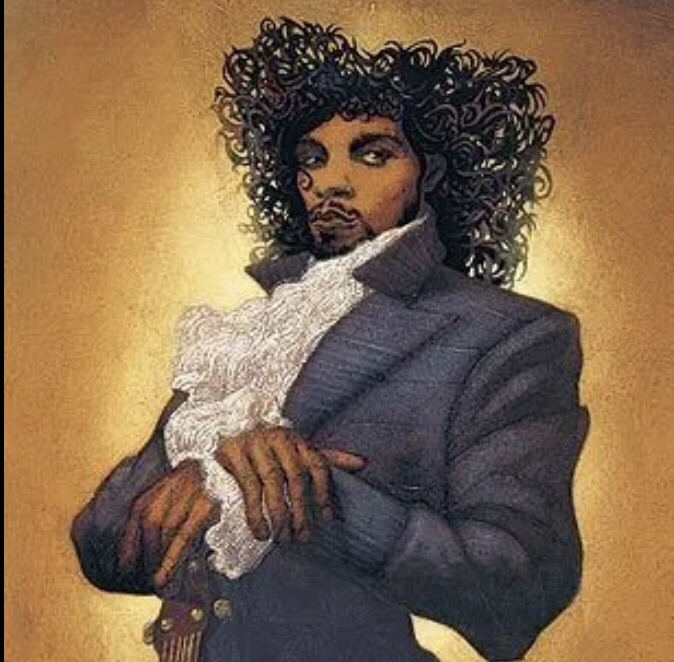
Rollingstone No27 Artist: Prince

(This is the fourth artist of the first 27 that produced his music beginning in 1978. So, he was not a part of the 1950s-60s generation.)

By Ahmir Thompson, The drummer that formed The Roots in 1987.

Illustrator: Sterling Hundley

Prince was forbidden in my closed, Christian household. He was somewhere between Richard Pryor — whom we absolutely couldn’t listen to — and a stash of porn. In junior high, my parents would put $30 or $40 in an envelope, and that would buy a card that would cover a month of school lunches. It was November of 1982, and I took my $36 and purchased Prince’s 1999, What Time Is It?, by the Time, and the Vanity 6 album. I starved that whole month.

“Little Red Corvette” from 1999was one of the first regularly played songs by a black artist on MTV; Prince crossed boundaries like that all the time. In the first five songs on Sign ‘O’ the Times, he sprawls across James Brown, Joni Mitchell, Pink Floyd, the Beatles and Curtis Mayfield in five easy swoops and maintains his own identity. But it’s Purple Rain that was a crowning achievement, not only in Prince’s career but for black life — or how blacks were perceived — in the Eighties. It’s the equivalent of Michael Jordan’s 1997 championship games: He was absolutely just in the zone, every shot was going in. “When Doves Cry” is one of the most radical Number One songs of the past 25 years. Here’s a song with no bass line in it, hardly any music. Yet it’s still had such an influence; “When Doves Cry” is a precursor to the Neptunes’ one-note funk grind, a masterpiece of song with just a drum machine and very little melody. Purple Rain was a great movie too. Anyone who saw Eminem’s biopic, 8 Mile, if they’re over 35, the first words out of their mouth are, “Oh, I liked that film the first time I saw it back in the Eighties. It was this Prince movie called Purple Rain.”

Prince’s greatest hits playlist:

https://open.spotify.com/playlist/63VPJo5HJpD1fcwJRdK8og?si=wTmxzOHxST66Apqwwu-59Q&pi=XiEJWmq9Q1mGF

Prince must be one of the most bootlegged artists of the rock era — on a weekly basis I listen to a bootleg called The Dream Factory, which would later be known as Sign ‘O’ the Times. His ability to create on the spot is mind-boggling. Like a hip-hop MC freestyling, he executes ideas off the top of his head in a very convincing manner. But there must be at least 20 ways to prove that hip-hop is damn-near patterned after Prince, including his genius, blatant use of sexuality and the use of controversy as a way to get attention. I don’t think any artist before had used that level of sex to get in the door and be accepted by the mainstream. I wonder what his mind state was in 1981, standing onstage in kiddie briefs, leg warmers and high heels without a Number One hit. That was a risk. Also, Prince created the image of what we now know as the video ho — he was a pioneer of objectifying and empowering women at the same time. Jay-Z often talks about ghostwriting for other artists; Prince is notorious for ghostwriting. Not only that, but he invented different aliases for himself in a way that rappers have adopted — he was Jamie Starr, Joey Coco or Alexander Nevermind.

I met Prince in 1996, and I was prepared for the grasshopper voice, the one that he always uses at award shows, but he was totally normal. Just like you and me, except he’s Prince. We played together a few times, and one of my hero moments of all time is after a concert in New York when me, him and D’Angelo got onstage and played for about a half-hour. His period of silence about a decade ago bothered me. It was really a shame that his fight for independence from the labels was a David and Goliath battle that he had to fight alone. But judging from what he’s done lately, I’m happy to say that he hasn’t lost a step in his 30 years of doing it. He seems as young and as in charge as ever. He definitely seizes the moment. In case a few people counted him out, he’s got a few trump cards up his sleeve.

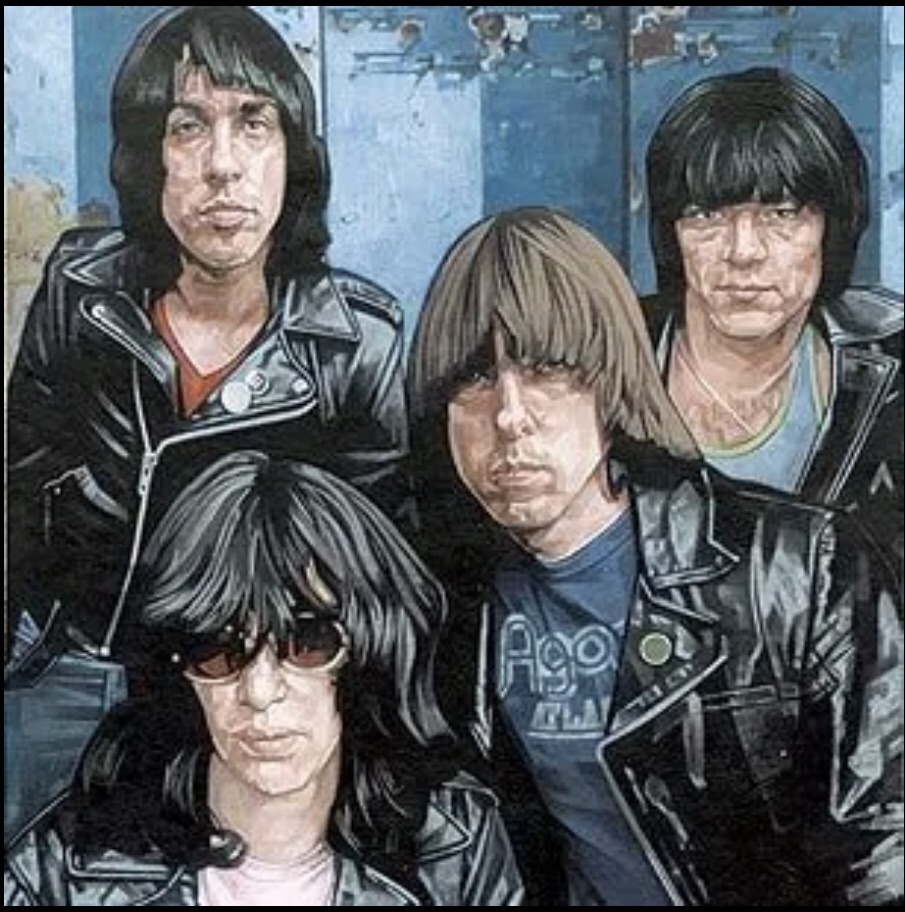
Rollingstone No26 Artist: The Ramones

(The third artist that released music starting in 1974. So, was nit a part of the 1950s-60s generation.)

By Lenny Kaye, the guitarist for The Patti Smith Group. Illustrator: Chris Kasch

Every rock & roll generation needs reminding of why it picks up a guitar in the first place, and four nonbrothers from the borough of Queens had a concept that was almost too perfect. Their look — ripped jeans, tight T-shirt, high-top sneakers, bowl haircut and black motorcycle jacket — was a cartoon version of rock’s tough-guy ethos. When they first started, they played what they knew how to play, which wasn’t much, and worked it to their advantage. They opted for speed rather than complexity, they aspired to be the Beach Boys, Alice Cooper and the Bay City Rollers, and their rotational three chords and headlong lunge kept them skidding through the simpleton catchphrases of their singalongs.

The Ramones were pure, unadulterated — and hardly adult in their adolescent concerns of sniffing glue and beating on brats with a baseball bat, even if the brats were themselves. Their sibling rivalry meshed like any television reality show. Johnny was the stern older brother, disciplined, military; Dee Dee was the blunt instrument; Tommy was the producer who knew the record business, and like any good producer, knew that you build a great track from the drums out. Joey was the beating heart.

The Ramones had their act so together that they would change it only in increments for two decades after they took it out of the CBGB nest in 1975. They were easily understood, translatable. When the band got to England on Independence Day 1976, returning the favor of the English Invasion in a fun-house mirror, it was a frontal assault on here-we-go-again pop subculture.

The Ramones always believed in their music’s message of self-deliverance. They affirmed that if they could do it, you could do it; just be resolute. Count to four.

The Ramones greatest hits playlist:

https://open.spotify.com/playlist/4kf2AuUVNAj7r668swikki?si=_cp6P4o_SxyNS_YcBIMp6w&pi=y4YfuwvCTsy7H

When I think of a Ramones moment, I remember not the early years — when the bands played for each other on the Bowery, and each was like a different world — but a late afternoon in May, somewhere in New England, a daylong festival, maybe the early Eighties. I’m standing backstage with Johnny, and we’re talking about nothing much, guitars we’ve known, the Red Sox, and finally the conversation stops, and we just look around, quiet in the midst of electric noise, seeing where rock & roll has brought us on this beautiful afternoon, playing the music we love.

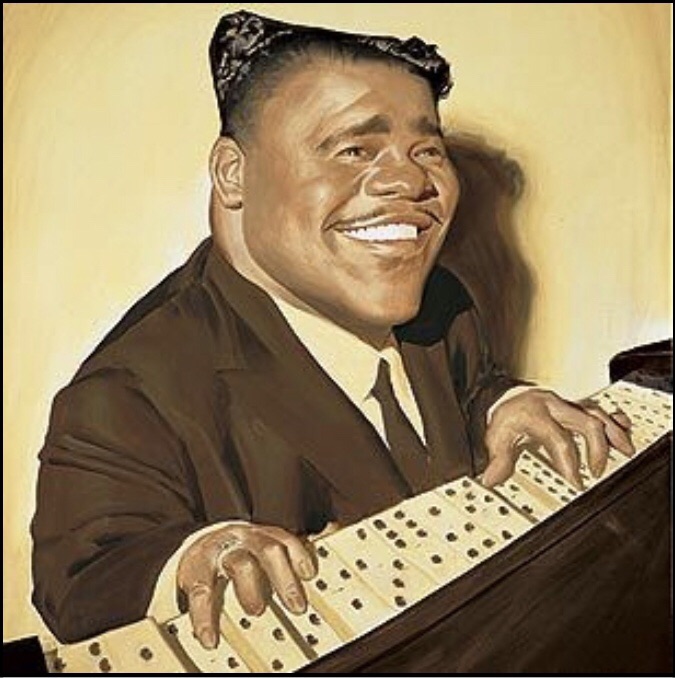
Rollingstone No25 Artist: Fats Domino

By Dr. John, An icon and emdodiment of New Orleans musical legacy. Best known for his 1973 hit “Right Place, Wrong Time.” Illustrator: Dan Adel.

After John Lennon and Paul McCartney, Fats Domino and his partner, Dave Bartholomew, were probably the greatest team of songwriters ever. They always had a simple melody, a hip set of chord changes and a cool groove. And their songs all had simple lyrics; that’s the key. There are no deep plots in Fats Domino songs: “Yes, it’s me, and I’m in love again/Had no lovin’ since you know when/You know I love you, yes I do/And I’m savin’ all my lovin’ just for you.” It don’t get no simpler than that.

Fats Domino’s greatest hits playlist:

https://open.spotify.com/album/06srT6zqpIJQEIhfHUFdQ4?si=bjs9qdD-QI2cG5r3HRuaWA

Even when Fats Domino did songs by somebody else, it was still Fats. He could really lock in with his band and play those hard-driving boogie shuffles — it was pre-funk stuff, and it was New Orleans, and he did it all his way. One thing that most people miss, which he did on some of his biggest records, like “Blueberry Hill”: He could do piano rolls with both hands. A couple of guys, like Allen Toussaint, could do Fats to a T, but with Fats, there was brothsome little different thing. He was like Thelonious Monk that way. You can always tell when it’s Monk and when it’s somebody trying to play like Monk.

I give a lot of credit to Dave Bartholomew, Fats’ producer and songwriting partner. They were a team. Dave produced records perfect for Fats. He had the sense to go with the best-feeling take when they were recording. People would have missed something great about Fats if they had just heard the more “correct” takes — the ones without that extra off-the-wall thing that Fats would bring.

You can’t hardly hear the bass on some of Fats’ early records. Later, they started doubling the bass line with the guitar, and it made for a very distinctive sound. That became standard with Phil Spector. I don’t know if Phil picked it up from Fats or from somebody who picked it up from Fats, but it started with Fats. You can hear a lot of Fats in Jerry Lee Lewis. Anytime anybody plays a slow blues, the piano player will eventually get to something like Fats. I can’t tell you the number of times I played sessions and was asked specifically to do Fats. Eighty kajillion little bands all through the South — we all had to play Fats Domino songs. Everybody, everywhere.

Fats is old school to the max — he loved to work the house, do looooong shows and push the piano across the stage with his belly. That innocence is there in his music. He’s a good man, and people respond to that goodness. I don’t think it was about anything other than the tradition of working the house and what felt good to Fats.

When all the payola scandals were happening and it looked bad for rock & roll, Fats did an interview in some magazine. He said, “I don’t know what all the trouble is about us being a bad influence on teenagers. I’m just playing the same music I played all my life.” That’s what Fats was about. He didn’t look on what he did as special or different. He just did what Fats did.

Rollingstone No24 Artist: Jerry Lee Lewis

By Moby, a singer brought electronic techno into the mainstream. Illustrator: Jody Hegill.

I’d be curious to know how many pianos Jerry Lee Lewis has gone through in his lifetime. Whoever was responsible for keeping the piano in tune and making sure it didn’t fall apart at Sun Studio must have wept every time he showed up to play. I don’t know what switch got flipped in his brain when he was born that compelled him to play so fast and so hard, but I’m glad it got flipped.

There’s a perhaps apocryphal story that when he and his cousin, the evangelist Jimmy Swaggart, were children, they went to a roadhouse and listened through the window to some amazing R&B band. Jimmy Swaggart supposedly said, “This is the devil’s music! We have to leave!” But Jerry Lee just stood there transfixed and couldn’t tear himself away. He was an evangelist for the devil’s music.

If you listen to his records, they sound more punk rock than just about anything any contemporary punk band is doing. His records sound faster than they actually are, and they sound louder than they actually are. If you listen to them on a crummy little stereo on low volume, they still sound like they’re exploding out of the speakers.

Jerry Lee Lewis’s greatest hits playlist:

https://open.spotify.com/album/02FCCye8QsWyjHwedg9Quj?si=awSXDlgVRuCu2xiGSLouwg

Whether it’s Jerry Lee Lewis or Little Richard or Gene Vincent, these guys were dripping sex and anarchy. Their records all have a sense of abandon, like they had given up all hope of commercial success or ever being respected, so they just wanted to play crazy music and get laid.

If I had a daughter, I wouldn’t let her date a musician, because most of them are just too dumb. In Jerry Lee’s case, if he were coming over for dinner, I would literally lock her up. The story of him marrying his 13-year-old cousin is unbearably sad. Elvis had just been drafted, Jerry Lee was about to tour England for the first time, and the scandal broke. He was never able to ascend to the throne that was rightfully his. And the piano faded because it was too big and too hard to mic. The beauty of the electric guitar is that it’s small, portable, loud and easy to mic.

“Great Balls of Fire” and “Whole Lot of Shakin’ Going On” are the iconic singles. But if you really want to understand Jerry Lee Lewis, find some video performance of him doing “Great Balls of Fire.” It’s pure, narcotic rock & roll excitement.

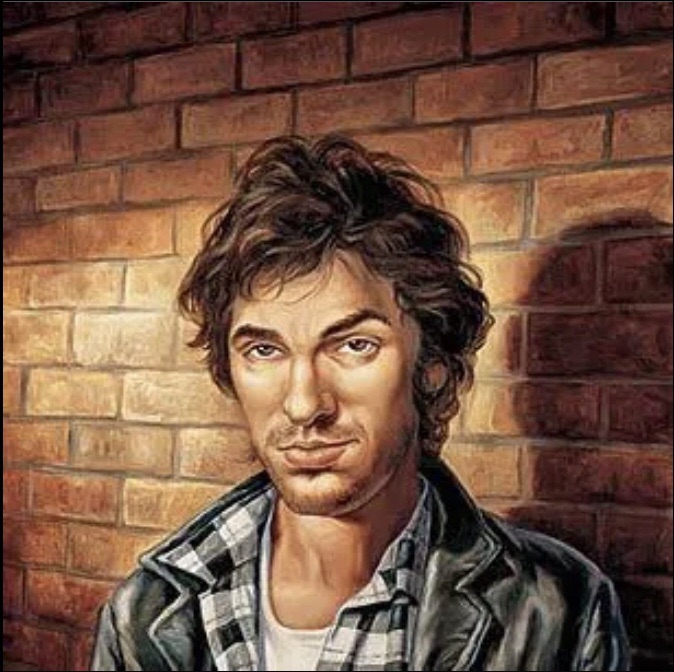
Rollingstone No23 Artist: Bruce Springsteen

(This is the second artist of the first 23 that was not releasing songs in the 1950s or 60s. Bruce was active in the 1970s including Born in the USA.)

By Jackson Browne Illustrator: Owen Smith

In many ways, Bruce Springsteen is the embodiment of rock & roll. Combining strains of Appalachian music, rockabilly, blues and R&B, his work epitomizes rock’s deepest values: desire, the need for freedom Noand the search to find yourself. All through his songs there is a generosity and a willingness to portray even the simplest aspects of our lives in a dramatic and committed way. The first time I heard him play was at a small club, the Bitter End in bNew York, where he did a guest set. It was just an amazing display of lyrical prowess. I asked him where he was from, and he sort of grinned and said he was from New Jersey.

Bruce Springsteen’s greatest hits playlist:

https://open.spotify.com/playlist/4adcEAzQKaVJLlo94o3nVU?si=s-nPfLw_ShWf7MtmxC0Rrw&pi=cKae9iDAT4ikj

The next time I saw him play it was with his band, the one with David Sancious in it. I’d never seen anybody hdo what he was doing: He would play acoustic guitar and dance all over the place, and the guitar wasn’t plugged into anything. There wasn’t this meticulous need to have every note heard. It filled that college gym with so much emotion that it didn’t matter if you couldn’t hear every note.

A year or so later I saw him play in L.A., with Max Weinberg, Clarence Clemons and Steve Van Zandt in the band, and it was even more dramatic — the use of lights and the way it was staged. There were these events built into the music. I went to see them the second night, and I guess I expected it to be the same thing, but it was completely different. It was obvious that they were drawing on a vocabulary. It was exhilarating, and at the bottom of it all there was all this joy and fun and a sense of brotherhood, of being outsiders who had tremendous power and a story to tell.

Bruce has been unafraid to take on the tasks associated with growing up. He’s a family man, with kids and the same values and concerns as working-class Americans. It runs all through his work, the idea of finding that one person and making a life together. Look at “Rosalita”: Her mother doesn’t like him, her father doesn’t like him, but he’s coming for her. Or in “The River,” where he gets Mary pregnant and for his 19th birthday he gets a union card and a wedding coat. That night they go to the river and dive in. For those of us who are ambivalent about marriage, the struggle for love in a world of impermanence is summed up by the two of them diving into that river at night. Bruce’s songs are filled with these images, but they aren’t exclusively the images of working-class people. It just happens to be where he’s from.

Bruce has all kinds of influences, from Chuck Berry and Gary U.S. Bonds to Bob Dylan and Woody Guthrie. But he’s also a lot like Montgomery Clift, Marlon Brando and James Dean — people whose most indistinct utterances have been magnified to communicate volumes. He is one of the few songwriters who works on a scale that is capable of handling the subject of our national grief and the need to find a response to an event like September 11th. His sense of music as a healing power, of band-as-church, has always been there. He’s got his feet planted on either side of that great divide between rebellion and redemption.

Rollingstone No22 Artist: U2

(First artist that made this Top100 list that was not from the 1950s or 1960s. Their best recordings began in 1976)

By Chris Martin, Lead singer of Coldplay. Illustrator: Anita Kunz

I don’t buy weekend tickets to Ireland and hang out in front of their gates, but U2 are the only band whose entire catalog I know by heart. The first song on The Unforgettable Fire, “A Sort of Homecoming,” I know backward and forward — it’s so rousing, brilliant and beautiful. It’s one of the first songs I played to my unborn baby.

U2’s greatest hits playlist:

https://open.spotify.com/playlist/0NsBqiR0s3D3Tz05L5B6x6?si=FA_Bc9KvSBuRLIqPVd2P-w&pi=2LpJKXlcQeiCm

The first U2 album I ever heard was Achtung Baby. It was 1991, and I was 14 years old. Before that, I didn’t even know what albums were. From that point, I worked backward — every six months, I’d get to buy a new U2 album. The sound they pioneered — the driving bass and drums underneath and those ethereal, effects-laden guitar tracks floating out from above — was nothing that had been heard before. They may be the only good anthemic rock band ever. Certainly they’re the best.

What I love most about U2 is that the band is more important than any of its songs or albums. I love that they’re still best mates and that they each play an integral role in one another’s lives as friends. I love the way that they’re not interchangeable — if Larry Mullen Jr. wants to go scuba diving for a week, the rest of the band can’t do a thing. U2 — like Coldplay — maintain that all songs that appear on their albums are credited to the band. And they are the only band that’s been around for more than 30 years with no member changes and no big splits.

It’s amazing that the biggest band in the world has so much integrity and passion in its music. Our society is thoroughly screwed, fame is a ridiculous waste of time, and celebrity culture is disgusting. There are only a few people around brave enough to talk out against it, who use their fame in a good way. And every time I try, I feel like an idiot, because I see Bono actually getting things achieved. While everyone else was swearing at George Bush, Bono was the one who rubbed Bush’s back and got a billion dollars for Africa. People can be so cynical — they don’t like do-gooders — but Bono’s attitude is, “I don’t care what anybody thinks, I’m going to speak out.” He’s accomplished so much with Greenpeace, in Sarajevo, at the concert to shut down the Sellafield nuclear plant, and he still runs the gantlet. When the time came for Coldplay to think about fair trade, we took his lead to speak out regardless of what anyone may think. That’s what we’ve learned from U2: You have to be brave enough to be yourself.