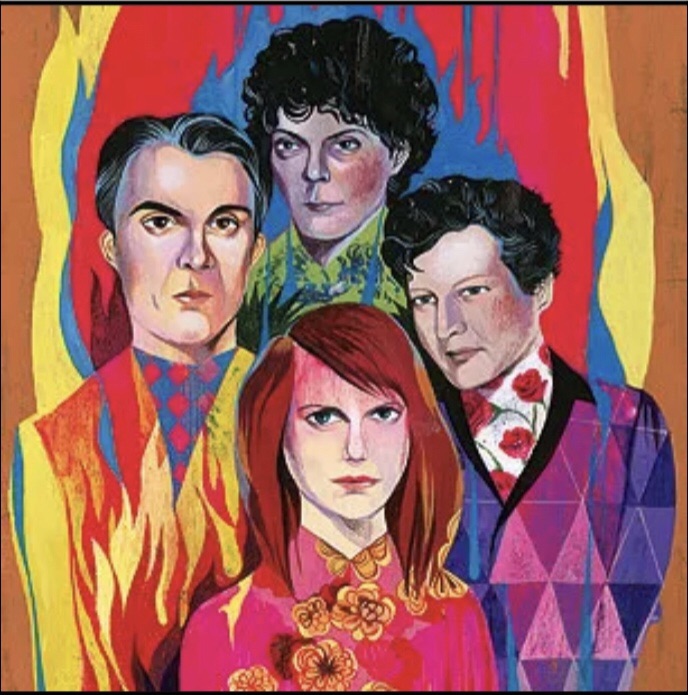
Rollingstone No85 Black Sabbath

By Dave Navarro, an American guitarist who is best known for his work with alternative rock band Jane’s Addiction (1993-98) as well as The Red Hot Chili Peppers (1995).

Illustrator: Tim Bower

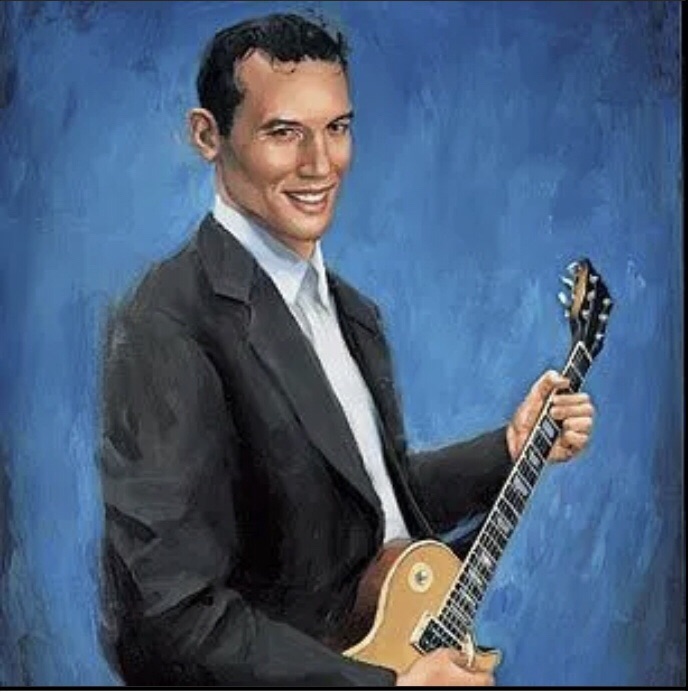
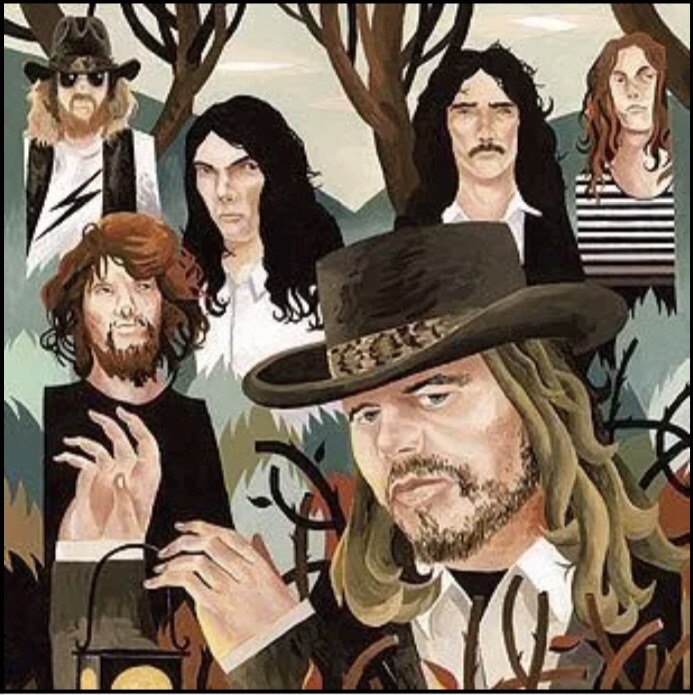
Black Sabbath are the Beatles of heavy metal. Anybody who’s serious about metal will tell you it all comes down to Sabbath. Any hard-rock band that ever tried to write a crazy twelve-minute operetta owes them a debt. There’s a direct line you can draw back from today’s metal, through Eighties bands like Iron Maiden, back to Sabbath.

Black Sabbath greatest hits playlist:

https://open.spotify.com/playlist/2eJnNT0zEiQbR5GVjj6i6p?si=mDZAnBT2Ssi7E1b2ZqTDeg&pi=hWwSoi0vTviBU

All the compelling themes are on Black Sabbath’s records: beauty, atrocity, the seven deadly sins. Their music can make you think of walking on the beach with your wife, or of locking yourself in your room with your big toe on the trigger of a shotgun — sometimes within the same song. The title song of Sabbath Bloody Sabbath has all of the stuff I’m talking about: It’s rebellious and dark and wicked, but it’s also gorgeous.

A lot of deep records — like Pink Floyd’s The Wall or Nine Inch Nails’ The Fragile — are dense, long journeys. Every time you listen to them you hear something new. Sabbath records do that for me, too, but they’re simple. When Sabbath wanted to convey a different message, they didn’t need to pick up an acoustic guitar or call in the London Philharmonic. They could do pretty much anything with just bass, drums, guitar and vocals.

Black Sabbath’s rhythm section doesn’t get enough props. If you listen to the way that Geezer Butler and Bill Ward play off of each other, that’s the core of the heaviness right there. Add to that Ozzy’s amazing voice and one of the greatest rock guitarists of all time, Tony Iommi, and it’s an unstoppable force. They’re a f__king piece of the mountain coming down behind you, and you can’t do anything about it.

I was 11 when I first heard Sabbath. Vol. 4 was the album, and it quickly became one of my favorites. At an early age I looked to music to take me out of my reality, and Sabbath does that better than any hard-rock act I know. In Jane’s Addiction, we were into a groove that was very repetitive, riff-oriented and hypnotic — similar in a lot of ways to a song like “War Pigs,” off of Paranoid (my favorite Sabbath album). And of course, both bands have a singer with a really high-end voice that cuts through all the chaos below. I’m still coming up with stuff that is a complete and blatant rip-off. There’s just no escaping them.

Rollingstone No84 James Taylor

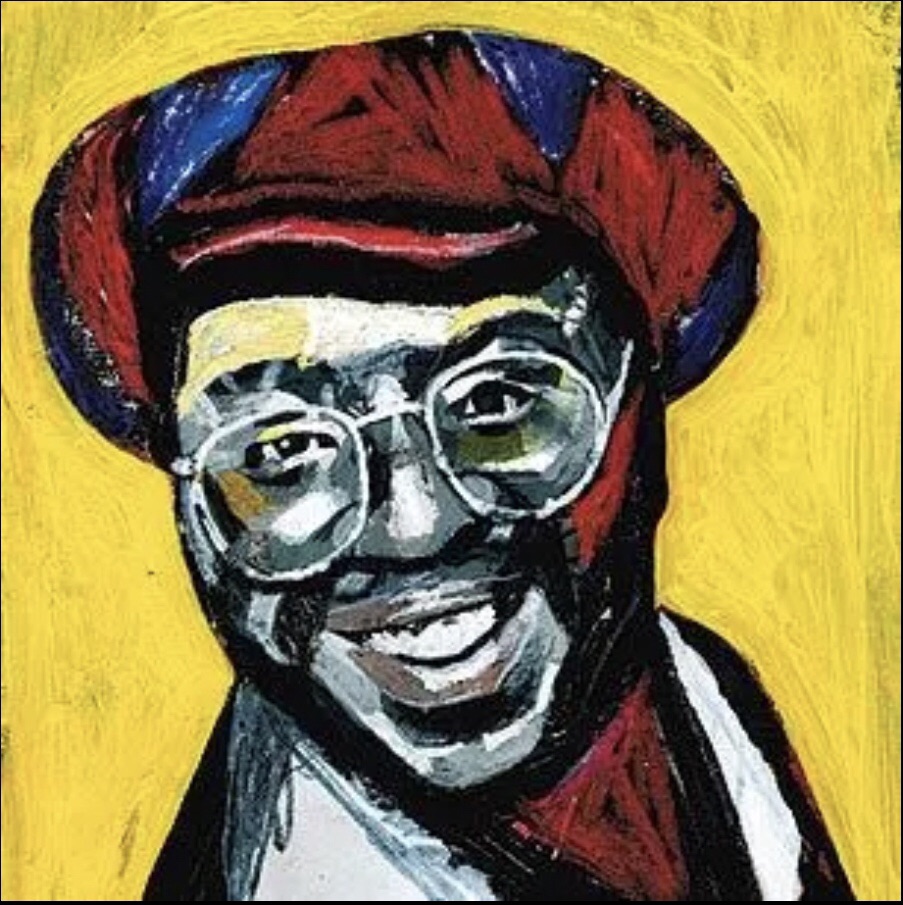
By Art Garfunkel, best known for his partnership with Paul Simon. Active 1956-present.

Illustrator: Dan Brown

I sing to James Taylor before every show I do. I warm up in my dressing room to “Handy Man,” “Sarah Maria,” “Song for You Far Away,” “Sweet Baby James,” “Copperline” and about 20 other favorites. Then I go from James’ bass-baritone to tenor singing with the Everly Brothers — first Don, later Phil.

The “Best of James Taylor” playlist:

While I’m unisoning with James, my reverence rises; my heart and mind become engaged in the sober intelligence of the song and the beauty of the singing. James’ accuracy of pitch is like a trader’s honesty. To me, it has always been paramount in singing. There is an illuminating love of living things — all of them here on earth — that lies within the tenderness of his line readings (listen to his song “Gaia,” from Hourglass). If vocal-cord vibration were like surfing off the swelling of the heart, James would be my favorite rider on the cusp — a little in the air, sublime in the spray.

It’s no accident that the Beatles’ Apple Records signed James Taylor at its inception. He is the finest of us Americans. I know the “folk music” he must have listened to (I, too, had been wand’ring early and late…). I have experienced the thrill of collaborating with him numerous times as we have invited each other into our respective albums. I recall our trio arrangement of “(What a) Wonderful World” with my Paul — we met up at Paul’s apartment (of course). It was ’77. Two extraordinary artists were giving me the gift of their vocals and guitar parts for my album, Watermark. I must have done something right. What is memorable today is the ease and efficiency with which we three found our harmonies. There was a mutual musical sensibility and a serious mutual respect.

James is so fine. His exactitude with the Note is simple, impeccable musicianship. Call it his refinement or the civility of intelligent life. Hear the innate dignity of James’ tribute song to Martin Luther King Jr. (“Shed a Little Light”). Some people have a hard time with the self-consciousness of perfectionism. But I think “perfect” is the best review.

I hope he reads this tribute of mine and recognizes what a great personal value his existence is to one of his colleagues. And I hope he breaks into another grin from ear to ear as he feels “that’s why I’m here.”

Rollingstone No83 Eminem

(This artist began producing records in 1988, so therefore was not a part of the 1960s generation)

By Elton John, a British singer-songwriter and pianist who has sold over 300M records led by “Rocket Man” in 1972.

Illustrator: Phil Burke

When Eminem and I did “Stan” at the Grammys in 2001, we got together to rehearse out in the Valley. We had never met or really spoken, so I was a little intimidated. When we started to do the song and Eminem made his entrance, I got goose bumps, the likes of which I have not felt since I first saw Jimi Hendrix, Mick Jagger, James Brown and Aretha Franklin. Eminem was that good. I just thought, “F__k, this man is amazing.” There are very few performers who can grab you like that the first time — only the greats.

Eminem is a true poet of his time, someone we’ll be talking about for decades to come. He tells stories in such a powerful and distinctive way. As a lyricist, he’s one of the best ever.

“Best of the Best” playlist: https://open.spotify.com/playlist/3xqcAMgjHGrv3ElA51zZRj?si=F71e39WAT5COq7fsa_k4rg&pi=6F7hmVJ3SHKUa

Eminem does for his audience what Dylan did for his: He writes how he feels. His anger, vulnerability and humor come out. That’s why we look forward to listening to Eminem’s lyrics and finding out where the hell he’s headed next.

Eminem lives, sleeps and breathes music — he’s a bit like me in that respect. He’s pretty much a recluse. I think he’s enthralled with what he’s doing; he’s intimately involved with his art. There’s a mystique about him. From the start, I have always admired Eminem’s thinking. That’s the reason I wanted to appear on the Grammys with him when I was asked, despite all the nonsense talked about his being homophobic and crap like that. The Boy Georges of the world all got up in a twist about it. If they didn’t have the intelligence to see his intelligence, that was their problem.

Eminem has the balls to say what he feels and to make offensive things funny. That’s very necessary today, when irony is becoming a lost art. Artists like Eminem who use their free speech to get a point across are vitally important. There just aren’t many people in the world with balls that big and talent that awesome.

Rollingstone No82 Creedence Clearwater Revival

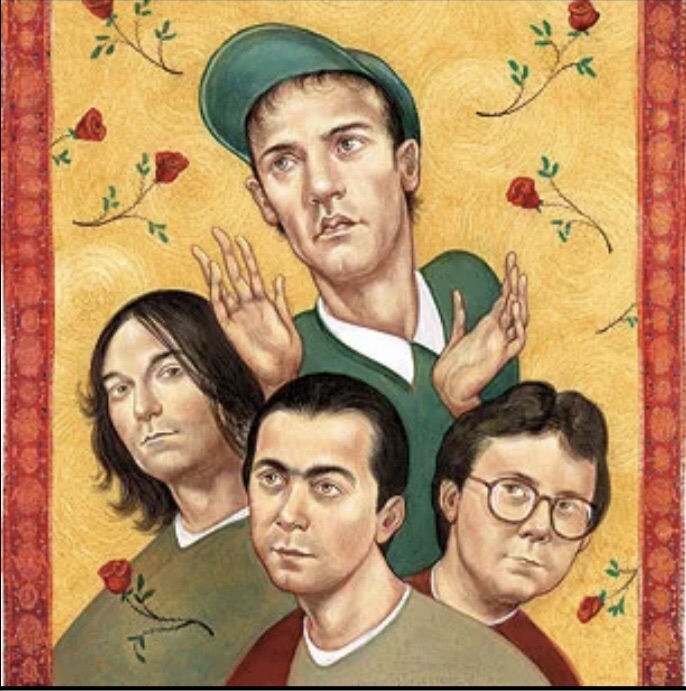
By Stephen Malkamus, best known for his songwriting for the indie rock band Pavement (1992-1999). Also recorded with Silver Jews, The Crust Brothers and The Jicks.

Illustrator: Unknown

My parents had basically nine vinyl albums, all greatest hits: the Beatles’ red/blue albums, Carpenters, Neil Diamond, Elton John, the Beach Boys’ Endless Summer, Jim Croce, Gordon Lightfoot … and Creedence Gold.Creedence was the one I took. It has perhaps the Dullest Expensive Album Cover ever, with the foldout profiles of the band members, but it sat proudly next to Devo, Kiss, the Yardbirds, the Stones’ early albums (they were cheap), the Decline of Western Civilization soundtrack and the Dead Kennedys’ Fresh Fruit for Rotting Vegetables. I was pretty much just into “Suzie Q” and “Born on the Bayou” back then, but I came to appreciate almost everything they ever did.

The songs are great. You have swamp-boogie numbers of varying length (“Green River,” “Born on the Bayou”), catchy energy bursts (“Fortunate Son,” https://open.spotify.com/track/4BP3uh0hFLFRb5cjsgLqDh?si=kSi1ZJzJS8uYdqTmZEfBZA

“Sinister Purpose”), pop (“Have You Ever Seen the Rain,” et al.) and the soul numbers (“Long As I Can See the Light”). They are all arranged well, have catchy melodies and solid rock lyrics.

John Fogerty has an inimitable voice. He puts it to the test over and over — and wins. The rhythm section is rad. You try to play this stuff and you’ll see they had chops. The rhythm guitar kicks, too. Fogerty plays what I would if I was 22, more talented and into the blues.

The records have their own vibe — performance-based, few overdubs, like if some Memphis/Booker T.-type band moved West and got a youth-culture injection. The focus is on the songs and not the rock star BS that was taking over back then. But they weren’t afraid to create a mood. When Cream came out, everybody started a power trio. But basically, “Suzie Q” has all the drama you would ever need. John Fogerty wrote more classic songs in a three-year stretch than anyone other than the Beatles.

Thank you, Creedence, for being popular and timeless enough to be on CD jukeboxes. Keep on chooglin’.

Rollingstone No81 The Drifters

By Jerry Leiber and Mike Stoller, The duo mixed Leiber’s lyrics with Stoller’s composing skills. For example in 1952, the two compiled both “Hound Dog” for Elvis and “Kansas City” for Little Willie Littlefield (covered by Wilbert Harrison in 1959).

Illustrator: Olaf Hajek

Over the years, the Drifters were a couple of different great groups and a whole bunch of wonderful guys. In a way, that upheaval may be part of the reason they recorded so many immortal songs over such a long period.

We were both fans of the Drifters even before we started writing, and later producing, for them. There was a real tradition of great singers in the group: Clyde McPhatter, Johnny Moore, Ben E. King and Rudy Lewis. Yet for all their fantastic records, the Drifters had the least stable lineup of any of the great vocal groups. They were in essence a band of hired guns, overseen by their management. Let’s just say this wasn’t necessarily a situation where guys were getting rich off the royalties.

Our first cut writing for the Drifters was “Ruby Baby,” which Nesuhi Ertegun produced and Johnny Moore sang lead on, in 1955. We loved what they did with the song. Their management changed the lineup in 1958, and that’s when the great Ben E. King came into the picture. The Drifters records that we’re most associated with, including “There Goes My Baby,” (https://open.spotify.com/track/3jSuQJuYwiQsVbB5jQ1Dxw?si=DtsP3M1kQX6XtX61EXTqog) come from that era.

Ben E. King was this younger singer just coming up, yet he had this mature style that was so unusual. He was always wonderful to work with, and we had a truly great run together. People have said that “There Goes My Baby” was a very influential record because it helped set the stage for the Wall of Sound and Motown. Who are we to argue? Thanks to a great arrangement by Stan Applebaum, the song showed us how rock & roll and strings could really work together. When King left, we worked with him as a solo artist, and the Drifters kept on having hits too, first with Rudy Lewis as the new lead singer. Upon Lewis’ death, Moore returned to the group in time for “Under the Boardwalk.”

We wrote songs for the Drifters, but we also put the call out to all the best songwriters in our world. Doc Pomus and Mort Shuman came with perfect songs like “This Magic Moment” and “Save the Last Dance for Me.” Gerry Goffin and Carole King wrote “Up on the Roof.” We also put the Drifters together with Burt Bacharach — who met Dionne Warwick at our office for a Drifters session.

Through it all, the Drifters always had this exquisite vocal blend. It was warm and round and full and dripping with chocolate. Since we were involved in the Drifters’ career, it’s probably not our place to declare their music immortal. But you have to say, they did pretty well.

Rollingstone No80 Elvis Costello

(This is the twenty-second artist that made the Top100 list but he didn’t begin recording until 1977. So, he wasn’t apart of the 1960s generation).

Illustrator: Roberto Parada

By Liz Phair, is an American rock singer songwriter. She was raised in Chicago. Her first attempt at success was singing under the stage name Girly-Sound. Her video cassette tapes landed a deal with Matador Records. She released two albums “Exile in Guyville” (1993) and Whip-Smart” (1994) that anchored the beginning of her commercial success.

Elvis Costello writes novels in three minutes. He gets inside your head, and he doesn’t let go. I’d pay a great amount of money to audit a course taught by him. If you love Elvis Costello, it’s because you love what he’s thinking — the depth and breadth of his notice is astounding. Sometimes I wonder if he watches people on the Strand in London and makes up entire histories for them. (“This person didn’t pass the bar and has thyroid problems.” “They’re jogging because they just went through a breakup.”)

When I was a teenager, it was a career aim for many of my friends to have a song written about them by Elvis Costello. His songs about women and girls are devastating, like arrows to the heart. There are very few artists who can depict a woman’s life, her thoughts and desires and her failings, like he can. Most rock songs about women are from the outside looking in: They say, “Babe, you’re so hot, come sleep with me.” Elvis’ songs say, “I see you, and I know what you’re doing.” He catches us at our tricks, and that’s always thrilling.

He’s a poet with a punk’s heart. There’s a Jerry Lee Lewis flavor to the way he just gets in there and lets it rip: His rocking stuff has a lot of raw power, a real physicality. Even when it’s just him and a piano onstage, it’s powerful. When I first heard him, I was blown away that someone could just spit those words out without even hitting the right notes, with no holding back and no shame. Of course, the Attractions were really important to his music — if you’re going to cram a whole book into one song, it helps to have a steady groove.

Elvis Costello greatest hits playlist:

https://open.spotify.com/playlist/0ptNBy7AerwKMgAD9L6V8z?si=5AFxuL-2QzumGGNjNdtjEw&pi=JHsDy2suQDSWz

Nobody sounds like him. People imitate Stevie Wonder or whomever, but how many people can do Elvis Costello? Not bloody many. His melodies weave in and out and all over the place, and you can tell they just spring out of him. Finally, Elvis is the definition of a career artist — he’s always coming up with a different sound, always challenging himself. All of his music tells you: You could come along for the ride — but I’m not stopping.

Rollingstone No79 The Four Tops

By Smokey Robinson, founder and frontman of The Miracles (active from 1955-present). Elected into the Rock and Roll Hall of Fame in 1987. His single “Just to See Her” won a Grammy in 1988. Released a total of 35 albums.

Illustrator: Gregory Machess

The Four Tops are a one-in-a-million singing group. They were the best in my neighborhood in Detroit when I was growing up. When I was 11 or so, my first group was an early version of what would become the Miracles. Back then the Four Tops were called the Four Aims. We all used to sing on the corners, at school functions and at house parties. Sometimes we’d have talent competitions. But all the groups in the neighborhood knew that if the Four Aims were going to be there, you were going to be singing for second place at best.

They were the first group from the neighborhood that sang modern harmony: They could sing like a gospel group but then do R&B like no one else. I love singers whom you can identify the first second they open their mouth, and Levi Stubbs is one of those; he’s one of the greatest of all time. He has that distinctive voice, and his range is staggering. The combination of Levi, Obie Benson, Duke Fakir and Lawrence Payton was truly awesome.

When they came to Motown and teamed up with Holland-Dozier-Holland, there was no looking back. They performed some of the most dramatic records ever written: “Standing in the Shadows of Love,” “Bernadette,” “Reach Out I’ll Be There,” “I Can’t Help Myself” and “Baby I Need Your Loving.” Later, when Holland-Dozier-Holland left, I co-wrote “Still Water (Love)” with Frank Wilson for the Four Tops.

The Four Tops greatest hits playlist:

https://open.spotify.com/playlist/1CxTjYrA6DVfV8knVh4qUm?si=zvsrYEk4T5-ohRzXcAlnUw&pi=pXmIK-KAT4iVj

They were always great singers and great guys. When the Four Tops first came to Motown, the Miracles and I were the mainstays of the label, and the Temptations had just gotten there. But all the guys were very, very close. You’d come back to town from a 51-night tour, and the first thing you did was shower and head back to Hitsville. We’d play cards and shoot pool together into the early hours.

The Four Tops will always be one of the best groups ever. Their music is forever.

Rollingstone No78 The Stooges

By Thurston Moore, an American guitarist, singer-songwriter best known for being a member of the rock band Sonic Youth (1981-2011).

Illustrator: Tim Bower

For me, The Stooges were the perfect embodiment of what music should be — of wanting it to be alive, riding the edge of control. Their music was total high-energy blues, with the contemporary freakout of Jimi Hendrix and the free-jazz spirit of John Coltrane. Iggy wanted the Stooges to be what he’d seen in Chicago as a young guy — these old bluesmen playing so hard that, as Iggy once said, the music drips off you.

I was 14 when I first saw a picture of Iggy onstage: shirtless, with his body spray-painted silver. He was sweating — it looked like glitter sweat — and he had a chipped tooth. He looked young and on fire. Iggy’s parents were intellectuals — his father was an English teacher — and that gave him an edge. He had focus. Iggy believed what he was doing was important — this self-reliant, anti-establishment art form.

The Stooges’ sound was so evocative yet so simple. Scott Asheton played drums as if he was in an electric-blues band. On The Stooges and Fun House, while his brother Ron, the guitarist, was playing these loud bar-chord progressions, Scott was making the band rev and swing. And when I played with Ron for the soundtrack of Velvet Goldmine, the first week was a crash course on how to play Stooges songs. We went through those first two albums, and there was that Asheton swing again, the way he rocked the chord grooves.

The Stooges greatest hits playlist:

https://open.spotify.com/album/0sZysU7lWI01Vjla0AZ7AV?si=6gLN9_5VSmei2HcnYLxsXw

Raw Power was made by a different lineup, with James Williamson on guitar and Ron on bass. It’s the ultimate fuck-off. This is a band getting very strung out, putting so much blood and soul into what it’s doing, and for the most part looked upon as trash. There’s a damaged quality to David Bowie’s original mix that is way ahead of its time.

Seeing the Stooges in reunion with Mike Watt from the Minutemen on bass was awesome. When they played their first gig, in 2003 at Coachella, the first thing Iggy did was start jumping in the air, flipping the bird to the crowd — “F__k you, f__k you and f__k you.” Then Iggy turned to the side of the stage, where the elite were standing — Sonic Youth, Queens of the Stone Age, the Red Hot Chili Peppers and the other all-access rock stars — and he gave us the jerk-off motion. It was great. After all this time, he’s still at war.

Rollingstone No77 Beastie Boys

(This is the twenty-first artist who made this Top100 list but didn’t begin recording until 1979. So, they were not a part of the 1950s or 1960s generation.)

By Darryl “DMC” McDaniels, an American rapper and record producer. Best known for being the founding member of the hip hop band Run-DMC.

Illustrator: Anita Kunz

In the early days of rap, the conventional wisdom was that only black people were supposed to like hip-hop and only white people were supposed to like rock. But it wasn’t like that. In Run-DMC, we were rapping over rock beats. The Beasties were a punk band listening to hip-hop.

I met the Beastie Boys in Rick Rubin’s dorm room at NYU. What bugged me out about the Beasties was that they knew everything about hip-hop — the Cold Crush Brothers, the Treacherous Three and Afrika Bambaataa, all the old-school shit. In addition, they could rap, they could sing and they could play instruments.

Run-DMC gave “Slow and Low” to the Beastie Boys. The song was basically their blueprint. But then they started writing anita kunztheir own rhymes, and when Licensed to Ill came out, it went to Number One. They were writing songs we wished we had written, like “No Sleep Till Brooklyn.” They put rock with rap like we did, but it made so much sense when they did it because they were punk rockers.

The Beastie Boys greatest hits playlist:

https://open.spotify.com/playlist/6HMyz9WasDPETukqHfOnhc?si=qH0nVJ4bSqiDRVDEY-LT8g&pi=9zu0sg4EQ4WeQ

The first time we toured with the Beastie Boys was the Raising Helltour in 1986: Run-DMC, Whodini, LL Cool J and the Beastie Boys. We were playing the Deep South — Crunkville, before there was crunk — and it was just black people at those shows. The first night was somewhere in Georgia, and we were thinking, “I hope people don’t leave when they see them.” But the crowd loved them, because they weren’t trying to be black rappers. They rapped about shit they knew about: skateboarding, going to White Castle, angel dust and television. Real recognizes real.

One of the most significant things about the Beasties is their longevity. They’ve put out genius records for decades. When Paul’s Boutique came out, it didn’t sell as well as their debut. Now people realize it’s one of the best albums of the Eighties.

Each of the Beastie Boys has a different personality. Mike D is the examiner: He looks around, he takes in all the information, he’s a little laid-back. MCA was always the mature one, but he could be a fool when it was time to be a fool. And Ad-Rock is just full of life. He’s approachable, affectionate and funny. But maybe my favorite thing about the Beastie Boys is that they’re worldly. They taught me and many other people a lot about life, people and music.

Rollingstone No76 The Shirelles

By Paul Shaffer, a Canadian musician that served on the David Letterman Show as bandleader from 1982-2015.

Illustrator: Gary Kelly

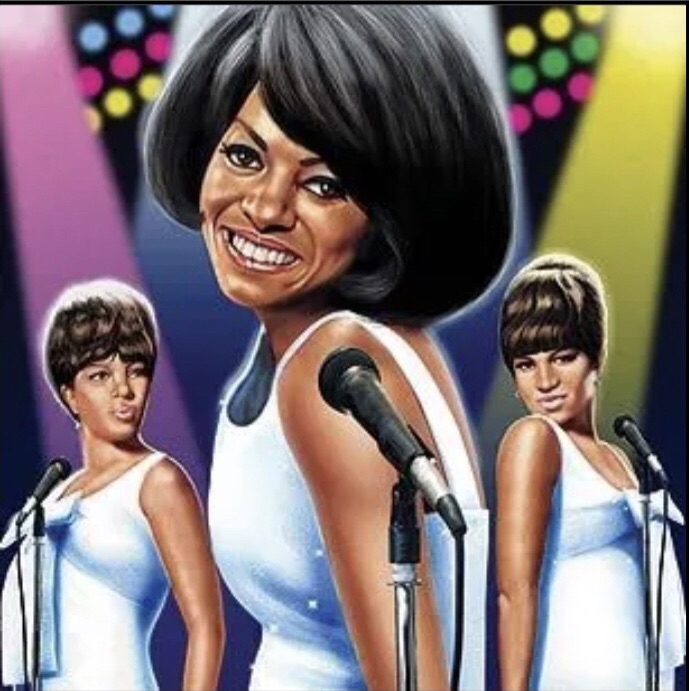
The Shirelles had a “sound,” a word that people from the Sixties vocal-group era use with a lot of reverence. Shirley Alston Reeves, who did most of the group’s lead vocals, wasn’t a gospel shouter like Arlene Smith of the Chantels. Shirley was more sentimental and street. When she said, “Baby, it’s you,” you thought, “Baby, it isme.”

They weren’t the first girl group, but the Shirelles were the first to have many hits. They influenced everyone from the Ronettes and Motown girl groups like the Supremes to the Beatles, who covered “Baby It’s You” and “Boys.” The Shirelles were given some of the all-time greatest songs to sing: “Will You Love Me Tomorrow,” “Soldier Boy,” “Tonight’s the Night,” “Mama Said.” But what’s interesting to me is that they wrote their very first hit, “I Met Him on a Sunday,” themselves, when they were still high school students in New Jersey. It was on this song that the group combined doo-wop with very accessible pop melodies: It began with the whole group singing, “Doo ron, day ron, day ron day papa, doo ron,” then one of them would sing, “Well, I met him on a Sunday.” It was the cutest thing.

The Shirelles greatest hits playlist:

https://open.spotify.com/album/483nAiMzsnzn1OJOSWyvuL?si=KiW8IjtvSIqvZ503FBS2mg

The girl-group sound was everything to me. As a kid, I used to sit at home after school and just bang out those songs on the piano. Later in life, in the early Nineties, I witnessed a wonderful moment, when the Shirelles were honored by the Rhythm & Blues Foundation. The three living members of the group — Shirley, Beverly Lee and Doris Jackson — were at the awards ceremony. The fourth member, Addie “Micki” Harris, had died in 1982. I had heard that they hadn’t seen each other in quite a while, so there was some apprehension when the three of them took the stage. They certainly hadn’t planned to perform. But when Doris took her award in hand, she said, “This is dedicated to the one I love,” and then they just started singing it.

They sounded fantastic. The band fell into place, and people in the audience just fell over. After that, Shirley, Beverly and Doris were having so much fun that they went into “Soldier Boy.” This was a group that hadn’t sung together in years, but they sounded heavenly. I was so inspired, I stood at attention and saluted. There was nothing else I could do.