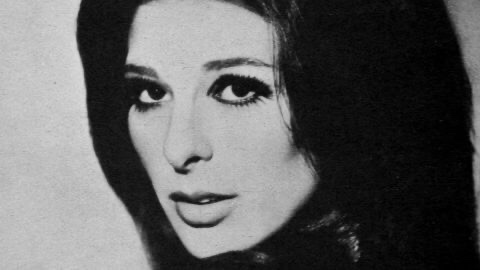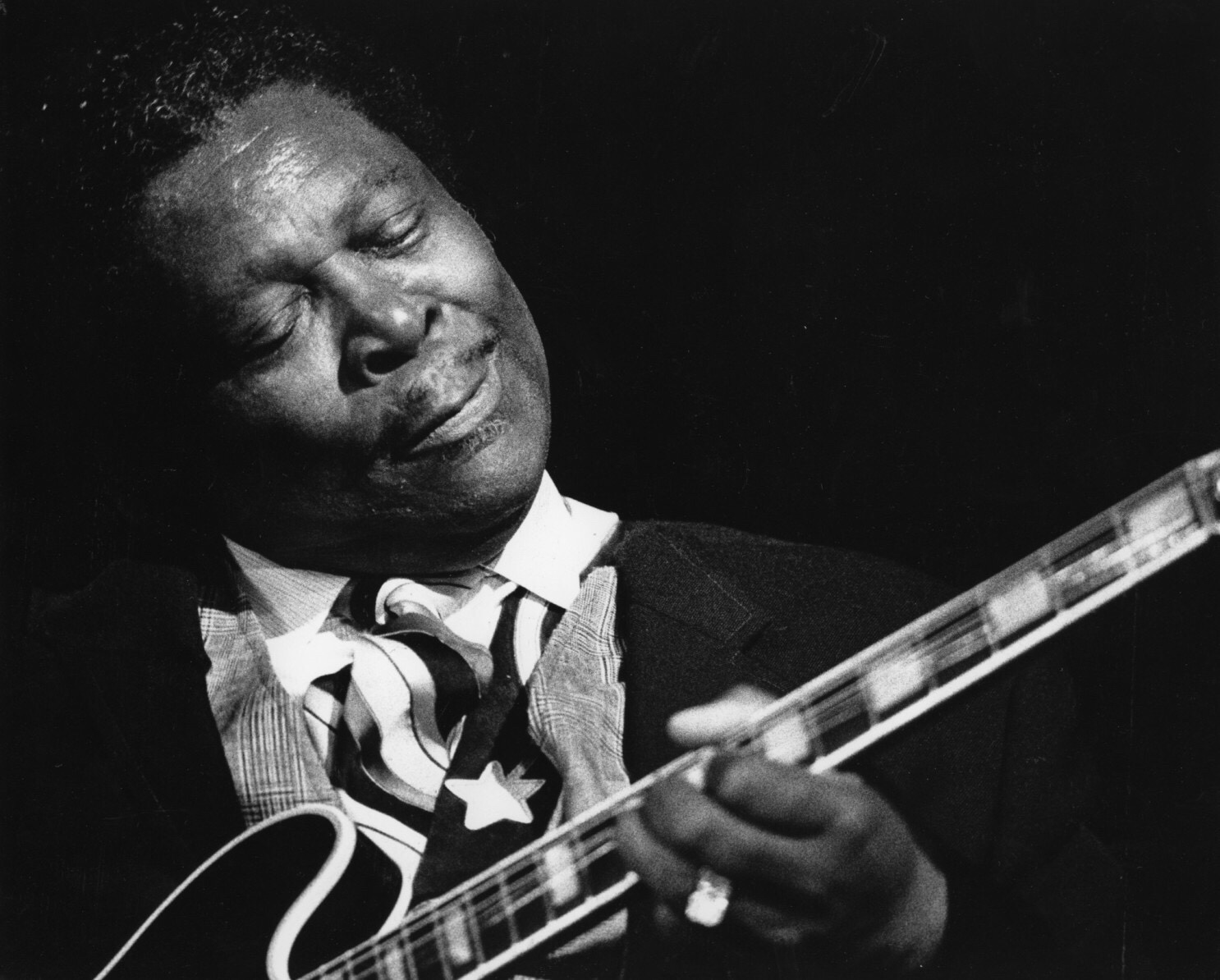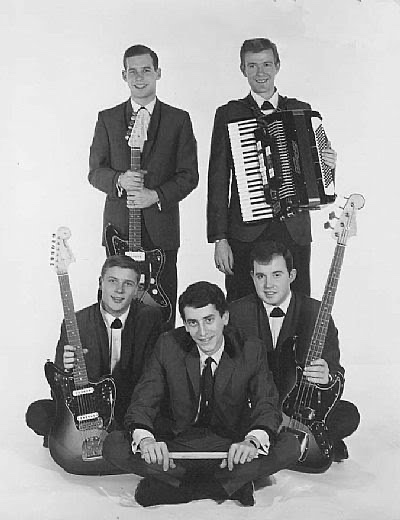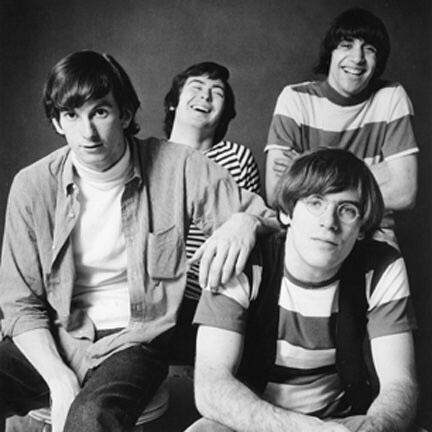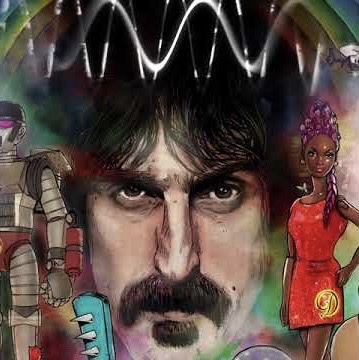

There are three more dynamic singing groups to add to those that have last names ending with S. They are a significant part of the 1960s era which I believe is a big of the best music of all-time: Huey Smith, The Spencer Davis Group, Steppenwolf, Morris Stoloff and The Supremes…
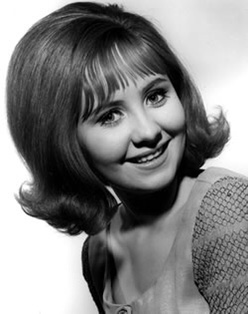
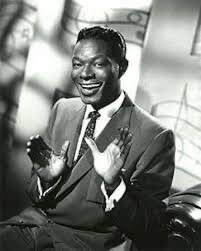
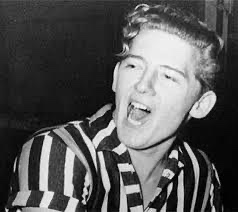
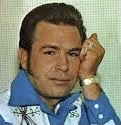
Huey “Piano“ Smith Photo credit: toppermost.co.uk
Huey Smith was born in the Central City neighborhood of New Orleans. He was influenced by the innovative work of Professor Longhair. He became known for his shuffling right-handed break on the piano that influenced other Southern players. Smith wrote his first song “Robertson Street Boogie”, named after the street where he lived, on the piano, when he was eight years old. He performed the tune with a friend, with the two billing themselves as Slick and Dark. Smith attended McDowell High School and Xavier University of Louisiana in New Orleans. When Smith was fifteen, he began working in clubsand recording with his flamboyant partner, Eddie Jones, who rose to fame as Guitar Slim. When Smith was eighteen, in 1952, he signed a recording contract with Savoy Records, which released his first known single, “You Made Me Cry”. In 1953 Smith recorded with Earl King. In 1955, Smith became the piano player with Little Richard’s first band in sessions for Specialty Records. The same year he also played piano on several studio sessions for other artists, such as Lloyd Price. Two of the sessions resulted in hits for Earl King (“Those Lonely Lonely Nights”) and Smiley Lewis (“I Hear You Knocking”). In 1956, Smith recorded for Ace Records’ with his Rhythm Aces. The A-side of the record was “Little Liza Jane”, backed with “Everybody’s Whalin'”. On the session, in addition to Smith on piano, were sax man Lee Allen, Earl King on guitar, and Earl Palmeron drums. The Rhythm Aces consisted of vocalists Dave Dixon, Roland Cook, and Issacher “Izzycoo” Gordon. Mac Rebennac, also known as Dr. John, said, “And Huey was catching the real second line on ‘Little Liza Jane’. Of course he had the right cats doing it, but he had that instinct for getting it. And with Dave Dixon and Izzycoo (Gordon) singing on it, man, he couldn’t get no better.” Gordon, who also sang with another notable New Orleans vocal group The Spiders, recorded Smith’s Latin-tinged “Blow Wind Blow” under the name “Junior” Gordon in 1956. In 1957, he formed a band, Huey “Piano” Smith and His Clowns, with sometime vocalist Bobby Marchan, and signed a long-term contract with Ace Records, represented by former Specialty record producer Johnny Vincent. Smith and the Clowns recorded “Rockin’ Pneumonia and the Boogie Woogie Flu” with singers Sidney Rayfield (Huey’s barber) and eighteen-year-old “Scarface” John Williams joining him on vocals. Not caring for the sound of his own voice, Huey instructed Williams to move closer to the microphone. “Get in closer, John,” he said. “I’m trying to get a hit out of this.” The record was issued as “Rockin’ Pneumonia and the Boogie Woogie Flu (https://youtu.be/-WWlwgoAxPE) (RQ 8)by Ace Records’ John Vincent. The record sold over one million copies, achieving gold disc status.
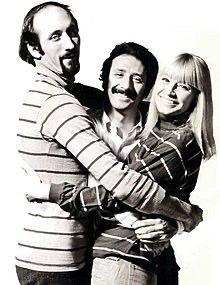
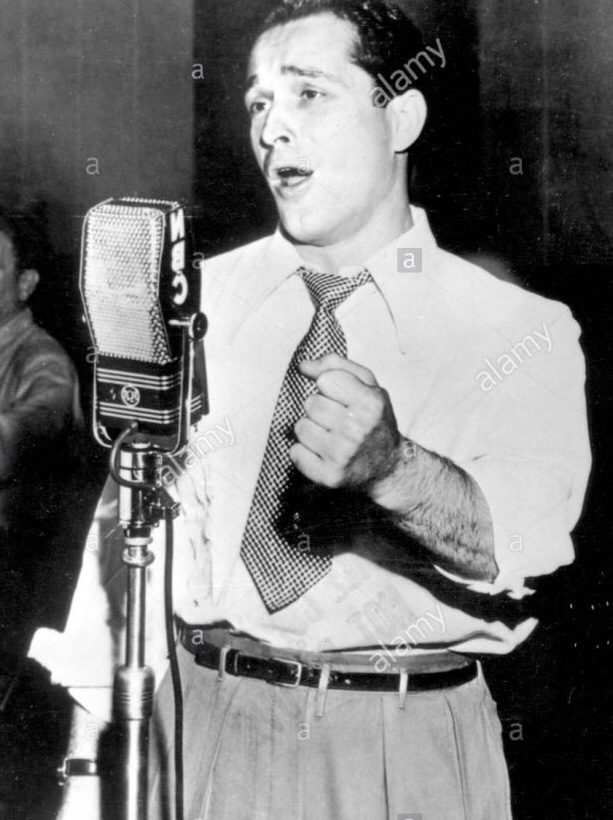
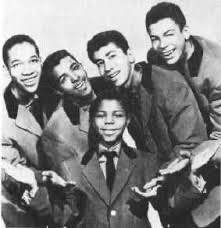
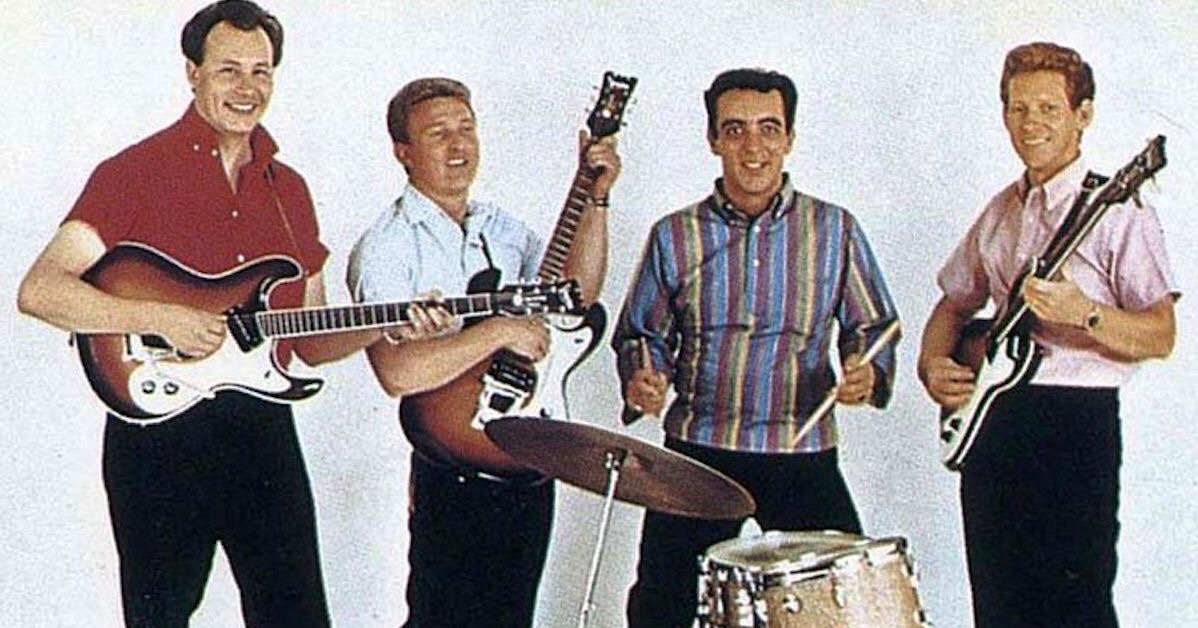
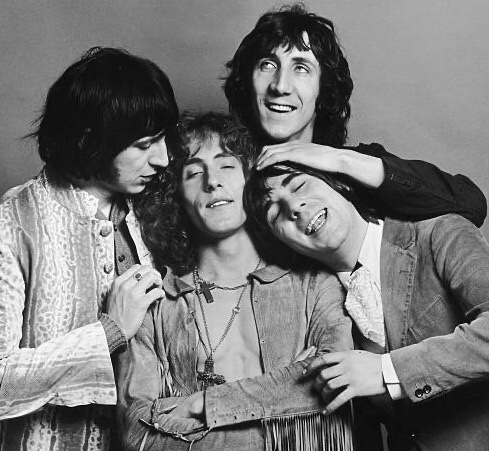
The Spencer Davis Group Photo credit: Audio Music – Greatest Hits – 1967
Spencer Davis Group. 1963-present
They are a British group that formed in 1963 in Birmingham, England (which is about half way in between Liverpool and London in the central part of the country). The initial group members were: Spencer Davis (guitar), Steve Winwood (keyboard, guitar), Steve’s brother Muff (bass guitar) and Pete York (Bass). Muff came up with the group’s name as he said Spencer was the only member who liked doing interviews while we all stayed in bed. Their four best known songs were: “Somebody Help Me” (https://youtu.be/UlLRgcjUkvw) (RQ 6) and “Keep on Running” (https://youtu.be/TyZrK9meebo) (RQ 5) both No1s in England (written by reggae musician Jackie Edwards). These singles, due to lack of promotion, didn’t get airplay in the U.S. They introduced a special medley of tribute singles in Germany based after a 1913 operetta (Spencer had studied music in West Germany in the early 60s) . Their other two were: “I’m a Man” (https://youtu.be/POCUgBSVENQ) (RQ 8) and “Gimmie Some Lovin” (https://youtu.be/ko3m0NBbq1o) No2 in the U.S. and No7 in the UK. These two records sold more than one million copies and were awarded gold record status. In 1966, the group also starred in a British musical comedy movie: “The Ghost Goes Gear.” Steve Winwood left in 1967 to form Traffic then joined Blind Faith before going out on his own to become a solo artist. After 1968, the group became inactive (with exception of recording a couple unproductive singles) and reformed a couple of times without the Winwood brothers.
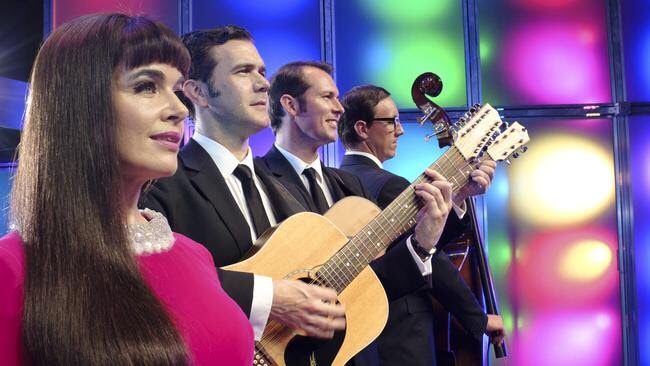
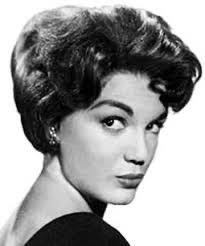
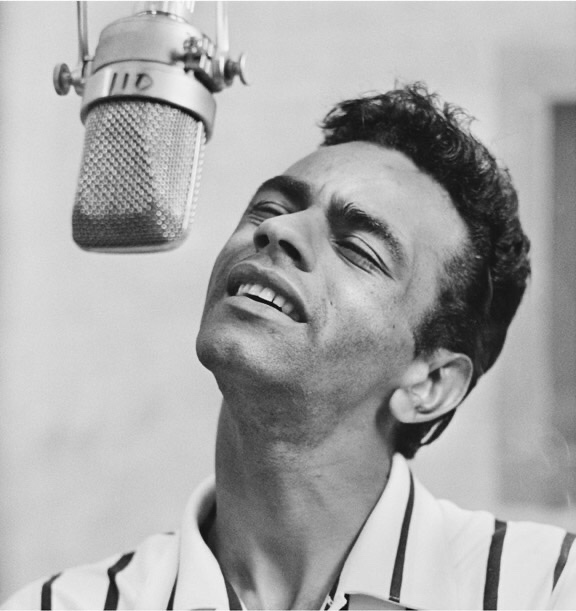
Steppenwolf Photo credit: CDA Casino – May 24, 2018
Steppenwolf 1968-72
The group was formed in late 1967 in LA by lead singer John Kay. His other band members were: Goldy McJohn (keyboard), and Jerry Edmonton (drummer). The band was named after the German novel “Der Steppenwolf.” They all had been previously with a Canadian band called The Sparrows. Michael Monarch (guitarist) and Rushton Moreve (bass) were recruited from the LA area via notices placed in local musical instrument stores. The group sold more than 25M records worldwide including eight gold albums, 12 Billboard Hot100 singles. Six were Top40 including:
After 1972, personalities clashed and the group split up whereby Kay continued with the group from 1980-2015. The band was nominated for the Rock and Roll HOF in 2017 but were not inducted.
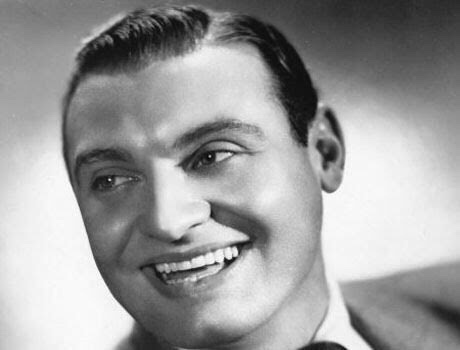
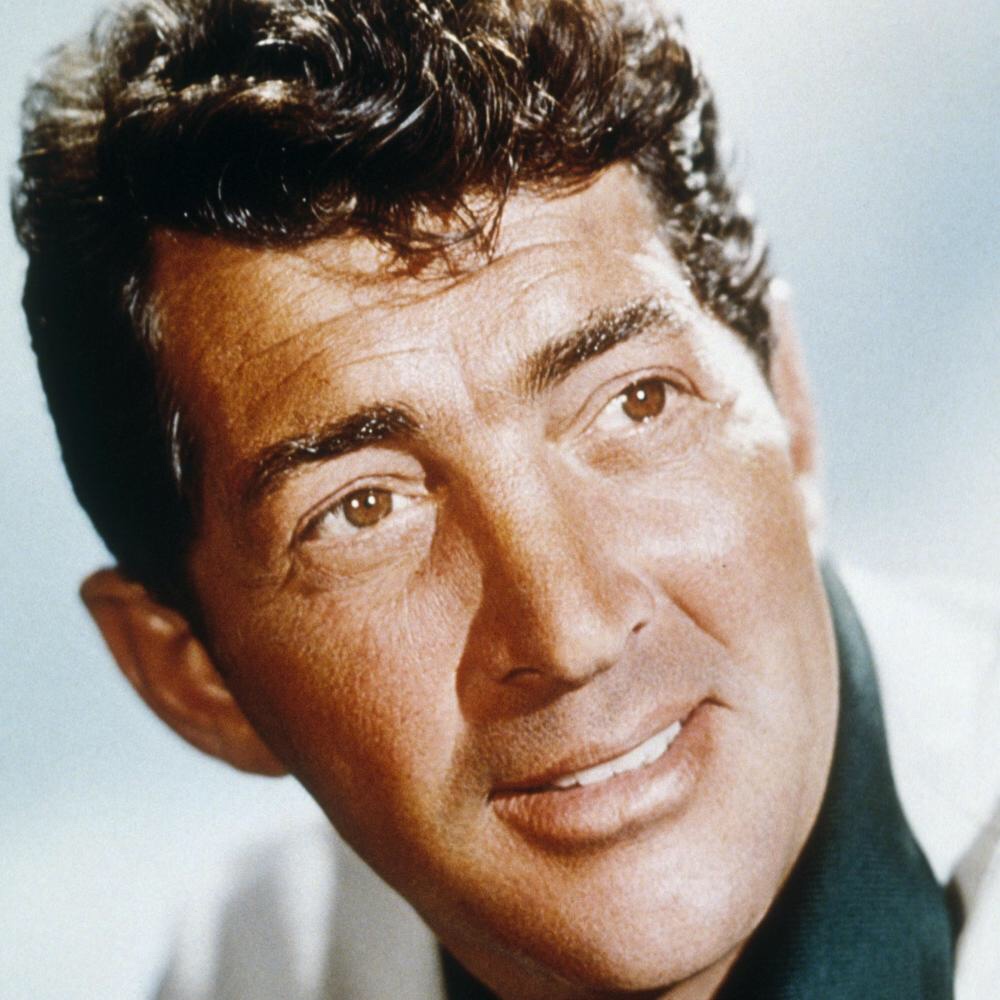
Morris Stoloff Photo credit: projects.latimes.com
Morris Stoloff worked as music director at Columbia Pictures from 1936 to 1962. Among space age popfans, he is best remembered for his 1956 Top 10 hit that paired the swing era tune “Moonglow” (https://youtu.be/MLStsAY2fDI) (RQ 10) with the love theme from the movie Picnic, the medley called “Moonglow and Theme from Picnic“. It sold over one million copies, and was awarded a gold disc by the RIAA. Stoloff was born in Philadelphia, Pennsylvania. A child prodigy on the violin, Stoloff was taken under the wing of W. A. Clark. After studying with Leopold Auer for several years, Stoloff was touring the U.S. as a featured soloist at the age of 16, and joined the Los Angeles Philharmonic a year later as its youngest member ever.
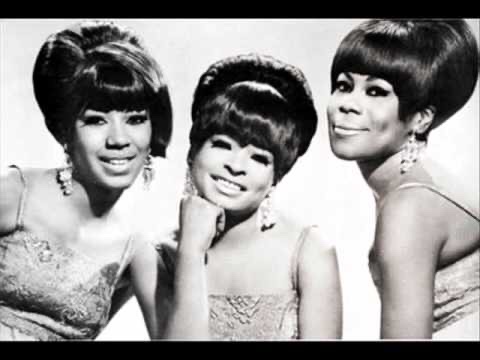
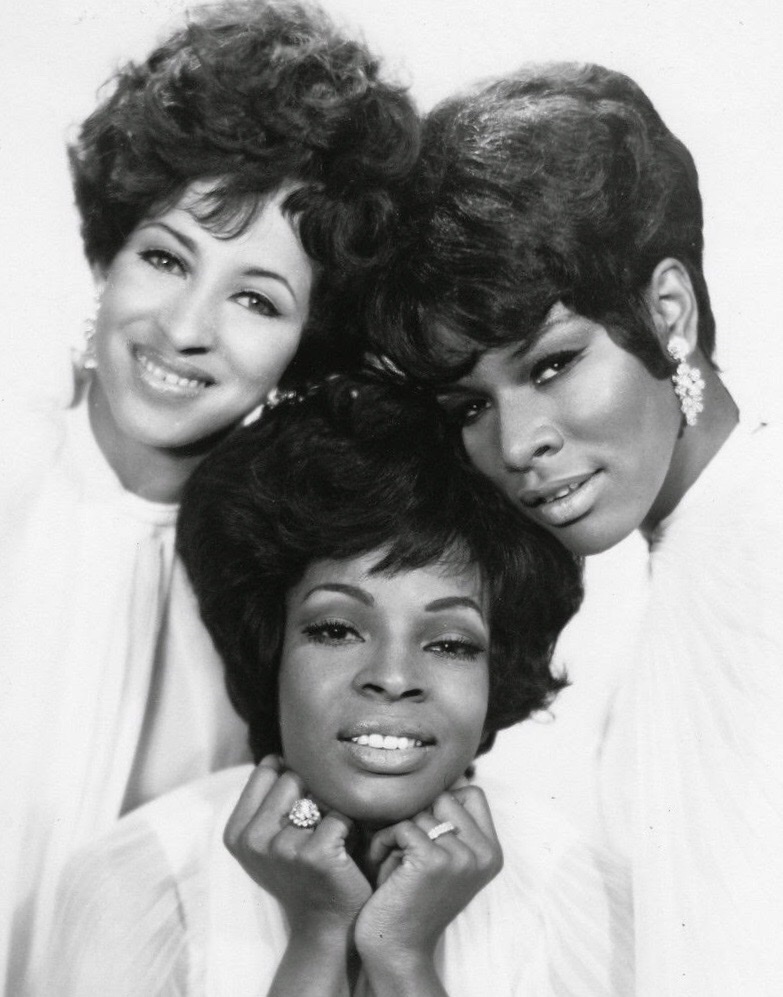
The Supremes Photo credit: The Meridian Star – May 26, 2018
Supremes, The. 1959-1977
The quartet was initially formed in Detroit in 1959 was called The Primettes. The original group members were: Diane Ross, Florence Ballard, Mary Wilson and Betty McGlown all lived in the Brewster-Douglass public housing project. In 1958, while in junior high, Ballard begun discussions with her friends and classmates to form the Primettes. Their first recording using Lu Pine Records was: “Tears of Sorrow” (https://youtu.be/w4OPDynjTTs) (RQ 3) and “Pretty Baby” (https://youtu.be/ZK5CmbFbYII) (RQ 3) on the backside. The record didn’t catch on. They continued on though with doing hand claps and background vocals for Marvin Gaye and Mary Wells. In 1960, the group signed on with Motown Records as The Supremes. Gordy Berry, their manager at Motown had given the girls a list of band names to consider: besides The Supremes, the others were The Darlenes, The Sweet Ps, The Melodees, The Royaltones and The Jewelettes.
Even though Diane thought that the name The Supremes was too masculine, they went with it. Between 1961-63, the group released six singles that didn’t chart. As a result, they were initially jokingly being referred to as “The No Hit Supremes.” By December of 1963, they recorded their first charted song (No23): “When Lovelight Starts Shining Through His Eyes” (https://youtu.be/QE0qaIk8LRo) (RQ 9) Ross, Ballard and Wilson initially sang lead for songs, but Berry Gordy ended up choosing Diane. In the spring of 1964, they recorded “Where Did Our Love Go” (https://youtu.be/qTBmgAOO0Nw) (RQ 10+). It reached No1 on the charts in the U.S. The song was initially intended for the Marvelettes but the Motown producers coerced them into doing it as the ladies didn’t like the song. Afterward, Diane ended up going by Diana in 1965. Next, the ladies recorded four No1 hits in a row:
“Stop in the Name of Love” was nominated for a Grammy Award in 1965 for the Best R&B Song. The whole “look”of the Supremes were very well orchestrated. Starting with Maxine Powell’s Motown finishing school, a vocal style focusing of femininity, detailed makeup, sophisticated (but simple) and graceful dance routines, and wearing high fashion gowns and wigs. Time and the Detroit News commented on their polished presentation techniques. They also commented that they didn’t scream or wail incoherently and nine out of ten words in their lyrics can be understood by listeners. By the end of 1966, they produced three more No1 hits singles:
Their album “Supremes A Go-Go” outsold the Beatles “Revolver.” In 1967, there was tension brewing as other Motown performers felt that Betty Gordy was placing too much attention on Diana (as evidenced ny the groups name that changed to: Diana Ross and the Supremes). Ss a result Ballard became depressed feeling pushed aside by Diana. She began abusing alcohol. Even so, the group recorded two more singles in the first quarter of 1967: “Love is Here and Now Your Gone” (https://youtu.be/X4z2iubQPgo) (RQ 10) and “The Happening” (https://youtu.be/Z4IFtxQfLWg) (RQ 10). However, as a group, the Supremes began to implode. The Supremes recorded somewhere between a total of 50-100M records. It is difficult to put a number on the dollars earned or the net worth of the Supremes. For example, it is estimated that Diana’s net worth is 250M.
This post addresses the greatest of all-time singing groups and artists from the 1960s that have last names starting with S: Sagittarius, Shep and the Limelites, The Staple Singers, Sam and Dave, Sam the Sham and the Pharaohs, The Shangri-Las, The Shirelles, Simon and Garfunkel, Percy Sledge, Sly and the Family Stone and Sonny and Cher are included…
Sagittarius Photo credit: discogs
Sagittarius was an American sunshine pop studio group formed in the late-1960s, devised by the record producer and songwriter, Gary Usher.
Usher had been involved with music as a songwriter since the early 1960s (including writing lyrics for some of Brian Wilson’s earliest songs), and soon branched out into production work. After considerable success as a producer, he eventually became a staff producer for Columbia Records. It was at this position that, during 1967, he produced Chad & Jeremy. They had played him several songs, which he felt lacked any commercial potential. He had heard a demo around that time for a song called “My World Fell Down” (https://youtu.be/81skBnAAdcQ) (RQ 9) also recorded by the British pop group The Ivy League), and he played it for them, thinking that it was a sure-fire hit. They balked at the idea of covering the song, and Usher felt that he would do it himself.
He brought in Los Angeles session musicians, as well as drafting friends such as Beach Boystouring alumni Glen Campbell (who did the lead vocal on the track) and Bruce Johnston and singer-turned-producer Terry Melcher for vocals. He finished the recording by adding a musique concrète bridge. He presented it to Columbia executives under the group name Sagittarius, named after his astrological sun sign.
The single, reached number 70 in the Billboard Hot 100. When there was pressure from Columbia for the group to tour, it was revealed that a group did not exist. Usher did, however, start working on an album for Columbia under the Sagittarius name. Most of this work was done in conjunction with Curt Boettcher.
Usher had met Boettcher when he was working with a group that he led and produced called The Ballroom. They were signed to Warner Bros. Records, and they recorded an album which was not released at the time. Usher, however, was impressed enough by Boettcher’s talents that he utilized him as a songwriter, musician, and producer (two of the album’s tracks were the same recordings made for the unreleased Ballroom album, though they appeared in stereo) throughout the album.
Prior to releasing an album, another single appeared, with the song “Hotel Indiscreet” as the A-side. The B-sides for some of the Sagittarius singles consisted of instrumentalsthat Usher had originally recorded for another studio project. As was the case with “My World Fell Down”, the bridge featured an unrelated comedy bit by The Firesign Theatre, another Usher discovery, but unlike the previous single, it failed to chart.
In 1968, the Present Tense album was released. Because Clive Davis disliked the usage of musique concrete in the two singles, Usher removed these segments from the album versions. The album version of “My World Fell Down” featured a few bars of additional music between the first and second verses, that did not appear in the single version, and both were mixed in stereo for the album. The single “Another Time” written and sung by Curt Boettcher was released from the album and charted in some markets.
However, in 1969, Usher left his job at Columbia Records in order to start his own label, Together Records. Usher started work on another Sagittarius album, The Blue Marble, but this time, he contributed more as a musician, particularly as a vocalist. As he had done with the Byrds album The Notorious Byrd Brothers, Usher made extensive use of a Moog synthesizer throughout the record. Boettcher contributed lead vocals on two songs, “Will You Ever See Me” and a cover of the Beach Boys song “In My Room”, but his involvement was otherwise minimal. “In My Room” was issued as a single and became a minor hit, peaking at number 86 on the Hot 100. However, the album failed to chart. Several more non-album singles were released by Together Records, before the end of the label.
Shep and the Limelites Photo credit: deepdiscount.com
Shep and the Limelites was an American doo-wop trio of the early 1960s, composed of James “Shep” Sheppard (September 24, 1935 – January 24, 1970), Clarence Bassett (March 13, 1936 – January 25, 2005) and Charles Baskerville (July 6, 1936 – January 18, 1995). They are best known for their 1961 hit recording, “Daddy’s Home” (https://youtu.be/AIGla91-qmk) (RQ 10) co-written by Sheppard.
Staple Singers Photo credit: Wolfgang’s Music Fillmore Auditorium – April 18, 1968
Staple Singers. 1948-1994
An American gospel, soul and rock group from Chicago. Roebuck “Pops” Staples (born in Drew, Mississippi) formed the group with his children Cleotha, Pervis, Mavis, and Yvonne. They are best known for their songs: “Respect Yourself, I’ll Take You There, If You’re Ready Come Go With Me and Lets Do It Again.” Their first public appearance was in the Mount Zion Church on Chicago. starting in 1952, they began recording with: “Uncloudy Day” and Will the Circle Be Unbroken” which were best sellers. In 1967, they moved toward mainstream audiences with:
Both records sold more than a million copies and were certified gold. Spike Lee used the record in his movie Crooklyn (in 1994). In 1972, “I’ll Take You There” (https://youtu.be/Qsl4A9hZEto) (RQ 10) topped the charts. Then in 1973, “If You’re Ready Come Go With Me,” (https://youtu.be/_pUSe3zmd_Y) (RQ 8) reached No1 in the R&B charts and No9 on the Billboard chart. They went bankrupt in 1975, but still released “Let’s Do It Again” (https://youtu.be/NIS4P8xbPtg) (RQ 8). It was their second No1 hit. They were elected into the HOF in 1999 and received a Lifetime Achievement Award.
Sam (Moore) and Dave (Prater) “Soul Man” Photo credit: Pass the Paisley
Sam & Dave. 1961-81
The singers are originally from Miami, Florida. The tenor voice was Sam Moore and the baritone Dave Prater. Sam & Dave were HOF inductees in the Rock and Roll, Vocal Group, the Memphis Music, and Rhythm & Blues associations. Their recordings won multiple Grammys and gold records and were considered to be the most successful soul duo of their time (1961-81). Their “call-and-response” top recordings included:
Overall they had 10 consecutive Top20 singles and three consecutive Top10 LPs. They helped pave the way for the acceptance of soul music by white pop audiences. “Soul Man” (https://youtu.be/1cSyZY1dBpI) (RQ 8) was a No1 pop hit and was recognized by the Grammy Hall of Fame as being the most influential song over a 50 year time period. It was also featured in the movie “Soul Men” in 2008. Nicknamed “Double Dynamite” for their gritty, gospel-infused performances. The pair were known to have a tumultuous relationship and did not speak to each other off stage for 13 of their 20 performing years!
Moore had continuing issues with Prater (drug use, touring fatigue, and having a desire to do his own thing) that ultimately led to their breakup. In 1970-71, Moore toured on his own at which time he married Joyce McRae. Joyce helped him through this difficult time in a lengthly battle with drug addition.
Sam the Sham & the Pharaohs Photo credit: Sixties Beat Blog
Sam The Sham & The Pharaohs 1961-present
Domingo “Sam” Samudio, was from Dallas, Texas. He began performing (singing and learned to play the guitar) in the second grade. After high school, he joined the Navy snd spent six years in Panama. After being discharged, he enrolled at the University of Texas-Arlington where he studied voice for two years before dropping out. Immediately afterward he became a carny (worked at a carnival).
In 1961, Sam formed the Pharaohs, the name inspired from the costumes worn in Yul Brynner’s portrayal of a pharaoh in the 1956 movie The Ten Commandments.
In late 1964, they recorded the first and greatest hit: “Wooly Bully” (https://youtu.be/uE_MpQhgtQ8) (RQ 8). The recording ended up selling three million copies, made No2 on the chart and was awarded a gold disc. The recording lingered on the Top40 charts for 18 weeks, the most for any single in 1965.
Their next two releases were moderately successful: “Ju Ju Hand (https://youtu.be/ZDQfDdBUmbc) (RQ 4) and “Ring Dang Doo” (https://youtu.be/Xt6QnGxBeLw) (RQ 5). Late in 1965 the band had a financial dispute and formed a new group. This new set of band members recorded a new successful record: “Li’l Red Riding Hood” (https://youtu.be/_FA85RO89HA) (RQ 8). In August of 1966, the recording peaked at No2 for two weeks. The group produced a series of four “novelty tunes” after Riding Hood that didn’t go anywhere.
The Shangri-Las “A Date With Betty Weiss” Photo credit: Russell Raynor – April 7, 2015
Shangri-Las, The. 1963-1989
From NYC. Formed in Andrew Jackson High School in Queens in 1963. Two sets of sisters were the initial members of the group: Mary and Betty Weiss and twins Margie and Mary Ann Ganser. After doing a variety and teen hops, their first recording was done in December of 1963: “Simon Says” (https://youtu.be/QevN976qdLs) (RQ 4).
At first the girls performed without a name, but when they signed their first deal they began calling themselves the Shangri-Las (after a restaurant in Queens, NY). The girls shared the lead singing roles in their songs. Betty sang lead for:
In April 1964, the girls were still teenagers (Mary 15, Betty 17). They had their first hit: “Remember Walking in the Sand” (https://youtu.be/V5YxtweUxrA). It charted No5 in the U.S. Before the final recording was produced. Billy Joel (an unknown at the time) was working as a session musician played in the demo of the song. Their record producer, George Morton, featured lavish productions.
This proved to be the case for their second recording: “Leader of the Pack” (https://youtu.be/5Ge8_6rtQvs) (RQ 9). It reached No1 on the charts. Heavy orchestration and sound effects were used including roaring motorcycles and breaking glass.
The sudden success that the girls were experiencing caused them to leave their high school. By the end of 1964 the group was established touring with the likes of: The Beatles, The Rolling Stones, The Drifters, James Brown, Hermans Hermits, Del Shannon and others. They also did college dates with bands like The Young Rascals and the Animals. In 1966, two releases failed to crack the Top50 in the U.S. But the group remained popular in England and Japan. However, Mary left the group which was the beginning of the end of the group.
Del Shannon Classic Rock & Roll Photo credit: Pinterest
Shannon, Del 1934-90
His name at birth was: Charles Weedon Westover. He was an American rock/country singer and songwriter who played the guitar. He was best known for his No1 hit: “Runaway” (https://youtu.be/0S13mP_pfEc). (RQ 8).
He was born in Grand Rapids, Michigan and grew up in nearby Coopersville. In 1954, he was drafted into the army and, while in Germany, played guitar in a band called “The Cool Flames.” After his discharge, he returned to Battle Creek, MI and worked selling carpet and drove a truck for a furniture factory. On evenings and weekends he played part time rhythm guitar for the local group The Moonlight Ramblers led by singer Doug DeMott.
In 1958 DeMott was fired for drunkenness and Westover took over as lead singer. He gave himself the stage name of Charlie Johnson and renamed the band “Big Little Band Show.” In early 1959 he added keyboarder Max Crook who also played the musitron (his own invention which was like an early synthesizer). The group took some early recordings to Ollie McLaughlin, an Ann Arbor disc jockey. McLaughlin took their demos to Harry Balk of Talent Artists in Detroit.
In July of 1960, Westover and Crook signed to be composers and recording artists for BigTop Records. Balk suggested another new name. They came up with Del Shannon which was derived from a wrestler’s pseudonym (Mark Shannon) and Del from his favorite car (a Cadillac Coupe de Ville).
They began by flying to NYC, but found their initial recording sessions were not successful. Then they re-recorded one of their earlier songs “Little Runaway” using their musitron. In January of 1961 they made a recording called “Runaway” which reached No1 on the charts.
After these songs Shannon began losing his popularity in the U.S., but not in the UK. He was the first artist to record a Beatles cover version song of their “From Me To You” (https://youtu.be/nzoRrWB0xSY) (RQ 4).
In August if 1963 his relationships soured with Bigtop so he tried writing two more songs under two of his own new labels: Berlee snd Amy. Their recordings were:
In late 1964, he produced a demo recording session for a young Bob Seger, who later on became famous. Also he recorded an album with his idol Hank Williams music called: “Del Shannon sings Hank Williams” “Your Cheatin Heart” (https://youtu.be/DnWohbtj4XE) (RQ 10).
In 1967-68 he recorded an album with two uncharted singles: “Thinkin It Over and Gemini.” At this point Shannon turned his focus to working with other artists. He discovered country singer Johnny Carver who went on to record 20 hit songs. Then he also discovered the band Smith and arranged their hit “Baby It’s You.” In 1970 he produced Bryan Highland’s million dollar hit: “Gypsy Woman” (https://youtu.be/StC5lwA2snM) (RQ 9). His career faltered in the late 70s and 80s.
The Shirelles Photo credit: Tune Find – March 11, 2010
Shirelles, The 1957-82
In the 1960s, this all girl group gained popularity with their rhythm and blues, doo-wop and soul music style. They were from Passiac, New Jersey (about twenty miles west of the Bronx, NY). The girls were schoolmates: Shirley Owens, Doris Coley, Addie Harris and Beverly Lee.
They got their start in 1957, where at their high school, they did a talent show and sang their first single: “Met Him on a Sunday” (https://youtu.be/Q0D_qkha5wU) (RQ 7).
Soon afterward, working with Luther Dixon, they rose to fame with: “Tonight’s the Night” (https://youtu.be/n0-W7Uiic5o) (RQ 8). A classmate referred them to Florence Greenberg, the owner of Tiara Records (who recorded their songs). Subsequently, they recorded seven Top 20 hits.
They were described as having a naive schoolgirl sound using strings and baiao (i.e. Native Brazillion music using a syncopated double meter based rhythm around the pulse of the zabumba, a flat, double-headed bass drum played with a mallet in one hand and a stick in the other, each striking the opposite head of the drum for alternating high and low notes).
In 1963, their single: “Foolish Little Girl” (https://youtu.be/8zAX5StHD6A) (RQ 8) reached the Top10. Their acceptance by both black and white audiences was new to the era. Unfortunately, the ladies learned that the trust, supposedly created by Greenberg where their royalties were to held in a safe place, did not exist! This caused a series of lawsuits and a disbanding of the group. In 1996, they were inducted into the HOF.
SIMON & GARFUNKEL Photo credit: Live for Live Music January 24, 2020 loop
Simon & Garfunkel. 1956-70.
From Queens, NY. The duet’s names were: Paul Simon (singer-songwriter) and Art Garfunkel (singer). They met in grade school where they learned how to harmonize. In 1957, they created their first song: “Hey Schoolgirl” (https://youtu.be/Bsqt5jXFkYU) (RQ 5) as they were doing their best sounding like their favorite band, The Everly Brothers (under the group name of: Tom and Jerry).
In 1963, they were signed by Columbia Records as Simon and Garfunkel. Their first recording was: “Wednesday Morning, 3am” (https://youtu.be/gzmgJ_ZOqrE) (RQ 8). The record sold poorly so the group disbanded.
However, in June of 1965, they regrouped and recorded “Sounds of Silence.” (https://youtu.be/4fWyzwo1xg0) (RQ 10). The record charted No1 and was a smash hit on U. S. radio. They were one of the best selling groups in the 1960s.
Percy Sledge Photo credit: Alabama Hall of Fame April 10, 2010
Sledge, Percy 1941-2015
Was an American soul, R&B and gospel singer. Was born in Lighten, Alabama (located about 100 miles northwest of Birmingham).
His most remembered and best song was: “When a Man Loves a Woman.” (https://youtu.be/dsQriJbxYBU) (RQ 10+). It was No1 on all the charts in 1966 and was awarded a million-selling gold disc. Sledge said he was motivated to write the song when his girlfriend left him after losing his job.
In the early sixties he worked as an orderly at Colbert County Hospital in Sheffield, Alabama. He worked weekdays at the hospital and toured on weekends in the SE part of the U.S. He met record producer Quinn Ivy during the mid-sixties. His emotional, soulful singing style was a perfect fit for the series of ballads produced by Ivy.
He became an international concert favorite including averaging more than 100 concerts per year in South Africa. He continued into the 90s producing the album “Blue Night” which received a Grammy nomination for Contemporary Blues. Next, in 2004, he recorded a live album with his band Sunset Drive called “Percy Sledge and Sunset Drive – Live in Virginia.” In 2007, he was inducted into the Louisiana HOF, His last tour was with Cliff Richard’s “Soulicious” tour in 2011 where he performed “ I’m Your Puppet” (https://youtu.be/yQBpfziG1Xo) (RQ 4).
Sly & the Family Stone Photo credit: JamBase – Documentary January 2, 2019
Sly & The Family Stone 1966-83
The group was from SanFrancisco. They represented a combination of funk, soul, rock and psychedelic music. It’s makeup was: led by Sly Stone (Singer, songwriter, producer that played multiple instruments), his brother Freddie (singer & guitarist), his sister Rose (singer and keyboard), Cynthia Robinson (trumpet), Gregg Errico (drummer), Jerry Martini (saxophone), and Larry Graham (bass).
It was the first American group to have been racially integrated. Starting in 1968, they recorded a string of Top10 Billboard hits including:
In 1971-73, they moved toward a darker and less commercial sound such as: “There’s a Riot Going On and Fresh.” These songs failed to chart. By 1975, drug problems led to a dissolution of the group.
They were inducted into the Rock and Roll HOF in 1993. One odd incident happened at the final public appearance for Sly at the 2006 Grammy Award Show…three minutes into singing “I Want to Take You Higher” (https://youtu.be/BqWQzOzK3kw) (RQ 9) he waved and exited the stage leaving his band to finish the song!
SONNY & CHER Photo credit: Publicity Photo – 1971
Sonny (1935-1998) & Cher 1946-present
The married duet were Salvatore (Sonny) Bono and Cherilyn Sarkisian (Cher for short). Sonny was born in Detroit, Michigan and Cher was born in El Centro, California. They met in a LA coffee shop when Cher was only 16 (Sonny was 27).
They started their careers as R&B backing singers for record producer Phil Spector in the mid-sixties. Cher then was a session singer backing up the Ronette’s “Be My Baby,” the Righteous Brother’s: “You’ve Lost That Loving Feeling,” and Darlene Love’s “A Fine, Fine Boy.” Their early recordings were:
These recordings received very little attention. In September of 1964, they released “Baby Don’t Go” (https://youtu.be/BjHSOzVU5j0) (RQ 9) which became their first regional hit. In the summer of 1965, they then released their first album: “Look At Us.”
The album included “I Got You Babe” (https://youtu.be/BERd61bDY7k) (RQ 10) which eventually peaked on the charts at No2.
In the same timeframe, they regularly appeared on ten of the most popular tv entertainment shows including the Ed Sullivan Show and American Bandstand, etc.
They also appeared as themselves in the movie: “Wild on the Beach” singing “Its Gonna Rain” (https://youtu.be/YNRJHFKJidU) (RQ 6) They produced their second studio album in April of 1966 called: “The Wondrous World of Sonny and Cher” “Summertime” (https://youtu.be/qAtprpOmt9o) (RQ 9). It peaked on the charts at No34. They setup concert tours around the world that were sold out.
In the late 60s, Cher released some popular singles including: “Bang Bang” (https://youtu.be/i-wk7-pRqCo) (RQ 10).
In 1967, they released their third album called: “In Case You’re in Love.” Within the album, it contained two hit singles:
While their success in recording/touring started to dry up in the late 60s, they celebrated the birth of their child (Chasity Sun Bono) on March 4, 1969. Shortly after Chastity was born, the couple was officially married.
They did record two songs in conjunction with their tv show “The Sonny and Cher Comedy Hour.” They were:
The couple was divorced on June 6, 1975. They did temporarily try to unite in 1976, but it failed. After 1978, Sonny ultimately managed to be elected into the U.S. House of Representatives. Sonny ended up dying from hitting a tree while skiing on January 5, 1998 at the Heavenly Ski Resort in Lake Tahoe. Cher has become a Grammy Award, winning solo singer and a Academy Award winning actress. Even today (2020) she is still touring and putting on fabulous shows at 74! My wife and I witnessed her show in Nashville in 2018. She looked great, danced well and her voice was outstanding at 72 years old! At the end of the three hour show she said, “What is your Grandma doing tonight?”
An American duet, from LA, featuring Bill Medley and Bobby Hatfield. Bill and Bobby were in different groups before they met. Hatfield was in the Variations out of Anaheim, CA. Medley was in the Paramours from Santa Ana. Barry Rillera, who was in Hatfield’s band, suggested that Bill and Bobby go see each others show and then perform together. The rest is history. Bill and Bobby formed the new Paramours which recorded one song together: “She’s Walking Away” (https://youtu.be/zkK_894ylEY) (RQ 7). The group failed to have success, so they made up their duet and the Righteous Brothers in 1963. Medley and Hatfield had contrasting singing styles…Medley sung the low parts with his base- baritone voice. Hatfield took on the high register with his tenor voice. Their first major hit was: “You’ve Lost that Lovin Feelin” (https://youtu.be/xbg1gkWb0Wo) (RQ 10+). Their other notable hits in the mid-sixties were: “

They recorded an album in 1971 called: “Rebirth” after splitting up in 1968. After producing this album they disbanded. In the 1970s Medley had some success as a solo artist, but no songs that charted. The exception was Medley recorded “I’ve Had the Time of My Life” with Jennifer Warnes (https://youtu.be/4BQLE_RrTSU) (RQ 10) in 1988. The song won a Grammy Award for the Best Pop Performance by a Duo. In 2003, the twosome were inducted into the Rock and Roll HOF by Billy Joel.
This post includes 44 musical groups and artists from the 1950 and 1960s that have last names ending between A-D:
The Animals, The Association, Gene Autry, Mo Bandy, Eileen Barton, The Beach Boys, The Beatles, Brook Bennett, Joe Bennett & The Sparkletones, Blood, Sweat & Tears, Booker T & The MGs, Earl Bostic, The Box Tops, Jan Bradley, Arthur Brown, Jackson Browne, James Brown, The Browns, The Bryds, The Buckinghams, Paul Butterfield Blues Band, Canned Heat, Jimmy Charles, Ray Charles, Don Cherry, Lou Christie, Jimmy Clayton, Mary Clayton, Patsy Cline, Creedence Clearwater Revival, Sam Cooke, Cream, Bing Crosby, Danny & The Juniors, Dave Clark Five, The Del-Vikings, Deep Purple, Bo Didley, Dion & The Belmonts, Fats Domino, The Doors, Patti Drew, and The Drifters.
The Animals Photo credit: Group Portrait- 1964 GAB archive – Redferns
Animals, The 1963-1969
“House of the Rising Son.” (https://youtu.be/MJkr0DWbhTk) (RQ 10). Eric Burdon lead singer. Rock & Roll HOF. Music used in 43 movies including the Sopranos. An English group.
The Association Photo credit: Songbook – Never My Love – 1967
Orvon Grover “Gene” Autry (September 29, 1907 – October 2, 1998), nicknamed the Singing Cowboy, was an American singer, songwriter, actor, musician, and rodeo performer who gained fame largely by singing in a crooning style on radio, in films, and on television for more than three decades beginning in the early 1930s. Autry was the owner of a television station, several radio stations in Southern California, and the Los Angeles/California Angels Major League Baseball team from 1961 to 1997. From 1934 to 1953, Autry appeared in 93 films, and between 1950 and 1956 hosted The Gene Autry Show television series. During the 1930s and 1940s, he personified the straight-shooting hero—honest, brave, and true—and profoundly touched the lives of millions of Americans. Autry was also one of the most important pioneering figures in the history of country music, considered the second major influential artist of the genre’s development after Jimmie Rodgers. His singing cowboy films were the first vehicle to carry country music to a national audience. In addition to his signature song, “Back in the Saddle Again” (https://youtu.be/E5F-O_19lSI) (RQ8) and his hit “At Mail Call Today”, Autry is still remembered for his Christmas holiday songs, most especially his biggest hit “Rudolph, the Red-Nosed Reindeer” as well as “Frosty the Snowman”, “Here Comes Santa Claus”, and “Up on the House Top”.
MoeBandy Photo credit: cactustheater.com
Marion Franklin “Moe” Bandy Jr. (born February 12, 1944) is an American country music singer. He was most popular during the 1970s, when he had several hit songs, both alone and with his singing partner, Joe Stampley.
In 1962, he began to pursue a career in country music. He assembled a band that he called Moe and the Mavericks and found work playing small beer joints, honky-tonks, and clubs over a wide area around San Antonio. When he was young he tried to sound like Hank Williams and George Jones – “I even had my hair cut short like his.” An example of his earlier work is “That’s What Makes a Jukebox Play.” (https://youtu.be/mwZMbwa6eqc) (RQ 9).
During the day he worked for his father as a sheet metal worker, a job that lasted for 12 years, during which time he made a few recordings for various small labels. In 1964, his first single, “Lonely Girl”, made little impression. In 1973, he went solo when record producer Ray Baker, who had listened to his demos, suggested that he come to Nashville, Tennessee. Bandy’s song “I Just Started Hatin’ Cheatin’ Songs Today” was initially released on Footprint Records but it came to the attention of the GRC record label. In March 1974, it entered the US country chart, eventually peaking at number 17. Other minor hits followed, including “It Was Always So Easy To Find An Unhappy Woman (Till I Started Looking For Mine)” and “Don’t Anyone Make Love at Home Anymore”
Eileen Barton Photo credit: diomedia
Eileen Barton (November 24, 1924 – June 27, 2006) was an American singer best known for her 1950 hit song, “If I Knew You Were Comin’ I’d’ve Baked a Cake. (https://youtu.be/G1wEVPqFFCg) (RQ 8). Barton was a child star. By age 6, she appeared on The Horn and Hardart Children’s Hour, a radio program sponsored by Horn & Hardart’s Automat, a then-well-known restaurant chain, and, by age 7, in 1936–37, she was working with Milton Berle on his Community Sing radio program, using the name “Jolly Gillette” and playing the sponsor’s “daughter” (the sponsor was Gillette Razors). She would ask to sing, he would tell her she couldn’t, and she would remind him that her daddy was the sponsor, so he’d let her sing a current hit song. She also was a regular on The Milton Berle Show in 1939. At 8, she had a daily singing program of her own on radio station WMCA, Arnold’s Dinner Club. At 10, she appeared twice on Rudy Vallée’s network radio program in 1936. She also acted on radio series such as Death Valley Days. At age 11, she left show business briefly. At age 14 she went on the Broadway stage as an understudy to Nancy Walker in Best Foot Forward, followed by an appearance under her own name with Elaine Stritch in Angel in the Wings. At age 15, she appeared as a guest singer on a Johnny Mercer variety series, leading to her being noticed by Frank Sinatra, who took her under his wing and put her in a regular spot on the CBS radio show that he hosted in the 1940s. She co-starred on Sinatra’s showbeginning August 16, 1944, and was also part of Sinatra’s act at the Paramount Theaterin 15 appearances there. She also appeared on her own and as a guest performer with such stars as Duke Ellington, Count Basie, Nat King Cole, and Danny Kaye. In 1945, Barton had her own radio program, Teen Timers. That November, the program’s name was changed to The Eileen Barton Show. It was broadcast Saturday mornings on NBC. In 1954, she starred in The Eileen Barton Show, a 13-episode transcribed program for the United States Marine Corps. Her first record, for Capitol Records, was “Would You Believe Me?” (catalog number 402), with the orchestra of Lyle “Skitch” Henderson, in 1948. In 1949, she recorded “If I Knew You Were Comin’ I’d’ve Baked a Cake” (written by Bob Merrill, Albert Hoffman and Al Trace; Trace used the pseudonym Clem Watts) and introduced it on Don McNeill’s radio program, The Breakfast Club. On the record, Trace’s band musicians backed her, but were given billing as “The New Yorkers.” It was first released by National Records, a small New York–based label, mostly specializing in rhythm & blues records, as catalog number 9103. When National’s owner, Al Green, decided it had become too big a seller for National to handle, the record was later distributed by Mercury Records, whose co-owner was Al Green’s son, Irving Green. The record became one of the best-selling records on an independent label of all time, charting at #1best selling in stores for 2 weeks and most played by jockeys for 10 weeks, and altogether on the Billboard charts for over four months. In a 2005 interview for the liner-notes of her Jasmine Records CD release, Eileen indicated that she never received a penny in royalties from either National or Mercury for her record’s success, although by contract she was supposed to receive 5% of each sale.After the success of this record, she became a night club and stage performer, appearing at all the important clubs in New York City and many others. In the 1950s, she was a featured singer with Guy Lombardo and his orchestra. In 1956, Barton began recording for Epic Records. She continued to record for both National and Mercury, making “Honey, Won’t You Honeymoon with Me?” (catalog number 9109) and “May I Take Two Giant Steps?” (catalog number 9112) for National and “You Brought a New Kind of Love” (catalog number 5410) for Mercury. Later she moved over to Coral Records, and charted with some cover versions of songs that were bigger hits for other artists, such as “Cry”, “Sway”, and others. She also appeared in motion pictures and television, working the restaurant and night club circuit until around 1980.
The Beach Boys “The Beach Boys Today” Photo credit: Ultimate Classic Rock – 1965
Beach Boys, The. 1961-present
Brian, Carl & Dennis Wilson and friend Al Jardine (lead singer) and cousin Mike Love formed the group. One of their top hits was: “Good Vibrations.” (https://youtu.be/Eab_beh07HU36) (RQ 10). The song made was charted No1. It sold over 100M records. The Beach Boys had three more No1 songs:
The Beatles Sgt. Peppers Lonely Hearts Club Band Photo credit: Apple Corps Ltd. – June 1, 2017
Beatles, The. 1960-present
From Liverpool, England. Band members: John Lennon, Paul McCartney, Geo Harrison & Ringo Starr (Sir Richard Starkey at birth). In May of 1964 they recorded: “Love Me Do” (https://youtu.be/KPon7i1-T1U) (RQ 9). It was charted No1.
The group suffered an immeasurable loss when Lennon was shot and killed in December of 1980. Then, Harrison died of lung cancer in November 2001.
They have earned 7 Grammys. And, in 1970, they won an Academy Award for “Let It Be.” (https://youtu.be/QDYfEBY9NM4) (RQ 9). It was also charted No1. They also have been elected into the Rock & Roll HOF. They have been awarded 6 Diamond albums, 8 Platinum albums, 8 Gold albums and one silver. Along with “Love Me Do” and “Let It Be,” the Beatles recorded 18 more No1 hits:
The Beatles ceased playing live shows in 1966. After their breakup in 1970, Paul McCartney recorded two solo albums, “McCartney” “Lovely Linda, etc.” (1970) (https://youtu.be/WrRCkQEw9Dk) (RQ 7) and “Ram” (https://youtu.be/7ppNnQ-slEg) (1971) (RQ9), before forming the band Wings with his wife Linda (formerly Linda Eastman), an American photographer and musician whom he had married in 1969.
In 1970, McCartney debuted as a solo artist with the album McCartney. Throughout the 1970s, he led Wings, one of the most successful bands of the decade, with more than a dozen international top 10 singles and albums. McCartney resumed his solo career in 1980. Since 1989, he has toured consistently as a solo artist. In 1993, he formed the music duo the Fireman with Youth of Killing Joke. Beyond music, he has taken part in projects to promote international charities related to such subjects as animal rights, seal hunting, land mines, vegetarianism, poverty, and music education.
McCartney is one of the most successful composers and performers of all time. He has written or co-written 32 songs that have reached No. 1 on the Billboard Hot100 and as of 2009, had sales of 25.5 million RIAA-certified units in the United States. His honours include two inductions into the Rock and Toll Hall of Fame (as a member of the Beatles in 1988 and as a solo artist in 1999), 18 Grammy Awards, an appointment as a Member if the Order of the British Empire in 1965, and a knighthood in 1997 for services to music. As of 2020, he is also one of the wealthiest musicians in the world, with an estimated fortune of £800 million.
McCartney produced eight No1 charted songs (the first six with his band Wings):
After the band’s breakup in 1970, George Harrison released the triple album “All Things Must Pass” a critically acclaimed work that produced his most successful hit single, “My Sweet Lord” (https://youtu.be/SP9wms6oEMo) (RQ 10+) and introduced his signature sound as a solo artist, the slide guitar. His recording “What is Life” (https://youtu.be/fiH9edd25Bc) (RQ 8) charted Top10. He also organised the 1971 Concert for Bangladesh with Indian musician Ravi Shankar, a precursor to later benefit concerts such as Live Aid. In his role as a music and film producer, Harrison produced acts signed to the Beatles’ Apple record label before founding Dark Horse Records in 1974 and co-founding HandMade films in 1978.
Harrison released several best-selling singles and albums as a solo performer. In 1988, he co-founded the platinum-selling subgroup the Traveling Wilburys. A prolific recording artist, he was featured as a guest guitarist on tracks by Badfinger, Ronnie Wood and Billy Preston, and collaborated on songs and music with Dylan, Eric Clapton, Ringo Starr and Tom Petty, among others. RollingStone magazine ranked him number 11 in their list of the “100 Greatest Guitarists of All Time”. He is a two-time Rick and Toll Hall of Fame inductee – as a member of the Beatles in 1988, and posthumously for his solo career in 2004.
Harrison’s first marriage, to model Patti Boyd in 1966, ended in divorce in 1977. The following year he married Olivia Arias, with whom he had a son, Dhani. Harrison died from lung cancer in 2001 at the age of 58, two years after surviving a knife attack by an intruder at his Friar Park home. His remains were cremated and the ashes were scattered according to Hindu tradition in a private ceremony in the Ganges and Yamuna rivers in India. He left an estate of almost £100 million.
After the Beatles: Ringo Starr
After the band’s breakup in 1970, Ringo Starr released several successful singles including the US top-ten hit “It Don’t Come Easy” (https://youtu.be/anpjEN9KeJ0) (RQ 8) and number ones “Photograph” (https://youtu.be/t6CMSuT98-E) (RQ 10) and “You’re Sixteen” (https://youtu.be/vkR7u_sOtHI). (RQ 10). His most successful UK single was “Back Off Boogaloo” (https://youtu.be/BXg1AxBXN5g) (RQ 6) which peaked at number two. He achieved commercial and critical success with his 1973 album “Ringo” “I’m the Greatest” (https://youtu.be/Ua5EAfAMYpM) (RQ 8) which was a top-ten release in both the UK and the US. He has featured in numerous documentaries, hosted television shows, narrated the first two series of the children’s television programme Thomas & Friends and portrayed “Mr. Conductor” during the first season of the PBS Children’s television series Shinning Time Station. Since 1989, he has toured with thirteen variations of Tingo Starr & His All-Starr Band.
Starr’s playing style, which emphasised feel over technical virtuosity, influenced many drummers to reconsider their playing from a compositional perspective. He also influenced various modern drumming techniques, such as the matched grip, tuning the drums lower, and using muffling devices on tonal rings. In his opinion, his finest recorded performance was on the Beatles’ “Rain” (https://youtu.be/cK5G8fPmWeA) (RQ 7). In 1999, he was inducted into the Modern Drummer Hall of Fame. In 2011, Rolling Stone readers named him the fifth-greatest drummer of all time. He was inducted twice into the Rock and Roll Hall of Fame, as a Beatle in 1988 and as a solo artist in 2015, and appointed a Knight Bachelor in the 2018 New Year Honours for services to music. In 2018, he was cited as the wealthiest drummer in the world, with a net worth of $350 million.
After the Beatles: John Lennon
In 1970: John Lennon releases “Instant Karma” (https://youtu.be/xLy2SaSQAtA) (RQ 10). He later attends primal scream therapy, designed to provoke the patient to release their deepest traumas as screams. Feeling lighter than he had in years, John records the raw, confessional “Plastic Ono Band” including “Blue Suede Shoes” (https://youtu.be/hsbllVibGVg) (RQ 8). The album is not as successful as Paul or George’s debuts. It is, however, generally considered the best Beatles solo album and one of the very best in rock history.
In 1971: John records “Imagine” (https://youtu.be/v27CEFE02Hs) (RQ 9) was the single and album, both masterpieces. The lyrics are almost as raw and confessional but the melodies are more commercial; coating the medicine in sugar as it were. It is regarded as a return to form as it was a bigger success. John and Yoko moved to New York in the fall. They fall in with a far left intelligentsia crowd.
In 1972, inspired by his new friends, John releases his worst album, the self indulgent “Some Time In New York City” (https://youtu.be/GlwuwEx2zLA) (RQ 3). His association with this crowd unnerved the Nixon administration, who begin deportation proceedings on John based on his 1968 conviction for marijuana possession. Nixon was concerned ‘the youth’ will vote against him due to John’s influence.
In 1973, John humiliated Yoko by getting drunk and cheating on her at a party she was in attendance at. Yoko kicks him out, commencing the infamous ‘Long Weekend’. John moves to Los Angeles, falls in with Ringo, Harry Nilsson and some other expatriates and they attempt to drink the West Coast dry. John also releases “Mind Games” (https://youtu.be/bVYXWVs0Prc) (RQ 8) was a solid effort that was a rebound from the uneven Some Time. John settles with the publisher of Chuck Berry’s catalog over “Come Together” (https://youtu.be/_WBeG9wjGmM) (RQ 8). He agrees to record an album of 50s hits featuring several of the songs the man owned. The project would not be released for nearly two years.
In 1974, John released “Going Down on Love” (https://youtu.be/oQKTLI7IWWE) (RQ 6), his best album since Imagine. He makes up with Yoko and moves back to New York.
In 1975, John releases “Rock and Roll” “Be-Bop-A-Lula” (https://youtu.be/S8huF2Jgn4c) (RQ 7) the 50s album. Due to the delay (Phil Spector had stolen the master tapes for some reason), the album goes from being ahead of the curve to being behind it and is not as successful as it might have been (Bowie had released, “Pin Ups”, a similar concept, 18 months earlier, for example). John releases “Shaved Fish” “Happy Christmas” (https://youtu.be/yN4Uu0OlmTg) (RQ 7) a greatest hits collection and allows his record contract to expire in Jan, 1976. John’s second son, Sean is born and John gets his green card as a permanent resident alien of the U.S.
1976–1979, John sits in his apartment, bakes bread and raises his Sean. A three year “layoff.”
In 1980, John regrouped, fully rested, returns to making music. The 5 1/2 year gap between studio albums, which would not even be noteworthy today, was astonishing for the time. John and Yoko record “Double Fantasy”, (https://youtu.be/pZCxyOcvp5A) (RQ 9). John’s most focused album since Imagine, although not everyone warms to the record, which is similar in theme to McCartney, Paul’s debut. Nonetheless it augurs perhaps a bright future for John and his music, which tragically was never to be.
Joe Bennett & The Sparkletones Photo credit: wspa.com
Joe Bennett & the Sparkletones were an Americanrock and roll/rockabilly group from Spartanburg, South Carolina. The Sparkletones formed in 1956 at Cowpens High School in Spartanburg when the group’s members were between the ages of 13 and 16. In January 1957, Bob Cox, a talent scout for CBS, held auditions at the Spartanburg Memorial Auditorium; The Sparkletones took first prize at the event. Convinced they would be a success, Cox quit CBS to manage the group and flew them out to New York City to sign with ABC-Paramount. At their first recording session they recorded the 12-bar blues “Black Slacks”. Paul Anka, who had been recording in the studio earlier that day, added falsetto background on a different song that the group recorded that day, “Boppin’ Rock Boogie”. Band members Joe Bennett (born Joseph H. Bennett, February 21, 1940 – June 27, 2015) and Jimmy Denton co-wrote “Black Slacks” (https://youtu.be/kfmtyaj4NXQ) (RQ 8). Released as a single soon after, “Black Slacks” became a local hit and slowly built up national recognition as the group set out on a tour that crisscrossed the U.S. several times over, also performing on The Nat King Cole Show, American Bandstand, and The Ed Sullivan Show. “Black Slacks” remained on the U.S. charts for over four months, peaking at #17 on the BillboardTop 100 in late 1957. The Sparkletones’ next single, “Penny Loafers and Bobby Socks”, reached #42 on the Billboard charts early in 1958, staying on the charts for 8 weeks, while “Cotton Pickin’ Rocker”, “We’ve Had It”, “Late Again”, “Run Rabbit Run”, all failed to chart over the course of the next three years. In 1959 the group’s contract with ABC-Paramount expired, and they released three singles on Paris Records, and only the single “Boys Do Cry” had any semblance of success, peaking at #105 in 1959. Around this time original guitarist Sparky Childress and drummer Jimmy Denton left and were replaced by Gene Brown and Donnie Seay, respectively. The group broke up about 1961. Childress played country in the 1960s. A compilation LP was released by MCA Records in 1980, and European bootleg CD reissues were put out in the 1990s. The band members did occasional reunions in South Carolina into the 2000s. Joe Bennett served in the U.S. Air Force during the Vietnam War. During that time he was exposed to Agent Orange. In his later years he suffered from complications related to Parkinson’s disease and Lewy body dementia. Bennett continued in music as a publisher and teacher. He died on June 27, 2015, at age 75.
Brook Benton Photo credit: tunefind.com
Benjamin Franklin Peay (September 19, 1931 – April 9, 1988), better known as Brook Benton, was an American singer and songwriter who was popular with rock and roll, rhythm and blues, and pop music audiences during the late 1950s and early 1960s, with hits such as “It’s Just a Matter of Time” and “Endlessly”, many of which he co-wrote. In 1959, he finally made his breakthrough with hits like “It’s Just a Matter of Time” (https://youtu.be/7Dv9B_W8tSk) (RQ 10) and “Endlessly” (https://youtu.be/OwrPutH55l8) (RQ 10). “It’s Just a Matter of Time” peaked at No. 3 on the United States Billboard Hot 100 chart, sold over one million copies and was awarded a gold disc by the RIAA. “Endlessly” made it to No. 12. Both of the first two hits were written by Benton with Clyde Otis. They were originally offered to Nat King Cole, but when Otis became an A&R manager and producer at Mercury, he convinced Benton to sign with the label and record them himself, while asking Cole not to record the songs as planned. Benton followed this success with a series of hits, including “So Many Ways” (No. 6), “Hotel Happiness” (No. 3), “Think Twice” (No. 11), “Kiddio” (No. 7), and “The Boll Weevil Song” (No. 2). In 1960, he had two top 10 hit duets with Dinah Washington: “Baby (You’ve Got What It Takes)” (No. 5) and “A Rockin’ Good Way (To Mess Around and Fall in Love)” (No. 7). In the mid 1960s, Benton recorded for RCA Records and Reprise Records with minimal commercial success. Then, in 1968, he signed with Cotillion Records, a subsidiary of Atlantic Records, where, the following year, he enjoyed his last major hit with “Rainy Night in Georgia” (https://youtu.be/X7VsQwVSqXw) (RQ 10), written by Tony Joe Whiteand produced and arranged by Arif Mardin, a million-seller which topped the Billboard R&B chart. Benton recorded a total of five albums with Mardin, including a gospel album, during his stay at Cotillion. Benton eventually charted a total of 49 singles on the Billboard Hot 100, with other songs charting on Billboard‘s rhythm and blues, easy listening, and Christmas music charts. The last album made by Benton was Fools Rush In, which was released posthumously in 2005. He also had records released on various other labels, including All-Platinum, Brut, Olde Worlde, Stax and Groove Records.
Blood, Sweat & Tears Photo credit: The Essential album April 4, 2014
Blood, Sweat & Tears 1967-present
“Spinning Wheel” (https://youtu.be/SFEewD4EVwU) (RQ 10) and “You’ve Made Me So Very Happy” (https://youtu.be/9cWPbLxtsLs) (RQ 10) were their top hits. Al Cooper first formed group in NYC. David Clayton-Thomas next lead singer. Jerry Fisher last singer.
Booker T & The MGs Photo credit: The Guardian Dave Simpson – March 11, 2019
Booker T & The MGs. 1962-
Booker T Jones, Steve Cropper, Lewis Steinberg, Al Jackson Jr. First integrated band in Memphis (2 of 4 white) First hit instrumental single: “Green Onions.” (https://youtu.be/0oox9bJaGJ84) (RQ 10). Inducted into the HOF.
Earl Bostic Photo credit: Deezer
Eugene Earl Bostic (April 25, 1913 – October 28, 1965) was an American jazz alto saxophonist and a pioneer of the post-war American rhythm and blues style. He had a number of popular hits such as “Flamingo”, “Harlem Nocturne”, “Temptation”, “Sleep”, “Special Delivery Stomp”, and “Where or When” (https://youtu.be/P3HlIz_2Uk8) (RQ 9) which all showed off his characteristic growl on the horn. He was a major influence on John Coltrane.
The Box Tops Photo credit: Toppermost – Dave Stephens
Box Tops, The. 1967-
Alex Chilton lead singer. Died of heart attack in 2010 (Five members). There hits were: “Cry Like a Baby” (https://youtu.be/dmhtxLSUhYU) (RQ 7) and “The Letter” (https://youtu.be/HIWY8UyW9bw) (RQ 10). They both charted No1 on Billboard. And, sold more than 4M records.
Jan Bradley Photo credit: secondhandsongs.com
Jan Bradley was born in Byhalia, Mississippi, and grew up in Robbins, Illinois. She was noticed by manager Don Talty (who also managed Phil Upchurch) at a high school talent show singing with The Passions. After graduating, she auditioned for Curtis Mayfield, and soon recorded the Mayfield-penned “We Girls”, which became a hit regionally in the Midwest (on Talty’s Formal Records label). Several singles followed, and another Mayfield song originally issued on Formal, “Mama Didn’t Lie” (https://youtu.be/dtFNVo4HsEA) (RQ 9) (b/w “Lovers Like Me”), was released nationally in the U.S. by Chess Records in 1963 and hit #8 R&B and #14 on the Billboard Hot 100.
Following the single’s success, Mayfield and Chess got into a legal battle over the publishing rights to Mayfield’s songs, and as a result Bradley was no longer able to work with him. She started writing her own songs and released several further singles on Chess. “I’m Over You” hit #24 R&B in 1965; other Chess releases included “Just a Summer Memory” b/w “He’ll Wait on Me”, “It’s Just Your Way”, and “These Tears” b/w “Baby What Can I Do”. Bradley continued working with Talty after her arrangement with Chess ended, releasing singles for the smaller Adanti, Hootenanny, Doylen, Spectra Sound, and Night Owl labels.
Arthur Brown (The Crazy World) Photo credit: songkick.com
The Crazy World of Arthur Brown are an English psychedelic rock band formed by singer Arthur Brown in 1967. The original band included Vincent Crane (Hammond organ and piano), Drachen Theaker (drums), and Nick Greenwood (bass). This early incarnation were noted for Crane’s organ and brass arrangements and Brown’s operatic voice and the burning helmet he wore during live shows. Their song “Fire”(https://youtu.be/k3C7ziLZQz0) (RQ 10) (released in 1968 as a single) sold over one million copies, and was awarded a gold disc reaching number one in the UK Singles Chartand Canada, and number two on the US Billboard Hot 100 as well as its parent album The Crazy World of Arthur Brown which reached number 2 on the UK album charts and number 7 in the US. In the late 1960s, the Crazy World of Arthur Brown’s popularity was such that the group shared bills with the Who, Jimi Hendrix, the Mothers of Invention, the Doors, the Small Faces, and Joe Cocker, among others.
Jackson Browne Photo credit: wsmv.com
Clyde Jackson Browne (born October 9, 1948) is an American singer-songwriter and musician who has sold over 18 million albums in the United States. Emerging as a precocious teenage songwriter in mid-1960s Los Angeles, he had his first successes writing songs for others, writing “These Days” as a 16-year-old; the song became a minor hit for the German singer and Andy Warhol protégé Nico in 1967. He also wrote several songs for fellow Southern California bands Nitty Gritty Dirt Band (with whom he was briefly a member in 1966) and the Eagles, the latter of whom had their first Billboard Top 40 hit in 1972 with the Browne co-written song “Take It Easy”. Encouraged by his successes writing songs for others, Browne released his self-titled debut albumin 1972, which spawned two Top 40 hits of his own, “Doctor, My Eyes” and “Rock Me on the Water”. For his debut album, as well as for the next several albums and concert tours, Browne started working closely with The Section, a prolific session band that also worked with a number of other prominent singer-songwriters of the era. His second album, For Everyman, was released in 1973, and while it lacked an enduring single, has been retrospectively assessed as some of his best work, appearing highly on several “Best Album of All Time” lists. His third album, Late for the Sky, was his most successful to that point, peaking at number 14 on the Billboard200 album chart, and earning Browne his first Grammy nomination for Album of the Year. His fourth album, The Pretender (https://youtu.be/SqRvJLH_-vU) (RQ 8), continued the pattern of each album topping the previous by peaking at number 5 on the album chart, and spawned the hit singles “Here Come Those Tears Again” and “The Pretender”. It would be the 1977 album Running on Empty, however, that would be his signature work, peaking at number 3 on the album chart, and remaining there for over a year. Both a live album and a concept album, the songs on the album explore the themes of life as a touring musician, and the album was recorded both on stage, and in places touring musicians spend time when not playing, such as hotel rooms, backstage, and in one case on a moving tour bus. The album produced two Top 40 singles, “Running on Empty” and “The Load-Out/Stay”, and many of the other tracks became popular radio hits on the AOR format. Successful albums continued through the 1980s, including the 1980 album Hold Out, his only number 1 album, the non-album single “Somebody’s Baby”, which was used in the film Fast Times at Ridgemont High, and 1983’s Lawyers in Love, which included the hit single “Tender Is the Night”. In 1986, he released Lives in the Balance, which had several radio hits and included the introspective “In the Shape of a Heart”, which was inspired by the suicide of his first wife a decade prior. His string of hit albums came to an end at that point, as his next several albums failed to produce a gold or platinum RIAA rating. He released two compilation albums, The Next Voice You Hear: The Best of Jackson Browne in 1997, and The Very Best of Jackson Browne, released in conjunction with his Rock and Roll Hall of Fameinduction in 2004. His most recent studio album is 2021’s Downhill From Everywhere, the follow-up to 2014’s Standing in the Breach, which included the first fully realized version of his song “The Birds of St. Marks”, a song he had written at age 18. In 2015, Rolling Stone ranked him as 37th in its list of the “100 Greatest Songwriters of All Time”.
James Brown Photo credit: The Atlantic Jessie Jarnow – March 28, 2012
Brown, James. 1933-2006
“Papa’s Got a Brand New Bag” (https://youtu.be/QE5D2hJhacU) (RQ 10) reached No1 on Billboard and No 7 on Rolling Stones top 100 artists of all time. Recorded 17 singles. Inducted into 2 HOFs.
The Browns Photo credit: countrymusichalloffane.org
The Browns were an American country and folk music vocal trio best known for their 1959 Grammy-nominated hit, “The Three Bells” (https://youtu.be/fRKokjU2s74) (RQ 10). The group, composed of Jim Ed Brown and his sisters Maxine and Bonnie, had a close, smooth harmony characteristic of the Nashville sound, though their music also combined elements of folk and pop. They disbanded in 1967 and were elected to the Country Music Hall of Fame in March 2015.
The Bryds Photo credit: Observer Music John Kruth – February 6, 2017
Bryds, The. 1964-2000
Roger McGuinn led group out of LA. David Crosby also a member. HOF in 1991. “Mr. Tambourine Man” (https://youtu.be/uPqAvgN6Tyw) (RQ 7) was their first No 1 hit. First to embrace use of a moog synthesizer. After “Eight Miles High” (https://youtu.be/J74ttSR8lEg) (RQ 10) was when their primary song writer Gene Clark left the group (cause of fear of flying).
The Buckinghams Photo credit: LaCrosse Tribune – Dawn Lee Wakefield August 21, 2013
Buckinghams, The. 1966-
Hail from Chicago. Five top 20 hits in 1967. Including: “Kind of a Drag.” Sold over 1M copies (https://youtu.be/Hq1fpN1qWv8) (RQ 8) and “Don’t You Care” (https://youtu.be/S3iVXwR6JVU) (RC 10). Dissolved in 1970, reformed in 1980. Billboard said they were the most listened group in America in 1967.
Paul Butterfield Blues Band Photo credit: Ultimate Classic Rock Jeff Giles – December 16, 2014
Butterfield, Paul (Blues Band). 1963-1987
Paul was a blues “harp” harmonica player. Mike Bloomfield was their lead guitarist. “Born in Chicago” (https://youtu.be/kCjFRNWN3o4) (RQ 6) was their best song. Blues HOF in 06 and Rock & Roll HOF in 2015. Cleared way for white blues players. Bloomfield died in 1987 from a drug overdose.
Formed in LA by Alan Wilson and Bob Hite. Hits: “Going Up Country” (https://youtu.be/4eQMA_noRYQ) (RQ 10) & “On the Road Again” (https://youtu.be/qRKNw477onU) (RQ 10+). Known as “the bad boys of rock.” Were jailed for drug use, sold their publishing rights to Liberty Records to meet their $10,000 bail.

Jimmy Charles Photo credit: discogs.com
Jimmy Charles (born 1942) is an American singer with a distinctive “crying style”. He was born in Paterson, New Jersey and before he sang professionally, he performed at churches and community functions. When Charles was 12 years old, he began to study singing with jazz vocalist Jimmy Scott. At 16, he entered the amateur talent shows held at the Apollo Theaterin New York City and won the contest for four consecutive weeks. Phil Medley, a songwriter, soon became involved in Charles’ career. Impressed by his ability, Medley recorded a demo with Charles singing “A Million to One” (https://youtu.be/-KHrbh5tFOk) (RQ 10), written by Medley. After playing it for Bill Lashley, an executive at Promo Records, the label signed Charles to a recording contract. He re-recorded Medley’s song with vocal backing by the Revellettes, a trio of sisters Jackie and Evelyn Kline, and Dottie Hailstock, whom Charles knew from Patterson. After 16 takes, the master was chosen. The ballad-style song reached number five on the Billboard Hot 100 in September 1960. It was also released on the London label in both the UK and Australia, and it was issued by Reo in Canada.
Ray Charles Photo credit: Sunset Jazz Club (Paris, France) A Tribute October 16, 2019
Charles, Ray. 1930-2004
Last name was Robinson at birth. Started losing his vision when he was 6 due to glaucoma. Combined blues and rhythm and blues. “Georgia on my Mind” )https://youtu.be/qIp9TwSEgFg) (RQ 10+) was the first of three No 1 hits in 1960. The other two were “I Can’t Stop Loving You” (https://youtu.be/w-YqaTDDCDM) (RQ 10) and “Hit the Road Jack” (https://youtu.be/CyVuYAHiZb8) (RQ 6). He won 17 Grammys. In 2008, Rolling Stone magazine rated him as the No 2 of 100 greatest singers of all time.
Don Cherry Photo credit: nytimes.com
Don Cherry was born in Wichita Falls, Texas. He started in his early 20s as a big band singer in the orchestras of Jan Garber and Victor Young. During World War II, he served in the U.S. Army Air Forces. In 1951, he recorded his first solo hits, “Thinking of You” and “Belle, Belle, My Liberty Belle”. In 1955, came his biggest hit, “Band of Gold” (https://youtu.be/BXAfgnLtEjw) (RQ 9), which reached No. 4 on the Billboard chart. It sold over one million copies, and was awarded a gold disc. The track peaked at No. 6 in the UK Singles Chart. He had three more hits in 1956: “Wild Cherry”, “Ghost Town”, and “Namely You”, all backed by orchestra leader Ray Conniff. He was also the voice of the Mr. Clean commercials during the late 1950s and early 1960s. In 1962, he also recorded the original version of “Then You Can Tell Me Goodbye,” which became a hit much later for The Casinos and others. Throughout his singing career, Cherry was also a top-ranked amateur golfer, and was in contention to win the 1960 U.S. Open before eventually finishing tied for ninth along with Ben Hogan, four strokes behind winner Arnold Palmer. Cherry played on three Walker Cupteams (1953, 1955, and 1961), in the Americas Cup twice (1954 and 1960) and in nine Masters Tournaments, making the cut seven times with a best finish of T-25 in 1959. He captured the Canadian Amateur Championship in 1953 and the prestigious Sunnehanna Amateur title in 1954. In 1962, Cherry decided to turn professional and “Pro” became his nickname among fellow entertainers. His volcanic temper on the golf course (which, according to Cherry, “…made Tommy Bolt look like a choir boy!”) was in startling contrast to his velvety-smooth singing voice and pleasant stage persona.
Lou Christie Photo credit: Magnet – Real Music Alternatives Peter Holsupple
Christie, Lou. 1943-
Real name: Lugee Alfredo Giovanni Sacco. His hs music teacher wanted him to pursue classical music. He wanted to cut a record and get on American Bandstand. Nick Censi approached him about changing his name with something with Christ in it.
Jimmy Clanton (born September 2, 1938) is an American singer who became known as the “swamp pop R&B teenage idol”. His band recorded a hit song “Just A Dream” (https://youtu.be/IDTVgF-Z7as) (RQ 10) which Clanton had written in 1958 for the Ace Recordslabel. It reached number four on the Billboardchart and sold a million copies. Clanton performed on Dick Clark’s American Bandstandand toured with popular artists like Fats Domino, Jerry Lee Lewis and the Platters.
Merry Clayton Photo credit: nola.com
Merry Clayton (born December 25, 1948) is an American soul and gospel singer and an actress. She provided a number of backing vocal tracks for major performing artists in the 1960s, most notably in her duet with Mick Jagger on the Rolling Stones song “Gimme Shelter” (https://youtu.be/8kl6q_9qZOs) (RQ 8) Clayton is featured in 20 Feet from Stardom (https://youtu.be/A2KOV2Veut4) (RQ 7), the Oscar-winning documentary about background singers and their contributions to the music industry.
Creedence Clearwater Revival Photo credit: Video Beat – In Concert 1970
Creedence Clearwater Revival 1967-
Members were: John Fogerty, Tom Fogerty (his brother), Doug Clifford & Stu Cook. Famous songs: “Proud Mary” (https://youtu.be/5hid10EgMXE) (RQ 9) and “Suzie Q” (https://youtu.be/18kqUNG9mO4) (RQ 10 +) reached top 40. “I Put a Spell on You” (https://youtu.be/xeXqtzusIU0) (RQ 10+) was next. Some songs were in the movie Cool Hand Luke. They were inducted into the Hall of Fame in 1993.
Sam Cooke Photo credit: We Had Faces Then
Sam Cooke. 1951-1964
Cooke was known as the “King of Soul.” Probably his most famous song was: “Twistin the Night Away” (https://youtu.be/jSoPeZMHMf4) (RQ 10). Another well known song was: “You Send Me” (https://youtu.be/mrwfB4aAZZc) (RQ 9). Other hits included: “Chain Gang” (https://youtu.be/zBn5aIfZElE)” (RQ 8), “Having a Party” (https://youtu.be/OmMbN_MrlTQ) (RQ 9) and “Cupid” (https://youtu.be/S28tILqie1o) (RQ 10). He was elected into 4 Hall of Fames in 1986-7. Sam was from Chicago (he has a street there named after him called Sam Cooke Way). In 1964, he was shot and killed by Bertha Franklin, the manager of the Hacinda Motel in LA.
Cream Pictured L to R: Eric Clapton, Ginger Baker & Jack Bruce Photo credit: The Rock & Roll Chemist – July 29, 2008
Cream. 1966
An English group from London. Members: Eric Clapton (guitar), Jack Bruce (bass) & Ginger Baker (drummer). Considered to be the world’s first “super group.” A couple of their most famous songs were: “Sunshine of Your Love” (https://youtu.be/stNqkmKCgyI) (RQ 10+) and “Crossroads” (https://youtu.be/PE9HvSdcaL4) (RQ 10). In 1993. The they were elected into the Rock & Roll HOF.
Danny and the Juniors Photo credit: napster.com
Danny & the Juniors are an American doo-wop and rock and roll vocal group from Philadelphia, Pennsylvania originally consisting of Danny Rapp, Dave White, Frank Maffei and Joe Terranova. Formed in 1955, they are most widely recognized for their 1957 hit single: “At the Hop” (https://youtu.be/eOly_iMXaUY) (RQ 10).
Dave Clark Five Photo credit: Rock Cellar Magazine Ken Shatp – February 13, 2020
Dave Clark Five. 1957-1970
From Tottenham England. Members: Dave Clark (drummer), Stan Saxon (lead singer), Rick Huxley (bass), Lenny Davidson (lead guitar), Denis Payton (saxophone) & Mike Smith (keyboard and vocals). First hit: “Glad All Over” (https://youtu.be/NHtNFaa2ne0) (RQ 10+). Also popular: “Catch Us If You Can” (https://youtu.be/8zGvtBCgKeY) (RQ 10). They were elected into the HOF in 2008. The group made 18 appearances on the Ed Sullivan Show.

Skeeter Davis Photo credit: Goldmine Collector’s Magazine December 17, 2017
Skeeter was born in Dry Ridge, Kentucky on December 30, 1931 (her name at birth was Mary Frances Penick). She passed in Nashville on September 20, 2004 at the age of 72. Her most popular recording in 1962 was: “End of the World” (https://youtu.be/sonLd-32ns4) (RQ 10). She wrote a total of 70 songs and two others made the charts: “Set Him Free” (https://youtu.be/kyciC_tBj7A) (RQ 5) and “My Last Date With You” (https://youtu.be/-BLR5R8b-Ao) (RQ 7).
The Del-Vikings Photo credit: singers.com
The Del-Vikings were formed in 1955 by members of the United States Air Forcestationed in Pittsburgh, Pennsylvania, with Clarence Quick, Kripp Johnson, Don Jackson, Samuel Paterson, Bernard Robertson and Clarence Harvey Ringo. The Del-Vikings (also known as The Dell-Vikings) were an American doo-wop musical group that recorded several hit singles in the 1950s and continued to record and tour with various lineups in later decades. The group is notable for the hit songs “Come Go with Me” (https://youtu.be/hF8URFxNx40) (RQ 10) and “Whispering Bells”, and for having been a successful racially mixed musical group during a period of time when such groups were rare.
Deep Purple Photo credit: uncut.co.uk
In May 1968, the Deep Purple band moved into Pye Studios in London’s Marble Arch to record their debut album, Shades of Deep Purple, which was released in July by American label Tetragrammaton, and in September by UK label EMI. The group had success in North America with a cover of Joe South’s “Hush” (https://youtu.be/u1kZ9zYr7kk) (RQ 9), and by September 1968, the song had reached number 4 on the Billboard Hot 100 in the US and number 2 in the Canadian RPM chart, pushing the Shades LP up to No. 24 on Billboard‘s pop albums chart. The following month, Deep Purple were booked to support Cream on their Goodbye tour. The band’s second album, The Book of Taliesyn, was quickly recorded, then released in North America in October 1968 to coincide with the tour. The album included a cover of Neil Diamond’s “Kentucky Woman”, which cracked the Top 40 in both the US (No. 38 on the Billboard chart) and Canada (No. 21 on the RPM chart), though sales for the album were not as strong (No. 54 in US, No. 48 in Canada). The Book of Taliesyn would not be released in the band’s home country until the following year and, like its predecessor, it failed to have much impact in the UK Albums Chart. Early in 1969, the band recorded a single called “Emmaretta”, named after Emmaretta Marks, then a cast member of the musical Hair, whom Evans was trying to seduce. By March of that year, the band had completed recording for their third album, Deep Purple. The album contained strings and woodwind on one track (“April”), showcasing Lord’s classical antecedents such as Bach and Rimsky-Korsakov, and several other influences were in evidence, notably Vanilla Fudge. (Lord and Blackmore had even claimed the group wanted to be a “Vanilla Fudge clone”.) This was the last recording by the original line-up. Deep Purple’s North American record label, Tetragrammaton, delayed production of the Deep Purple album until after the band’s 1969 American tour ended. This, as well as lackluster promotion by the nearly broke label, caused the album to sell poorly, finishing well out of the Billboard Top 100. Soon after the third album’s eventual release, Tetragrammaton went out of business, leaving the band with no money and an uncertain future. (Tetragrammaton’s assets were assumed by Warner Bros. Records, who would release Deep Purple’s records in the US throughout the 1970s.). During the 1969 American tour, Lord and Blackmore met with Paice to discuss their desire to take the band in a heavier direction. Feeling that Evans and Simper would not fit well with a heavy rock style, both were replaced that summer. Paice stated, “A change had to come. If they hadn’t left, the band would have totally disintegrated.” Both Simper and Blackmore noted that Rod Evans already had one foot out of the door. Simper said that Evans had met a girl in Hollywood and had eyes on being an actor, while Blackmore explained, “Rod just wanted to go to America and live in America.”
Bo Didley Photo credit: SF Gate Joel Selvin – june 3, 2008
Didley, Bo. 1928-2008
Real name: Ellas McDaniel. Known for transitioning from blues to rock and roll. Used a five-accent hambone rhythm. 3 HOFs. Grammy Lifetime Achievement award. Played on street corners in Chicago. Some of his hits:
Dion (& The Belmonts) Photo credit: Alany Stock Photos #BJ5HK7
Dion (and the Belmonts). 1939-
His last name is: DiMucci. Famous songs:”Wanderer” (https://youtu.be/FCW0HviPEEY) (RQ 10) & “Run Around Sue” (https://youtu.be/4NQLmUOgT5M) (RQ 10+) and “I Wonder Why” (https://youtu.be/ylnQXpMd1Yg) (RQ 8) A Doo-wop, R&B and rock style group. They had 39 top 40 songs before the English groups took over. Late in his career he changed his style with more of contemplative feeling like: “Abraham, Martin & John” (https://youtu.be/DXl3XG5aGtM) (RQ 9).
Fats Domino Photo credit: Village Voice Robert Christgau – October 26, 2017
Domino, Fats. 1928-2017
His first name was Antoine. Sold more than 65M records! Btwn 1955-60 he produced 11top ten hits. He was very humble and shy which may have been why he was overlooked. Played a mean piano. In 1949 he recorded “The Fat Man” (https://youtu.be/aIz1cPfTRW4) (RQ 8). It was thought to be the first million selling record in history! His other famous songs were: “Ain’t That a Shame”(https://youtu.be/I6JZW7zMDfY) (RQ 9) & “Blueberry Hill” (https://youtu.be/bQQCPrwKzdo) (RQ 8).
The Doors Photo credit: L. A. Woman – You Tube 1971
Doors, The. 1965-
Vocalist Jim Morrison, keyboardist Ray Manzarek, guitarist Robby Krieger & drummer John Densmore formed the group in LA in 1965. Represented the era’s counter-culture. Sold more than 100M records worldwide. “Light My Fire” (https://youtu.be/AMCl9eOBlsY) (RQ 10+) in 1967 sold more than one million copies. They were elected to the HOF. The group had their controversial moments…On Dec 9, 1967, at a concert in New Haven CT, Morrison was found in a restroom with a female fan. A police officer ended up finding them and Morrison became upset whereby the officer maced him. After a hour delay, the Doors began their concert when Morrison began using improvised vulgar lyrics aimed at the local police. The police surrounded the stage and arrested and dragged Morrison off the stage.
Patti Drew Photo credit: soulfulkindamusic.com
Patti Drew (born December 29, 1944, Charleston, South Carolina) is an American pop singer who achieved brief success in the late 1960s. Drew was raised in Nashville, Tennessee and Evanston, Illinois, where she sang in church with her sisters, Lorraine and Erma. Drew’s mother worked for a Capitol Records promoter, who heard Drew and her sisters sing in a church service and signed the group as the Drew-Vels. They first recorded “Tell Him” (https://youtu.be/sq9HRkVgu6Y) (RQ 10) which was written by Carlton Black (and not to be confused with “Tell Him” by The Exciters) and featured Black on the record singing bass. The single release was a local pop and R&B hit in 1964 and scraped the lower part of the ‘Billboard’ pop chart the same year. Two follow-up singles also in 1964 did well in Chicago, “It’s My Time” and “I’ve Known.” By 1965 the group had broken up. Drew signed as a solo artist to Quill Records in 1965 and soon after moved up to Capitol, issuing a new recording of “Tell Him,” It was the first of three charting singles on Capitol. She released four albums before leaving the industry in 1971, though she recorded a one-off single in 1975 and sang locally in Evanston in the group Front Line in the 1980s.
The Drifters Photo credit: United Singers International Your Source for Vocal Harmony
PATSY CLINE Photo credit: SF Jazz – On the Corner Rusty Aceves – March 14, 2018
PATSY CLINE
Patsy is one of my personal favorite singers. Like another one of my favorites (Otis Redding), she was killed very early in her life in a small plane accident flown by her inexperienced pilot/business manager on March 5, 1963. She was only 30 years of age! Her name at birth was Virginia Hensley (hometown: Winchester, Virginia). She was known to be one of the few successful singers to show that she was able to cross over into pop music from country. She recorded “Crazy” in October of 1961. This tune charted a No2 (https://youtu.be/MbnrdCS57d0) (10+). Willie Nelson wrote this song and, it is said, that he sold the rights to Patsy for $25 over a beer! This was viewed as her best song. She also recorded more successful songs including:
She was active in professional singing from 1948-1963.
BING CROSBY 1903-1977 Photo credit: San Diego Reader
Bing’s first name at birth was Harry. He was born in Tacoma, Washington. As a result of his acting career he is one of 33 people to have three stars at Hollywood’s Walk of Fame. He won an Oscar for Best Actor in the movie “Going My Way” where he played the role of Father Chuck O’Malley. Overall Bing was known to be the third most popular actor behind only Clark Gable and John Wayne (selling over one billion theatre admission tickets). As a singer, he was best known for recording “White Christmas” (https://youtu.be/w9QLn7gM-hY) (RQ 9). This record is known to have sold more than fifty million copies worldwide. He recordings achieved 23 gold and platinum records. His style that he was known for as being a “phraser.” This meant he placed as much emphasis on the lyrics as well as the music.
This post completes the artists and groups that have last names ending in R. These eight groups of artists continue to build upon the fact that the 1950s and 1960s was the all-time greatest era for music. Included here are: Smokey Robinson. Tommy Roe, The Rolling Stones, The Ronettes, Jimmy and David Ruffin, Rush, Bobby Rydell, Mitch Ryder and the Detroit Wheels.
SMOKEY ROBINSON Photo credit: AARP The Magazine Music Entertainment November 28, 2018
Robinson, Smokey (& The Miracles). 1955-
From Detroit Michigan. He grew up in a poor neighborhood on the northside. Name at birth: William Robinson Jr. His uncle Claude gave him the nickname “Smokey Joe” when he was a child. Smokey lived on the same block as Aretha Franklin (who he knew since he was five). He was a singer, songwriter and record producer and executive. He has been the leader of both the original band called The Five Chimes which later became the Matadors, and then the Miracles. The Chimes were a doo-wop group that Smokey formed when he was in high school.
In August of 1957 he met songwriter Barry Gordy. Smokey had brought along a notebook with about 100 songs he had written in high school. Gordy was impressed with his vocals, but even more impressed with his ambitious songwriting. With Gordy’s help the Miracles released their first single: “Got a Job” (https://youtu.be/VJ7GltNmDbg) (RQ 6). Then, in late 1960, they released their first hit single: “Shop Around (https://youtu.be/AQGXa3FiXKM) (RQ 7).
Between 1960-1970 the Miracles produced 26 Top40 songs including these that charted No1:
He also wrote one song each for: Debbie Dean, Chuck Jackson, Bobby Taylor, The Jackson 5, The Four Tops, Bobby Darin, Carolyn Crawford, Gene Chandler, Kim Weston, and Singing Sammy Ward.
In 1972, be became a full time vice president for Motown Records until 1990. While his singing career was winding down, between 1974-81 he had a No1 hit called: “Crusin” (https://youtu.be/WlzY6cWpoMQ) (RQ 8). A Top40 hit called “Let Me Be the Clock,” another No1 hit: “Being With You” (https://youtu.be/0P2a6aLDkkM) (RQ 10). In 1983, he recorded another four hits: “Tell Me Tomorrow”, “Touch the Sky”, “Essar” and “Ebony Eyes.”
After experiencing a period of personal and professional issues, in 1987 he made a comeback with the singles: “Just to See Her” (https://youtu.be/g5bvjUrVObk) (RQ 9) and “One Heartbreak” (https://youtu.be/A39xfn3K_Ps) (RQ 8). They were Top10 hits and he won his first Grammy Award as well as they sold more than 900,000 copies. In 1988, Robinson himself was inducted into the Rock and Roll HOF (but not his band members, by which Smokey was offended). It was not until 2012 that the committee reversed their decision and included the whole band.
TOMMY ROE Photo credit: ReBeat By Rick Simmons
Roe, Tommy. 1959-2018
Was an American rock-pop singer and songwriter. He was widely perceived as one of the archetypal bubblegum artists of the late 1960s. He is best remembered for these two hit singles: “Sheila” in 1962 and “Dizzy” in 1969. “Sheila” (https://youtu.be/oDWM3bLEB3M) (RQ 7) was a No1 hit but the Recording Industry of America didn’t present him with the gold record until 1969. “Dizzy” (https://youtu.be/arpidGq8SlA) (RQ 10) also became a No1 hit and sold more than two million copies.
ABC/Paramount asked him to go on tour to promote his successful recordings. But Roe was hesitant because he was afraid of losing his soldering job he had with General Electric. Not until ABC advanced him $5,000 would he agree to go on tour. During the tour, the UK magazine NME reported that Roe (and Chris Montez) were being upstaged by the Beatles. Even so, Roe produced two more Top10 hits: “Everybody” (https://youtu.be/WkOyTewypAo) (RQ 7) and “The Folk Singer” (https://youtu.be/lBKWNaKLpgQ) (RQ 8).
Later on Roe toured the U.S. with his friend Roy Orbison. After about a year, Roe moved to England where he lived for several years. In 1964, Roe recorded a new song called “Diane From Manchester Square” that failed to chart. However, in 1966, he recorded two more Top10 singles: “Sweet Pea” (https://youtu.be/JCKXxJRgVgc) (RQ 7) and “Hooray for Hazel” (https://youtu.be/DHxm99JgTLg) (RQ 7). His last single to make the Top10 chart was: “Jam Up and Jelly Tight” (https://youtu.be/WmwcaP2wwEg) (RQ 9).
ROLLING STONES Photo credit: Radio 2 – August 30, 2019
Rolling Stones. 1962-
An English rock band formed in London in 1962. The original band members were: Mick Jagger (lead vocals, harmonica), Brian Jones (keyboard, guitar), Keith Richards (guitar, vocals), Bill Wyman (bass), Charlie Watts (drums) and Ian Stewart (piano).
The Rolling Stones (RS) were at the forefront of the “British Invasion” of music from the UK taking over the U.S. marketplace (in 1964). They were symbolic of the youthful and rebellious counterculture in the U.S. in the 1960s. Their most important records initially were:
At their concerts they were beginning to be introduced as “the greatest rock and roll band in the world.” From 1978-81 they recorded two commercially successful albums: “Some Girls” (https://youtu.be/aJDwQjZrYW8) (RQ 10) and “Start Me Up” (https://youtu.be/SGyOaCXr8Lw) (RQ 8).
The rest of the 1980s (until 1989) proved to be an unproductive time as group in-fighting disrupted their work. In 1989, their fortunes changed when they released “Sad Sad Sad” (https://youtu.be/ARFqK4kKg5s) (RQ 6). After this hit, the group didn’t produce new material in the 90s. Despite this, the group were hugely popular on the live concert tours. By 2007, the group had four of the five largest grossing concert tours all time: “Voodoo Lounge (1994-5), Bridges to Babylon (1997-8), Licks (2002-03) and A Bigger Bang (2005-07).
The Rolling Stones were inducted into the Rock and Roll HOF in 1989 and the UK HOF in 2004. They have released 30 studio albums and 23 live albums (and numerous compilations). In total, according to the Recording Industry Association of America, they have sold 68M certified units (42 were gold second only to the Beatles 43). They still continue to release albums, for example in 2016, they released “Blue and Lonesome” (https://youtu.be/iDCKiJkHAQ4) (RQ 5) which charted No1 in the UK and No4 in the U.S. The album won a Grammy Award for Best Traditional Blues album.
The Rondels Photo credit: therondels.net
How the Rondels got their start…So it’s a Friday night in early 1957 and I’m excited to be at what I believe is my first high school dance “Record Hop.” A Disc Jockey playing the hit 45’s of the day The sound was loud and bouncing off the wood in the Weymouth High School gymnasium in Weymouth, Massachusetts. A new sound of guitars, drums, pumping bass and vocals bred energy for all the teenagers anxious to dance, a sound created by “Rock and Roll” The DJ replayed “Party Doll“ by Buddy Knox five times in three hours. He also played “Poor Butterfly” by Charlie Gracie, ”Roll Over Beethoven” by Chuck Berry, “Eddie My Love“ by The Teen Queens and “I’m Sticking With You“ by Jimmy Bowen. I had heard all these songs on Boston radio but this environment added another dimension of excitement. One that left me longing to create that environment and be a bigger part of it. It was an experience that lead to experimenting with the formation of bands. Teens from the suburbs of Boston, Massachusetts; Weymouth, Quincy and Braintree called themselves as they evolved: The Rhythm Rockers, The Rainbows, and The Reveleers. Ultimately four teens from those bands, came together to form The Rondels. Lennie Petze, Jimmy Petze, Ray Pizzi and Lenny Collins started writing and recording as The Rondels in 1959. As luck would have it, a demo we recorded of an old standard song titled “Greensleeves” would find it’s way to the ears of a producer in New York city named “Bugs” Bower. Bugs was currently having huge success with an artist named Brian Hyland. Brian’s record of ‘Itsy Bitsy Teenie Weenie Yellow Polka Dot Bikini” was a top five record at the time and destined to get to the number one position on all the music charts. After hearing our demo, Bugs asked the band to come to New York to record “Greensleeves” with him as the producer. That is how it all started for The Rondels. One of their better recordings was “Back Beat No.1” (https://youtu.be/2ui48a_z6Wo) (RQ 9).
THE RONETTES Photo credit: Tiny Mix Tapes Jared Levy – September 13, 2011
Ronettes, The. 1957-68
They were a trio of girls from Spanish Harlem, NYC. The group members were: Veronica Bennett (lead singer), older sister Estelle, and their cousin Nedra Tally. They were considered one one of the popular groups in the 1960s. They were the only girl group to tour with the Beatles in 1967. After this tour, while in Germany, the group agreed to breakup.
All charted on Billboards Top100. “Walking in the Rain” (https://youtu.be/tBBys5TLxCI) won a Grammy Award in 1965. “Be My Baby” was inducted into the Grammy HOF in 1999. The Ronettes were inducted into the Rock and Roll HOF in 2007.
Jimmy and David Ruffin Photo credit: Redbubble
Jimmy Lee Ruffin (May 7, 1936 – November 17, 2014) was an American soul singer, and elder brother of David Ruffin of the Temptations. He had several hit records between the 1960s and 1980s, the most successful being the Top 10 hits “What Becomes of the Brokenhearted,” “Hold On (To My Love),” “My Whole World Ended” (https://youtu.be/OyMaAGVb2Jw) (RQ 8) and “When My Love Hand Comes Down” (https://youtu.be/DeCBP4eu3iM) ( RQ 9).
Rush Photo credit: ew.com
Rush was a Canadian hard rock band formed in Toronto in 1968, consisting of Geddy Lee (bass, vocals, keyboards, composer), Alex Lifeson (guitars, composer), and Neil Peart (drums, percussion, lyricist). After its formation in 1968, the band went through several configurations before arriving at its classic power trio lineup with the addition of Peart in 1974, who replaced original drummer John Rutsey right after the release of their self-titled debut album, which contained their first radio hit, “Working Man” (https://youtu.be/iIGKlicb8n0) (RQ 8). This lineup had remained intact for the duration of the band’s career.
Bobby Rydell Photo credit: forgottenhits.com
Bobby Rydell (born Robert Louis Ridarelli; April 26, 1942) is an American singer, mainly of rock and roll music. In the early 1960s, he was considered a teen idol.
Rydell was born to an Italian family, in Philadelphia, Pennsylvania, the son of Jennie (Sapienza) and Adrio “Al” Ridarelli. In 1950, he won a talent show on the television series Paul Whiteman’s TV Teen Club and gained a spot on the cast, where he remained for several years. He changed his name to Bobby Rydell and played in several bands in the Philadelphia area. After three unsuccessful singles for small companies, he signed a recording contract with Cameo Records. After a couple of flops, “Kissin’ Time” reached the charts in 1959. In May 1960, Rydell toured Australia with The Everly Brothers, Billy “Crash” Craddock, Marv Johnson, The Champs, and The Crickets, recording an Australian version of “Kissin’ Time” for the event.
His second success, “We Got Love”, was his first million-album seller, gaining gold discstatus. “Wild One”, backed with “Little Bitty Girl”, was his second million-selling single; his successes continued with “Swingin’ School” backed with “Ding-A-Ling”, and the million-album selling Volare (https://youtu.be/7seu5KXBUuc) (RQ 10) later that year. He performed at the Copacabana in New York City in 1961, where he was the youngest performer to headline at the nightclub. In February 1961 he appeared at the Festival du Rock, at the Palais des Sports de Paris in Paris, France.
MITCH RYDER & THE DETROIT WHEELS Reverend Frost Blogspot November 30, 2005
Ryder, Mitch (& The Detroit Wheels) 1964-67
They were an American rock band formed in Detroit in 1964. The Detroit Wheels served as Backup band to Mitch Ryder. The group got together starting out with a young white singer by the name of William Levise Jr. They were playing at a black soul club callef the Village. Initially, Levise took a stage name of Billy Lee and he started a band called The Riveras.
Then the band moved to NYC and, with a help of a phonebook, they renamed themselves Mitch Ryder and the Detroit Wheels.
Their first big hit was in 1965 called: “Jenny Take a Ride” (https://youtu.be/9cFWclF7p8A) (RQ 8). It sold more than one million copies and received a gold disc from RIAA. It charted No1 on R&B and No10 on the national charts. Immediately afterward, the group recorded three more top twenty hits: “Little Latin Lupe Lou” (https://youtu.be/KEGS-pAEvCA) (RQ 10), “Devil with the Blue Dress On” (https://youtu.be/xXy7qYAKrfc) (RQ 7) and Good Golly Miss Molly” (https://youtu.be/nZ9QlVBSX5g) (RQ 4). In 1967, Ryder produced another hit: “Sock It To Me Baby” (https://youtu.be/lX_2mqFeGRk) (RQ 7). This was banned by some radio stations as it was considered to be too sexually suggestive. Its last recording before Ryder left to develop his solo career was: “Too Many Fish in the Sea” (https://youtu.be/8fPTBMWVy3Y) (RQ 6). After Ryder left, the group dissolved.
1950 and1960s MUSIC GROUPS:THE RAMRODS, PAUL REVERE & JOHNNY RIVERS
As it turns out, the artists with last names beginning with R had been extremely productive. I have included three more in this tenth post: The Ramrods, Paul Revere and the Raiders and Johnny Rivers.
The Ramrods Photo credit: The Music Museum of England
The Ramrods were an American instrumental pop group in the late 1950s and 1960s, who had a hit in 1961 with their version of the song “(Ghost) Riders in the Sky” (https://youtu.be/Tmqpy6zk7mA) (RQ 9). The group was formed in Connecticut in 1956 by Claire Lane (born Claire Litke) and her brother Rich Litke. Claire played drums, sang, and arranged the songs; Rich played saxophone. They added Vinny Lee on lead guitar, and Gene Morro on second guitar. At the end of 1960, they recorded their instrumental arrangement of “(Ghost) Riders in the Sky”, a song written by Stan Jones which had been a big hit in 1949 for Vaughn Monroe. The Ramrods’ version contained eerie and evocative overdubbed shouts, whistles and cattle calls, and was placed with Amy Records, a subsidiary of Bell Records in New York City. The record was made a “Pick of the Week” by Cash Boxmagazine, and rose to # 30 on the Billboardpop chart in early 1961. Released on the London label, it also reached # 8 on the UK singles chart.
PAUL REVERE & THE RAIDERS Photo credit: Billboard News October 5, 2014
Revere, Paul (& The Raiders). 1958-
This group experienced mainstream success in the second half of the 1960s. Their origin is Boise, Idaho. They relocated to Portland in 1962 after Paul returned from serving in the armed services (as a conscientious objector where he worked as a cook in a mental institution). In 1961, their first recording was an instrumental called “Like Long Hair” (https://youtu.be/hzcz7XNg0c4) (RQ 6). Their greatest songs were:
“Indian Reservation” (https://youtu.be/dVxYL2sI1oM) (RQ 8). This was their platinum classified hit that reached No1 on the charts.
The year before, Paul Revere Dick (organist) formed this group including Mark Lindsay (singer), Michael Smith (drummer), Drake Kevin (Guitar) and Mike Holliday (bass). In 1965, this group began to gel and decided to move to LA. This was when they started producing their hits including their first one: “Just Like Me” (https://youtu.be/gqNMzJlhrpM) (RQ 9). This was of the first rock records that featured a double racked guitar solo.
The group appeared regularly on tv on the program “Where the Action Is” hosted by Dick Clark. Through an endorsement deal with VOX Amplifier Co, their entire group was plugged into Vox Super Beatle amplifiers (for the first time). Their newer hits included:
“Kicks” became their best known song which projected an anti-drug message. Its writers, Barry Mann and Cynthia Weil actually originally earmarked the Animals to record the song. In mid-1967, with three gold albums to their credit, they were Columbia Record’s top selling rock group. Last year (in 2019), the group’s music was used in the film “Once Upon a Time in Hollywood.” The music included their hits:
Overall the group produced 15 studio albums, 2 live albums, 15 compilation albums and 39 singles.
JOHNNY RIVERS Photo credit: North Folk Sound Blog Photo – Dwight McCann
Rivers, Johnny. 1942-
His family moved from New York to Baton Rouge, Louisana. His given name was: John Henry Ramistella. In 1958, he met Alan Freed where he recommended that he change his name to Johnny Rivers after the Mississippi River.
He was a rock and roll singer, songwriter, guitarist and record producer. His repertoire included pop, folk, blues and old-time rock and roll. Between 1964-68, he recorded seven popular and charted songs:
In 1958, Rivers met James Burton, a guitarist in a band led by Ricky Nelson. Rivers ended up writing “I’ll Make Believe” (https://youtu.be/M_NFMqsROpE) (RQ 7) which Nelson recorded. His big break came in 1963 where he filled in for a jazz combo at Gazzarri’s in Hollywood. His instant popularity began drawing large crowds.
In 1964, even though the Beatles were beginning to dominate the rock scene in the U.S., record producer Lou Adler decided to issue Johnny Rivers Live at Whiskey A Go Go (reached No12 on the charts) because of his popularity. Rivers most requested song of this time was: “Memphis” which reached No2 on the charts. Before releasing Memphis, Rivers had Elvis do a test recording but refused him. This cause a permanent friendship rift between Elvis and Rivers.
Also in 1963, he developed “Secret Agent Man” (https://youtu.be/7hPm4eiiD08) (RQ 8) for a British tv series called Danger Man. An American show called “Secret Agent” was also aired beginning in the spring of 1965 which also used his song for the theme of the show. The song reached No3 on the charts, and sold more than one million copies.
In 1966, Johnny started to record ballads. There were two major hits:
Also he wrote “Up, Up and Away” (https://youtu.be/HfxqQmWtGNM) (RQ 9) which the Fifth Dimension recorded. In 1967, he wrote: “Baby I Need Your Lovin” (https://youtu.be/joqjBAJx4ZA) (RQ 10) which was recorded by the Four Topps and the “Tracks of My Tears” (https://youtu.be/BCwkZrj2VT4) (RQ 8) that was recorded by the Miracles. His last hurrah was in 1977 where he produced two more hits:
1950 and 1960s MUSIC ARTISTS: LOU RAWLS & OTIS REDDING
My goal was to complete the artists and groups that their names ended with an R. I was able to complete two of eight. I managed to get through Lou Rawls and Otis Redding. For me, the Otis research was sad and depressing. He is a personal favorite of mine, yet died so young (26)…
Rawls, Lou. 1933-2006
Lou Rawls Photo credit: bandsintown.com
Lou was born in Chicago and was raised by his grandmother in the Ida B. Wells projects on the south side. He sang in local groups as he grew up and where he met both Sam Cooke and Curtis Mayfield. He and Cooke sang together in gospel groups. In 1951, he replaced Cooke in the Highway QC’s when moved to LA. In 1955 Rawls enlisted in the Army (The 82nd Airborne Division). After his tour in the service both Rawls and Cooke toured with the Travelers.
In 1958, Rawls was in a serious car crash where he was pronounced dead at the scene. However, he was taken to a hospital and was found to be alive but spent five days in a coma there. He spent over a year recuperating and considered this to be a life-changing event.
In 1959, he performed at the Hollywood Bowl where Dick Clark was master of ceremonies. During this time period he cut four singles:
In 1962, he sang backing vocals in the songs: “Bring It On Home To Me (was charted) and That’s Where Its At.” Also in ‘62, three albums were completed:
These albums charted and propelled his career. In 1966, his album “Live!” (https://youtu.be/PFcmcH1DN2k) (RQ 8) was certified gold, but he did not have a star-making hit until his album “Soulin” was made. The album included: “Love is a Hurtin’ Thing” (https://youtu.be/BTvrd8038mY) (RQ 5) which was his first No1 R&B hit. In 1967, his record “Dead End Street” (https://youtu.be/N7540y6PTV8) (RQ 6) won a Grammy Award.
In 1969 Lou was a co-host (with Gail Martin, Dean’s daughter) for the summer tv series “Dean Martin Show.” In 1971, he recorded “Natural Man” (https://youtu.be/wuMEAgd5T0s). Then, in 1974, he did a cover version for “She’s Gone.” Finally two years later (1976) he recorded his first million dollar single: “You’re The One” (https://youtu.be/o9l4T4kfzcY) (RQ 10). He went back to back with another million dollar recording “You’ll Never Find Another Love Like Mine” (https://youtu.be/BUh3Hj2-cCo) (RQ 10+). Another Love reached No2 on the charts. Immediately next he recorded his next hit: “Lady Love” (https://youtu.be/RzlNHnnEAA4) (RQ 10).


In the 80s Lou spent time raising money for the United Negro College. He did 27 shows at this and raised more than 200M dollars doing so! He also did make some appearances on tv for Sesame Street and the Muppet Show. Last, he appeared in four movies: “The Big Valley, Leaving Las Vegas, Blues Brothers 2000 and Baywatch Nights.” Over time Lou won two more Grammy Awards in addition to the one for Dead End Street: “A Natural Man” and Unmistakably Lou (nominated for a fourth: “You’ll Never Find Another Love Like Mine.”
Redding, Otis. 1941-67
Otis Redding Photo credit: Reid Lee – December 23, 2017
Born in Dawson, Georgia. Was considered to be one of the greatest singers in the history of American pop music. He quit school at 15 to support his family. He worked talent shows at the historic Douglass Theater in Macon with Little Richard’s backing band the Upsetters. In 1958, he joined Johnny Jenkin’s band the Upsetters. It was in 1962 that he cut his first single: “These Arms of Mine” (https://youtu.be/aUaO50nWnvg) (RQ 7).
He released his first album: “Pain in My Heart” (https://youtu.be/158fwCG27zE) (RQ 7). in 1964. Initially his music was appealing only to primarily African-Americans. He was killed (only 26 years old) flying in his Beechcraft 18 on his way home from a gig in Cleveland (there were severe weather alert warnings), along with six other Bar-Kay band members: Jimmy King (guitarist), Phalon Jones (saxophonist), Ronnie Caldwell (organist), Carl Cunningham (drummer), Matthew Kelly (valet) and the pilot Richard Fraser. The plane crashed into Lake Monona only four miles from their destination at Truax field in Madison, WI. There was one lone survivor, Ben Cauley, another band member. The cause of this accident was never determined.
The true irony around this event was that three days before he had just completed re-recording his classic hit: “Sittin at the Dock of the Bay” (https://youtu.be/rTVjnBo96Ug) (RQ 8). This recording reached at No1 rating and sold more than four million copies. It also won a Grammy Award. Atlantic Records owned the rights to all of Redding’s unreleased recordings. There was sufficient material for three studio albums. Five successful singles emerged from these recordings:
In 2013 he was inducted into the Rhythm and Blues Music HOF. After his death France’s Academie du Jazz named an award after him: “Prix Otis Redding” given annually to the best record release in R&B.
This post may include the biggest contributor to the greatest of all time music era (1950-1969): Elvis Presley! In addition (with the group and artists names ending with O or P), four more dynamic people and two groups are included here: Roy Orbison, Johnny Otis, Peaches and Cream, Wilson Pickett and Gene Pitney, Playmates and The Poni-Tails…
ROY ORBISON Photo credit: Wall Street Journal – November 7, 2013
Orbison, Roy. 1952-1988
An American singer (born in Vernon, TX) and songwriter best known for his impassioned singing style, complex song structures, and dark, emotional ballads. Some critics described him as bring operatic nicknamed him “the Caruso of rock.” Most male rock singers in the 1950-60s projected a defiant masculinity, he conveyed vulnerability. He performed standing still, wearing dark clothing matching his dyed black hair along with his dark sunglasses.
Between 1960-66, 22 of his singles made the Billboard Top40 charts. Five reached the Top10:
Soon after this amazing run, he experienced a number of personal tragedies while his sales declined. These included a divorce over his wife’s Claudette’s infidelities, but they ended up going through a reconciliation. Claudette and Roy shared a love for motorcycles, however this led to tragedy. On June 6, 1966, in Gallatin, TN, a pickup pulled out in front of her and she hit it and she died instantly.
Then, on September 14, 1968, his home burnt down where his two eldest sons died. Johnny Cash bought the property, tore it down, and planted an orchard on it.
After a period of almost twenty years he experienced a resurgence of popularity. In 1988, he co-founded a rock supergroup called Traveling Wilburys with George Harrison, Bob Dylan, Tom Petty and Jeff Lynne. Roy died of a heart attack in December of ‘88. One month later his song “You Got It” (https://youtu.be/lvR1YgT7QYs) (RQ 9) was released (Lynne and Petty assisted in writing it). It was his first solo Top10 hit in nearly twenty-five years.
While grieving, he through himself into work collaborating with Bill Dee from MGM to develop music for the movie “Fastest Guitar Alive.” He was to have starred in the movie as well. Roy’s music was recognized by inductions into Rock and Roll HOF, Songwriters HOF, Pop Music HOF and the Memphis Music HOF. Also, he earned a Lifetime Achievement Award. Over his career, he produced 23 studio albums, 4 live albums, 24 compilation albums and 92 singles.
Johnny Otis Photo credit: rollingstone.com
Johnny Otis (born Ioannis Alexandres Veliotes; December 28, 1921 – January 17, 2012) was an American singer, musician, composer, arranger, bandleader, talent scout, disc jockey, record producer, television show host, artist, author, journalist, minister, and impresario. He was a seminal influence on American R&B and rock and roll. In 1958 he recorded “Willie and the Hand Jive” (https://youtu.be/QvOuTInrue0) (RQ 8). He discovered numerous artists early in their careers who went on to become highly successful in their own right, including Little Esther Phillips, Etta James, Big Mama Thornton, Johnny Ace, Jackie Wilson, Little Willie John, Hank Ballard, and The Robins (who eventually changed their name to The Coasters), among many others. Otis has been called the “Godfather of Rhythm and Blues”.
Peaches and Herb Photo credit: napster
Peaches & Herb is an American vocal duo. Herb Fame (born October 1, 1942) has remained a constant as “Herb” since the duo was created in 1966; seven different women have filled the role of “Peaches”, most notably Francine “Peaches” Hurd Barker (April 28, 1947 – August 13, 2005), the original “Peaches” who lent her nickname to the duo, and Linda Greene, the third “Peaches”, who appeared on the duo’s biggest hits “Shake Your Groove Thing” (1978) and “Reunited” (1979). In 1967, “For Your Love” (https://youtu.be/X_uEsJhPAZ8) (RQ 9) reached No13 on the Billboard chart.
WILSON PICKETT Photo credit: Famous Singers Alexander Eckstein Editor
Pickett, Wilson 1941-2006
An American soul singer and songwriter. He recorded over 50 songs that reached the U.S. R&B charts. His top hits were:
“In the Midnight Hour” reached a No1 rating, sold more than a million copies and was awarded a gold disc. It was also nominated for his first Grammy.
While in the recording process, studio musician Steve Cropper made an observation…Wilson began a new way of dancing while performing. Wilson explained this was how kids were dancing, putting the accent on two. We had been one-beat-accenters with an afterbeat. He said, it was like an afterbeat, like boom-dah. But, then the thing went um-chaw, just the reverse as far as the accent goes.
He recorded 24 albums, 10 compilations and 59 singles. He was inducted into the Rock and Roll HOF in 1991.
GENE PITNEY Photo credit: Shazam – Top Songs
Pitney, Gene. 1940-2006
Born in Hartford, CT. His overall success included having charted 14 Top40 hits in the U.S. In the UK, he had 22 Top40 hits including 11 singles in the Top10.
In 1961, he recorded his first Top40 song: “Love My Life Away” (https://youtu.be/sD52iAFILOc) (RQ 8). His second single was the title song from the Kirk Douglass movie “Town Without Pity” (https://youtu.be/CkcvQQTe9Mw) (RQ 10). It won a Golden Globe award and was nominated for a best song Academy Award but lost to Moon River – Audrey Hepburn (1https://youtu.be/73CSB08Y3is) (RQ 8).
In 1964, his popularity was rising in the UK. There he wrote: “24 Hours from Tulsa” (https://youtu.be/jIjUaxP7PPE) (RQ 8). It reached the Top20 in the UK and in the U.S. Also in 1964 he wrote two songs for the Rolling Stones: “Little by Little” (https://youtu.be/_Fm2PIbgcTA) (RQ 7) and “That Girl Belongs to Yesterday” (https://youtu.be/0tU7ZW-2Deg) (RQ 6).
In 1965, he recorded two albums with country singer George Jones. Then In 1966, he produced two more big songs: “It Hurts to be In Love” (https://youtu.be/a9e65N4LPZ4) (RQ 10) and “I’m Gonna Be Strong” (https://youtu.be/ldcZkWLOTCI) (RQ 10).
In 1968 he produced his last top hit single: “She’s a Heartbreaker” (https://youtu.be/AULvmliobq4) (RQ 7). In 2002, he was elected into the Rock and Roll H0F.
The Playmates Photo credit m: waybackattack.com
The Playmates included Donald Claps (a.k.a. Donny Conn) drummer and lyricist, Carl Cicchetti (a.k.a. Chic Hetti) pianist music composer and Morey Cohen (a.k.a. Morey Carr) lead vocalist were an instrumental and vocal trio, all from Waterbury, Connecticut, United States and, in the early 1950s, at the University of Connecticut. After graduation in 1952, they began touring small lounges and night clubs in the United States and Canada, originally as “the Nitwits”, later as the Playmates. Signed to Roulette Records in 1958 as the label’s first vocal group, and anticipating a Calypso craze, the group recorded an album called Playmates Visit the West Indies. They then released two notable Top 40 singles — “Jo-Ann” and “Don’t Go Home” — before having a number 4 hit (July 9, 1958) with the tempo-changing novelty song “Beep, Beep” (https://youtu.be/5DPBfbSgqbY) (RQ 9), which became a regular feature for Dr. Demento.
ELVIS PRESLEY “Aloha From Hawaii” Photo credit: PicBizz
Presley, Elvis. 1935-77
Was an American singer and actor regarded to be one of the greatest cultural icons of the 20th century. Known as the “King of Rock and Roll.” He was born in Tupelo, TN. He was a pioneer of rockabilly, which is a uptempo, backbeat fusion of country music and rhythm and blues. In 1956, he recorded his first hit: “Heartbreak Hotel” (https://youtu.be/e9BLw4W5KU8) (RQ 10). It reached No1 on the charts in the U.S. His energized and sexually provocative performance style made him tremendously popular.
In 1956, he made his debut in the movie “ Love Me Tender” (https://youtu.be/2lD711_Xh8s) (RQ 8). Then in 1958, he was drafted into the military which temporarily slowed down his career.
In 1968, after about seven year break from live performances, he did a tv special simply called “Elvis.” This led to an extensive Las Vegas concert series and a string of highly profitable tours. In 1973, Elvis gave the first broadcast around the world called: “Aloha From Hawaii.”
In 1977, after years of prescription drug abuse that severely compromised his health, he died suddenly in 1977 at the age of 42 at his estate called Graceland. He is considered to be the greatest solo music artist of all time. He won three Grammys including their Lifetime Achievement Award. He recorded somewhere between 665-711 songs. Records conflict as to the exact number. He recorded 24 studio albums, 16 soundtrack albums, 117 singles (including 31 No1s).
He sold more than a billion records worldwide. Sony said that his income from his album sales alone exceeded 146.5 million dollars.
The Poni-Tails Photo credit: doo-wop.com March 19, 2010
The Poni-Tails were active between 1956-1960. They formed in Lyndhurst, Ohio which is a suburb of Cleveland. The group members were: Toni Cistone, Karen Topinka and Patti McCabe. They began singing together while attending Brush High School. They recorded seven singles, but their hit was “Born Too Late” (https://youtu.be/_1tgiHLE-w4) (RQ 10). It is regularly heard on the radio today.
Lloyd Price Photo credit: soulwalking.co.uk
Lloyd Price (March 9, 1933 – May 3, 2021) was an American R&B vocalist, known as “Mr. Personality”, after his 1959 million-selling hit, “Personality” (https://youtu.be/D8Rhg35qE5w) (RQ 10). His first recording, “Lawdy Miss Clawdy” (https://youtu.be/O1OX0kA0zA0) (RQ 10) was a hit for Specialty Records in 1952. He continued to release records, but none were as popular until several years later, when he refined the New Orleans beat and achieved a series of national hits. He was inducted into the Rock and Roll Hall of Fame in 1998.
This post is related to the artists and musical groups from the 1950s and 1960s that have the letters “L, M & N” as the first letter of their last name. These nine artists/groups make up continuing examples of why this time period is the greatest all time era for music: Jimmy Liggins, Manfred Mann, The Marvelettes, Mamas & the Papas, Johnny Mercer, The Monkeys, Moody Blues, Van Morrison and Willie Nelson.
Jimmy Liggins Photo credit: okjazz.com
Jimmy Liggins (born James L. Elliott; October 14, 1918 – July 21, 1983) was an American R&B guitarist and bandleader. His brother was the more commercially successful R&B/blues pianist, Joe Liggins.
The son of Harriett and Elijah Elliott, he was born in Newby, Oklahoma, United States, and adopted his stepfather’s surname, Liggins, as a child. He moved with his family to San Diego, California in 1932, and graduated from Hoover High School. He fought under the name of Kid Zulu as a professional boxer until age 18, when he began as a driver for his brother Joe’s band, the Honeydrippers.
Liggins started his own recording career as a singer, guitarist, and leader of the Drops of Joy, on Art Rupe’s Specialty label in 1947. One of his early releases, “Cadillac Boogie” was a direct forerunner of “Rocket 88”, itself often called the first rock and roll record. Recordings such as “Tear Drop Blues” (1948) and, later, “I Ain’t Drunk” (1954), featuring leading saxophone players such as Maxwell Davis, made him one of the most successful bandleaders in the jump blues period of the late 1940s and early 1950s. In 1954 he released “Boogie Woogie King.” (https://youtu.be/dgfQjII4Tso) (RQ 10).
Liggins left Specialty in 1954, recording “I Ain’t Drunk” (1954), later covered by Albert Collins, at Aladdin, before fading from the scene. He began his own management and record company Duplex Records in 1958. His wild stage presence and manic delivery influenced Little Richard, Chuck Berry, Bill Haley and Elvis Presley.
Mann, Manfred. 1962-69
MANFRED MANN Photo credit: Daily Express Richard Webber – October 18, 2014
Formed in London in 1962 by Mann. They had two different lead singers: Paul Jones from 1962-66 and Mike d’Abo from 1966-69. The other band members were: Dave Berry, Klaus Voorman and Mike Hugg. Their most successful recordings were:
They were asked to come up with a theme song for tv show called Ready, Steady Go. They came up with: “5-4-3-2-1” (https://youtu.be/1PM5McR-STA) (RQ 5). The song made it to No5 in the UK. Then they produced two more records: a girl group cover “Sha La La” (https://youtu.be/Xz2CXDFmz5w) (RQ 7) and “Come Tomorrow” (https://youtu.be/tBQ_nJGXaB0) (RQ 9). They turned to jazz and R&B themes on their albums. They utilized a couple of Bob Dylan’s songs: “The One in the Middle” (https://youtu.be/iw2YBdAQCHg) (RQ 6) and “With God on Our Side” (https://youtu.be/c53RqNwogQI) (RQ 6). One of their last hits was: “If You Gotta Go, Go Now” (https://youtu.be/DyAWVICAwqg) (RQ 4). Frustrated with the limitations and image of being seen as a hit singles band (their last two albums failed to chart), the group split in 1969.
Marvelettes, The 1960-70
THE MARVELETTES Photo credit: NPR -The Record Music News Jacob Ganz – January 27, 2011
The group got its start in Inkster, MI in 1960. The band members were schoolmates: Gladys Horton, Katherine Anderson, Georgeanna Tillman, Juanita Cowart and Wanda Young. Their first single: “Please Mr. Postman” (https://youtu.be/425GpjTSlS4) (RQ 10) turning made No1 was the first successful recording by an all female group on Motown. In 1966, they had another hit single: “Don’t Mess Around with Bill” (https://youtu.be/OVsW_6AomOQ) (RQ 7). Both Postman and Mess Around were million dollar selling records. They were having an intense rivalry with the Supremes. Then, they started having turnover problems with Cowart, Tillman and Horton leaving between 1963-67. They also struggled with health problems and substance abuse. Even so, they were inducted into the Vocal and Rhythm and Blues HOF.
Momas & Papas 1965-68
MAMAS & PAPAS Photo credit: On the Record – August 18, 2018
Out of the LA area, they were an American folk rock vocal group and were a part of the counterculture of the 1960s. The members were: John Phillips (songwriter and leader), Denny Doherty, Cass Elliot and Michelle Philips (born Holly Gilliam). The group released five studio albums, and seventeen singles over four years (six of which made Billboard’s Top10). They sold close to 40M records worldwide. They had several key singles that charted including:
In 1966, they recorded “Monday, Monday” (https://youtu.be/h81Ojd3d2rY) (RQ 10) which was rated No1 and also won a Grammy Award.
At this point in time Michelle had an affair with Gene Clark, a member of the Bryds. Ultimately this led to having her expelled from the group on June 28, 1966. This was the beginning of the group disbanding.
Johnny Mercer Photo credit: Peace Pledge Union
John Herndon Mercer (November 18, 1909 – June 25, 1976) was an American lyricist, songwriter, and singer. He was also a record label executive who co-founded Capitol Records with music industry businessmen Buddy DeSylva and Glenn E. Wallichs. He is best known as a Tin Pan Alley lyricist, but he also composed music. He was also a popular singer who recorded his own songs as well as songs written by others from the mid-1930s through the mid-1950s. Mercer’s songs were among the most successful hits of the time, including:
He wrote the lyrics to more than 1,500 songs, including compositions for movies and Broadway shows. He received nineteen Oscar nominations, and won four Best Original Song Oscars.
Monkeys, The (1966-71)
THE MONKEYS Photo credit: BBC News – Entertainment & Arts February 21, 2019
The group was conceived by tv producers Rob Rafelson and Bert Schneider in 1965. The American actors and singers were: Mickey Dolenz, Michael Nesmith, Peter Tork and Davy Jones. The group was recruited to do the situation comedy tv series called “The Monkeys.” The program aired from 1966-68. When the show was cancelled in 1968, the group continued to record music until 1971. Due to the success of the show, they were regarded as one of the most successful bands of the 1960s. They had four top hits:
They sold more than 75M records worldwide (newspapers and magazines reported that they outsold the Beatles and Rolling Stones combined in 1967!). Were inducted into the U. S. Pop Music HOF in 2014.
Moody Blues. 1964-
THE MOODY BLUES Photo credit: tvovermind.com
Group was formed in Birmingham, England in 1964. The group played rhythm and blues and the band members were: Mike Pinder (keyboard), Ray Thomas (multi-instruments), Justin Hayward (lead guitar), Graham Edge (drummer) and John Lodge (bass). They, to date, have been snubbed by the Hall of Fame.
Their second album: “Days of Future Passed” “The Day Begins” (https://youtu.be/4N8klQ3WW0U) (RQ 7) established them in art and progressive rock. In 1978, Pinder left and Swiss keyboarder Patrick Moraz replaced him. The “organ-type” of music was the group’s trademark. The group produced five top singles:
The group sold more than 70M records worldwide. They were inducted in the Rock and Roll HOF in 2018.
Morrison, Van (& Them) 1958-
VAN MORRISON Photo credit: The Current Jim McGinn – July 7, 2016
Morrison is from northern Ireland. He grew up playing a variety of instruments (guitar, harmonica, keyboard and saxophone). He played regularly in Irish show bands. He rose to prominence in the mid 60s as the lead singer for the group called “ Them .” He recorded the classic rock song “Gloria” (https://youtu.be/VlWiQ69DGE0) (RQ 10) as well as “Brown-Eyed Girl” (https://youtu.be/UfmkgQRmmeE) (RQ 10) in 1967.
The albums established him as a major artist. He has received two Grammy Awards, been inducted into the Rock & Roll and Songwriters HOFs and in 2017 was recognized with a American Lifetime Achievement Award.
WILLIE NELSON (1933 – Present)
WILLIE NELSON Photo credit: NPR – Fresh Air September 1, 2010
Willie’s career started to mushroom in 1960. He began writing music for other singers which became very successful. In addition to “Crazy” (https://youtu.be/MbnrdCS57d0) (RQ 10) years for Patsy Cline, he also wrote “Funny How Time Slips Away” (https://youtu.be/JTzQhr6AQdM) (RQ 10) for Billy Walker and “Pretty Paper” (https://youtu.be/Knj9jg6TuDY) (RQ 7) for Roy Orbison.
In 1972, primarily due to unsuccessful album sales, he prematurely retired from music. He resurrected his career in Austin, TX where he landed the first country artist contract for Atlantic Records. In 1973, he recorded “Shotgun Willie” (https://youtu.be/eK-7k8MHvnE) (RQ7) which failed to sell. Then in 1974 he wrote the hit “Bloody Mary Morning” (https://youtu.be/Qn8A72wnOZM) (RQ 6).
After moving over to Columbia Records in 1975, he recorded the massively popular “Red Headed Stranger” (https://youtu.be/wuyzrqEA2DQ) (RQ 8). Then, with Waylon Jennings, using only a guitar and piano for accompaniment, they recorded another hit: “Blue Eyes Crying in the Rain” (https://youtu.be/JA644rSZX1A) (RQ 10). This became Willier’s first No1 hit.
In the later 1970s, Nelson produced four more single hits:
These were followed up by: “Always On My Mind” (https://youtu.be/R7f189Z0v0Y). (RQ 10). The song won three Grammys.
The 1990s were overshadowed by the negative effects of the IRS claiming Nelson owed $32 million in back taxes (which was negotiated down by his attorney to $6 million).
1950 and 1960s MUSIC GROUPS (not known for million dollar songs) The photo above is Aaron Neville from Closer Weekly.
This post will include artists, from the 1950s and 1960s, that will have limited coverage in this blog as most of these artists did not have a track record of selling millions of records…
Rather than simply listing these artists, I looked each up and noted the number of charted recordings and whether they earned any No1 ratings. As it turns out, this group produced a total of 15 No1s. Two of the artists had three No1s (Aaron Neville and The Impressions). Here is a summary of their No1 recordings:
THE IMPRESSIONS Photo credit: Spotify
Jerry Butler Jr. (born December 8, 1939) is an American soul singer-songwriter, producer, musician, and retired politician (in Cook County, Illinois). He is also noted as being the original lead singer of the R&B vocal group TheImpressions. Their famous recording was “For Your Precious Love” (https://youtu.be/SrZ7NfwNBEk) (RQ 10). He is also a 1991 Rock and Roll Hall of Fame inductee. After leaving The Impressions, Jerry had over 55 Billboard Pop and R&B Chart hits as a solo artist, including some 15 Top 40 Pop hits in the Hot 100, and 15 R&B Top 10’s.
Here are 80 artists and bands that had charted songs in the 1950s and 1960s:
Overall, within this group of artists, there was one from the 1930s, one from the 40s, twenty-seven from the 50s, thirty-nine from the 60s, one from the 70s, one from the 80s and one from the 2000s. This further supports the fact that the 50-60s was the greatest era of all time music! Here is the updated list with the associated dates of active recording and the number of records produced:
Thomas, Rufus. 1936-1998: 13 charted songs including No1: “Do the Push and Pull” (https://youtu.be/m6zvPHRZP8c) (RQ 8) and No2 “The Breakdown”