
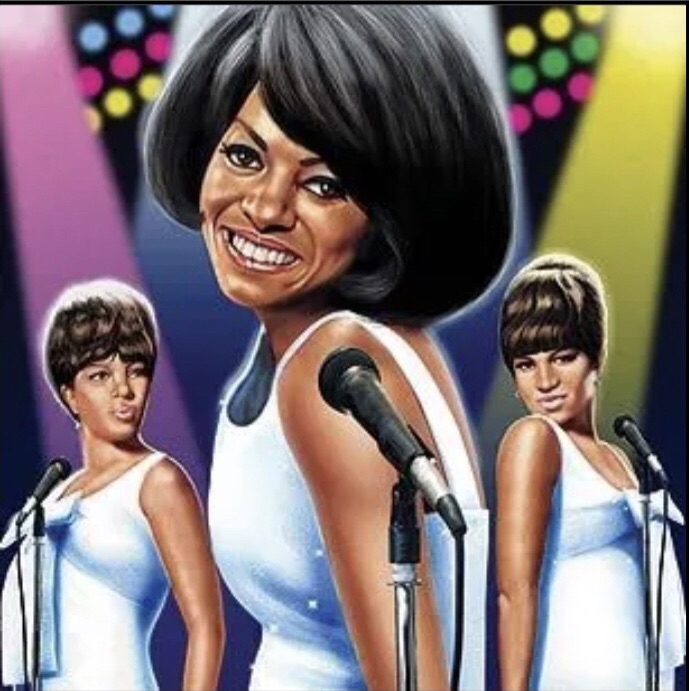
By Antonio “L.A.” Reid, is an American record executive, A&R representative, and record producer who served as president and CEO of Arista Records from 2000 to 2004, as well as chairman and CEO of the Island Def Jam Music Group from 2004 to 2011 and Epic Records from 2011 to 2017. He co-founded the record label Hitco Entertainment in the latter year, which was sold to Concord in 2022.
Illustrator: Dale Stephanos
For almost 30 years — my entire career, really — all I’ve been doing is trying to discover another Diana Ross. I obviously still have my work cut out for me. She was gorgeous and skinny — and this was back in the Twiggy days, when skinny was new — and she had that big, beautiful hair. And, of course, she was glamorous: I remember all those furs, diamonds and early bling-bling. Everything about her — her mannerisms, her look, her aura — exuded stardom.
The Supremes were the epitome of the Motown sound. People look at Ross and say she had great songs, she was a good-looking girl, behind her she had Berry Gordy — who, in my book, is the greatest record man who ever lived — she had all these things. Holland, Dozier and Holland were amazing songwriters, just pure melody men. As we all know now, the unsung heroes were the Motown house band, the Funk Brothers. They could take those great songs and give them sound. “Where Did Our Love Go,” “Baby Love,” “Come See About Me,” “Stop! In the Name of Love,” “I Hear a Symphony” — at the time, people thought those songs were disposable. And now we realize that they’re true masterpieces. They’re so alive. Everything about the songs was great, even the intros — every one of them had a distinctive, memorable intro, which was a hook in and of itself. And, of course, there were two other wonderful singers in the Supremes, Mary Wilson and Florence Ballard.
Diana Ross and The Supremes greatest hits playlist:
https://open.spotify.com/playlist/3nsa1qXpcKvsI3AwUKIWto?si=2n55k9H2Sv2MbO0SnPb1PQ&pi=Xlz37_JETne2U
But at the end of the day, Diana Ross’ voice would come on the air and give you chill bumps. It had such presence, terrific tone, and was so identifiable. She didn’t sing like Aretha Franklin — she wasn’t a gospel singer — but she was a stylist, and you always believed her. She was captivating, romantic. When she asked, “Where did our love go?” she sounded like she was begging.
To this day, I believe that her voice could work on contemporary radio. She set the road map for the success of Janet Jackson, Madonna — anybody who could sing but wasn’t a real crooner like Aretha or Patti LaBelle or Gladys Knight. I still ask artists in the studio to “sing this like Diana Ross would.” So far, no one has.
 All-Time Greatest Music